
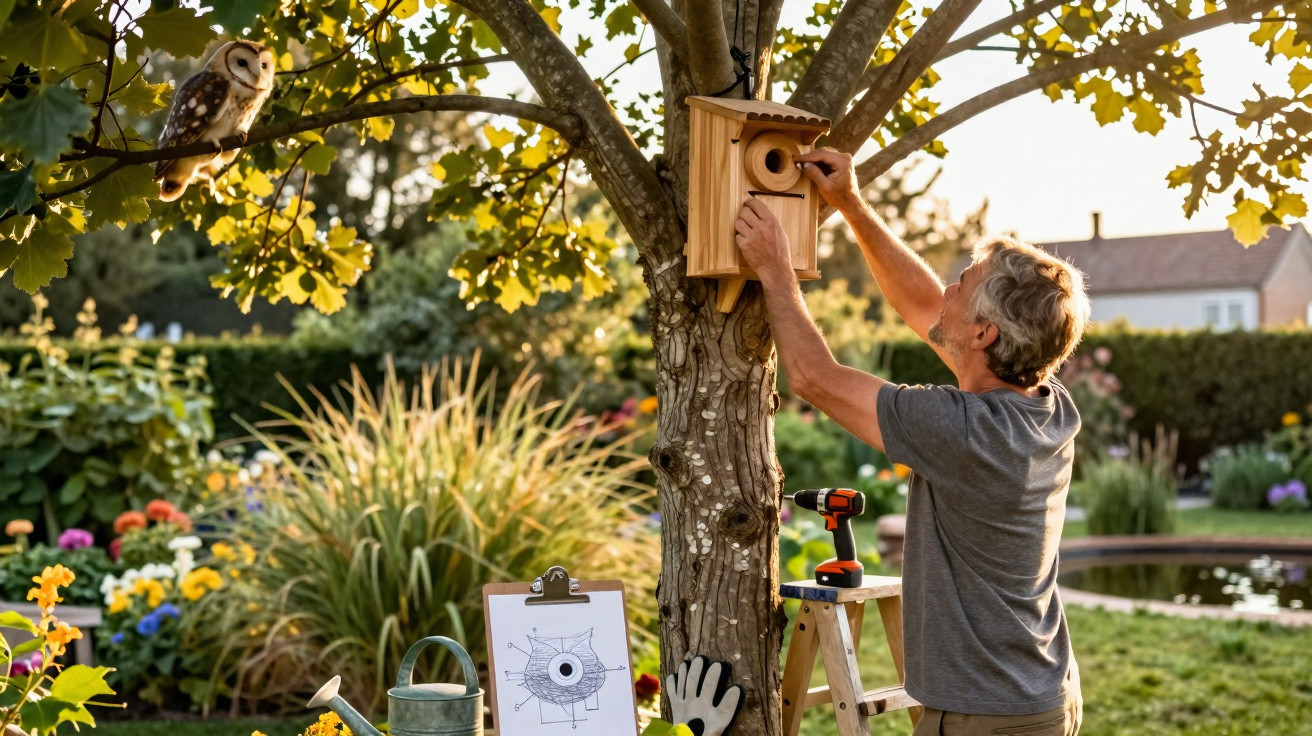
With one astonishingly simple action, any garden owner can make a real difference.
Owls are among Europe’s most captivating birds: silent in flight, elusive by nature, and brilliantly adapted to life after dark. Yet many species are facing growing pressure-from intensive modern farming to a shortage of nesting cavities and gardens that are kept overly tidy. If you have even a small patch of green, you can do more than admire them from afar: a well-sited nest box can quickly become a vital nursery for these birds.
Why owls urgently need our support
In the countryside, owls can still seem fairly common at first glance. In many areas there are thousands of breeding pairs-especially tawny owls, little owls, and various long-eared owl species. But that impression can be misleading: in numerous regions, populations are declining, with birds squeezed by roads and traffic, pesticides, and new housing.
The biggest issue is simple: there are fewer natural cavities. Old orchard trees are removed, barns are renovated and sealed up, and hollow trunks in woodland are felled for safety reasons. For a bird that depends on sheltered holes, suitable nest sites are becoming scarce.
"Owls don’t need a luxury villa - they simply need a safe place for their eggs again."
At the same time, owls do important work. A single owl can catch dozens of mice in one night. On farms and in vegetable gardens, that often reduces the need for poison. Supporting owls therefore helps natural “pest management” and strengthens the local ecosystem.
How owls breed - and why timing matters
The most exciting part of the owl year begins around spring. Depending on the species, males call with distinctive sounds: deep “hoo” notes from the tawny owl, sharper calls from other species. Females respond, pairs form, and then they start searching for a suitable nesting place.
Many owl species lay three to four eggs. Incubation usually lasts just under a month. During this period, the birds need undisturbed cover, protection from wet weather, and safety from predators such as martens or carrion crows. This is exactly where garden owners can help: if you put up a nest box in late winter or very early spring, you offer the next searching pair a secure nursery.
The garden gamechanger: a nest box for owls
The most effective help is surprisingly unglamorous: a sturdy, weatherproof nest box. It stands in for the missing tree hollow and is readily accepted by many species. Gardens on the edge of villages, traditional orchards, smallholdings beside fields, or properties near woodland are particularly suitable.
What matters is not only the box itself, but where you place it. Owls favour quiet, darkness, and a clear view-the nesting site should feel safe and sheltered.
- At least 4–5 m high, preferably more
- No streetlamp shining directly nearby
- As little human disturbance as possible, for example away from the patio
- A clear flight path, without dense branches right in front of the entrance hole
With these straightforward conditions in place, the chances of a pair using the box rise dramatically-sometimes even in the very first season.
What a suitable owl nest box looks like
Nest boxes for small to medium-sized owl species look much like an oversized tit box. The critical factors are dimensions and materials. Wood is the classic choice: it insulates well against heat and cold, is easy to work with, and feels natural to the birds.
"The entrance must be neither too small for owls to fit through, nor too large, so predators stay out."
For many smaller species, boxes with an entrance hole of around 12 cm in diameter work well. Larger openings increase the risk of martens or cats getting inside. The walls should be robust and at least 2 cm thick so the interior temperature stays relatively stable.
Interior: simple, but practical
Inside, a rough wooden surface is enough to give the birds grip. A membrane base or a thin layer of roofing felt on the outside helps prevent damp. A layer of straw, wood shavings, or dry wood chips makes a comfortable nest bowl and absorbs moisture.
Many conservationists also advise building in an access panel for cleaning. A screwed-on side panel or a hinged lid allows you to remove old nesting material and parasites in late summer-keeping the box hygienic and usable for years.
Build it yourself or buy one - both options work
If you’re reasonably handy, you can make a box yourself in just a few hours. Simple boards of untreated, weather-resistant wood are sufficient. You should avoid pressure-treated timber or toxic paints, as they can release harmful substances to the birds.
If you’d rather skip the sawing and screwing, ready-made models are widely available. Specialist retailers, DIY stores, and pet shops sell owl nest boxes in various sizes. The key is clear labelling showing which species the box is designed for. If you’re unsure, it’s best to ask-many sellers work with wildlife groups and understand local conditions.
| Criterion | Recommendation for an owl nest box |
|---|---|
| Material | Untreated, thick wood; optionally roofing felt on the outside |
| Entrance opening | About 12 cm, round or oval |
| Height in the tree | At least 4–5 m above the ground |
| Location | Quiet, semi-shaded, clear approach, no constant lighting |
| Maintenance | Clean once a year after the breeding season |
When owls need peace - and what you should avoid
Once a box has been adopted, the sensitive period begins. From the first calls in spring, the rule is: keep your distance. Repeated torch checks, selfies under the box, or hammering on the same tree can cause birds to abandon the nest.
Even well-meant feeding can do harm. Owls are specialised hunters and find their own food. Leaving meat scraps or dead mice by the box is more likely to attract rats and martens. A better approach is to avoid using poison baits for rodents in the garden-so the owls’ prey remains uncontaminated.
More than just a box: how the whole garden can benefit
If you want to support owls, you don’t have to stop at a single nest box. A wildlife-friendly setting makes the impact far stronger. Tall grassy margins, hedges, and old fruit trees provide habitat for mice and insects-ensuring there is enough food for predators.
- Leave a few corners of the garden uncut
- Keep old wood and deadwood piles
- Avoid chemical plant protection products
- Keep pet cats indoors at night where possible
This creates a small network of refuges that attracts many species-from bats to songbirds. Owls then become a visible symbol of a healthy garden.
Why the effort pays off in more than one way
Building or buying a nest box doesn’t cost much, yet it can change the feel of the space right outside your door. Many people describe how moving it is to hear the first spring calls when they know a pair is now nesting up in the box.
If you have children, there’s an added educational benefit. An afternoon building together, putting the box up, and later perhaps seeing fledged young-all of it creates a connection to nature that everyday life often erodes.
"A bit of wood, a safe spot in a tree - and suddenly your garden is raising a new generation of owls."
Anyone who has watched an owl glide soundlessly over their own lawn quickly realises: this small effort is worth it-for the birds, for the balance of the ecosystem, and for everyone who likes looking up in the evening and knowing there’s more moving through the night than just planes and satellites.
Comments
No comments yet. Be the first to comment!
Leave a Comment