
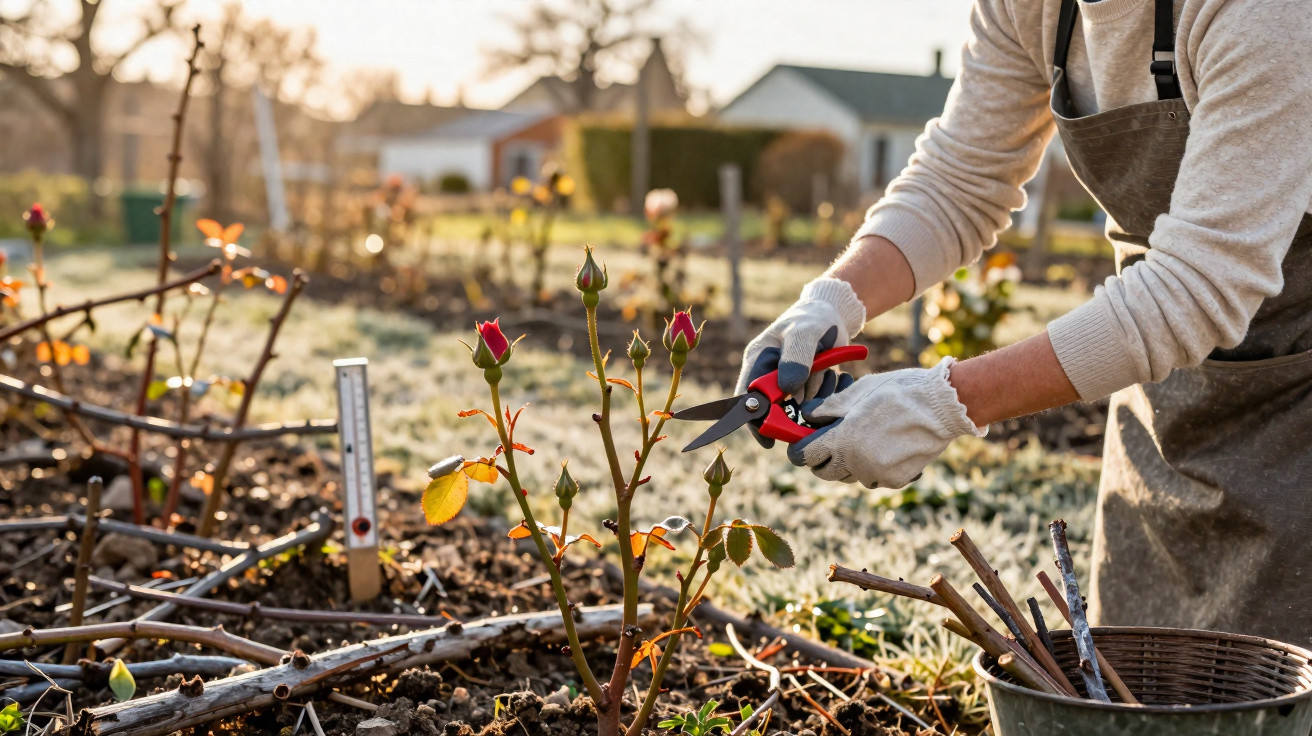
Plenty of keen gardeners find themselves staring at their roses every year, unsure when to reach for the secateurs. Cut too early and the soft new shoots can be caught by frost. Leave it too late and the display can suffer. The good news is that both the weather and the plant itself give clear, reliable signals for when the moment is right - and how to prune so your garden is packed with flowers in spring.
The magic window: mid-February to mid-March
Roses may look romantic, but pruning them is all about timing and cause-and-effect. In most areas, the best period sits between mid-February and mid-March. Winter is starting to loosen its grip, the plant is beginning to stir, and severe frosts tend to become less frequent.
"The best time to prune roses is just before new growth really gets going - when the plant is already ‘waking up’, but isn’t yet fully in leaf."
Pruning much earlier can be risky. After a cut, roses quickly push out fresh, moisture-rich shoots. If a hard frost arrives afterwards, those young shoots can be damaged or killed. Cold can also penetrate through the new cut surfaces into the wood and harm entire stems.
Thermometer, not calendar: prune only once hard frosts are over
Don’t rely on dates alone - watch the forecast. If there’s still a real chance of sharp overnight frosts, hold off on pruning. In many places, around mid-March is noticeably safer than early February.
A rule of thumb many gardeners swear by: better a week late than a night too early. A slightly delayed prune rarely harms a rose, whereas frost damage after an early cut can wipe out the season’s flowering.
Let the buds decide: when they swell, it’s time
The most dependable cue comes from the rose itself. Keep an eye on the buds: once they begin to swell and you can see small reddish or pinkish dots on the shoots, the first flush of growth is starting.
"The perfect moment is when the buds have clearly plumped up, but there are still no fully formed leaves."
At this stage, the rose is beginning to pump sap upwards. Pruning now directs that energy into fewer buds - but stronger ones. If you wait until lots of leaves have already opened and then cut hard, the plant has already spent a great deal of energy, only for you to remove it with the secateurs.
Region matters: why not every rose is ready at the same time
The ideal timing shifts with local climate. A rose bush in Freiburg often moves into spring far earlier than one in the Allgäu. If you stick rigidly to a fixed date, you can be caught out.
Mild areas: an earlier cut can work
In wine-growing regions, river valleys, many towns and cities, or anywhere with generally mild winters, pruning can make sense from the second half of February. In these places, severe late frosts are usually less common.
- Lowland areas with mild winters: pruning is often possible from mid/late February
- City gardens: buildings and hard surfaces store warmth, so timing is often earlier
- Very sheltered courtyards: sometimes earlier still
If you wait too long in these milder zones, the rose may already be covered in leaves. Then any strong pruning becomes a double effort for the plant.
Cooler regions and higher ground: patience into March
In northern and eastern areas, at higher elevations, or anywhere prone to frost, it pays to be cautious. Here, nights with well-below-zero temperatures can occur well into March.
"If you live in a cold area, it’s better to plan the main prune for mid- to late March - especially where late frosts are common."
The old rural saying about the “Ice Saints” exists for a reason: many gardeners have learned the hard way that buds lost late can cost you the entire floral show.
What’s happening inside the rose: why timing matters so much
Pruning isn’t a cosmetic tidy-up - it reshapes the plant’s whole energy budget. Through winter, most reserves sit in the roots. As light levels rise and temperatures lift, the rose pushes that stored energy into the buds.
Pruning before full sap flow delivers stronger flowering
If you prune right before, or at the very start of, this growth phase, the rose concentrates its resources on fewer buds. The result is strong, sturdy shoots topped with larger blooms. If pruning is delayed, the plant spreads itself thin across lots of weaker growth.
When you cut back only after plenty of foliage has emerged, the rose has already spent part of its reserves. It then has to mobilise more energy to rebuild new shoots after pruning. That reduces flowering potential and can leave the plant more vulnerable.
Limiting leaves in time so the shrub doesn’t exhaust itself
A rose that produces too many shoots and leaves can weaken itself. Every centimetre of growth needs water and nutrients. A well-timed, controlling prune prevents overload, keeping enough energy for robust flowering and healthy wood.
How to prune properly: technique on the day
Perfect timing won’t help much if your method is poor. Use sharp, clean, disinfected secateurs as standard. Blunt blades crush and tear, leaving damage where fungi and bacteria can gain a foothold.
The “three-bud rule” for bush roses
For typical bedding and shrub roses, a straightforward approach works well: shorten shoots so that roughly three visible buds (eyes) remain on each one.
- Count three clear buds up from the base of the shoot
- Choose a bud that points outwards
- Cut just above it
Always pick an outward-facing bud so the new growth heads away from the centre. That keeps the shrub open rather than turning it into a dense tangle.
The correct cutting angle helps prevent disease
Make cuts at a slight angle, about 5 mm above the chosen bud. Angle the cut so it slopes away from the bud. That way, rainwater runs off rather than sitting on the bud.
"Clean, angled cuts above an outward-facing bud are half the battle for healthy, vigorous roses."
Spring clean for your rose: remove old wood without hesitation
Rose pruning isn’t only about shortening shoots - it also includes a proper clean-out. Old, diseased and dead wood slows growth and encourages fungal problems.
What must go: dead wood and weak shoots
Dead stems are usually grey-brown (often darker), and they snap easily. Live shoots tend to look greenish and feel flexible. Remove dead material right back to the base.
Very thin, weak shoots should also be taken out decisively. They rarely produce worthwhile flowers, but they drain strength from the plant. What should remain are sturdy, healthy stems that can later support the weight of the blooms without trouble.
Light and air in the centre: how to reduce fungal problems
The middle of a rose shrub often traps moisture and shade - ideal conditions for powdery mildew and black spot. Remove branches that cross, rub together, or grow inwards.
"A good saying to remember is: ideally, a small bird should be able to fly through the rose bush without constantly bumping into twigs."
The more light and air that reach the centre, the lower the risk of fungal infection. Leaves dry faster after rain and stay healthy for longer.
Care after pruning: what your rose needs now
After pruning, the rose is briefly under stress. It has fresh wounds and much less top growth, and it can be more sensitive during this period.
| Action straight after pruning | Benefit for the rose |
|---|---|
| Water moderately during dry spells | Supports new growth and steadies the plant |
| Apply well-rotted compost or rose fertiliser | Supplies nutrients for fresh shoots |
| Add a mulch layer of bark humus or compost | Protects roots and helps retain soil moisture |
However, roses do not cope well with excess wet around the roots. Waterlogging can quickly lead to root rot, particularly after a heavy cut.
Common mistakes - and easy ways to avoid them
Most rose problems come down to a few familiar errors:
- Pruning too early when frost is still likely: frost damage to new shoots
- Cutting back hard too late when the plant is in full leaf: double strain on the rose
- Using blunt, dirty secateurs: easy entry points for disease
- Allowing a jumble of inward-growing shoots: damp, stagnant air in the centre
If you keep these in mind, you’ve already avoided the main traps. Roses are tougher than many people assume - and they reward clear, decisive pruning with strong growth and a long flowering period.
Extra tips for practical gardening and understanding
“Aus-trieb”, or the start of new growth, is the point when buds visibly fill and shoots begin to extend. You often won’t see large leaves yet, but the buds look fuller and more coloured. That is exactly the window in which pruning gives the biggest benefit.
If you’re unsure whether your garden’s climate behaves like an early or late area, use other early bloomers as a guide. When forsythia starts flowering in your garden or nearby, it’s usually a dependable sign that it’s time to prune your roses. That way you follow nature’s cues rather than relying only on calendar dates.


Comments
No comments yet. Be the first to comment!
Leave a Comment