
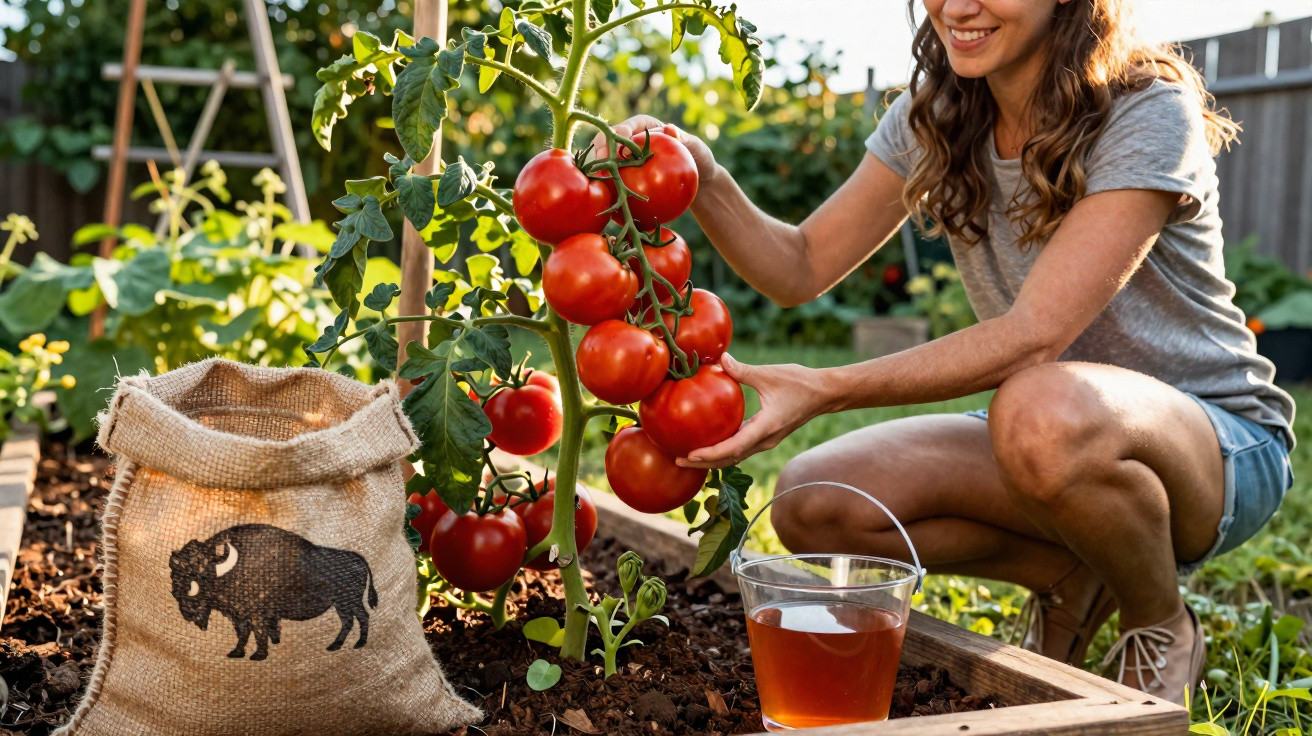
A little-known natural fertiliser is changing the game.
Tomatoes are heavy feeders in the veg patch. If you rely on a bit of compost and tap water alone, you often hit a wall: plants stay stunted, leaves start to discolour, and the crop is sparse and disappointing. In North America, more and more gardeners are backing a nutrient source that’s still barely on anyone’s radar here: well-composted bison manure.
Why bison manure makes tomatoes thrive
Tomatoes perform best in soil that stays consistently nutrient-rich. Quick fixes can fade fast-especially when plants are in full stride and suddenly find themselves “running on empty”. Bison manure brings several key nutrients together in a form that releases steadily over many months.
"Bison manure delivers a natural cocktail of nitrogen, phosphorus, potassium as well as calcium, sulphur and magnesium – ideal for hungry tomatoes."
Here’s what those nutrients actually do in the bed:
- Nitrogen (N): drives sturdy stem and leaf growth, without pushing plants to produce only lush foliage.
- Phosphorus (P): supports strong roots and helps with flowering and fruit set.
- Potassium (K): encourages firm, flavourful fruit and improves resilience to drought stress.
- Calcium: helps prevent blossom end rot, a common tomato issue.
- Sulphur and magnesium: strengthen plant tissues and support photosynthesis.
Bison mainly graze on grasses. That diet produces manure that behaves like a slow-release nutrient store once it’s in the soil. In the wild, dung pats become small hotspots for soil life: a single pile can attract hundreds of insect species, including dung beetles that break the material down and work it into the ground.
In the garden, composted bison manure feeds bacteria and fungi first, then earthworms-and through that chain, the tomato plants themselves. The result is steady, balanced growth rather than short fertiliser spikes followed by a slump.
Always compost bison manure - fresh manure is too strong
Fresh bison manure doesn’t belong in a vegetable bed. It can contain high levels of ammonia that can effectively scorch roots, and it often carries pathogens and weed seeds. There’s also the potential for bacteria such as Escherichia coli or Salmonella-not something anyone wants near food crops.
"Only thorough composting turns bison manure into a safe, low-odour humus – and a valuable feed for tomatoes."
How to turn bison manure into safe compost
If you can get hold of bison manure, you can handle it much like horse or cattle manure. A basic composting area is enough, as long as the heap is built correctly. The goal is for microbes inside the pile to reach around 55 degrees Celsius, which helps kill off disease organisms and weed seeds.
Key steps at a glance:
- Choose the site: Pick a well-drained spot, ideally on a firm base so it doesn’t become a soggy mess.
- Build in layers: Alternate bison manure with dry, carbon-rich materials such as straw, leaves, or wood shavings.
- Turn regularly: About once a week, turn the heap with a fork to add oxygen and spread heat evenly.
- Let it mature: Depending on temperature and moisture, allow at least 3 to 4 months.
You can tell bison compost is ready by three signs:
- The material is dark brown to black and crumbly.
- Individual manure clumps are no longer recognisable.
- It smells like woodland soil, not a livestock yard.
At this stage, you can use it like a high-quality humus: it’s low in smell, easy to incorporate, and brings active soil life-exactly what tomato roots respond to.
When and how tomatoes benefit from bison manure
For the best results, think about feeding the soil from spring onwards. Bison compost is most effective when worked into the top layer-where most of the actively feeding roots sit.
Work bison compost in before planting
A proven approach:
- Loosen the bed deeply 3–4 weeks before planting out tomatoes.
- Work in around 2–3 litres of mature bison compost per square metre.
- Mix thoroughly into the top 10–15 centimetres using a rake.
This creates a nutrient “buffer” in the root zone that releases gradually through the season. If you’re growing in containers, you can replace roughly a quarter of the potting mix with bison compost and blend it with good-quality compost/soil.
Avoid direct contact with the roots
When planting out, a little separation matters. Roots shouldn’t sit directly on the compost, as the concentration can be too strong in one spot.
A practical planting routine for young plants:
- Dig the planting hole slightly larger than the root ball.
- Add a layer of ordinary garden soil over the incorporated bison compost.
- Set the tomato plant in place, backfill with soil, and firm gently.
- Water thoroughly with plain water first so the roots can recover.
- Only add extra feed with later waterings.
This way, tomatoes can access nutrients from the start without being pushed into stress. In return, you typically see denser roots, sturdier growth, and earlier flowering.
Bison manure as “tea”: liquid feed for pots and bed-grown tomatoes
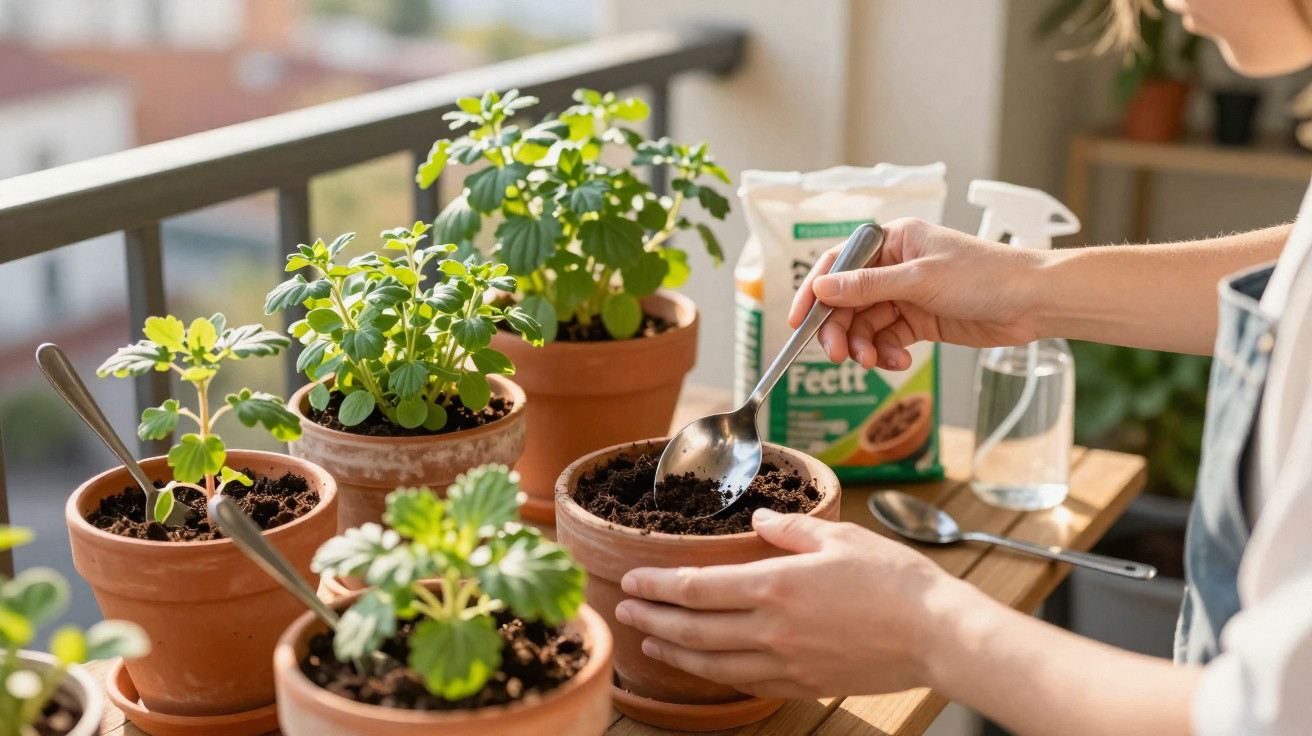
Alongside solid compost, many gardeners also use so-called “manure tea” made from bison manure. This is a liquid fertiliser produced from already composted material. Concentrates are now available commercially and can be mixed into watering cans easily.
"Manure tea made from bison compost works like a gentle energy drink for tomatoes – ideal for balcony pots and raised beds."
Using bison manure tea in the tomato bed
Typical method with a concentrate:
- Dilute according to the manufacturer’s instructions using non-chlorinated water (rainwater or tap water left to stand).
- Apply for the first time once young plants have established.
- After that, water it in around the root zone about every three weeks, a few centimetres away from the stem base.
One key rule: water with plain water first-especially during hot weather. If plants are under drought stress, adding feed can increase the risk of root damage.
| Application method | Advantages | When to use |
|---|---|---|
| Solid bison compost | Long-lasting effect, improves soil structure, encourages soil life | Before planting and as a light top-dress during the season |
| Bison manure tea | Faster nutrient delivery, easy to dose, ideal for containers | Every 2–3 weeks during the growth and fruiting period |
Opportunities, risks and sensible combinations in the garden
Used well, bison manure can largely replace chemical fertilisers in a tomato bed. It supports not only the plants but also a lively soil ecosystem. Still, it’s worth keeping an eye on potential pitfalls.
What can go wrong
- Too high a dose: dense, leafy growth with fewer fruits.
- Unfinished manure/compost: risk of rot, unpleasant odours, and pathogens.
- Waterlogged compost heap: the pile cools down, and germs may not be reliably eliminated.
Careful dosing, using only well-rotted compost, and keeping the soil open and aerated greatly reduces these risks. Pairing it with mulch-such as straw or grass clippings-also helps retain moisture and keeps soil organisms active.
How bison manure fits with other practices
Bison compost supports good growing practice; it doesn’t replace it. Useful additions include:
- Regular loosening with a garden fork rather than digging with a spade, to protect soil life.
- Cutting back nitrogen inputs if growth is too vigorous, to rein in leaf mass.
- Choosing varieties suited to your site and climate.
If you already use worm compost, nettle feed, or biochar, you can combine small amounts with bison manure. Each organic input brings its own microbes and nutrient profile. The end result is a more diverse, active soil-and in most cases a tomato season that fills the harvest basket far better.



Comments
No comments yet. Be the first to comment!
Leave a Comment