
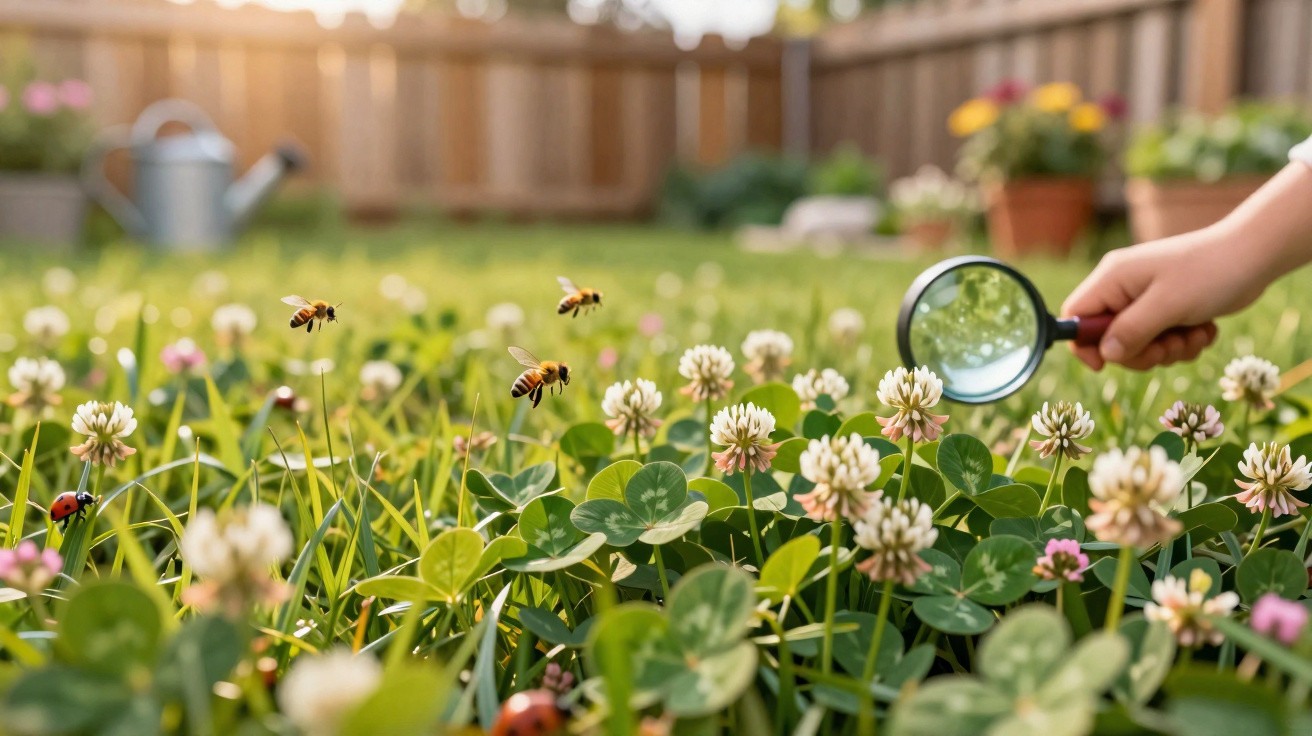
The clover lawn is having a moment: less mowing, less fertiliser, and a greener look even through hot summers. At the same time, there’s a common worry that those white blooms will turn the garden into an insect magnet - leading to stings, creepy-crawlies on the patio, and bugs making their way indoors. A closer look shows the reality is far more nuanced than many assume.
Which insects clover actually attracts
As soon as clover comes into flower, it becomes a refuelling stop for all sorts of insects. The blossoms provide plenty of nectar and pollen, effectively creating an all-you-can-eat buffet.
"Clover mainly attracts helpful pollinators and natural pest hunters - not automatically nuisance insects."
Pollinators searching for flowers
These are the insects most commonly seen visiting a clover lawn:
- Honey bees and bumblebees - they gather nectar and pollen without harming the plants.
- Butterflies - they use the flowers as an energy source.
- Solitary bees - many native species rely on clover as an important food plant.
All of them contribute to a balanced garden ecosystem. Fruit trees, berry bushes and ornamental plants in the surrounding area benefit from the extra pollination.
Beneficial insects hunting pests
Alongside pollinators, clover also draws in insects that help control pests naturally:
- Ladybirds, which feed on aphids
- Hoverflies, whose larvae consume soft-bodied pests
- Ground beetles, which hunt slugs and caterpillars
Dense clover is particularly useful here, because it offers cover and good hunting ground. A garden with clover can therefore be more resilient and may need fewer chemical treatments.
Unwanted visitors: when it can become unpleasant
There are also a few species people would rather do without:
- Clover mites: tiny arachnids that, in heavy infestations, can move towards the house. They don’t damage the clover, but they can be a nuisance indoors.
- Japanese beetles: in affected areas, they sometimes feed on clover leaves, though they usually prefer other plants such as roses or fruit trees.
- Grasshoppers and froghoppers: they appear from time to time, but as a rule they don’t cause serious damage in a clover lawn.
In most gardens, these remain relatively minor, localised issues. They may show up in patches, but they do not usually wipe out whole areas.
Are the insects around clover mostly helpful or dangerous?
A clover lawn does mean more insect activity - but the overwhelming majority of visitors support the garden rather than create problems.
Day-to-day ecological benefits
Pollinators such as bees and butterflies help more plants set fruit across the wider neighbourhood. Anyone with fruit trees, berries or perennials will see the benefit directly. These insects rarely behave aggressively towards people.
Stings tend to happen when someone steps on an insect barefoot or traps it with their hands. Visitors on clover are focused on feeding, not on attacking humans.
"For children, pets and gardeners, a clover lawn usually only becomes critical when people walk barefoot through areas in full bloom."
Natural pest control instead of reaching for chemicals
Ladybirds, hoverflies and ground beetles eat pests such as aphids, caterpillars and slugs - exactly the kinds of creatures that can cause real trouble in vegetable beds, on roses or around ornamental shrubs.
A thriving carpet of clover supports these beneficial species and reduces pest pressure. Many homeowners report they need to spray far less when they allow these kinds of habitats in the garden.
How high is the sting risk really?
For families with toddlers, or for people with severe allergies, concern about stings is understandable. A few points help put the risk into perspective:
- Bees visiting clover concentrate on the flowers and usually ignore people completely.
- Most stings happen through accidental stepping.
- Keeping grass short and limiting flowers significantly reduces the risk.
- Wasps that are more defensive or aggressive don’t build nests in clover; they’re more likely to nest in the ground or around buildings.
If you’re unsure, simply mow heavily used areas more often and deliberately reduce flowering clover there.
How to manage insects in a clover lawn on purpose
With a few straightforward steps, you can keep the benefits - while keeping potential downsides under control.
Place and mow clover strategically
A clear zoning approach works well:
- Keep clover areas towards the back of the garden or along less-used edges.
- Mow lawn around patios, seating and play areas more frequently so clover rarely flowers.
- Create flower-rich beds a little further from high-traffic spots.
- Adjust habits: wear shoes when clover is in full bloom.
This way, bees and other helpful insects remain welcome, without spoiling a barbecue or a children’s party.
Dealing with clover mites properly
If clover mites appear in large numbers and start moving indoors, the most effective solution is usually a physical barrier:
- Create a plant-free strip around the house roughly 40–50 centimetres wide.
- Remove thick mulch, leaf litter and groundcover plants right next to the wall.
- Seal cracks and gaps in masonry.
This removes the “bridge” the tiny animals use to get from the clover lawn to the house. Chemical products are generally unnecessary and tend to harm other insects.
Targeted control for Japanese beetles
In areas where this invasive beetle is already established, it’s worth paying closer attention. Methods that spare other insects are the most sensible:
- Knock adult beetles off plants early in the morning and collect them.
- Use biological treatments against larvae in the soil that target only this species.
- Avoid broad-spectrum insecticides, as they also kill pollinators and beneficial insects.
In most gardens, damage to clover itself remains minor. More sensitive ornamental plants and fruit trees usually need protection first.
When clover in the lawn is a good fit - and when it isn’t
Whether clover suits your garden depends on several factors: how intensively the lawn is used, how much insect activity the household is comfortable with, and how important sustainability is to you.
| Situation | Is a clover lawn suitable? | Note |
|---|---|---|
| Family with small children, lots of barefoot play | limited | Keep clover mainly at the edges; keep play areas short and allow minimal flowering |
| Wildlife-friendly garden, focus on biodiversity | very suitable | Clover supports pollinators and beneficial insects, and reduces maintenance |
| Formal front lawn for a neat, “show” look | partly | Clover can look patchy in a “golf-course” style lawn, but it reduces fertiliser needs |
| Highly built-up area, little surrounding greenery | very suitable | Any flowering space helps insects; clover is tough and low-demand |
Many homeowners choose a mixed approach: one part remains a traditional lawn or is maintained as a play area, while other zones are allowed to develop with clover and additional flowering plants.
What else a clover lawn brings with it
Beyond the insect question, clover has other effects that can influence the decision:
- Clover fixes nitrogen from the air, improving the soil.
- The plants stay green for longer and cope with dry spells better than a pure ornamental lawn.
- Less fertiliser and less frequent mowing are easier on both your budget and the environment.
If you get comfortable with increased insect activity, you gain a lower-maintenance garden with greater ecological value. The key is not letting clover spread everywhere at random, but creating deliberate zones where people and insects can coexist well.
For people with allergies, it’s worth speaking to your doctor before turning half the garden into a flowering clover area. In many cases, a compromise is enough: limited clover “islands”, neatly mown paths and seating areas, plus clear rules for children - such as wearing shoes when the white flowers are out.
Keeping these points in mind allows you to treat clover as an opportunity: more life in the garden, less weekend work, and a small boost for nature - without having to call it an insect plague.






Comments
No comments yet. Be the first to comment!
Leave a Comment