
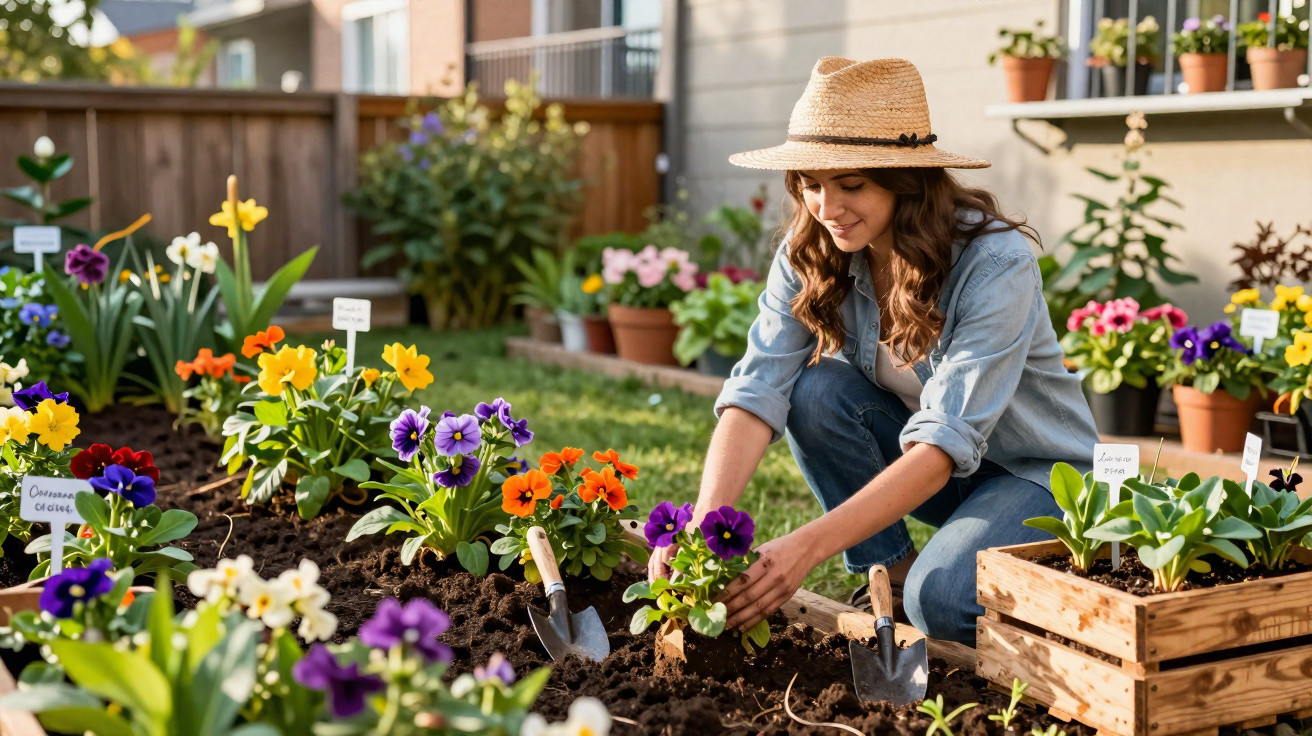
Many amateur gardeners look at dull, grey patches in spring and assume an expensive redesign is the only answer. In reality, a carefully chosen mix of long-lived perennials is often enough-plants you put in once and that return year after year. If you plant now, you set up a garden that can look noticeably different within weeks.
Why perennials are the smartest trick for lazy gardeners right now
Perennials-known in horticulture as “herbaceous perennials”-sprout again each year from the same root base. Over time they form larger clumps, tend to flower reliably, and demand far less work than many annual summer bedding plants.
"If you choose perennials now, you’ll save money, time and stress in the long run-while still getting a lush, lively garden."
The main advantage is simple: once they’re in, most varieties stay put for years. Rather than buying everything again each spring, you mainly top up gaps or lift and divide established clumps to reuse them elsewhere.
Spring as the starting gun: the best time to plant
In spring the soil is usually moist, workable and not yet hot. That combination helps young plants establish strong roots before summer conditions start to bite.
- In cooler northern areas and at higher elevations: planting is mainly in April and May.
- In milder regions: you can often begin as early as March.
- Important: the soil should be neither frozen nor completely waterlogged.
If you catch this window, you’ll often see a first flush of flowers in year one-and by the second year the border typically looks much fuller and more cohesive.
Preparing the soil: the underestimated key to transforming the garden
Before your new perennials go in, it pays to assess the site properly. Full sun, part shade and shade all call for very different plants.
Reading the site correctly
- Full sun: more than six hours of sun, often with drier soil.
- Part shade: alternating light and shade, for example beneath open, airy shrubs or trees.
- Shade: very little direct sun, usually cooler, damper spots.
Then comes the groundwork: weed thoroughly, loosen the soil with a hoe or spade, and work in some well-rotted compost. That improves aeration and provides nutrients for rooting. After planting, a mulch layer helps hold moisture in and slows down weeds.
15 perennials that will visibly change your garden
The following selection focuses on proven favourites that suit typical home gardens. Combined well, an empty bed can become a lively planted strip within a single season.
| Plant | Position | Stand-out effect |
|---|---|---|
| Hellebore (Christmas rose) | Part shade | Very early flowers at the end of winter |
| Peony | Sun | Large, fragrant blooms that become a focal point |
| Lupin | Sun to part shade | Tall, colourful flower spikes that add structure quickly |
| Penstemon | Sun | Long summer flowering with trumpet-shaped blooms |
| Lavender | Full sun, on the dry side | Scent, bee magnet, Mediterranean feel |
| Heuchera (coral bells) | Part shade | Colourful foliage that gives structure all year |
| Hardy geranium (cranesbill) | Sun to part shade | Flowering “carpet” from spring into autumn |
| Hosta | Shade, moist | Big, decorative leaves-ideal for dark corners |
| Yarrow (Achillea) | Sun | Drought-tolerant with flat flower heads in warm tones |
| Aster | Sun | Abundant late flowering that extends the season |
| Bergenia | Part shade | Large glossy leaves plus early flowers |
| Crocosmia | Sun | Bright red to orange sprays of summer flowers |
| Delphinium | Sun | Tall blue or violet flower spires |
| Astilbe | Part shade, moist | Delicate plumes that look airy and elegant |
| Bleeding heart | Part shade | Heart-shaped flowers, a romantic feature for shady beds |
How to combine perennials for maximum wow factor
A common mistake is dotting single plants around, where they get visually lost. You’ll get far more impact if you think in groups.
Rules that have proven themselves in real gardens
- Plant at least three of each variety-five is better.
- Low at the front, tall at the back: place cranesbill, heuchera and bergenia towards the front; delphiniums and asters towards the rear.
- Stagger flowering times: hellebores and bergenia early, lupins and peonies in early summer, asters for autumn.
- Repeat colours: a tone that appears in multiple places ties the border together.
For a sunny border, for example: cranesbill at the front as a flowering carpet, lupins and yarrow behind, with delphiniums and autumn asters providing height at the back. Add a few clumps of lavender between them for fragrance and pollinators.
Dream border in shade: turning the dark corner into a favourite spot
Many gardens have shady areas next to hedges or beneath trees. Instead of accepting bare ground there, savvy gardeners lean into foliage texture and softer flowers.
"With hosta, astilbe, bergenia and bleeding heart, part shade can feel like a romantic woodland garden."
Hostas contribute bold, substantial leaves; heuchera and bergenia bring colourful foliage accents; astilbes add feathery flower plumes. Bleeding heart adds a playful highlight in late spring with its dangling heart-shaped blooms.
Practical care: minimal effort, noticeable results
Perennials need less day-to-day attention than bedding and balcony plants, but they do benefit from good aftercare at the start. After planting you should:
- water thoroughly so the root zone is soaked deeply,
- spread a mulch layer of bark chips or grass clippings,
- check regularly for dryness during the first few weeks.
Later on, it’s usually enough to cut off faded flowers, add a little compost in spring, and provide support for tall plants such as delphiniums or dahlias so they don’t flop in high winds.
Useful background for long-term garden success
Many of the perennials listed die right back in winter, leaving little visible above ground. That can make it seem as though they’ve disappeared. In fact, their storage organs in the soil remain alive and will sprout again in spring. If you keep that in mind, you’re less likely to dig those spots unnecessarily over winter-helping you avoid damaging the plants.
There’s also an ecological upside: flowering perennials such as lavender, aster, yarrow and penstemon draw bees, bumblebees and butterflies into the garden. With smart choices, you can provide a sequence of blooms from March through to October that actively supports insects. A garden built around perennials doesn’t just look good; over time it becomes a lively, humming mini-habitat.

Comments
No comments yet. Be the first to comment!
Leave a Comment