
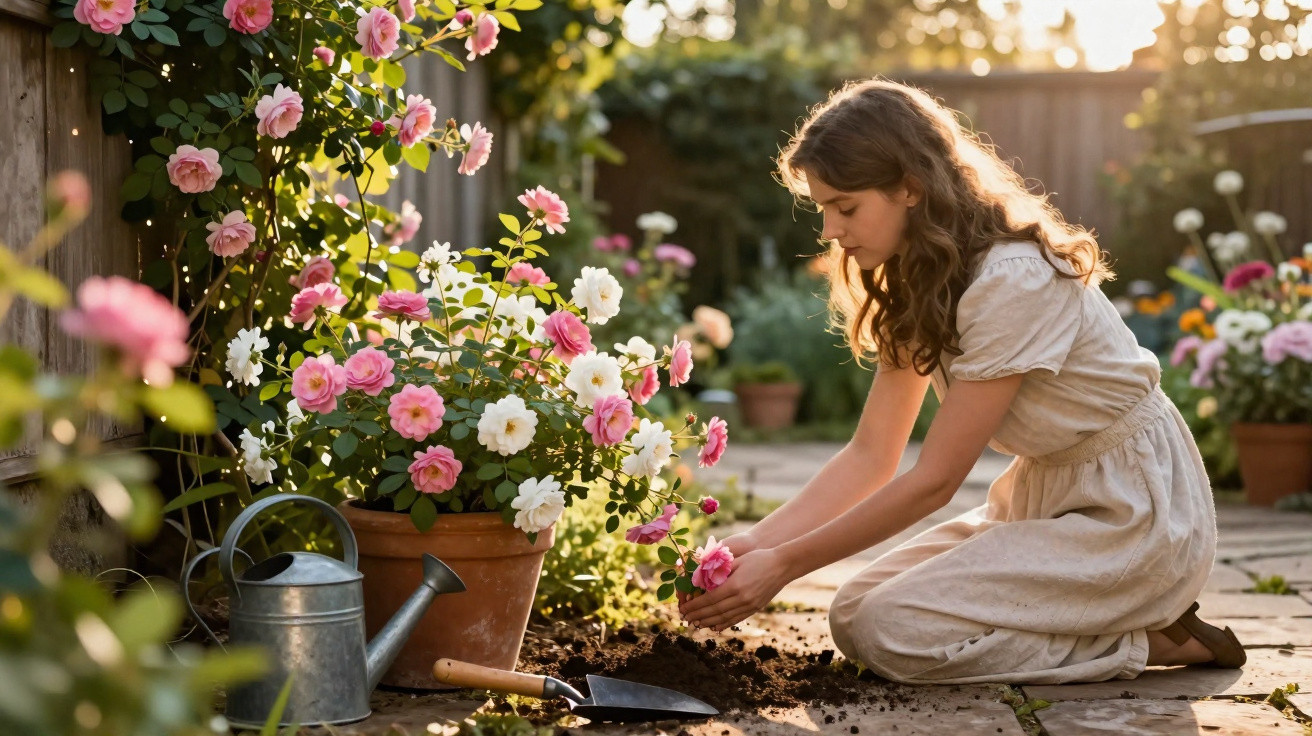
Plenty of amateur gardeners accept that autumn means washed-out borders and bare balcony boxes. Yet there’s one plant that really comes into its own just when others have already packed it in. A small flowering shrub, still not widely grown here, can keep beds, pots and patios colourful for months - and it asks surprisingly little in return.
A colour-changing flowering shrub that makes summer feel endless
This plant is called Lantana, and it originally comes from Central America, the Caribbean and parts of South Africa. In its native habitats it thrives in blazing sun on dry, sometimes poor soils - exactly the kind of conditions where many familiar garden favourites eventually struggle.
In our climate, Lantana typically forms a neat shrub around 40 to 80 centimetres tall, depending on local conditions. In very mild areas it can grow noticeably larger. Its dark green leaves are distinctive: slightly rough to the touch, and when brushed they release a spicy, peppery scent - not everyone takes to it instantly, but it certainly keeps a border from feeling dull.
The real headline act is the flower display. Blooms appear as tight, small clusters shaped like little balls, often mixing yellow, orange, pink, red or purple. The clever twist is that many varieties shift colour as the flowers age. One cluster may begin yellow, move through orange and end up a strong pink - so a single plant can look as though it’s covered in multicoloured mini-bouquets.
"Anyone who’s seen Lantana at peak bloom quickly understands why gardeners call it the ‘chameleon of the flowerbed’."
Where the long-flowering Lantana looks best
Lantana fits into a surprising range of garden settings. The key requirement is simple: as much sun as possible. Give it that, and it shows what it can do.
- In the garden: ideal for sunny borders, along paths, in front of walls, or as a relaxed, low hedge.
- On balconies and patios: planted in larger pots or boxes as a focal point, especially alongside calmer companion plants.
- As a gap-filler: perfect for giving a quick lift to bare patches in perennial beds.
Because it stays compact, the shrub keeps its shape and doesn’t look unruly. If you prefer a tidier look, it can be lightly pruned to maintain form. In containers it can even be trained into a small standard (a “lollipop” shape), which looks particularly smart on a terrace.
Lantana as a magnet for butterflies and bees
Lantana is considered a melliferous plant - in other words, a species that produces plenty of nectar. Those densely packed flower clusters function like a generous buffet for many insects.
On warm days in particular, butterflies flock to it. Wild bees and honeybees also make the most of the nectar supply, especially once other flowering plants begin to fade in late summer and autumn. For anyone aiming to make their space more wildlife-friendly, this shrub is a strong choice - even in a pot on a city balcony.
There’s more: in late summer and autumn, Lantana forms dark berries. These provide food for many wild birds and bring extra activity into the garden. For people, however, the berries matter for a very different reason.
Almost year-round flowers: how to keep the season going
In mild areas, flowering can begin in late spring and continue well into autumn. In especially sheltered spots - such as warm inner courtyards or against south-facing walls - well-established plants may sometimes still carry the odd bloom in winter.
If you grow Lantana in a container and move it into a bright, frost-free place through the colder months, you can ideally enjoy what feels like an almost year-round flowering plant. Some specimens do pause briefly in winter, but then surge back into growth with extra energy in spring.
"With the right position, the shrub looks as though it has forgotten the calendar - while others are already asleep for winter, it keeps pushing out colourful buds."
The most important care points for months of flowers
- Lots of sun: at least six hours of direct sun each day - more is better.
- Well-drained soil: sandy or relatively low-nutrient mixes are fine; avoid waterlogging at all costs.
- Targeted watering: water less often but thoroughly, then allow the compost/soil to dry slightly.
- Feeding: from spring to late summer, apply flowering-plant feed every two to three weeks.
- Remove spent flowers: pinch off faded blooms and young fruit starts regularly to encourage new buds.
How Lantana gets through winter in Central Europe
This long-flowering shrub loves warmth and does not tolerate frost at all. In typical Central European winters, it will die outdoors if left unprotected. If you want to keep it for more than one season, it pays to plan your winter approach from the start.
| Location | Recommended winter action |
|---|---|
| Open ground in exposed areas | treat as an annual, or lift and pot up before frost arrives |
| Large container on balcony/patio | move before the first frosts into a bright, frost-free space (5–10 °C) |
| Mild wine-growing or coastal region | try it against a sheltered south-facing wall with winter protection; severe frost can still cause damage |
Before bringing it into its winter quarters, a moderate cut-back is worthwhile. This keeps the crown more compact, reduces the space it takes up, and encourages stronger new growth in spring. During the winter rest period, water sparingly and do not feed.
Caution: beautiful, but highly toxic
For all its strengths, Lantana has a serious downside: all parts of the plant are considered highly poisonous - especially the berries and leaves. If ingested, they can cause severe poisoning symptoms in people and pets.
Households with small children, or with curious dogs and cats, should choose the planting position particularly carefully. A raised bed, the top of a wall, or a spot that children and animals cannot access freely is best.
"Lantana is a bit like a beautiful cocktail: a visual highlight, but not for children’s hands."
Practical tips: buying, choosing varieties and smart pairings
If you’re trying the plant for the first time, it’s best to start with a well-rooted specimen from a nursery or garden centre. Young plants that already show the first flowers usually get going faster. In areas with short summers, buying early - in late spring, once nights are frost-free - is a real advantage.
The choice of varieties grows year by year. There are compact options for balcony planters, more vigorous types for large containers, and single-colour lines in, for example, warm yellow–orange shades or cooler pink–purple mixes. Many gardeners like to pair Lantana with:
- ornamental grasses, whose fine stems create a calm backdrop,
- white-flowering perennials, which visually soften the colour intensity,
- Mediterranean herbs such as lavender or rosemary, which enjoy similar conditions.
With combinations like these, you can create beds that stay attractive into late autumn without demanding much work, while also drawing in both insects and birdlife.
Why trying Lantana is particularly worthwhile right now
Climate models suggest Central Europe is increasingly likely to see long, dry summer spells. Traditional border perennials can quickly reach their limits under those conditions. Lantana, however, copes well with exactly that mix: plenty of sun, modest watering, and well-drained soils. If you want to make your garden more resilient for the future, this species is an intriguing addition.
There’s another factor too: many people want more colour on a balcony or patio but don’t have time for demanding care routines. Lantana won’t immediately resent the occasional missed watering, and it repays a little attention with an unusually long flowering period. If you take its toxicity seriously and choose the location wisely, you’ll have a shrub that noticeably brightens grey days - whether in the garden, on a city balcony or in an inner courtyard.


Comments
No comments yet. Be the first to comment!
Leave a Comment