
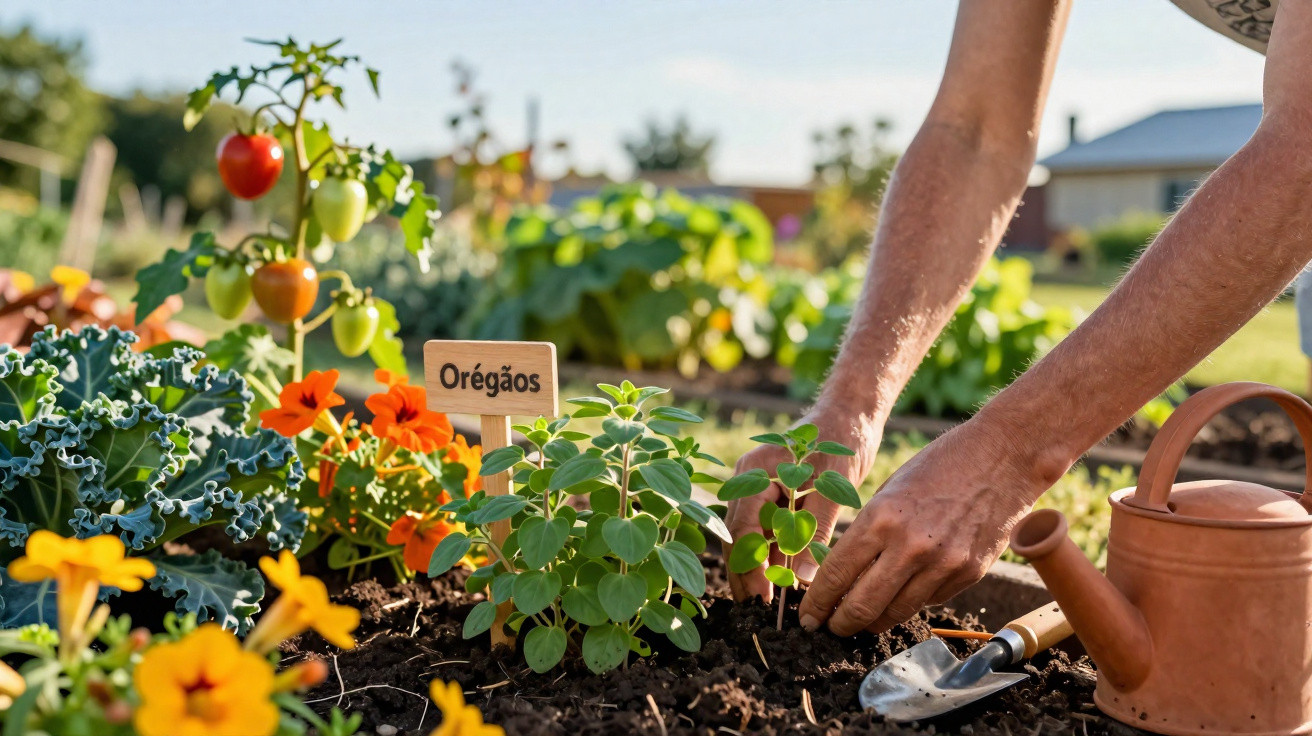
Many home gardeners reach for oregano without thinking when they are cooking. In the veg patch, however, this Mediterranean herb is often treated as an afterthought - and that is completely undeserved. Put in the right place, oregano can help protect vegetables, attract beneficial insects and even influence the flavour of certain crops. Choose its neighbours wisely and you can get noticeably more from every square metre of garden.
Why oregano is an underrated garden pro
Originating from the Mediterranean, oregano thrives in sun, warmth and free-draining, fairly lean soil. Those very preferences make it a tough, dependable perennial in the border: it copes well with dry spells, needs very little feeding and will happily stay in the same spot for years.
"The essential oils in oregano act like a natural shield: they confuse pests, attract beneficial insects and improve the microclimate in the bed."
Over time, the plant forms dense mats that shade the soil, suppress weeds and reduce evaporation. At the same time, its foliage continually releases aromatic compounds that strongly affect insects - sometimes repelling them, sometimes drawing them in.
The best vegetable partners for oregano
Tomatoes – the dream pairing in the home garden
Tomatoes and oregano do not just belong together on pizza; they can support each other in the garden too. The herb’s strong scent masks the natural smell of tomato plants, making it harder for hungry hornworms and aphids to locate their favourite host.
Set oregano around the base of tomatoes with roughly 30–45 cm spacing. In summer, the oregano perennials benefit from light shade cast by tomato leaves, while the tomatoes gain a fragrant “protective belt”. The antimicrobial compounds found in oregano may also slightly slow down fungal issues in the soil.
Peppers and chillies – more fruit, fewer pests
Sweet peppers and chilli plants also do well with oregano nearby. Because the herb stays relatively low, it does not steal light; instead, it neatly complements the row.
- Oregano attracts bees and butterflies, which can improve pollination of pepper flowers.
- The essential oils deter spider mites and aphids, which are often problematic in summer.
- Keep about 25–40 cm between plants so each has enough room.
Brassicas – natural support against cabbage white
Brassicas such as white cabbage, broccoli, cauliflower and Brussels sprouts frequently suffer from cabbage white butterflies. Their caterpillars can strip whole heads. Oregano helps in two ways.
First, its powerful fragrance disrupts the butterflies as they search for suitable plants on which to lay eggs. Second, flowering oregano draws in tiny parasitic wasps that lay their eggs in the caterpillars or in the pest’s eggs.
"Small oregano islands between the cabbage rows create a scented labyrinth in which pests struggle to navigate."
Cucumbers and squash family crops – protection from beetles and disease
Cucumbers, courgettes and pumpkins are prone to cucumber beetles and various diseases spread by sap-sucking insects. Oregano can reduce the pressure noticeably when planted around the edges of beds.
Important: do not place it right in the middle of the sprawling area, otherwise the roots will compete too strongly. Strips or clusters are better, positioned about half a metre from the main plant. The aroma confuses pests and reduces their approach.
| Vegetable partner | Main benefit from oregano | Recommended spacing |
|---|---|---|
| Tomatoes | Fewer hornworms and aphids, better soil microclimate | 30–45 cm from the base |
| Peppers & chillies | More pollinators, fewer mites | 25–40 cm |
| Cucumbers | Fewer beetles, sometimes more intense flavour | 45–60 cm |
| Courgettes & pumpkin | Confuses squash bugs, attracts beneficial insects | 60–75 cm from the runners |
Which herbs and flowers pair particularly well with oregano
Basil – a kitchen classic with different needs
Basil and oregano often share a pot - or a pizza. In the bed, the pairing can work too, but watering needs a bit of care. Basil prefers consistently lightly moist soil, while oregano is happier with occasional dry periods.
The best approach is to plant them in the same area but not right next to each other. That way you can water basil more precisely without leaving oregano too wet. The big advantage is convenience: your key herb combination for Mediterranean cooking sits in one place.
Thyme – the perfect partner for sunny spots
Thyme and oregano want almost the same conditions: full sun, lean, well-drained soil and minimal fuss. Together they create a dense, fragrant carpet that attracts insects such as bees, bumblebees and wild pollinators.
"In sunny front gardens or rockeries, the mix of thyme and oregano makes a lively, low-maintenance carpet of flowers."
Their slightly different leaf shapes add an extra ornamental touch: fine thyme leaves alongside the somewhat larger oregano leaves.
Marigolds – a double protection system in the bed
Marigolds are classic helpers in the vegetable garden. Root exudates from marigolds can suppress certain nematodes in the soil that damage roots. Combined with oregano, you get layered protection:
- Below ground, marigolds tackle the nematode issue.
- Above ground, oregano’s essential oils keep sap-sucking insects in check.
- Flowers from both plants draw in numerous beneficial insects and pollinators.
Nasturtiums – a living trap crop with visual impact
In professional growing, nasturtiums often serve as a so-called “trap crop”. Aphids tend to prefer the soft leaves and flowers of nasturtiums over many vegetables. Together with oregano, this becomes a smart division of labour.
Nasturtiums collect the pests, while oregano attracts predatory insects such as ladybirds and hoverflies that find plenty of food there. The result is a small, stable mini-ecosystem rather than a problem bed dependent on sprays.
Which plants should not go next to oregano
Fennel – chemical stress for the herb star
Fennel is generally a tricky neighbour. It releases substances that inhibit the growth of other crops. Oregano is sensitive to this: it grows poorly, stays small and loses aroma.
Keep at least 1.2 metres between fennel and oregano. Better still, give them separate beds or at least clearly divided areas.
Lettuce and other thirsty plants
Leafy salads, rocket and many spinach varieties like consistently moist soil. Over time, those conditions are bad for oregano: waterlogging and constantly damp ground encourage root rot, and the perennial loses vigour and resilience.
If you want oregano and lettuce in one bed, divide the space intelligently: a dry edge zone for the herb and a moister centre for water-loving plants. Shared rows, by contrast, are not a good idea.
How to get the most out of oregano in the bed
Understand and manage its growth habit
Oregano spreads via runners and, over the years, can become larger than many people expect. Without cutting back, it can smother smaller plants.
- Harvest regularly: continual cutting keeps the plant compact.
- Pinch out flower buds early if you mainly want leaves.
- If growth is strong in summer, cut back hard once or twice.
With this pruning, the concentration of aromatic compounds increases and the plant branches more densely.
Choose a smart position in the garden
Depending on your layout, oregano can be used very deliberately:
- As edging around tomato or pepper beds.
- Along paths, so the scent is released whenever you walk past.
- Near the compost area to soften smells and confuse flies.
- Under lightly canopied fruit trees, where it suppresses weeds and attracts insects.
- In rock gardens and dry-stone walls, where natural drainage is ideal.
Soil and nutrients: less is often more
Oregano does not need pampering. Heavy clay soils can be improved with coarse sand and well-rotted compost so water drains away faster. Highly nitrogen-rich fertiliser, however, is the wrong choice. Too many nutrients produce lots of leaf growth with comparatively weak flavour.
"A rather lean, well-drained soil promotes the typical, intense oregano aroma - and therefore its deterrent effect on harmful insects."
If you want to go further in practice, you can also build oregano into companion-planting systems on purpose: for instance as permanent edging on raised beds, as a fragrant border around potato beds, or as a long-term herb island in the middle of a vegetable garden that follows crop rotation. This keeps the protective effect in place for years, while the main crops change regularly.
Another interesting approach is to keep oregano in a pot near patios or balcony doors. As well as providing fresh leaves for barbecues, its scent can also keep nuisance visitors such as mosquitoes a little further away - a handy side benefit from this small all-rounder from the kitchen.


Comments
No comments yet. Be the first to comment!
Leave a Comment