
The smell reaches you before you have even made it to the back gate.
It is not the earthy, post-rain woodland fragrance promised by your search for “how to start composting”. Instead, it is more like a bin bag left out in August. You raise the lid, peer inside, and instinctively step away. This was meant to be your satisfying eco-friendly project; at the moment, it resembles a crime scene.
Your neighbour peers over the fence, lifts an eyebrow and murmurs something about an “interesting aroma”. You laugh, but immediately start asking yourself where it all went wrong. It is only kitchen scraps and garden cuttings, after all. You prod the heap using a partly broken fork, almost expecting it to twitch.
Beneath that sodden blanket of leftovers, the science is still attempting to do its job. It simply needs a small push in the right direction.
Why your compost pile smells like a rubbish tip
First, understand that a healthy compost heap should not stink. It ought to smell gently earthy, rather like the woodland floor or a bag of quality potting compost. If yours reeks of rotten eggs, sour milk or stale fish, something inside it has become unbalanced - quite literally.
You are managing a living system. Billions of microscopic organisms eat, breathe and break down the material you add. When their needs are not met, the process turns from quiet and unseen into a smelly protest at the bottom of your garden.
Oddly enough, the odour is useful news. Your compost is waving a large flag that says, “Change something. Now.”
Imagine a family in Birmingham setting up their first compost bin in spring. Proudly, they throw in every kind of kitchen leftover: pasta, salad, fruit peelings, tea bags and even the remains of a takeaway curry. They top it with a few grass clippings, shut the lid and consider the job finished. By June, they can smell it through the kitchen window. Nobody wants to lift that lid any more.
When they eventually dare to inspect it, the surface is slimy and compacted. The middle is hot, while the outer sections are cold and wet. Each spell of rain adds more water to the bin. With no air, excess “green” material and no structure, the result is a swamp rather than a compost heap.
They are far from the only ones. UK local council surveys suggest that bad smells are among the main reasons people give up home composting. It is not because they lack time or find it too complicated. It is the smell of failure that greets them whenever they go outdoors.
In reality, smelly compost nearly always comes down to two issues: insufficient oxygen and too much nitrogen-rich material. Food waste, fresh grass and coffee grounds are your “greens”. They decompose quickly and create heat, which is helpful, but without enough structure they can also become slimy and anaerobic.
Once oxygen is gone, other microbes take over. They do not break material down cleanly, producing gases such as ammonia and hydrogen sulphide - the familiar rotten-egg smell. That is why a heap can go from inoffensive to nauseating within days of heavy rain or a large addition of kitchen waste.
The answer is not magic; it is balance and physics. The right combination of air, moisture and ingredients changes odour into steam, and waste into soil.
The easy fix: air, browns and a quick reset
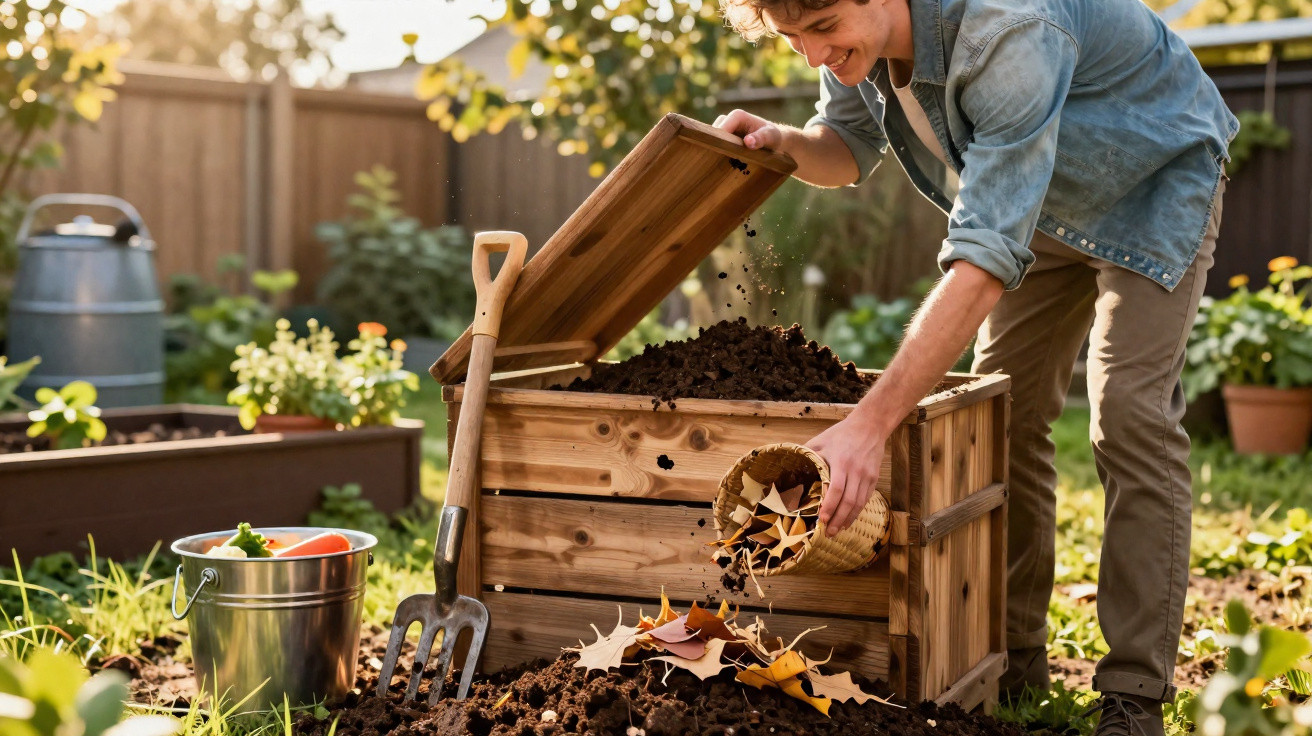
The quickest way to tackle a smelly compost pile is to introduce air and add “browns”. Browns are dry, carbon-rich materials, including shredded cardboard, fallen leaves, straw, ripped-up egg boxes and paper towels free from chemicals. They work both as a sponge and as a supporting framework.
Take a garden fork, broom handle or another robust tool. Open up the heap, mix material from the edges towards the centre and separate the wet clumps. Next, add browns in layers, as though making lasagne: one layer of smelly greens followed by a generous scattering of browns. Go heavier on the browns than you think you need.
That harsh smell should start to ease within a day or two. By doing this, you are supplying the microbes with oxygen and a more balanced food source. With the right mixture, they work more efficiently, more quickly and more cleanly.
After that, focus on prevention rather than rescue. Whenever you add kitchen scraps, cover them with a similar layer of browns. Keeping a small box or bag of shredded cardboard or dry leaves beside the compost bin makes this effortless. Even one handful at a time has an effect.
Do not be too hard on yourself. On a wet Tuesday evening, few people want to stand in the garden fussing over ratios and flawless layers. Let’s be honest: nobody really does that every day. The aim is not perfection, but a loose routine that lets the heap breathe and prevents your garden smelling like an abandoned skip.
Keep an eye out for warning signs: a glossy, slimy top layer, swarms of fruit flies or puddles around the base. These are early indications that “we’re getting smelly again”. Mix it, add browns and, if it is extremely wet, leave the lid slightly open for a while. Small actions can deliver major results.
“Think of compost like baking bread,” says one long-time allotment holder in Leeds. “Too wet, it’s a mess. Too dry, nothing happens. Somewhere in the middle, with a bit of air, and suddenly it all comes together.”
When your nose begins to object, this straightforward mental checklist can help:
- Does the heap appear slimy or saturated? Add browns and loosen it up.
- Does it smell strongly of ammonia or urine? You have too many greens, so add extra dry material.
- Is it compressed like a dense cake? Break it apart to create pockets of air.
- Does it contain cooked food, meat or dairy? Take out what you can; these should go in food waste collections, not your heap.
- Has it been raining for several days? Put cardboard or an old lid over the top to stop it becoming soup.
Living with your compost, not fighting it
After bringing a smelly heap back under control, your perspective changes. Rather than viewing it as a fixed container of rubbish, you begin to see a slow, breathing creature in one corner of the garden. That shift makes it easier to persevere when it looks untidy or fails to behave as neatly as the attractive diagrams suggested.
On a mild evening, you lift the lid and a little steam drifts upwards. It no longer smells of bin juice, but of a damp woodland trail. The centre feels warm when you prod it. Its outer edges remain slightly lumpy, yet they are getting there. You scatter a few more strips of cardboard over the newest banana skins and feel unexpectedly pleased.
We do not often discuss the emotional element of this. On a busy, somewhat chaotic planet, there is something reassuring about watching yesterday’s leftovers slowly become tomorrow’s soil. No app, password or subscription is required. Just time, microbes and a little gentle care whenever you remember.
That is the point: the nose knows. A terrible compost smell is not a judgement on your abilities. It is simply a prompt to adjust the balance, add air, put in a layer of browns and continue. On a good day, you may even find yourself opening the lid just to inhale that faint, earthy evidence that something is quietly recovering in a corner of your garden.
| Key point | Detail | Benefit for the reader |
|---|---|---|
| Smell is a signal | Rotten egg or ammonia smells indicate too little air and too many “greens” | Lets you diagnose the issue in seconds, without tools |
| The winning combination: air + browns | Turning the heap and adding dry material often stops the smell within 24–48 h | Provides a simple, immediate way to save compost that has gone wrong |
| Small actions, not perfection | Rely on realistic habits instead of “ideal” heap management | Makes composting sustainable, even when time or mental energy is limited |
FAQ:
- Why does my compost smell like rotten eggs? That sulphur-like smell usually means the pile has gone anaerobic. There’s not enough air inside, so different microbes take over and produce hydrogen sulphide. Turn the heap, break up clumps and add plenty of dry browns to bring oxygen back in.
- How long does it take for a smelly compost pile to stop stinking? Once you add browns, improve drainage and mix in some air, most bad odours fade within a day or two. Heavier, very wet piles can take up to a week to fully reset, but you should notice a clear improvement quickly.
- Can I still use compost that has smelled bad? Yes, as long as you give it time to finish breaking down and lose the smell. Let it dry a bit, keep turning it now and then, and wait until it looks like dark, crumbly soil with a neutral or earthy scent.
- What should I stop putting in my compost to avoid bad smells? Avoid meat, fish, dairy, oily foods and large amounts of cooked leftovers. Go easy on huge loads of fresh grass or very wet kitchen scraps unless you have lots of dry browns ready to balance them.
- Do I really need to turn my compost regularly? Turning helps, but it doesn’t need to be a strict schedule. Stir it when it smells, looks slimy or seems to stall. Many home composters get decent results by turning it only when something feels off.

Comments
No comments yet. Be the first to comment!
Leave a Comment