
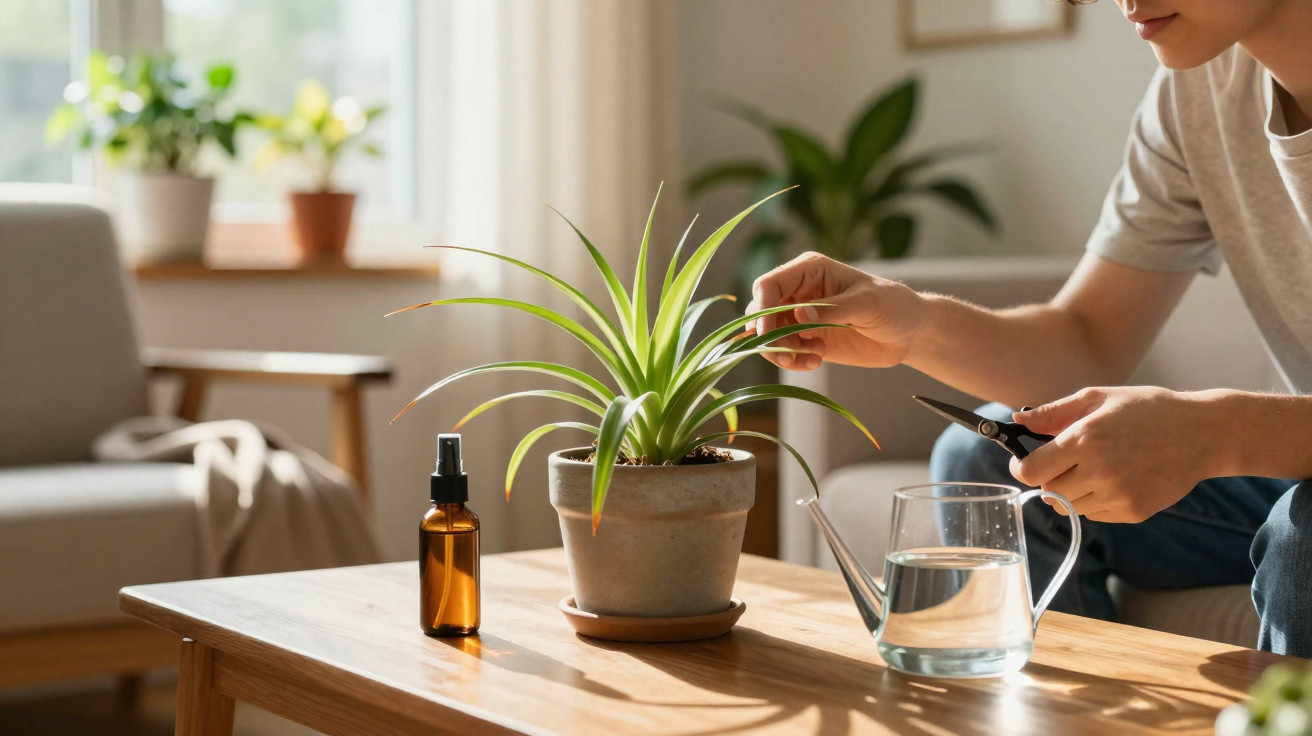
The first time I noticed brown tips on a spider plant, I reacted like any devoted plant owner: I blamed the shop. It hung in my kitchen window, its leaves curving like a miniature green fountain, until one morning I found crisp, tea-coloured edges looking back at me. I sprayed it, spoke to it, moved it around and even put on a podcast for it. Nothing helped. The brown patches simply spread inwards, like scorched paper.
Then a friend came over, took one look and said, almost casually: “Oh, you’re overloving it.”
That comment hurt more than the damaged leaves.
We tend to treat spider plants as though they are leafy children, assuming that more attention automatically means better care. But what if brown tips are not an accidental blemish, but a blunt warning that we have got the whole idea of being a “good plant parent” badly wrong?
The sort of warning that is impossible to fake.
Brown-tipped spider plants: the quiet verdict on your plant care
Walk into almost any city flat and you will probably see the familiar picture: a spider plant perched on a shelf or suspended from a macramé hanger, with baby plants tumbling down like green confetti. It is the classic first houseplant, the beginner’s favourite and the one people insist is “impossible to kill”.
Look more carefully, though. The ends of those pale, sweeping leaves are often browned and crisp, like toast left in too long. The plant may be surviving, but it is also quietly signalling that something in its small environment is not right.
That is what many of us overlook. We mistake survival for success. The brown tips tell a different story.
A reader once sent me an image of her indoor plant collection. There were plants from wall to wall, softened daylight and a fashionable watering can sitting on the coffee table. Her spider plant, placed proudly at the centre, was beautifully symmetrical and had sharply crisp brown edges on every side. She wrote, “I don’t get it, I baby this one the most.”
We went through her habits together. She misted it every day, used tap water straight from the tap, watered “a little bit” nearly daily and added fertiliser every weekend, because that is what a committed plant owner does, isn’t it?
In plant terms, every one of those affectionate habits was slightly misguided. Nothing extreme or cruel, simply wrong enough for the leaf tips to reveal it.
Brown-tipped spider plants can feel like a performance appraisal stuck to the fridge. They respond to the things you may regard as care: excess fertiliser, hard tap water, compost that never has the chance to dry and air that is drier than it appears. All of these factors drive salts and moisture towards the leaf edges, where the plant cannot cope.
The outcome is gradual dehydration at the very tips, even as the rest of the leaf acts as if nothing is wrong. Since the plant remains alive, it is easy to think you are doing everything brilliantly.
Honestly, hardly anyone follows houseplant advice perfectly every day. We estimate, improvise and copy what we have seen on Instagram. Brown spider plant tips are the evidence.
How to care for your spider plant as a plant, not a pet
To keep the leaves fresh and green, the first step is wonderfully straightforward: water less frequently, but water properly. Spider plants prefer a thorough soak followed by time for the compost to breathe. Allow the top few centimetres of compost to dry before you reach for the watering can again.
When it is time to water, do it generously. Soak the compost until water flows from the drainage holes, then leave it alone. Avoid tiny daily “sips” and anxious top-ups. This soak-then-dry approach helps prevent mineral deposits building up in the leaf tips.
It is a move away from relentless helicopter parenting and towards a dependable, steady routine.
Often, the problem behind brown tips is the water itself. Spider plants are particularly sensitive to fluoride and salts in tap water, especially in urban areas. That attractive trailing plant in your sitting room may be suffering quietly at the edges because of what comes out of the tap, rather than because you are doing anything obviously “wrong”.
Try a practical experiment: for one month, use filtered water or leave tap water to stand overnight before watering. Skip the fertiliser and avoid a misting frenzy; simply use gentler water. Many plant owners find that browning slows and that new leaves appear much cleaner.
Most of us know that moment when we realise our “extra care” has actually been troubling the poor plant for months.
Overfeeding is another easily missed cause. Spider plants do not require a weekly feast of plant food. Feed them at half strength once a month during spring and summer, then stop. Too much fertiliser forces salts into the compost, and leaf tips are usually the first place the damage becomes visible.
“People assume a thriving plant needs more of everything,” says a houseplant grower I spoke with. “Spider plants want balance, not spoiling. When the tips turn brown, they’re not being dramatic. They’re just telling the truth.”
- Use filtered or rested tap water to limit the fluoride and salts reaching the leaf tips.
- Water thoroughly, then allow the compost to dry partly, rather than giving it “just a little” every day.
- Do not over-fertilise; feeding once a month during the growing season is enough.
- Cut away brown tips with clean scissors, following the leaf’s natural outline.
- Provide bright, indirect light and an uncomplicated routine instead of constant intervention.
From brown-tipped spider plants to a more relaxed routine
Spider plants have become an unwanted mirror. They sit in the corner, quietly taking in our good intentions, our anxiety and our need to manage every detail, before turning it all into those crisp, accusing edges. Once you treat them as feedback rather than failure, your relationship with the plant changes.
You begin watering deliberately instead of anxiously. Rather than pursuing perfection, you prioritise consistency. A spider plant does not require a perfect parent; it simply needs you to make a little less noise with your care.
There is an unexpected comfort in recognising that a few brown tips are not a moral verdict. They are a history recorded on the leaves: tap water, winter central heating and that month when you became too enthusiastic with fertiliser. If you change your habits now, new growth can emerge cleaner, softer and more assured.
The next time you walk past your plant and spot those rough edges, try not to spray it or fuss over it. Check the compost. Consider when you last fed it. Think about the water you use. Then do slightly less, but do it more effectively.
Your plant will show you when you are moving in the right direction. It has been doing so all along.
| Key point | Detail | Value for the reader |
|---|---|---|
| Watering rhythm | Thorough watering followed by partial drying, rather than daily sips | Limits salt build-up and brown tips while making the routine easier |
| Water quality | Filtered or rested tap water containing fewer chemicals | Kinder to sensitive leaf edges and supports cleaner new growth |
| Fertiliser control | Light monthly feeding during the growing season only | Avoids chemical scorch at the tips and keeps growth balanced |
FAQ:
- Question 1: Why do the tips of my spider plant go brown while the rest of the leaf stays green?
- Question 2: Can I trim off brown spider plant tips, or would that damage the plant?
- Question 3: Does a spider plant with brown tips mean that it is dying?
- Question 4: Which water is best for preventing brown tips on a spider plant?
- Question 5: How frequently should I fertilise a spider plant to prevent browning?

Comments
No comments yet. Be the first to comment!
Leave a Comment