
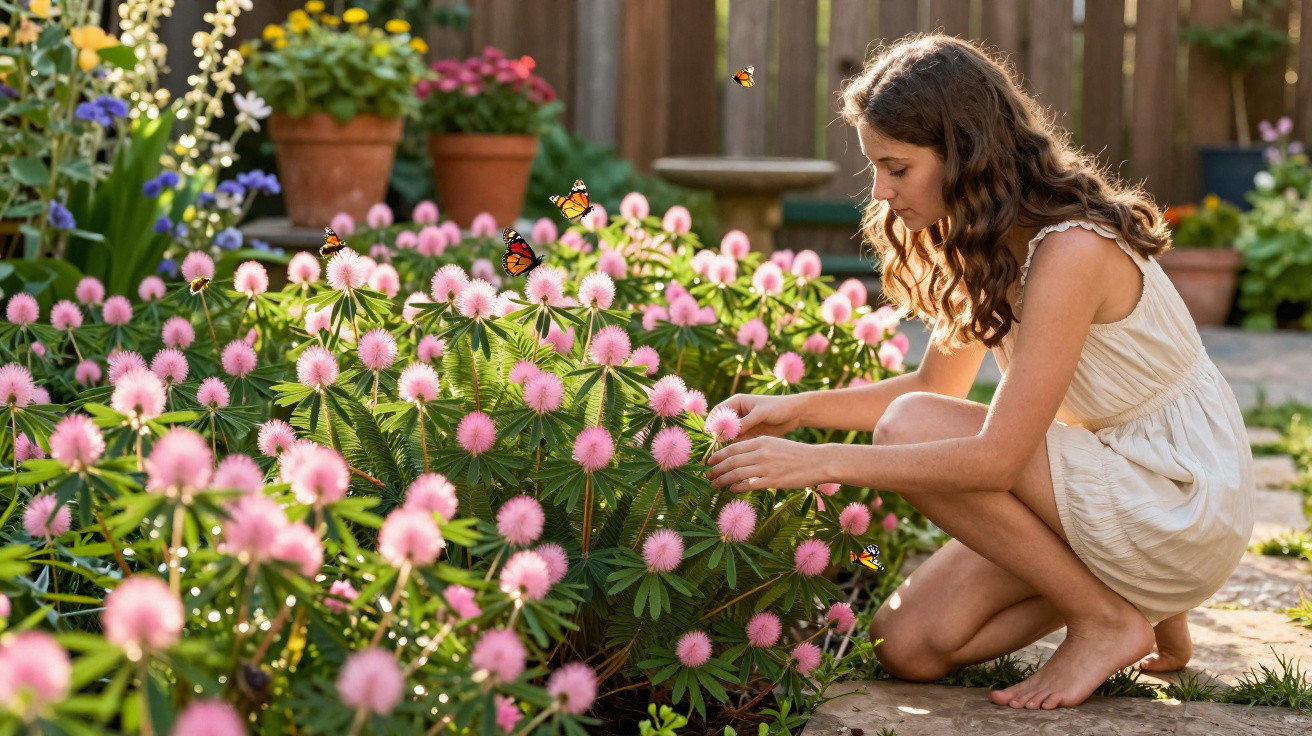
More and more home gardeners are swapping a closely mown, thirsty grass lawn for a low carpet of flowers that spreads at speed and brings insects back in. One little-known relative of mimosa is becoming a quiet favourite: it can replace a traditional lawn in the right spot, cuts water use, needs very little feed - and turns the area into a lively butterfly meeting place from spring through to autumn.
From parched lawn to flowering carpet: what makes this ground cover so special
The botanical name may sound a bit unwieldy, but the effect in the garden is genuinely striking: Mimosa strigillosa, often sold as “sunshine mimosa”, forms a dense, low mat of fine, pale green foliage. Its stems run along the surface and keep branching, gradually knitting together until the ground is fully covered.
Depending on conditions, the mat stays roughly 8 to 15 centimetres tall - visually it reads like an ultra-fine, soft mini-meadow. The real trick is the flowering: from spring to autumn, countless spherical, pink pom‑pom blooms rise above the leaves. They look a little like tiny powder puffs and wash the ground in a gentle rosy hue.
"Four to five young plants are enough to cover around 18 to 28 square metres in only about six months - provided they go into the ground in spring."
That puts it in direct competition with the classic ornamental lawn: where grass demands frequent mowing, watering and feeding, this ground cover largely looks after itself once it has settled in - and it supports far more life.
A magnetic draw for butterflies and other insects
Those pink flowers are not just decorative; they offer plenty of nectar. That makes the plant attractive to a wide range of pollinators, especially solitary bees and day-flying butterflies. For one particular butterfly species, the benefit goes further still: the caterpillars deliberately use the leaves as a food source.
If you take a closer look, the contrast with a sterile lawn is obvious: butterflies flutter above the mat, bees sit on the blooms, and small caterpillars move through the foliage. Children can watch the whole life cycle - from egg to caterpillar to butterfly - right outside the door, without ordering a “butterfly rearing kit” online.
"A few nibbled leaves are part of the deal - they show the garden is genuinely serving as habitat, not just decoration."
So if you used to reach for a spray bottle at the first sign of a hole in a leaf, this is a shift in mindset. This ground cover copes very well with grazing damage. It grows low and dense, and it rebounds quickly - exactly why it suits more wildlife-friendly gardens in residential areas.
Where this ground cover thrives
Mimosa strigillosa originates from warm parts of North and South America. As you would expect, it prefers mild winters and lots of sun. Its hardiness roughly corresponds to USDA zones 8 to 11. In the UK, that means only certain locations are realistic.
- Climatically suitable areas: mild coastal districts, sheltered city centres, vineyards and other low-frost microclimates
- Position: full sun to light partial shade, ideally protected from wind
- Soil: sandy to sandy-loam, free-draining, kept lightly moist at the start
- Use: ornamental areas, along paths, edging for patios - not as a heavily used play lawn
In places with harsher winters, the growth above ground can be cut back hard by frost or die off. In milder spots, the deep root system can still send up fresh growth in spring. If you garden on the edge of what’s feasible, it can be worth trialling it in a protected position, such as against a south-facing house wall.
Low effort instead of high maintenance: how to switch from grass successfully
If you want to replace an existing lawn, it is usually best not to redo everything at once. Starting with smaller sections - for example along a path or by the patio edge - lets you learn what works without rebuilding the entire garden.
Step by step to a flowering area
- Remove the turf thoroughly from the target patch, or dig it over deeply and take out remaining roots.
- Loosen the soil, pick out stones and persistent weeds, and level any major bumps and hollows.
- On heavy ground, work in sand or fine gravel so water drains more freely.
- Plant in spring in a loose grid; the ground cover will fill the gaps on its own.
- Water regularly in the first weeks until the runners are clearly spreading.
Once it is established, the workload drops sharply. The plant tolerates short dry spells and usually only needs extra watering during very hot, prolonged dry summers.
Feeding, cutting and keeping it in check
As a legume, Mimosa strigillosa fixes its own nitrogen through bacteria in root nodules. That keeps its nutrient requirements low. If the mat shows noticeably yellow leaves, a slow-release fertiliser with low phosphorus is usually enough.
Light foot traffic is fine. If you want to walk across it, you can mow it occasionally, but not as close as a lawn. A higher mower setting is sufficient to tidy the surface without removing all the flowers.
The plant spreads quickly, but it is easy to control. Where you do not want it, you can restrain it by cutting a narrow spade trench or simply trimming back along the edge.
More life in the garden: combinations for butterflies and bees
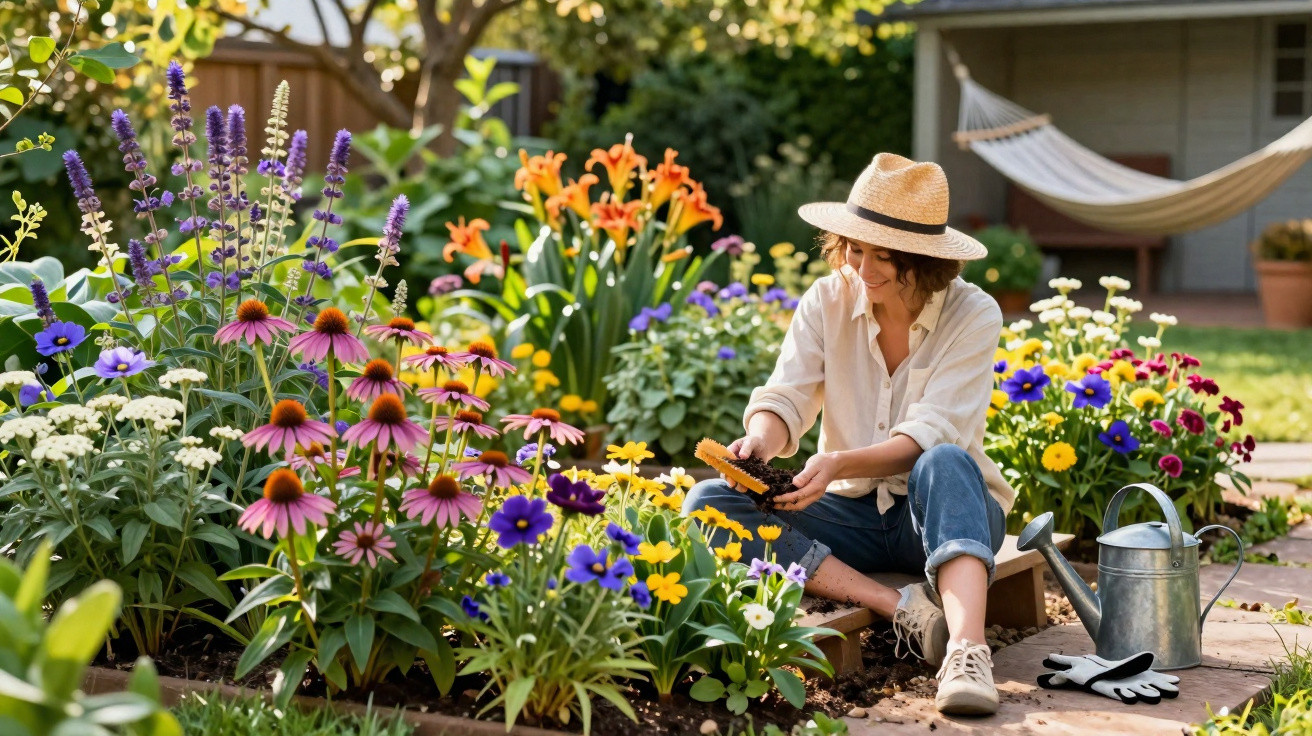
This ground cover becomes especially interesting when paired with other nectar-rich perennials. That way you create a colourful “insect avenue” instead of a flat, uniform lawn. Drought-tolerant species that are equally popular with pollinators work particularly well.
Examples of suitable companion plants:
- Lavender: loves sun and dry soils, and draws day-flying butterflies and bees in huge numbers.
- Scabious: airy blooms in blue, pink or white, with a long flowering season.
- Catmint: tough and long-lived, ideal along path edges.
- Sage species: valuable nectar source, adding height and structure above the low mat.
"If you avoid chemical plant protection products, you create a true oasis for insects - with food, shelter and breeding space in the smallest area."
Particularly in densely built-up neighbourhoods, a single garden can become an important stepping-stone habitat, helping connect other green “islands” nearby.
What gardening beginners should also know
The term “ground cover” refers to plants that spread low and form closed mats in a short time. By doing so, they suppress many weeds and protect soil from drying out and erosion. Mimosa strigillosa is one of the more vigorous ground covers, but it remains manageable.
If you keep pets, you may wonder about tolerance and safety. For this species there is still limited data available in Europe; so far, no notable issues are known. If in doubt, watch your animals and speak to your vet if you notice unusual chewing behaviour.
For climate-adapted gardening, the appeal is clear: after the rooting-in phase, this ground cover needs far less water than a conventional lawn. In regions facing increasingly dry summers, it can noticeably reduce garden water use - especially if you do not convert everything, but focus on sunny areas that previously required heavy irrigation.
If you live in colder areas, you can still take inspiration from the idea and choose similar, more frost-hardy ground covers with strong insect value, such as thyme species or low-growing cranesbills. The principle stays the same: move away from a “green carpet without life” towards a flowering mosaic where butterflies, solitary bees and other wildlife have a reliable place.



Comments
No comments yet. Be the first to comment!
Leave a Comment