
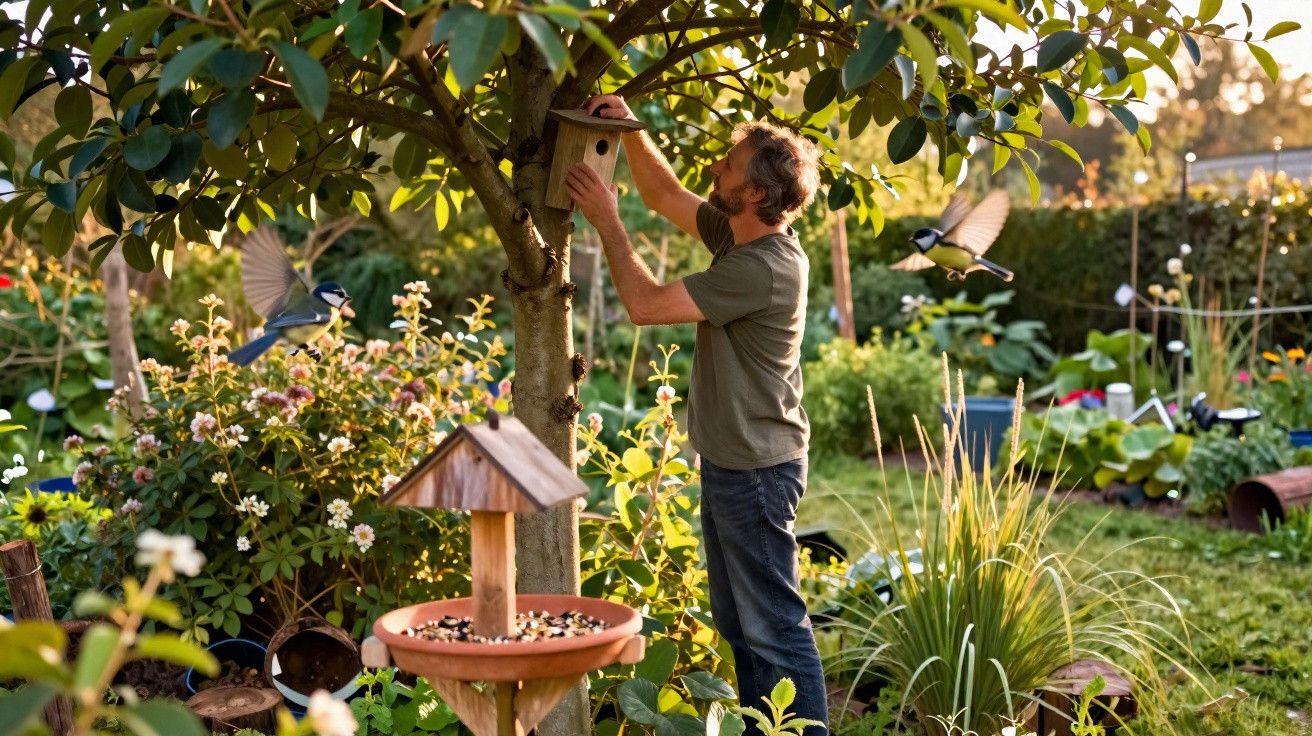
Something not adding up?
Plenty of keen gardeners pour time, money and care into their plot, expecting a little haven filled with birdsong - only to realise, disappointed, that tits hardly show up at all. It’s rarely down to luck. In most cases, it comes down to small choices that seem harmless to us, but make the difference between a safe home and a place they avoid.
What tits actually need – and what picture-perfect gardens often lack
Tits aren’t looking for a show garden. They want a secure place to raise young, with food close by and as little disruption as possible. Three things matter most: safety, food and peace.
- Secure cavities rather than open nests - they are cavity nesters.
- Plenty of insects nearby, not a “green desert”.
- Quiet corners without constant disturbance from people or pets.
One attractive tree on its own won’t do the job. If there’s no natural cavity in it - and no suitable nest box installed - they will simply move on. And if the area around it supports hardly any insects, breeding there isn’t worth the effort.
"A garden can look perfect to human eyes - but for tits, what matters is whether it feels like a safe, well-stocked fridge."
Noise is another major factor. Frequent visitors, children playing right beside the nest box, barking dogs, or a lawnmower running during the breeding season can mean tits don’t start building at all - or they abandon the brood.
Common garden mistakes that reliably drive tits away
A lot of what proud garden owners aim for can be off-putting to tits. The most typical missteps include the following.
Too clean, too tidy, too “perfect”
If you cut down every dried stem, remove every dead branch fork and clear away every last leaf, you strip out the very habitat wildlife depends on.
- Removing all leaf litter - countless insects and larvae overwinter there, and in spring that food is missing for tits.
- Cutting back old wood aggressively - deadwood provides hiding places, insect breeding sites and, over time, cavities.
- A flawless ornamental lawn - nutrient-poor meadows or “wild corners” provide far more food.
The end result is a garden that looks neat, but feels empty and lifeless to tits.
Hitting every crawling thing with chemicals
Pesticides, insect killers and so-called “pest-free” products almost always wipe out the insects tits rely on. During breeding season in particular, they need huge numbers of caterpillars, beetles and spiders.
"Fewer insects means for tits: not enough baby food - the garden is ruled out as a breeding site."
Treated ornamental shrubs and fruit trees are also an issue. You often can’t see the products on the plant, but they still disrupt the food chain.
The wrong nest box in the wrong place
Many people mean well and put up a colourful kit birdhouse - then wonder why it stays empty. There are several common reasons:
- The entrance hole diameter doesn’t suit the species (too large or too small).
- The box is mounted too low - easy pickings for cats and martens.
- It’s installed right by the patio or above the barbecue area.
- It sits in full sun all day or in constant wind.
Tits assess nesting sites carefully for risk. One bad incident - such as a box being opened or a curious child’s hand reaching in - can be enough for them to avoid the spot long-term.
Pets and other predators
Free-roaming cats, martens, predatory magpies and even hungry squirrels are constant threats. If predators are a regular sight in the garden, tits quickly label the territory as dangerous.
The trees and structures tits love
Planting with intent can make a garden far more appealing to tits over time. Particularly attractive options include:
- Oaks - extremely rich in insects, making them true “food trees”.
- Old apple and pear trees - often with natural cavities and cracks.
- Pines and spruces - provide shelter, perches and good visibility.
- Birches and willows - with distinctive bark and their own insect communities.
Variety is what counts. Monocultures such as thuja hedges and cherry laurel may stay green year-round, but they offer very little for insects and birds. A mix of native trees, shrubs, hedging and some deadwood, by contrast, creates a small ecosystem.
"A structurally rich garden with hedges, old trees and a bit of ‘mess’ feels to tits like a whole block of flats with a supermarket and a playground."
A practical plan: how to make your garden tit-friendly
To attract tits, you don’t need to redesign everything. Small, well-chosen changes are often enough.
Choosing and hanging nest boxes correctly
Different tit species need slightly different dimensions. Here are the key figures at a glance:
| Species | Entrance hole | Height above ground | Direction |
|---|---|---|---|
| Blue tit | approx. 28 mm | 2–3 m | East or south-east |
| Great tit | approx. 32 mm | 2–3 m | East or south-east |
The box should be hung with a slight forward tilt so rainwater can drain away. Put it somewhere calm - not right next to the swing, the patio door or the barbecue.
Spacing between multiple boxes matters too, because tits are territorial. Don’t hang them close together; leave a few metres between them, or place them in different parts of the garden.
Combine food, water and security
Near the nesting spot, every resource helps. Useful additions include:
- A shallow water point or bird bath, cleaned regularly.
- Sunflower hearts and fat balls in winter and early spring.
- Poison-free areas with leaf litter and perennial stems for insects.
- A predator guard collar or a smooth sleeve on the nest-box post.
In spring, avoid using any poisons in the garden wherever possible. If you tolerate caterpillars on roses and fruit trees, you’re effectively feeding a whole tit family at the same time.
Small rules with a big impact
- Clean out the nest box only once a year, in autumn.
- Don’t cut shrubs and hedges back hard in spring.
- Keep cats indoors during breeding season, especially morning and evening.
- Where possible, schedule mowing and noisy jobs outside the breeding months.
These habits cost little, but they bring calm to the garden - and that calm is exactly what birds need when raising chicks.
Why tits are so valuable in the garden
Tits are more than colourful visitors at the feeder. They work hard every day as natural pest control. A single tit family can consume thousands of caterpillars and other insects during breeding season, taking pressure off fruit trees, ornamental shrubs and vegetables without any chemicals.
"Supporting tits is an investment in your garden’s stable, natural defences."
They also act as a living indicator of how healthy a garden truly is. A diverse mix of birds, insects and plants suggests a robust, resilient system. Where there’s only lawn, paving and evergreen exotics, they usually stay away.
Practical day-to-day tips and common stumbling blocks
Two things often cause frustration: unrealistic expectations and impatience. Tits need time to notice, explore and trust new features. A newly installed nest box is often unused in its first year even if it’s perfectly positioned - and that doesn’t mean it’s unsuitable.
Keeping a simple “diary” can help: jot down when tits appear, where they forage, and which trees they visit. It quickly becomes clear which areas they prefer and where a nest box is most likely to succeed.
One more important point: not every garden can offer everything. In densely built-up inner cities, noise and cats can sometimes make successful breeding difficult. Even so, every improvement helps - even if only the feeder ends up being a regular stop.
If you build up more structure, more insects and more sheltered spaces step by step, you’ll move closer to what tits really want. And one morning you’ll hear that bright, familiar “zi-zi-baaah” in the air - a sure sign the garden works not only for people, but for its feathered residents too.
Comments
No comments yet. Be the first to comment!
Leave a Comment