
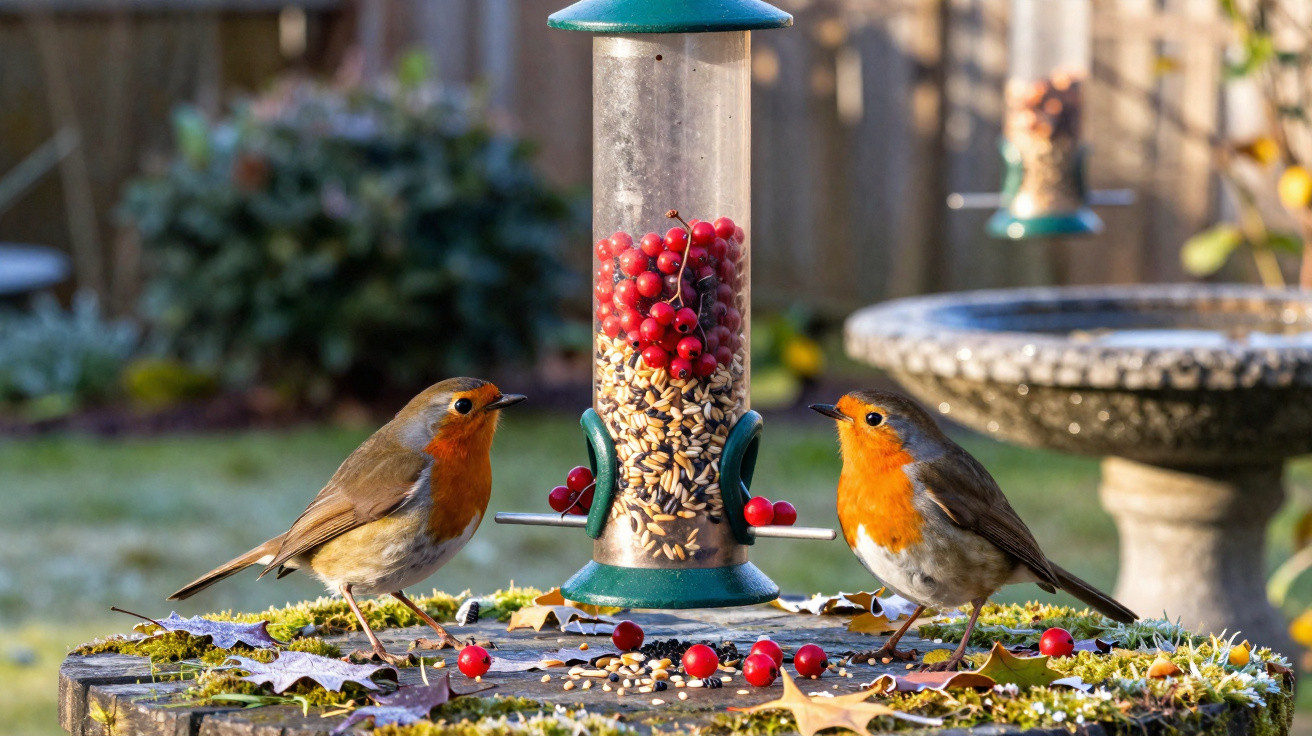
On a bitter January morning - the sort where your breath lingers like steam - I watched two robins completely lose their composure over one tight cluster of glossy, bright red berries. The seed feeder was packed. Fat balls swung from nearby branches. Still, both birds kept shooting back to that shining holly sprig, wings splayed, chests thrust forward, jabbing at one another like feathered prizefighters.
Eventually one snatched a berry and shot off to the fence, trembling and livid, as though it hadn’t just “won” a quick bite.
It looked far less like a tranquil winter tableau and far more like a pub scrap in miniature.
Those scarlet berries photograph beautifully for Instagram.
Out in the garden, though, they can be quietly turning our most familiar visitors into pint-sized bullies.
The pretty winter fruit that’s stirring up ugly robin fights
Each winter, gardens across Britain suddenly glow with picture-perfect bunches of red berries. Holly, cotoneaster, pyracantha and rowan shift from modest green to instant festive display - no fairy lights required. Robins clock them well before we do.
They arrive early and stake a claim on berry-heavy shrubs as if they’ve been paying the mortgage for years. The singing may sound lovely, but it’s largely a warning. Any other robin that dares to drop in too close gets met with the full routine: dive-bombing, wing-flicking, and sharp little kicks from tiny claws.
From across the lawn it can seem charming; from a few steps away, it’s straight-up territorial warfare.
Speak to any birdwatcher who’s stood in the cold for more than five minutes and you’ll hear the same tale.
One London gardener described seeing a single male robin “patrol” a pyracantha hedge all December. He drove off tits, blackbirds, even another robin twice his size, culminating in a chaotic mid-air tumble of feathers. That spiky shrub, heavy with orange-red berries, had turned into his private supermarket - and he guarded it like an overtime security guard.
Wildlife cameras have even filmed robins pecking and striking at their own reflection in windows above berry bushes, apparently mistaking it for a thief making off with their stash. The fixation can look almost absurd.
Yet there’s a hard, simple logic behind the drama. In winter, berries are high-energy sugar hits at a time when worms are buried, insects are scarce, and daylight feels brutally short. A dependable berry bush can be the difference between getting through a cold snap - or quietly not waking up.
So the robin that controls that fruit supply gains a real edge. Nature doesn’t hand out prizes for being “nice”; it favours whoever keeps hold of the calories. That’s the moment the robin’s Christmas-card reputation collides with the truth of a fiercely territorial survivor.
The contentious bit isn’t the berries themselves. It’s what happens when so much food is concentrated on a handful of plants - shifting robin behaviour from wary neighbours to relentless bouncers.
How to feed robins without turning your garden into a war zone
You can enjoy berry-rich shrubs and still keep something resembling peace. The key is to break up the “buffet” so one plant doesn’t become the golden ticket. Think of your garden as a tiny winter high street rather than a single mega-supermarket.
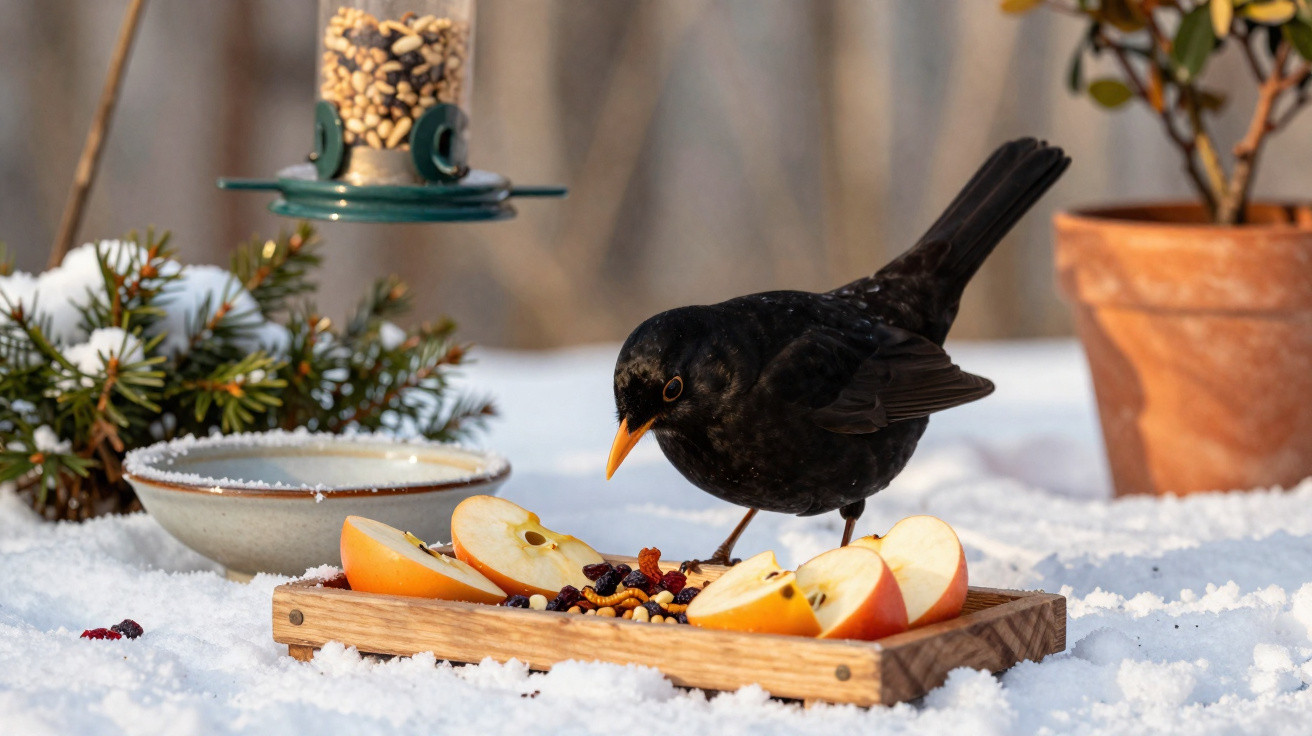
Try planting or placing food in multiple areas: a berry bush in one corner, a seed feeder on the far side, mealworms on a table, a suet block near a hedge. With that layout, even a determined robin can’t dominate everything at once.
It also helps to shift extra food to a different spot every few days. That gentle rotation muddles their mental map a little. They’ll still defend patches - just not every patch.
Many of us accidentally set up the perfect storm. We hang three feeders right beside the showiest holly tree, post the snowy photo online, then wonder why the robin starts behaving like a tiny gangster. Food is concentrated, cover is excellent, and the bird’s brain flips into “this is my kingdom” mode.
Spreading things out sounds almost laughably simple, but it changes the atmosphere fast: less queueing, fewer aerial collisions, more quiet perching and quick snatches of food. And yes - almost nobody rearranges feeders every single day.
Still, nudging the layout once or twice can settle the garden far more than you’d think.
“I used to think my robin was just ‘grumpy’,” says Clare, a wildlife volunteer in Devon. “After I moved the mealworms away from the big cotoneaster, he stopped slamming into every visitor. He still sings from the top, still guards it, but the garden doesn’t feel like a battlefield anymore.”
- Set up at least two distinct feeding zones, ideally separated by shrubs or pots.
- Provide more than berries: mealworms, fat balls and seed mixes help spread demand.
- Don’t hang all feeders right next to the flashiest berry shrub in your garden.
- Keep a few “wild” corners so timid birds can feed out of sight of the resident robin.
- If chasing becomes constant, move one food source a few metres to cool things down.
A gentler winter for the bird on your Christmas card
Walk through any frosty park and you’ll see them: robins flicking along hedges, eyes bright, watching us almost as closely as we watch them. Their charm is hard to resist. But behind that neat red breast is a bird living on a knife-edge of temperature and daylight, clinging to any food source it can control.
Once you’ve watched a robin rabbit-punch a rival off a berry-laden twig, it sticks with you. The cosy myth slips a little - and in its place you get something better: a clearer, more honest respect for what they’re up against.
That supposedly “controversial” burst of winter colour - the berries we love to photograph - sits right at the centre of it all. Not good. Not bad. Just powerful: a magnet that brings behaviour into sharper focus.
Pack too much food around it and you turn the conflict dial up. Share resources more widely across a garden and the stakes drop. The robin doesn’t transform into an angel overnight; it simply gets to be what it is - a small, tough bird trying to secure breakfast without losing its head.
There’s something strangely reassuring in that. You shift a feeder, plant a second shrub, leave a corner messy instead of pruning it into perfection, and the winter drama softens by a notch. We’ve all had that moment where a tiny change in our space changes the feel of everything that visits it.
Next time your “friendly” robin is glaring from the holly, it might be worth looking twice at those berries. Are they just decoration - or the spark behind your garden’s quiet power struggle? And if you’ve noticed your own robin turning into a feathered bouncer, your story may be exactly what someone else needs to hear.
| Key point | Detail | Value for the reader |
|---|---|---|
| Winter berries drive territorial behaviour | High-energy fruits such as holly, pyracantha and cotoneaster become crucial food hubs in the cold months | Explains why “cute” robins can suddenly behave aggressively |
| Food concentration fuels conflict | Positioning feeders and treats right beside berry shrubs creates high-stakes hotspots | Offers a practical lever to reduce robin fights in your own garden |
| Spread resources, calm the mood | Several feeding zones and a mix of foods reduce pressure on any single plant | Encourages more relaxed birdwatching and healthier winter visitors |
FAQ:
- Question 1 Are certain berry plants worse than others for triggering robin aggression?
- Question 2 Can I stop a robin from attacking other birds completely?
- Question 3 Will removing berry plants solve the problem?
- Question 4 What should I feed robins in winter that doesn’t cause as many fights?
- Question 5 Is this behaviour harmful to the robins themselves?


Comments
No comments yet. Be the first to comment!
Leave a Comment