
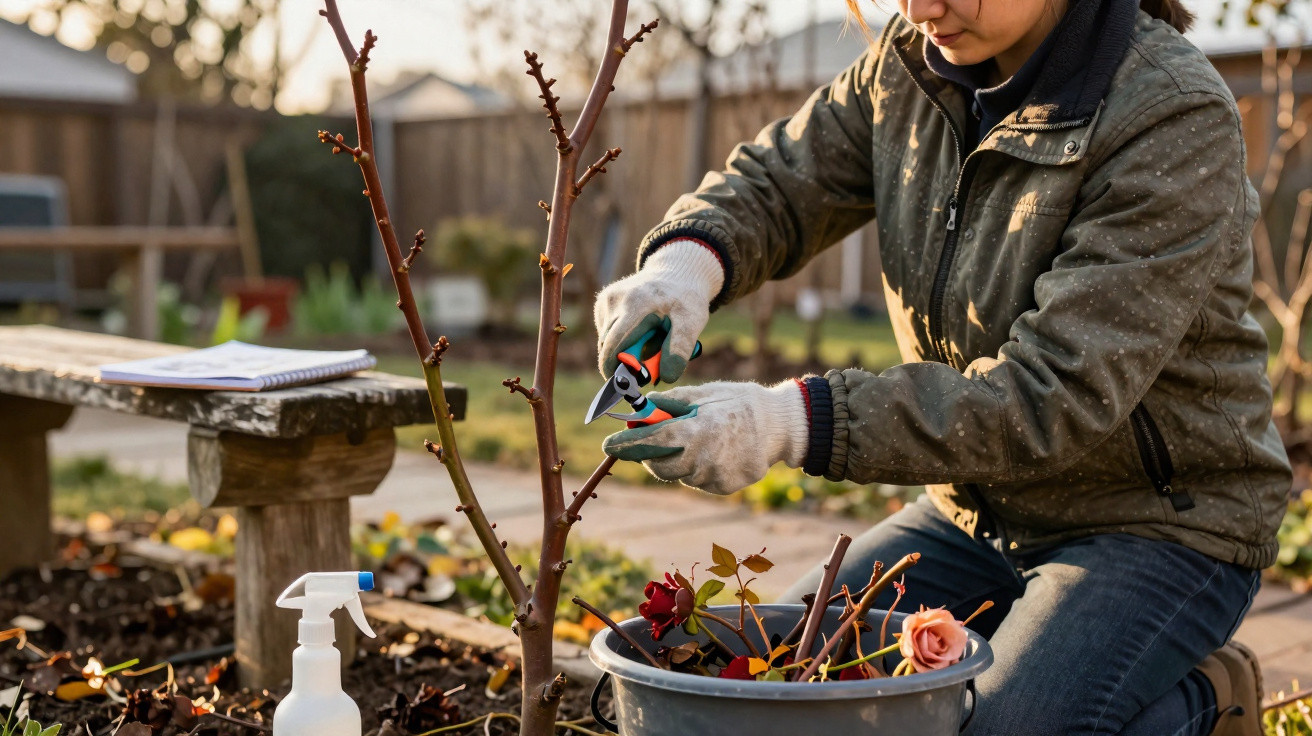
Those dark speckles and chalky white films on rose leaves almost never arrive without warning. The decisive fight is usually lost much earlier, when the garden seems dormant and most people stop looking.
Why your roses keep getting sick year after year
For anyone who grows roses, black spot, rust and powdery mildew can feel inevitable. You try sprays, you pick “resistant” cultivars, you water carefully-yet the problems keep circling back. In many cases, it comes down to one straightforward cause: still, damp air sitting inside the bush.
When growth is thick and jumbled, fungal spores get exactly what they want. Stems scrape against each other, small shoots clog the centre, and rainwater hangs about. The plant stays wet for longer-particularly during mild winter spells followed by cold nights-so moisture lingers instead of drying quickly. That slow-drying dampness is effectively an invitation for disease.
Unventilated rose bushes hold on to humidity, turning every wet spell into a fungal growth opportunity.
Over winter, many pathogens simply persist on last season’s leaves, dead stems and shrivelled hips. Once temperatures lift and fresh foliage appears, they reactivate and spread. If the plant’s framework remains crowded, the same humid pocket forms again-and the same diseases return with it.
January: the quiet, overlooked window that changes everything
Most pruning advice focuses on late winter-often around March-when severe frosts become less likely. That timing is ideal for shaping and major cuts. However, it can distract from a subtler but highly effective task: a mid-winter sanitation tidy.
Across many temperate areas of Europe and North America, roses are in deep dormancy in January. Sap movement is minimal, buds stay tight, and the bare structure is easy to read. That visibility lets you make small, careful interventions without triggering tender new growth that could then be damaged by frost.
At this point, you are not trying to shorten every stem. You are aiming to improve cleanliness and airflow. This “winter hygiene” is about reducing disease pressure rather than controlling size.
Think of mid-winter pruning as a health check, not a haircut: you remove problems, not potential.
The winter pruning move almost nobody uses
The overlooked approach is a light, selective prune designed to bring in air and light. Many gardeners describe the target form as an “open bowl”: the middle stays relatively clear, with a few strong main canes set out like the spokes of an umbrella.
Use this straightforward order of work on a dry day:
- Begin with sharp, disinfected secateurs so you do not transfer infection between plants.
- Take out all dead wood-usually dull brown or grey, often brittle, and lifeless inside.
- Remove thin, feeble shoots in the centre that are unlikely to flower well and lack vigour.
- Cut away any stems that cross or rub, because the resulting wounds are easy entry points for disease.
Work slowly. After several cuts, pause and reassess. You should gradually notice daylight appearing through the centre. Picture a gentle breeze moving through the shrub rather than skirting around it. A common professional check is simple: a small bird ought to be able to fly through the middle without getting stuck.
This pruning is not meant to hack a rose back hard. Instead, it improves the plant’s structure. With a more open framework, rain and dew clear far more quickly in late winter and spring, and fungal spores are less able to germinate on surfaces that do not stay wet for long.
By opening the structure in January, you tackle humidity at its source and make life harder for every common rose disease.
Pruning is only half the job: what you leave on the ground fights back
It is possible to prune well and still end up with sick roses. Often the problem is right underfoot. Fallen leaves, spent blooms and dried hips around the base can hold vast numbers of spores. In effect, that litter becomes a winter refuge that fuels next season’s outbreaks.
How to clean without feeding the problem
Once you have finished pruning, bring gloves and a bucket and give the soil surface the same attention as the stems. Clear away:
- Every fallen leaf, particularly anything showing spots or mildew.
- Old petals lodged at the base or caught within the branches.
- Dry, mummified hips that are still attached to the stems.
A frequent error is to treat infected debris as a nice insulating mulch. Doing that concentrates inoculum exactly where the new leaves will emerge. Unless you have a very hot, carefully managed composting system that consistently reaches high temperatures, do not add diseased material to the compost heap.
Infected leaves and hips are not mulch; they are spore factories waiting for spring.
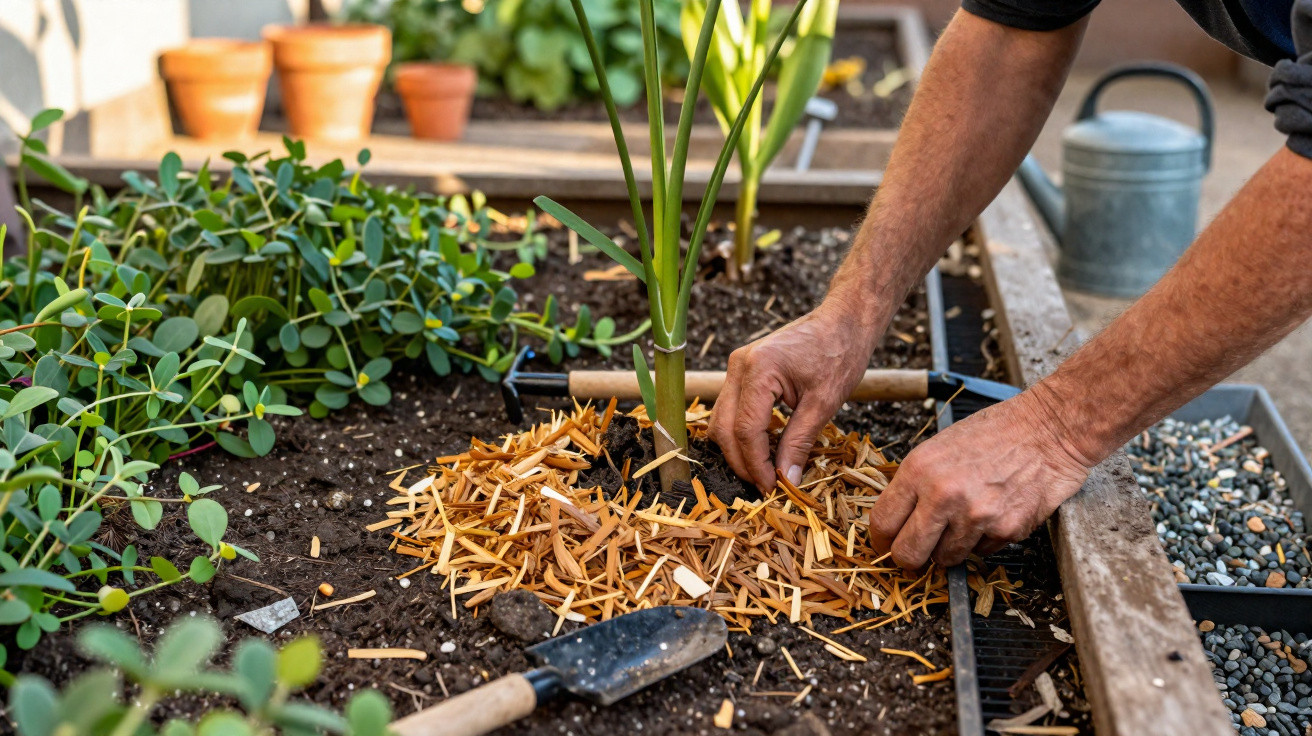
The safest option is to bag the waste for local council green-waste collection, or burn it where regulations permit. When the area is clean, you can apply a fresh, healthy mulch such as composted bark, leaf mould made from clean leaves, or well-rotted garden compost.
What a healthy winter regime does for spring and summer flowers
On a cold, overcast day, this work can feel unrewarding, but the benefits show up as soon as roses break into leaf. Better airflow and less overwintering inoculum often mean fewer applications of copper sprays and other protectants. The plant can put more energy into growth and flowering rather than constantly responding to infection.
Gardeners who adopt this January routine often describe fewer bushes stripped of leaves by July, stronger repeat flowering on modern cultivars, and a clear reduction in how often they reach for sprays.
| Without winter clean-up | With winter clean-up |
|---|---|
| Dense centre stays damp after rain | Open structure dries quickly |
| Old leaves and hips host spores | Infected debris removed from the area |
| Frequent black spot and mildew cycles | Lower disease pressure through the season |
| More reliance on sprays | Less chemical or copper use needed |
Tools, timing and small details that make a big difference
A few practical decisions can significantly improve results. Pick a dry, reasonably mild day when the plant is not frozen. Frozen canes are more likely to snap than make a clean cut. Make each cut just above a bud that faces outward, which encourages growth away from the centre.
Clean blades before you begin and between any heavily infected plants, using alcohol or a bleach solution. If you find canker or dark staining on stems, cut back until you reach healthy wood with a fresh green interior.
If you are dealing with an older rose that has been neglected, consider spreading corrective pruning over two winters. Opening a very congested shrub in one session can stress it and leave it overly exposed all at once.
Going further: supporting rose health beyond the secateurs
Winter pruning and tidying are central to preventing disease, but a few additional, low-key adjustments help as well. Feeding in early spring should be balanced to build strong, resilient leaves. Too much nitrogen pushes soft, lush growth that fungi colonise readily.
Spacing also matters. Even an extra 30 centimetres between bushes can reduce leaf-to-leaf contact and help foliage dry sooner. In dry periods, watering at the base-rather than overhead-keeps leaves drier during the growing season.
Cultivar choice plays its part too. Combining tough modern roses with a smaller number of heritage types can spread the risk. Where disease pressure is high, particularly in damp climates, a mixed planting of roses alongside perennials and shrubs can stop any one pathogen from dominating.
Using winter as a quiet planning lab
This mid-winter cut can be more than routine maintenance. It becomes a way to observe each rose’s habits. As you prune, you can note which varieties held their leaves longest, which dropped foliage early, and which showed the worst spotting.
Those notes make it easier to plan changes in the border-whether that means replacing a problem plant or simply moving it. A rose that turns into a disease magnet in a shaded corner may do far better in full sun with freer airflow.
Some gardeners also use the moment to visualise the season ahead: where underplanting with lavender or catmint might improve air movement, where a simple stake could guide an unruly cane, and where adding one more rose would overcrowd a tight border. Done thoughtfully, winter pruning shapes not just the shrub, but the amount of work you will face for the rest of the year.




Comments
No comments yet. Be the first to comment!
Leave a Comment