
The first rumble of thunder sounded just as she set down her empty mug. A sharp gust skimmed across the patio, making the seed packets jitter on the table, and the sky shifted from clear blue to a deep, bruise-like purple in less than ten minutes. She watched rain lash the exposed earth and felt the usual tightness in her stomach as water gathered - again - in the same miserable low corner of the lawn. Last year, a heatwave had scorched her dahlias into brittle husks. The year before that, a late frost had ruined every hydrangea bud. This time, she promised herself, would not go the same way.
When the deluge finally eased, she pulled on her boots and did one small, quiet thing that changed everything.
A tiny seasonal habit - almost dull in how simple it is.
The small habit that quietly armors your garden
That habit is seasonal mulching: laying a protective covering over the soil whenever the season turns. Not a once-a-year job you do “when you get around to it”, but a steady, near-ritual practice - autumn into winter, winter into spring, and again before the weight of summer heat arrives.
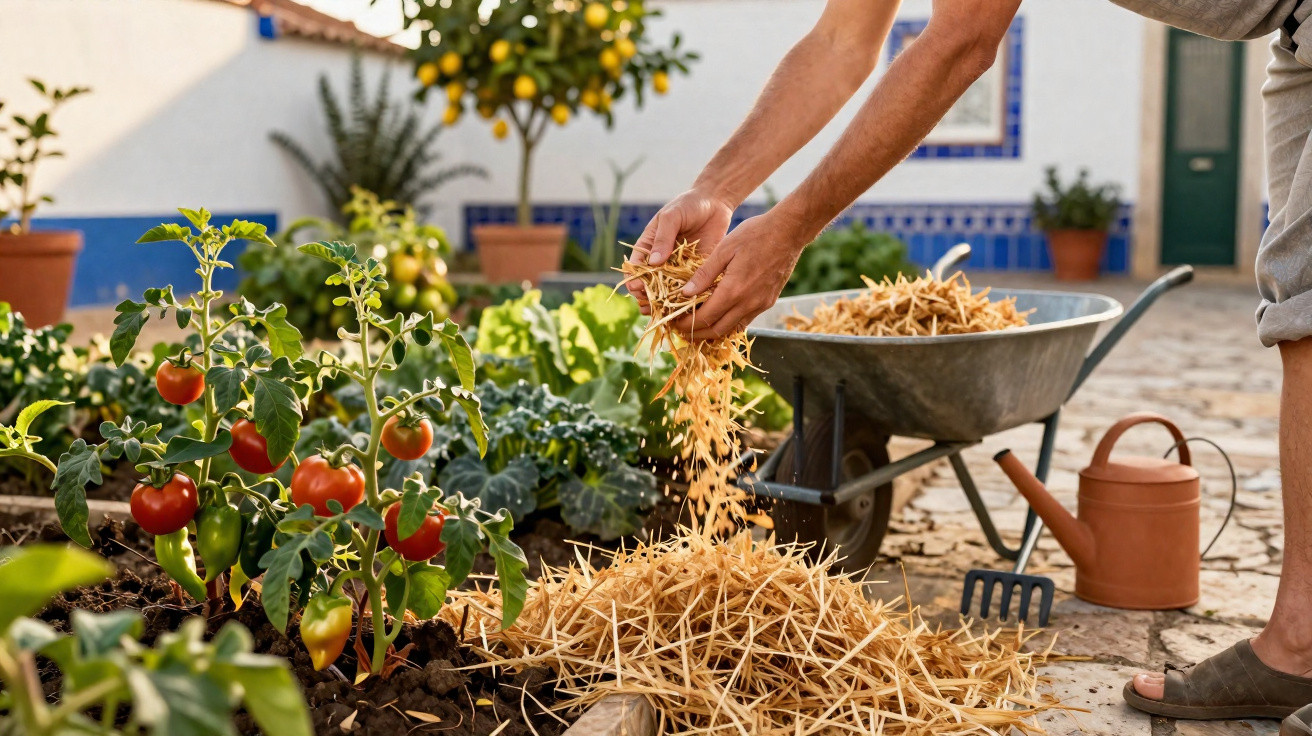
It isn’t showy. You’re only spreading straw, shredded leaves, wood chips, or compost. And yet that modest layer becomes one of the most effective ways to defend a garden against sudden, extreme weather swings.
On peaceful days, it simply rests there, barely noticed. When the weather turns wild, it earns its keep.
Think back to the last heavy downpour. With bare ground, soil turns slick and muddy almost instantly; water rushes across the surface instead of soaking in. Roots sit in waterlogged muck, then end up parched a couple of days later when the sun returns at full force.
Now imagine the same storm over mulched beds. Raindrops hit the shredded leaves or bark first, and their impact is softened. Water seeps down more gradually, like a sponge taking its time to drink. Evaporation slows, the soil beneath stays crumbly rather than compacted, and fragile feeder roots are far less likely to be damaged.
In a heatwave, the very same mulch becomes a barrier - keeping the soil several degrees cooler and making each watering go further.
There’s straightforward physics behind this quiet resilience. Mulch works as insulation, like a light jacket for the ground. When temperatures drop overnight or a sudden cold snap arrives, the soil releases heat more slowly, so roots suffer fewer harsh shocks. When intense sun bears down, the surface layer takes the punishment while the deeper soil stays damper.
Mulch also helps stop erosion during violent storms. Instead of fine soil being blasted loose or washed down the drive, it’s held in place by the weight and texture of the covering. And as that mulch gradually breaks down, it feeds the soil life that supports plants when conditions get stressful.
One small seasonal habit - and a whole set of protections that kick in when the weather becomes extreme.
How to mulch seasonally without turning it into a chore
The key is to link mulching to the seasons themselves, not to spurts of guilt. Whenever your garden shifts gear - the first frost warning, the first real warmth of spring, the first long hot spell - you head out with a bag or a wheelbarrow and top up the layer. You don’t need a thick mound, just a few centimetres: enough to cover the soil, not smother it.
In autumn, you can use what’s already around you: shredded leaves tucked around perennials, and a blend of compost with leaves across vegetable beds. In spring, younger plants tend to prefer lighter, airier materials such as straw or grass clippings (dried first). For summer, many gardeners rely on wood chips or bark around shrubs and trees because it lasts longer.
The aim isn’t flawlessness. It’s consistency - a seasonal pulse.
Most people come unstuck in two places: timing and thickness. It’s familiar - you tell yourself you’ll “sort the garden this weekend”, and three months later the bark is still piled beside the shed. Then a hailstorm arrives, followed by a week of 35°C heat, and the garden takes the full hit without any cushioning.
Another frequent mistake is heaping mulch right up against stems and trunks “just in case”. Plants don’t thank you for that. It holds moisture against the bark, encourages rot, and offers slugs a luxury hotel. A tidy “doughnut” shape - mulch around the plant with a small gap at the base - is all you need.
Let’s be honest: nobody does this every single day. You don’t have to. You only need to turn up at the key moments when the seasons change.
Mulching isn’t a fancy gardener’s secret, it’s more like brushing your teeth - a small, repeated act that prevents big problems later on.
- Best seasonal moment
Straight after steady rain or a deep watering, when the soil is already moist and slightly warm or cool for the time of year. - Ideal mulch thickness
About 5–7 cm for beds, a little more beneath established trees and shrubs, and always with a clear gap around stems and trunks. - Smart free materials
Shredded leaves, chipped prunings, straw, half-finished compost, dried grass clippings applied in thin layers. - Areas to prioritize
Young trees, new plantings, vegetable beds, containers baking on balconies, and places that flood or crack during drought. - One red flag
Mulch that smells sour or like ammonia - it’s still “cooking” and can stress roots; let it age first or mix it with dry material.
A small ritual that changes how you see your garden
Once you take up seasonal mulching, something shifts almost without you noticing. You begin walking the garden with a different focus - not only on blooms and foliage, but on the soil’s quiet surface. You spot where water sits, where wind scours, and where the sun bites hardest at 3 p.m. in July.
That attention, combined with the physical layer of mulch, means random weather becomes something your space can handle - rather than simply endure. Lettuce is less likely to bolt overnight, roses don’t collapse at the first drought alert, and young trees stop leaning after every storm.
What starts as a quick spread of straw or leaves turns into a kind of seasonal conversation with your plot. After a violent storm, you can see how well the mulch stayed put and how little soil escaped. After a frost, you scratch the surface and feel that the earth underneath is still pliable, not set hard like stone.
Gradually, you trust your garden more. And, quietly, it seems to trust you back. Extreme weather will keep arriving - that much is clear. Between the headlines, though, you still have this small, stubborn action: stepping outside at each seasonal turn and giving the ground a protective coat before the sky decides what happens next.
| Key point | Detail | Value for the reader |
|---|---|---|
| Seasonal mulching habit | Lightly refresh mulch at each seasonal shift rather than once a year | Builds consistent protection against storms, frost, and heat without feeling overwhelming |
| Right materials and thickness | Use local, organic matter in a 5–7 cm layer, leaving a gap around stems and trunks | Reduces risk of rot and pests while improving soil structure and resilience |
| Weather-smart timing | Apply after rain or deep watering, before expected extremes | Maximizes water retention and cushioning effect when weather swings suddenly |
FAQ:
- Question 1
Can I mulch if my soil is heavy clay and stays wet?- Answer 1
Yes, but use coarse materials like shredded bark or wood chips and keep the layer on the thinner side. The goal is to protect the surface while still letting air move through. Over time, mulch actually helps clay open up.- Question 2
Is stone or gravel mulch as protective in extreme weather?- Answer 2
Gravel can help against erosion, but it doesn’t cool the soil or feed it in the same way organic mulch does. Stones tend to store heat, which can stress plants in heatwaves. They’re better for specific dry, Mediterranean-style areas.- Question 3
Will mulching attract slugs and snails to my vegetables?- Answer 3
Dense, always-damp mulch can give slugs hiding spots, especially in cool, wet springs. Use a lighter layer around slug-prone crops, leave a bare ring around stems, and combine mulching with barriers or traps if slugs are a big issue.- Question 4
How often should I renew the mulch during the year?- Answer 4
A good rhythm is three times: at the end of autumn, early spring, and just before serious summer heat. In very harsh climates, a quick top-up before expected storms or cold snaps can be worth the extra effort.- Question 5
Can I just use fresh grass clippings as mulch?- Answer 5
Only in thin layers and ideally dried first. Fresh clippings in thick mats can go slimy, smell bad, and heat up as they decompose. Mix them with dry leaves or straw, or compost them a bit before spreading around plants.

Comments
No comments yet. Be the first to comment!
Leave a Comment