
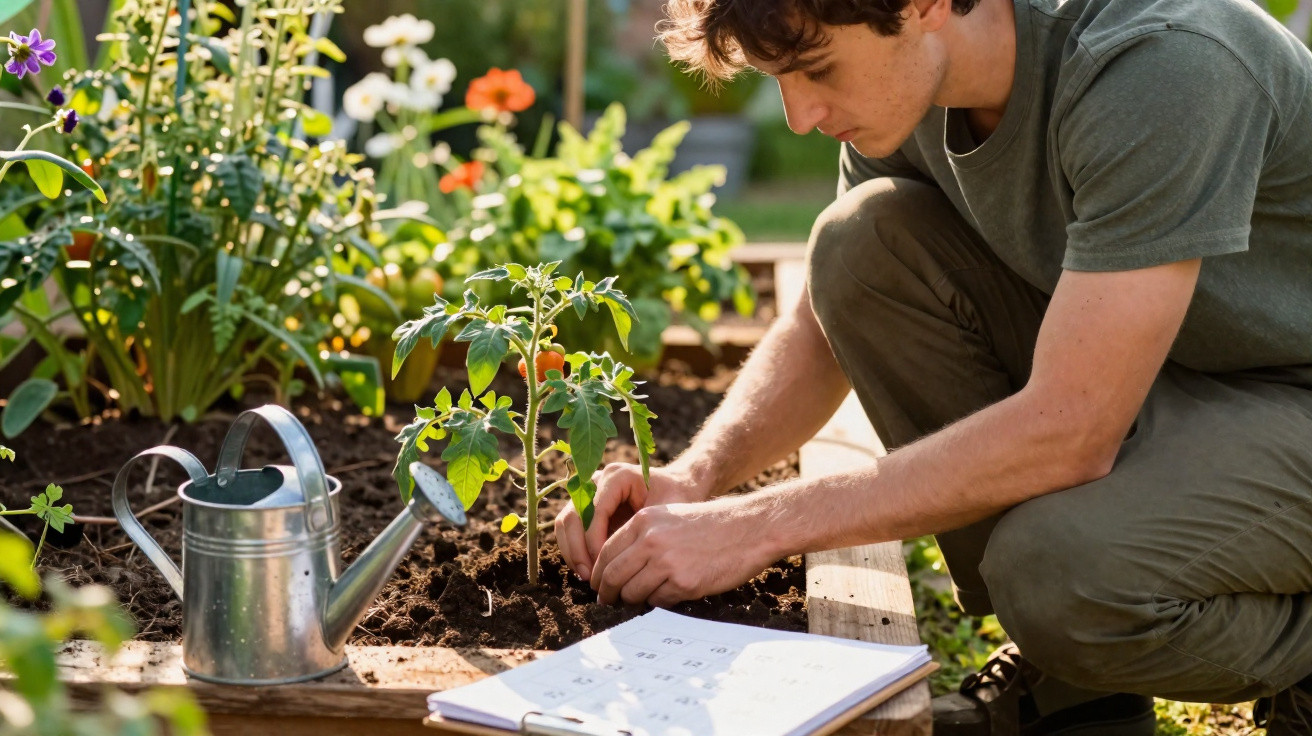
The hose had only been on for about ten minutes before the first earthworm bobbed up. Around the rose bushes, the ground went from shiny to sludge-like, then silently waterlogged. From the patio it still looked “nicely watered” - exactly the sort of moment people post with a smug little line about plant self-care Sundays. An hour later the leaf tips began to sag. Not because they were parched, but because they’d been smothered with affection.
The owner simply shrugged, glanced at the calendar on her phone, and still set the next watering day.
The ironic bit? The garden had already said - very plainly - “Enough.”
She just wasn’t paying attention to the right place.
The tiny test that tells you more than any watering schedule
Most of us judge plants from above. We scan the leaves, the flowers, maybe the fruit, and if nothing looks crisped or scorched we assume all is well. Yet the real information sits about 10 centimetres lower, in the soil you can actually feel.
Put the calendar aside for a moment. The easiest, most dependable way to avoid overwatering is something your grandparents likely did without a second thought: press a finger into the soil. Not a gentle tap on the surface - a proper push down to the first knuckle, where the roots are.
That tiny habit tells you what no watering schedule can: what the plant needs today, not what it supposedly needed three days ago.
There’s a small balcony in my neighbourhood that shows the difference perfectly. Two matching terracotta pots, identical size, with the same supermarket basil bought on the same day. One lives by a strict rule: “every 48 hours at 7 p.m.” The other gets watered only when the owner pushes a finger into the compost and pauses with a slight frown.
Three weeks on, basil number one looks… acceptable from across the street. Look closely and the bottom leaves are turning yellow, the stems are soft near the base, and fungus gnats flit up whenever the pot is nudged. Basil number two is shorter but sturdier, with thicker stems and a scent you notice halfway down the road.
Same sunshine, same balcony, same city rain. The only difference is that one gardener trusted the app, and the other trusted the soil.
The reasoning is almost painfully straightforward. Watering schedules rely on averages: average temperature, average soil, average pot. Your garden, thankfully, isn’t average. A dark ceramic pot can hang on to moisture for days longer than a plastic one. A windy rooftop can dry a bed out overnight. Clay soil grips water like a sponge; sandy soil lets it drain straight through.
A fixed calendar can’t sense any of that. Your fingertip can.
When you press into the soil and your finger comes out cool and damp, you’re feeling the same conditions that surround the roots. When it’s dry and crumbly, there’s no online chart that can argue. This is the one bit of “technology” every plant responds to.
How to “read” your soil so you don’t drown your plants
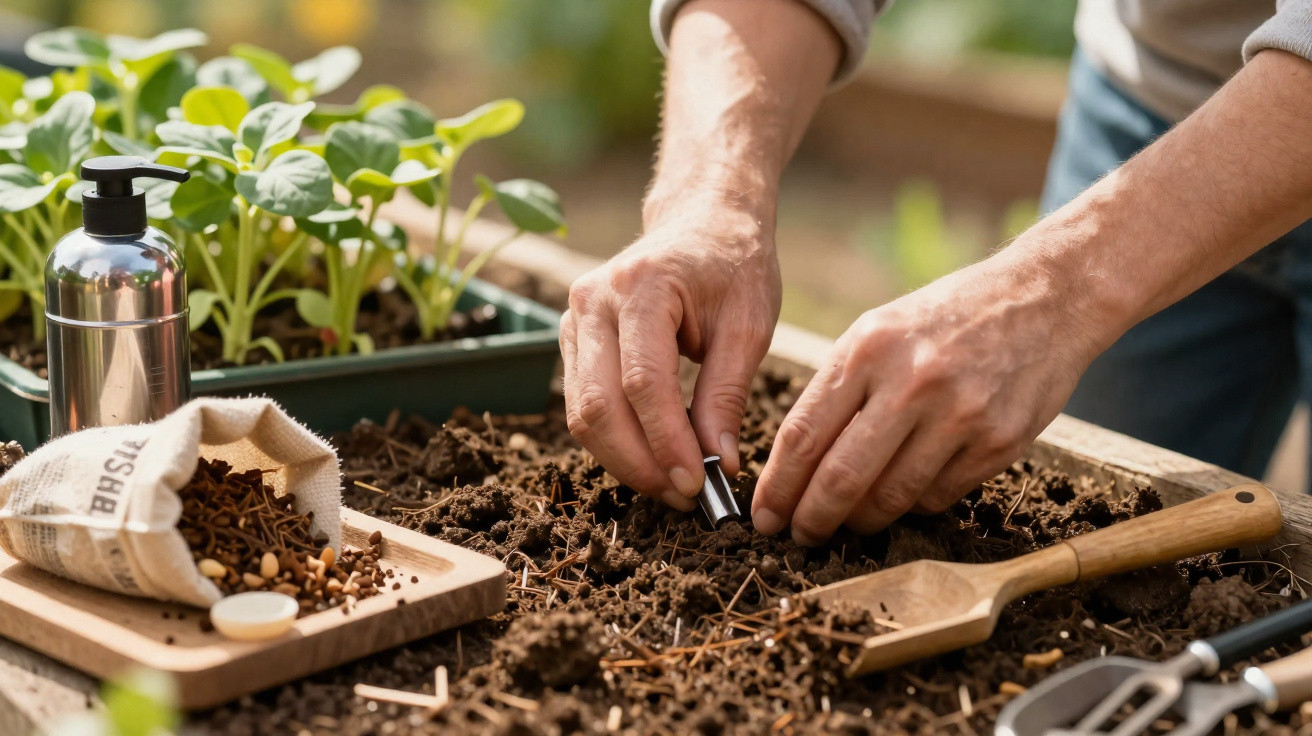
Here’s the approach, without the fancy gardening jargon. Before you even think about turning the hose on, go to the plant and test the soil with your finger. Push down to at least your first knuckle - deeper if the pot is tall.
If it feels cool and slightly wet, hold off, even when the top centimetre looks dusty and dry. That surface crust is often just sun-baked, while the compost lower down is still comfortable for the roots. If your finger comes out clean and the soil feels dry, that’s your cue. Water slowly at the base until you see the first trickle coming from the drainage holes.
Repeat this every time for a week, and you’ll spot patterns far faster than you ever will by memorising a care guide.
A lot of overwatering isn’t caused by not knowing. It’s caused by anxiety meeting enthusiasm. You bought the plant, you want it to flourish, so you hover - and for many of us hovering means “add water, just in case”. We’ve all done it: walking past a pot, feeling a pang of guilt, and pouring in a little water like an apology.
The finger test makes you slow down. It demands one small, truthful check before you act. It also helps you notice the quiet problems schedules ignore: a drainage hole that’s blocked, a saucer that never gets emptied, or that unmistakable moment you lift the pot and it feels like a bowling ball.
And if we’re being honest, hardly anyone follows complicated watering charts perfectly every single day.
“Since I started touching the soil instead of trusting my calendar, I haven’t lost a single plant to root rot,” laughs Claire, a self-described “reformed overwaterer” who runs a tiny urban garden behind her apartment. “I still over-love them, but in other ways now.”
- The finger test – Press into the soil to the first knuckle. If it’s cool and moist, skip watering.
- Lift-the-pot check – Pick up the pot regularly. Over time you’ll recognise the “thirsty” weight vs the “waterlogged” weight.
- Watch the leaves – Limp, yellowing lower leaves plus wet soil usually mean too much water, not too little.
- Respect drainage – Clear holes, use saucers that can be emptied, avoid pots with no way out for excess water.
- Adjust for weather – Hot, windy days dry faster than cool, cloudy ones. Let your finger, not the forecast, have the final say.
From strict schedules to quiet conversations with your garden
Once you adopt this simple routine of checking first, something surprising happens: the garden feels less like a task list and more like an ongoing conversation. You notice the tomato bed dries quicker after a windy day. You realise the shady corner stays wet for ages, even during heatwaves. You find the watering can stays in the shed more often, yet the plants look healthier.
There’s also a calm relief in not having to remember twelve different watering schedules for twelve different species. You just need to look and touch. Over time, the habit builds an intuitive map: this pot tends to be “two dry days, one wet day”; that bed wants a deep soak once a week; this hanging basket demands water every other evening.
| Key point | Detail | Value for the reader |
|---|---|---|
| Soil tells the truth | Finger test at root level beats fixed calendar dates | Fewer drowned plants, less guesswork, more confidence |
| Every pot is unique | Material, size, location and weather change water needs daily | Helps you adapt care to your real garden, not generic advice |
| Observe before you water | Look, touch, sometimes lift the pot before turning on the hose | Saves water, time, and avoids root rot and fungus problems |
FAQ:
- How often should I water if I use the finger test?There’s no fixed rhythm. Water only when the soil feels dry at finger depth. Some plants may need water every day in heat, others once a week or less.
- What if the top is dry but deeper it’s still moist?Skip watering. A dry crust on top is normal, especially in hot weather. Roots live deeper, where the moisture still is.
- Can I use a moisture meter instead of my finger?Yes, but treat it as a helper, not a judge. Calibrate it against what your finger feels so you learn to read both.
- How do I know if I’ve already overwatered?Signs include yellowing lower leaves, mushy stems, soil that smells sour, and pots that feel heavy for days. Let the soil dry out before watering again.
- Does this work for outdoor beds as well as pots?Absolutely. Test near the plant, not between rows, and go a bit deeper. Clay soils stay wet longer than sandy ones, so your finger will pick that up.
Comments
No comments yet. Be the first to comment!
Leave a Comment