
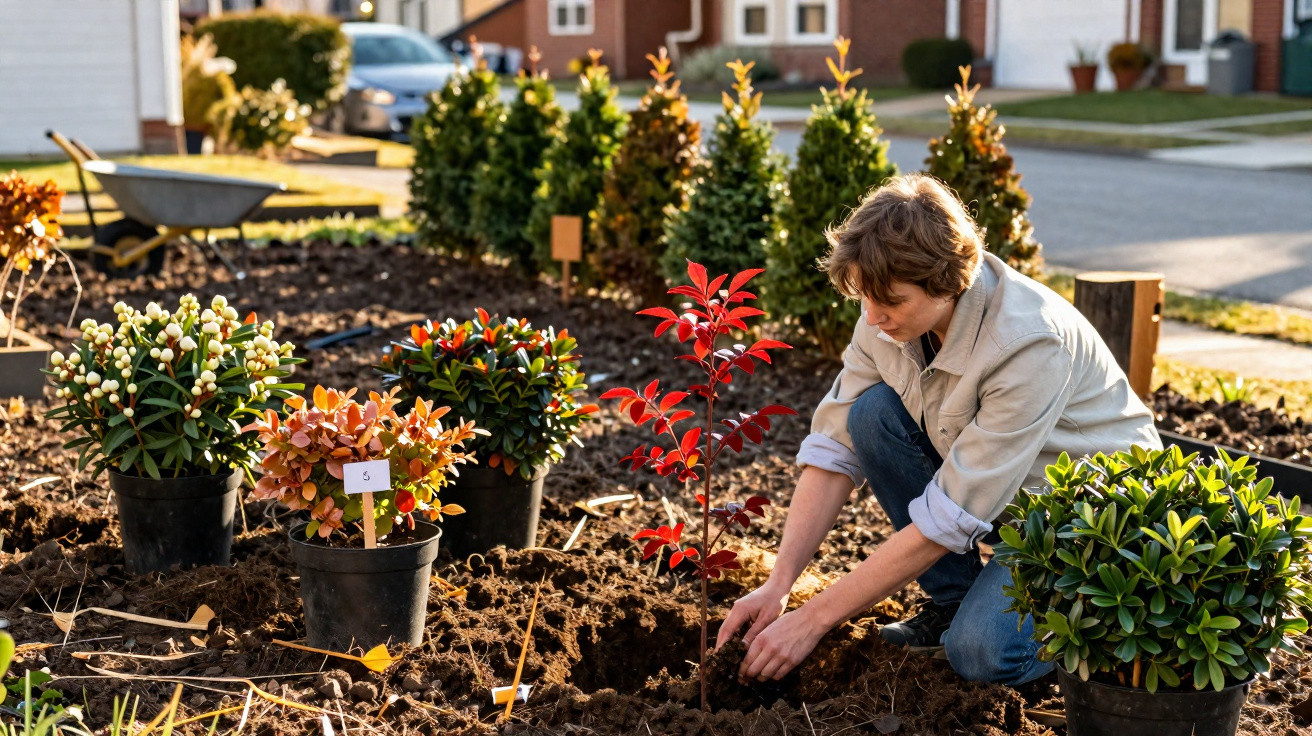
A quieter, more thoughtful hedging shift is happening out of sight.
All over the UK (and further afield), gardeners are steadily moving away from thirsty, high-maintenance thuja hedges and choosing living boundaries that properly justify the space they take up. Drier weather, higher energy costs, less spare time and a stronger preference for gardens with year-round life - rather than a flat green barrier - are all pushing the change.
Why the once-fashionable thuja hedge is losing its crown
For decades, thuja has been marketed as the fast route to an evergreen screen, and it has become a familiar sight in post-war estates and suburban front gardens. Plenty of people effectively inherited a ready-made conifer wall when they moved in, then carried on clipping it simply because that is what was always done.
Now, changing conditions are highlighting how vulnerable that default choice can be. Warmer, drier summers put plants under strain, and that stress makes fungal problems and insect damage more likely - sometimes browning off entire stretches of hedge within a single season.
Once one thuja in a row starts to fail, the damage often spreads, leaving ugly gaps that are costly and time-consuming to fix.
There is also an issue beneath the surface. As thuja drops needles, the soil can become more acidic, which restricts what will grow nearby and leaves a dead-looking strip along the base. If you remove the hedge, planting back into the same line may be difficult unless you are prepared for substantial soil improvement.
Upkeep is another reason people are losing patience. Keeping a two‑metre‑high, ruler-straight conifer hedge looking “perfect” can require multiple cuts each year, along with ladders, powered kit, plenty of noise and piles of green waste to deal with.
A dense conifer hedge often delivers all the hassle of a garden feature, with barely any payoff in seasonal interest or biodiversity.
Winter can be planting season, not dead season
From January onwards, the garden can appear quiet, yet it is an excellent window for swapping hedges. While many homeowners hold off until spring, professional gardeners frequently put hedging in during winter - particularly when using bare‑root stock.
In cool, damp soil, roots can settle in without battling heat or drought. With little energy going into flowers or fresh leafy growth, plants can concentrate on establishing below ground.
Planting hedges in winter lets the sky do most of the watering, setting them up for a low‑irrigation first summer.
Timing still matters: steer clear of frozen ground and choose days when the soil is workable rather than saturated. After planting and mulching, the hedge can be left to settle and connect with the surrounding soil while the rest of the garden lies dormant.
Evergreen colour that actually changes: laurustinus and photinia
Laurustinus: quiet flowers when everything else is bare
If winter privacy is essential, conifers are not the only answer. Laurustinus (Viburnum tinus), also known as laurustinus viburnum, forms a dense evergreen screen and brings unexpected interest at the bleakest time of year.
From mid‑winter onwards, it produces clusters of white to pale pink flowers that stand out against its dark foliage. After flowering, metallic blue berries appear, offering birds a valuable food source when resources are limited.
It suits a mixed hedge well, or it can be used as a softer, more informal boundary on its own. It responds well to pruning, but it does not demand constant clipping to stay tidy. In smaller gardens it is usually manageable at around 1.5–2 metres without turning into a constant battle.
Photinia: red flushes that wake up the whole street
Photinia - especially the widely grown ‘Red Robin’ - has shifted from a fashionable pick to a dependable modern staple. Even so, it is still not used as much as it could be within mixed hedging, where its colour really earns its keep.
Between late winter and spring, fresh growth emerges in vivid red, sometimes bordering on crimson. Next to calmer greens, the effect is striking, as if someone has flicked a switch along the boundary.
Photinia brings moving colour to a boundary, changing gear from deep green to fiery red and back again in a single season.
It will tolerate trimming, although repeated hard cutting can mean fewer red shoots. Many gardeners now favour a looser outline, giving it a single light prune each year to keep height and spread in check.
For dense screening that lasts: hornbeam and privet
Hornbeam: a “leaf curtain” that stays up all winter
Hornbeam (Carpinus betulus) is a native tree that performs exceptionally well when trained as a hedge. Its party piece is marcescent foliage: leaves turn bronze in autumn, yet many remain in place through winter instead of falling cleanly.
So, despite being deciduous in technical terms, it still provides privacy and structure for much of the year. In weak winter light, the dry leaves can glow with a warm, golden tone that lifts an otherwise bare garden.
Once it has settled in, hornbeam stands up well to cold, wind and dry spells. It can work in rural gardens, new-build settings and alongside busy roads, where it provides a visual barrier and some reduction in noise.
Privet: the old-fashioned workhorse ready for a comeback
For years, privet carried an overly neat, “vicarage garden” reputation, but toughness is back in fashion. It copes with urban pollution, chalky ground and exposed, windy corners where more delicate shrubs struggle.
In tough spots where other shrubs keep failing, privet often hangs on and quietly thickens into a reliable, bird-friendly wall.
Depending on the type and how harsh the winter is, privet can be semi-evergreen and may drop some leaves during cold snaps. Even so, the dense network of twigs continues to screen and provides valuable nesting cover.
Four plants that beat thuja on almost every front
When combined, laurustinus, photinia, hornbeam and privet can create a hedge with variety and depth that still reads as one continuous boundary. Each contributes a different advantage.
| Plant | Main strength | Best position |
|---|---|---|
| Laurustinus | Winter flowers and berries, evergreen privacy | Sunny or part-shade, sheltered |
| Photinia | Red new growth, strong visual impact | Full sun to light shade |
| Hornbeam | Year-round screening with bronzed winter leaves | Exposed or rural sites, heavier soils |
| Privet | Rugged, adaptable, fast to fill | Urban gardens, difficult corners |
Using a mix like this avoids the uniform “green wall” look associated with thuja. Wildlife benefits from berries, blossom and safer nesting places, while the garden gains movement, seasonal change and improved resistance to pests and disease.
How to plant a future-proof hedge in winter
A successful hedge is often decided before you plant the first shrub. Skipping the preparation tends to lead to years of extra watering and disappointment.
- Set out the hedge line with string to keep spacing consistent.
- Dig a trench or separate planting holes at least 40 cm deep and wide.
- Loosen the bottom with a fork so roots can drive down more easily.
- With bare-root plants, briefly dip the roots in a muddy, clay-based mixture to coat them.
- Refill using the original soil, pressing gently to remove air gaps.
- Water once (even in winter), then apply mulch using leaves, wood chips or shredded prunings.
How far apart you plant depends on the speed and density you want. A common guide is one plant every 60–80 cm, reducing to 50 cm if you want very fast cover from smaller plants.
From chore to asset: changing how we think about garden boundaries
Swapping out thuja is not just about fashion or appearances. A mixed hedge spreads risk across several species: if a pest or disease hits one plant, the whole boundary is far less likely to fail in one go. That, in turn, lowers the chance of having to remove several metres of dead hedge within a single year.
It also changes the practical realities of maintenance. A slightly looser mixed boundary commonly needs one main cut annually, and sometimes a second in particularly vigorous areas. Hand shears or a lightweight cordless trimmer can often replace petrol-powered tools - and the Saturday-morning noise many neighbours would happily do without.
A varied hedge can cut watering, reduce tool use, support wildlife and still deliver the privacy people want from a garden border.
Practical examples and small risks to consider
Imagine a 10‑metre back-garden boundary on a new housing estate. Rather than a single-species thuja screen, you plant it in repeating groups of three: three laurustinus, three hornbeam, three photinia, three privet. After two to three years, the plants can merge into one continuous, textured hedge - with winter flowers, spring red growth and strong green structure through summer.
There are compromises. In the early years, mixed hedges can look slightly irregular because each species grows at its own pace. If you are used to razor-straight conifers, the softer outline may take some getting used to. In addition, certain types of privet can be invasive in some areas if they are allowed to set seed into nearby countryside, so routine trimming and sensible disposal of clippings are important.
Against that, the upsides arrive quickly: fewer hosepipe sessions, less demanding pruning, better habitat for small birds and insects, and a boundary that changes with the light and weather rather than staying static.




Comments
No comments yet. Be the first to comment!
Leave a Comment