
The first bright weekend of the year turns up, you wheel the scarifier out of the shed, and it’s tempting to “sort out” a lawn that looks weary after winter. But one poorly judged spring pass can strip the turf so aggressively that it goes brown, bare and blotchy within days. Getting clear on when to scarify - and when to leave well alone - is what separates a refreshed lawn from a wrecked one.
Why scarifying your lawn can go badly wrong in spring
Scarifying is often described as straightforward: lightly rake or blade the lawn surface to lift out moss and thatch so air, water and nutrients can reach the soil again. After winter, many gardeners see it as a quick reset for grass that’s lost its sparkle.
Where it usually goes wrong is the combination of timing and how hard you go at it. Early in spring, the grass is only just starting to grow again. Roots are still recovering, and the ground is frequently cold and waterlogged. If you run blades through the lawn in those conditions, you can scalp the surface, rip out healthy roots and leave the soil exposed.
"Scarifying too early, on the wrong soil, or too deeply is the spring mistake that can wreck a lawn in just a few days."
The outcome is a common one: a lawn that was mossy but at least green becomes a brown, muddy patchwork of shredded turf - with the moss returning faster than the grass can fill in.
The real warning signs your lawn is ready for scarifying
Scarifying should be driven by what the lawn is telling you, not by what the calendar says. Before you even think about setting up the machine, pay attention to how the turf feels and how it performs after rain.
How to tell if thatch and moss are the real issue
- Spongey feeling underfoot: Walking across the lawn feels soft and springy, like a thin mattress.
- Water stagnation: After rainfall, small puddles sit for several minutes instead of draining away quickly.
- Moss dominant: Velvety green moss patches take up more space than grass in places.
- Thin, yellowish grass: You see bare areas, and the grass looks pale and weak even with regular mowing.
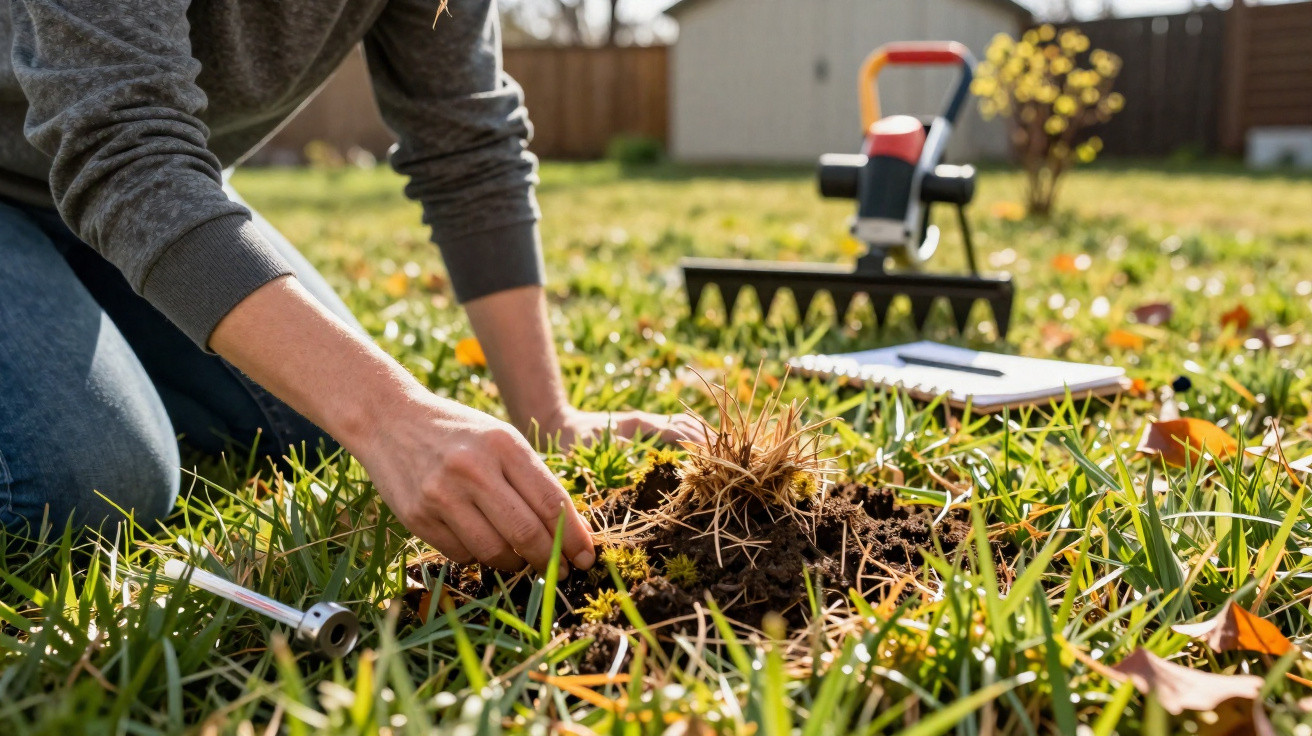
To confirm, use a basic metal rake and drag it gently through a small test patch.
"If the rake pulls up large clumps of dead grass, moss and brown debris, you’re dealing with a heavy thatch layer and scarifying becomes useful."
If you pull up very little - or you mainly lift live green grass - then thatch isn’t the core issue. More likely culprits are compaction, shade, drought or inadequate feeding. In that situation, scarifying won’t solve the problem and can easily make the lawn thinner.
The crucial window: when spring scarifying helps instead of harms
In temperate regions such as much of the UK, the safer period for spring scarifying is usually from late March through to May. Exact timing varies by location and by year, so it’s better to watch the lawn’s progress than pick a date.
| Condition | Safe for scarifying? |
|---|---|
| Soil temperature above 8–10°C (46–50°F) | Yes, grass growth is restarting |
| Lawn has already had 2–3 spring cuts | Yes, plants are active and recovering |
| Soil frozen or waterlogged | No, blades will rip roots and compact the surface |
| Newly sown or laid turf less than 1 year old | No, roots are not established enough |
Another frequent misstep is doing it too often. For most domestic lawns, scarifying once a year is plenty, and only occasionally twice if moss remains persistent and conditions are suitable. More than that can weaken and thin the sward rather than improve it.
How to prepare the lawn so scarifying doesn’t scalp it
A little early-spring preparation makes the job gentler and reduces the chance of tearing up healthy turf.
Steps before you start
- Light feeding: Apply a mild, balanced lawn feed early in the season to encourage growth.
- Cut slightly shorter than usual: Mow to about 3–4 cm (roughly 1¼–1½ inches) and collect the clippings.
- Wait for the right moisture level: Aim for soil that’s slightly damp - not dust-dry, and not soggy.
After that, the setting that catches many people out is the working depth.
"Set the scarifier so the blades only cut 2–3 mm into the surface. The goal is to scratch out thatch, not to plough the lawn."
Move steadily in straight runs across the lawn. If areas are particularly affected, you can make a second pass at right angles to the first, but inspect the surface each time. If you’re looking at widespread bare soil and lots of torn live roots, stop there - the lawn needs recovery time.
What you must do immediately after scarifying
Scarifying nearly always makes the lawn look worse before it improves. What happens next is what determines how quickly it bounces back.
Clean up and correct the soil
- Collect all debris: Rake up, or use a mower with a collection box, to remove lifted moss and thatch.
- Address soil acidity: Moss often thrives where soil is acidic, so a gentle liming product such as dolomitic limestone can help neutralise it gradually.
- Avoid harsh moss killers: Iron sulphate (sulphate of iron) turns moss black quickly but also makes the soil more acidic, which can encourage moss to return later.
"Post-scarifying care matters as much as the treatment itself; leaving the soil bare and acidic almost guarantees a return of moss."
Wherever soil is visible, overseed with an appropriate lawn seed mix. Rake the seed in lightly, then roll or tread carefully so the seed makes good contact with the soil.
The recovery phase: feed, water, then leave it alone
To help the grass thicken back up, apply a spring lawn feed. If conditions turn dry, water lightly - but avoid daily soaking that keeps the ground constantly wet and favours moss.
For the next week or two, keep children, pets and wheelbarrows off the lawn as much as possible. New shoots are delicate, and heavy traffic can turn thin areas into long-lasting bare scars.
Common scenarios: when not to scarify, even if the lawn looks bad
Some spring lawn problems look like they need scarifying, but the real solution lies elsewhere.
- Deep shade: Beneath dense trees or alongside tall fences, grass lacks light. Scarifying in these spots often removes what little turf is coping. Consider shade-tolerant mixes or alternative groundcover plants instead.
- Heavy clay, very compacted soil: If you can barely push a screwdriver into the ground, aeration is the priority, not scarifying. Hollow-tine aeration combined with topdressing using a sandier material typically helps far more than scraping the surface.
- Drought damage from the previous year: Dead brown patches caused by summer heat usually require reseeding or partial re-turfing, not aggressive scratching.
In these situations, put the effort into longer-term improvements: better drainage, smarter watering, a higher mowing height, or changes to planting - rather than repeating mechanical scarification every spring.
Key terms and how they affect your lawn
Two terms are often mixed up: thatch and moss. They’re different issues, even though they frequently show up together.
- Thatch: A build-up of dead stems, roots and clippings sitting at the base of the grass. A small amount can protect the soil, but a thick layer prevents air and water getting through.
- Moss: A separate plant that exploits damp, shady, compacted or acidic conditions. Removing it without changing those underlying conditions rarely lasts.
Scarifying is primarily aimed at thatch, while moss is often lifted as a side effect. If the soil remains acidic, compacted and damp, moss can quickly reclaim the gaps even after a thorough clean-out.
How a cautious approach saves you work later
Treat scarifying like minor surgery for a lawn. When you do it carefully and at the right time, it freshens growth and reduces future upkeep. When it’s rushed on a cold, wet March weekend, it can hold the grass back for months and create space for weeds and moss.
A practical rule for any home gardener is to trial it first in a small, out-of-the-way corner. Scarify gently, then follow with light feeding and overseeding, and track how the patch responds over the next few weeks. That real-life result on your own soil and in your own weather tells you far more than any date on a lawn-care calendar.




Comments
No comments yet. Be the first to comment!
Leave a Comment