
The first time the temperature dropped from a gentle 12°C afternoon to a biting –4°C overnight, I noticed it by sound before sight. The next morning, crossing the garden, there was a heavy, damp crackle underfoot. In places the ground had lifted and torn, like a bruise pushing up beneath thin skin, and my young spinach and strawberry plants were knocked sideways-leaf edges scorched, as though someone had waved a lighter along them.
On paper, I’d done “everything right”. I’d chosen good varieties, left the right gaps between plants, and watered sensibly. Even so, the damage was down at the roots.
That spring, after watching yet another early lettuce row fail, I tried something that felt almost laughably obvious.
I stopped leaving bare soil exposed.
That’s when the shockwaves stopped.
When I stopped leaving the soil naked
The shift happened in late March, on a Sunday that felt like June by lunchtime and like January at dawn. I’d been moaning about “crazy weather” for weeks, but that day it finally clicked. At 3 p.m. I was outside in a T-shirt. By 9 p.m. the forecast was warning of a hard frost.
I walked along the beds and, all at once, saw what I’d been missing. The soil was uncovered-dark, open to the elements-like a body with no coat. My seedlings were rooted in the thinnest surface layer, with roots sitting just beneath the top, precisely where those temperature swings bite hardest. It stopped feeling like misfortune and started feeling like I’d set them up to fail.
A neighbour-an old-school market gardener-watched me grumble, then passed me a battered rake and a bale of straw. “You’re roasting them by day and freezing them by night,” he said. “Put a blanket on the ground, not on the plants.”
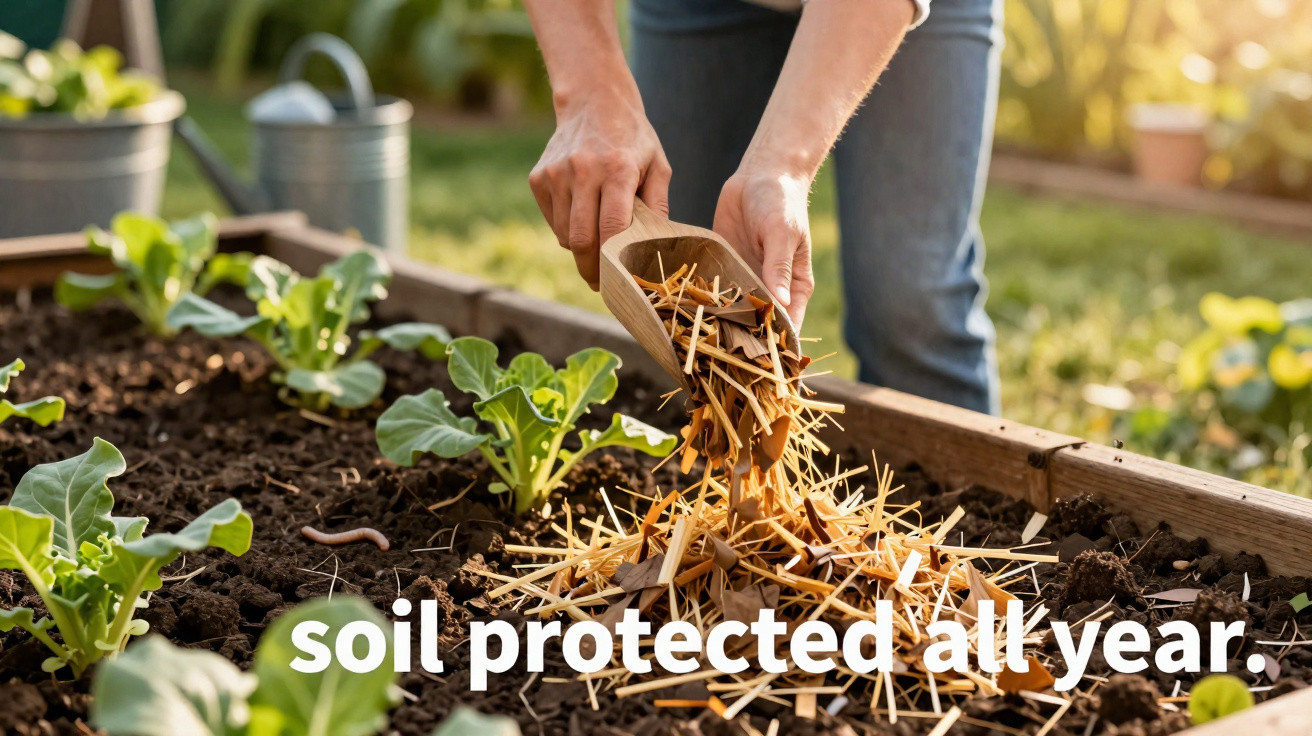
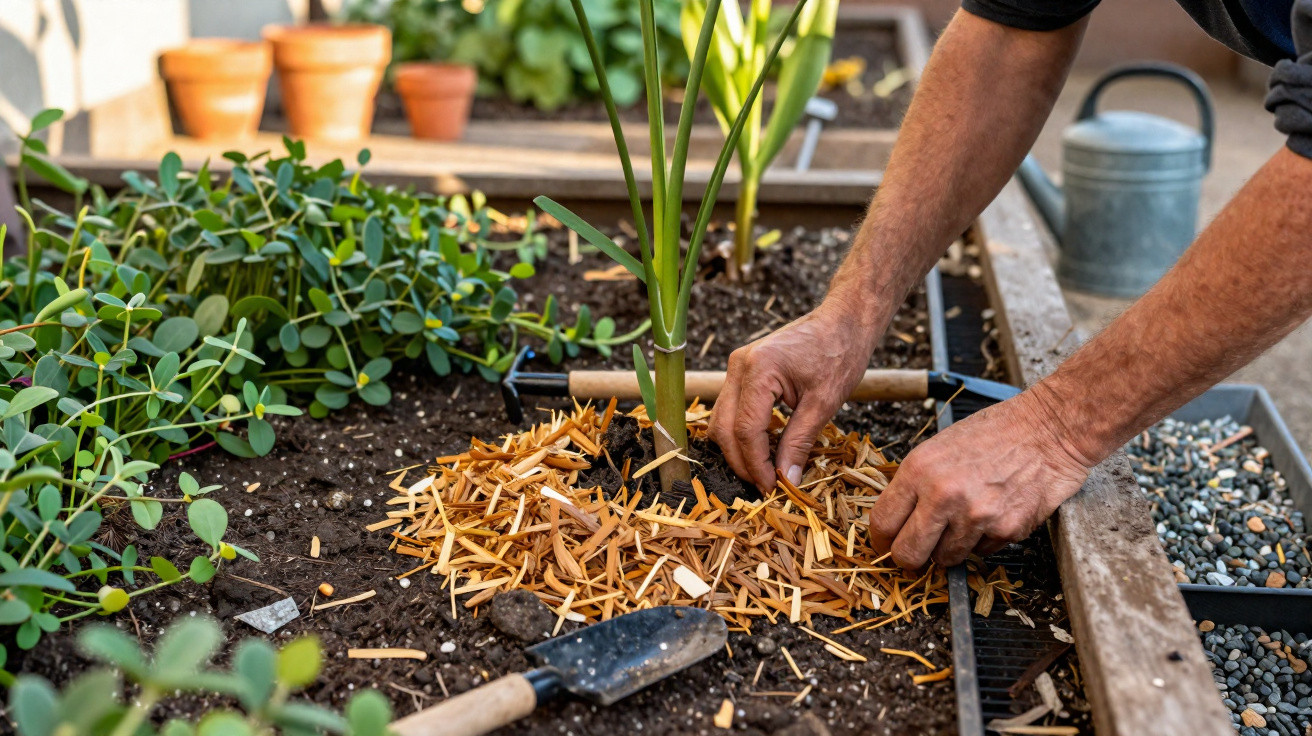
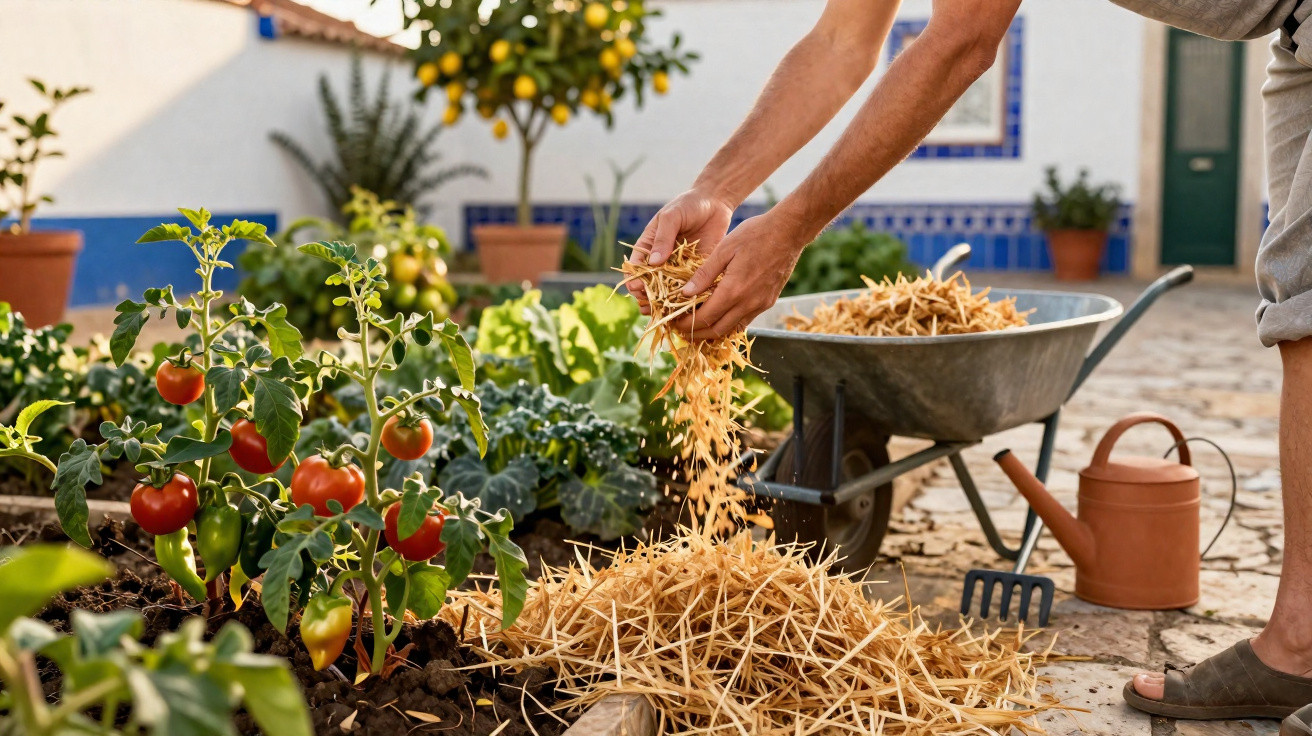
We laid a light but consistent layer of straw around the cabbages and onions. Another bed got a covering of shredded leaves he’d kept back from autumn. I deliberately left a third bed uncovered-almost like a control, though I wouldn’t have used that word at the time. I simply wanted to know, either way.
The next fortnight brought more of the same: sun, frost, wind, almost-summer warmth, then a slide back towards winter. The contrast between the beds was stark.
In the mulched beds, the soil stayed loose, cool, and damp when I pressed my fingers into it-even after warm afternoons. The roots hadn’t been baked. After the frosty nights the plants did look strained, but by mid-morning they were standing firm again, full of water, as if the night hadn’t happened.
On the uncovered bed, the top couple of centimetres hardened into a crust. The lettuce roots were stuck in a layer that swung from scorching to freezing in the space of a single 24-hour cycle. That’s when I understood that temperature isn’t just “something in the air”. The real battle is underground.
The mulch worked like a thermal cushion: slowing the peaks, easing the dips, and giving the roots a steadier microclimate while the weather carried on throwing tantrums above.
The year-round “blanket” that changed my soil
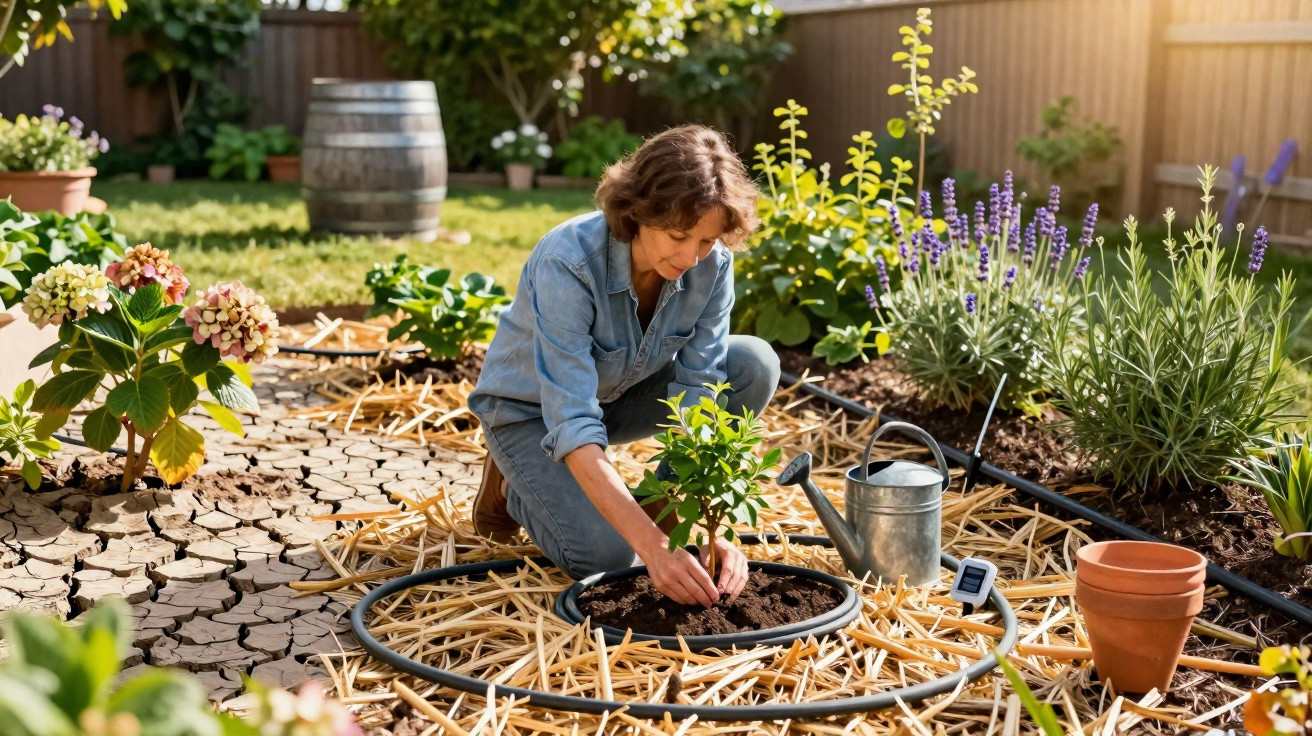
From then on, the approach became straightforward: I stopped allowing sunlight to hit raw soil directly, at any point in the year. Once a crop was harvested, I didn’t leave an empty bed sitting there. I either spread a layer of dead material-straw, shredded leaves, grass clippings-or I sowed something living to take over the surface, such as clover or rye.
It’s like putting your garden in proper layers, rather than leaving it in a T-shirt in December. In summer, mulch acted as a shield against harsh heat, keeping the ground cooler and holding onto moisture. In winter, even a few centimetres of organic matter slowed the freeze, so frost didn’t penetrate as far and the thaw came back more gently.
The formula stayed consistent; the seasonal details shifted.
My biggest early mistake was doing it in bursts. I’d mulch dutifully in spring, then “somehow” ignore the beds after a big August harvest-when I was tired and the evenings still felt long. Yet that’s exactly when soil is most at risk: overheated, worn out, and then left uncovered just before the first sharp autumn cold snaps.
So I built a habit around it. Harvest the crop, pause, have a glass of water, and then cover the exposed ground straight away. Even a rough, temporary layer of cardboard topped with a bit of compost beat leaving the soil open. When I had the time, I’d replace that stopgap with a proper, longer-lasting layer of straw or leaves. And, honestly, nobody manages this perfectly every single day.
We’ve all had that moment of telling ourselves, “I’ll get back to that bed later,” only for three weeks of punishing weather to happen in the meantime.
One winter, I decided to push the experiment. I mulched one bed of overwintering carrots with a thick 15 cm layer of dead leaves and barely touched it all season. Nearby, I left another bed of carrots on exposed soil, thinking “they’re hardy, they’ll cope.” Spring told a very different story.
The mulched carrots lifted out fat, with long, unbroken taproots that had driven down into calm, buffered soil. In the bare bed, the carrots were often forked, undersized, and split-damage from repeated freeze–thaw cycles.
- A deep organic mulch layer (5–15 cm) around perennials and winter vegetables kept the root zone steady and active.
- Light, airy covers (straw, shredded leaves) coped with rain better than heavy materials that compact down.
- Living cover crops safeguarded the soil when I didn’t have the time or the materials for dead mulch.
Once you’ve seen the difference side by side, you stop wondering whether the “blanket” is worth the effort.
A garden that breathes instead of flinching
After a full year of treating the soil surface like skin that needed shielding, the garden’s rhythm changed. Summer heatwaves didn’t land with the same force; by July the ground no longer set like concrete. Winter cold still arrived in snaps, but plants recovered faster, with roots anchored in something that felt closer to woodland floor than an abandoned building site.
I began to spot things I’d never really noticed. Earthworms just under the mulch, even in January. Fewer weeds that usually exploit bare gaps. Rainwater soaking in rather than rushing off during storms. The roots were living in a quiet middle ground while the atmosphere above remained unpredictable.
I stopped chasing complicated fertiliser programmes and instead held onto one basic rule: never leave soil uncovered-not in April, not in November, not ever. Some days that meant scattering a thin layer of grass clippings after mowing. Other days it meant sowing a sheet of phacelia or vetch so the surface stayed occupied and shaded.
The change wasn’t only practical; it was emotional too. The garden felt less like a fight against the climate and more like a managed ecosystem, where my job was mostly to keep the ground covered and able to breathe. Roots don’t like surprises. They prefer a stable, cushioned world where changes arrive gradually.
And that is exactly what a year-round soil “blanket” provides underfoot.
Once you start protecting the soil surface through all four seasons, you realise the temperature shocks don’t truly vanish. They simply move elsewhere: into the air, into the forecasts, into the conversations about strange climate patterns. Down where roots do their work, conditions become almost dull.
That dullness is where resilience takes shape. So perhaps the next gardening “trend” isn’t a gadget or a miracle feed. Perhaps it’s something old and wonderfully low-tech: covering the ground with the materials nature drops for free.
The question comes back every time I look at a fresh bed ready to be planted: what kind of year will the roots experience-an endless rollercoaster, or a calm, steady season under a quiet layer of protection?
| Key point | Detail | Value for the reader |
|---|---|---|
| Year-round soil cover | Use mulch or living cover crops so the ground is never bare | Reduces temperature shocks and protects roots across all seasons |
| Seasonal “blanket” strategy | Thicker organic mulch in winter, lighter but continuous cover in warmer months | Keeps soil structure stable and limits stress on plants during extremes |
| Simple, repeatable routine | Cover soil immediately after harvest with whatever safe organic material is on hand | Makes resilience a habit, not a project, and improves yields long-term |
FAQ:
- Question 1 How thick should my mulch layer be to protect roots from temperature shocks? For most vegetables, 5–8 cm is enough in spring and summer, while 8–15 cm works better in winter around perennials and overwintering crops. Keep stems clear so they don’t rot.
- Question 2 What’s the best material to cover soil all year round? There’s no single “best” choice. Straw, shredded leaves, grass clippings (dried a bit), wood chips on paths, and living cover crops can all work, as long as the soil isn’t left bare.
- Question 3 Won’t mulch keep the soil too cold in spring? Mulch does slow warming slightly, but it also prevents wild swings. You can gently pull it back from the rows a week or two before planting, then return it once plants are established.
- Question 4 Do I still need to water as much if my soil is covered? Usually less. Covered soil loses far less moisture, so watering becomes deeper and less frequent. The exact amount depends on your climate and soil type.
- Question 5 Can I use fresh grass clippings or will they harm my plants? You can use them in thin layers, ideally mixed with drier material like straw or leaves. Thick, fresh piles can heat up and mat together, so spread them loosely and let them dry a little first.
Comments
No comments yet. Be the first to comment!
Leave a Comment