
It first caught my attention on a damp Tuesday. I was in the kitchen in my socks, looking at a basil plant that flatly refused to put on any real growth. Same pot as ever, same bright windowsill, same watering can. Three weeks earlier I’d carried it home feeling smug and optimistic. Now it just sat there - small, stubborn, almost… stalled.
I did what most people do: I blamed the compost, the light, maybe my so-called “black thumb”. Then I went to a friend’s place. She barely waters anything, yet her living room could pass for a jungle advert. Same city, similar light, same shops.
That was when a gardener said something that quietly rewired how I look at every plant.
Something hidden that you rarely see - but which dictates everything.
The silent culprit: roots hiding just below the soil
Most of us judge a plant’s wellbeing by what’s above the compost. We watch for fresh leaves, count buds, inspect yellowing edges and end up googling diseases. Because the visible “action” is up top, that’s where our attention stays.
But the real explanation sits just a few centimetres beneath the surface. When houseplants aren’t growing as quickly as they ought to, the cause is usually the same: the roots can’t breathe properly or spread out. They’re trapped in tight pots, sitting in suffocating compost, or bouncing between soaking wet and bone dry - a pattern that keeps them stuck in survival mode.
From above, it rarely looks like a crisis.
Below, it’s stress in slow motion.
If you’ve ever had a shelf of struggling houseplants, you’ll recognise the pattern. Small pots that are easy to pick up. Dense “universal” potting compost from big bags. Plants that limp along for months - even a year - inching forward millimetre by millimetre. You assume it’s your technique. Then, almost by chance, you repot one.
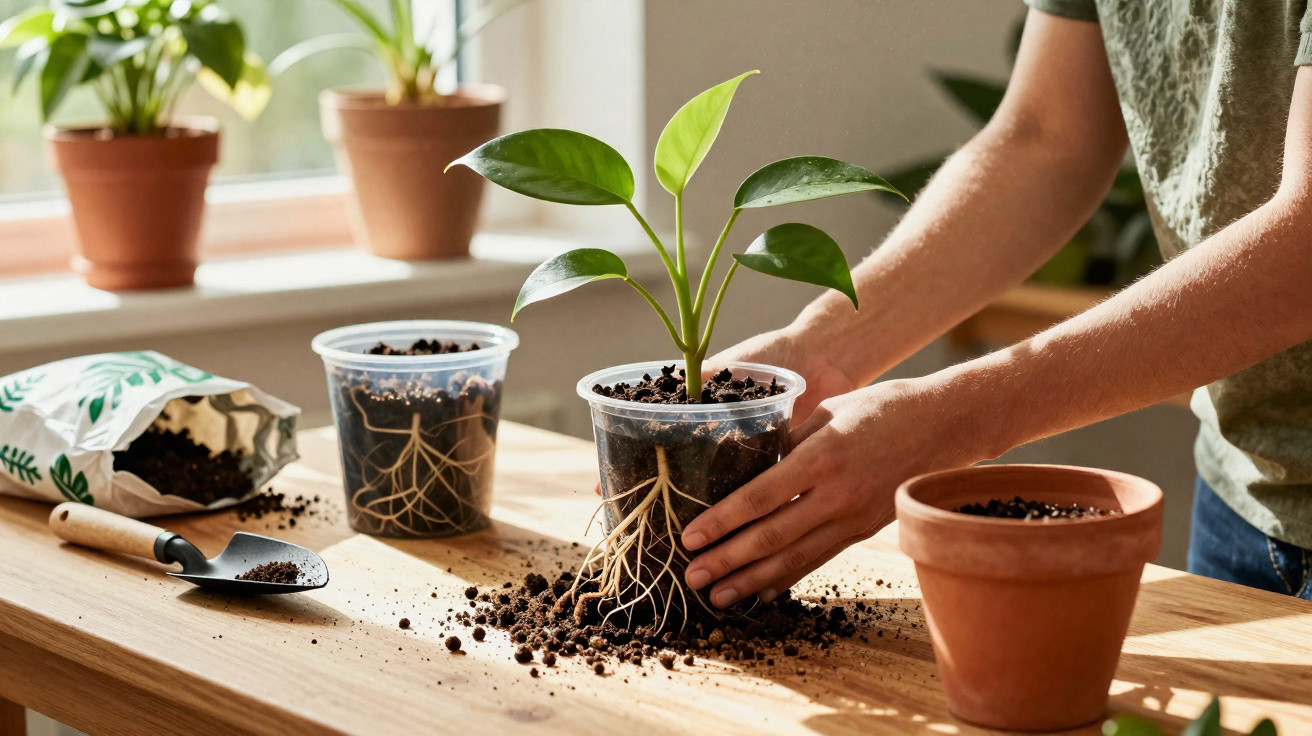
You slide it out of the plastic pot and there it is: a tight mass of pale roots spiralling around the inside edge like a tangled bracelet. There’s hardly any loose compost left - just roots looping endlessly back on themselves. That plant didn’t “hate you”. It had simply run out of space.
Move that exact plant into a slightly larger pot with a more open mix and it can take off within weeks. Nothing mystical happened. It just regained room for its roots.
Plants grow in two directions at the same time. What you see above ground usually mirrors what’s happening below. A plant producing short, cautious leaves often has short, cautious roots. When roots are squeezed, waterlogged, or deprived of oxygen, the plant sends itself a clear instruction: “Slow down. Growing is risky right now.”
So it plays safe - fewer leaves, thinner stems, flowers that take longer to appear.
We often fixate on fertilisers and fancy sprays, but the blunt truth is this: if roots can’t travel freely through a light, living substrate, no nutrient cocktail on earth will turn your plant into a monster.
Fast growth starts where you’re not looking.
How to give roots the “space and air” they’re begging for
One of the most overlooked moves in home gardening is repotting before things feel “critical”. Many people wait until the plant looks dreadful, or until roots are literally forcing the pot out of shape. By that point, growth may have been stalled for months.
A simple routine works better. Roughly once a year, ease the plant out of its pot and take a look. If you spot a thick spiral of roots pressed against the plastic, step up to a pot that’s only 2–4 cm wider - not a massive bucket. Use your fingers to gently loosen the root ball so it can fan out again. Then replant in a mix that feels airy and crumbly, rather than heavy like wet cement.
It’s a 15-minute job, and the plant behaves as though you’ve hit a reset button on growth.
Many slow-growth issues come from care that’s well meant but slightly overdone. You adore your plant, so you water regularly. You choose a rich compost that feels heavy and “nutritious”. Then you drop it into a decorative cover pot with no drainage because it looks better. For a while, it seems fine: glossy leaves, dark compost, and a faint sense you’re doing the right thing.
But inside the pot, the roots sit in stagnant water, oxygen levels fall, and gradually the plant shifts into survival mode. All that effort ends up holding it back. We’ve all been there, that moment when you realise your plant didn’t die from neglect but from too much love.
The answer isn’t to care less - it’s to care in a different way.
“Healthy roots are like a good Wi-Fi signal,” laughs one urban gardener I met. “You don’t see them, but when they’re bad, everything on the surface gets glitchy and slow.”
- Pick pots with proper drainage holes, even if they’re mainly decorative.
- Use a mix with texture and structure: universal potting compost + perlite or coarse sand can work wonders.
- Repot slightly sooner than your instincts suggest.
- Water thoroughly, then let the extra drain away - don’t leave the pot sitting in a saucer swamp.
- Once a year, tease the roots apart gently rather than leaving them locked in tight circles.
Rethinking growth: from “green decor” to living system
Once you treat roots as the main character, your whole perspective shifts. You stop measuring your ability by how shiny the leaves look this week, and start asking quieter, more useful questions. When did this plant last get extra space? Does the compost feel springy and alive, or dense like a brick?
You also start noticing what happens after repotting. A philodendron that’s been frozen in place for months suddenly produces a new leaf every ten days. A balcony tomato can double in size after escaping a cramped starter pot. Even a droopy supermarket orchid can perk up once its roots are in airier bark instead of tightly packed moss.
Let’s be honest: nobody keeps on top of this every single day.
What usually speeds up growth isn’t buying more plants or splashing out on pricier fertiliser. It’s building small, almost boring habits around the invisible bits: keeping a bag of perlite or bark at home; avoiding attractive but suffocating pots; setting a spring reminder for a “root check weekend”.
Do that, and your home slowly changes from a set of struggling green ornaments into a collection of tiny ecosystems that respond when you adjust the basics. Growth feels less mysterious and more like a relationship: you provide space and air, and your plants respond with leaves and flowers.
You don’t need a greenhouse. You need a different focus.
| Key point | Detail | Value for the reader |
|---|---|---|
| Root health first | Prioritise airy soil, gentle root loosening, and annual repotting into slightly larger pots. | Faster, more reliable growth without relying on complex products. |
| Drainage over decoration | Use pots with holes, avoid stagnant water, and add materials like perlite or bark. | Reduces root rot risks and keeps plants out of permanent “survival mode.” |
| Small habits, big impact | Quick root checks, seasonal repotting, and lighter substrates. | Transforms slow, stuck plants into vigorous, responsive ones over time. |
FAQ:
- Question 1 How do I know my plant is root-bound if I don’t want to unpot it?
- Answer 1 Look for roots coming out of the drainage holes, soil that dries extremely fast, and a plant that topples easily because the pot is light but the top is heavy. These are strong signs the roots are packed tight inside.
- Question 2 What’s a simple soil mix that works for most houseplants?
- Answer 2 A basic, reliable mix is 2 parts universal potting soil, 1 part perlite, and 1 part fine bark or coarse sand. It drains well, keeps oxygen around the roots, and avoids the heavy, compacted feel that slows growth.
- Question 3 Can I repot a plant any time of year?
- Answer 3 Most plants handle repotting best in spring and early summer, when they naturally want to grow. You can repot gently in other seasons if needed, but avoid major root work right after buying a stressed plant or in the middle of a heatwave.
- Question 4 Do I always need a bigger pot when I repot?
- Answer 4 Not always. If the plant isn’t root-bound but the soil is exhausted or compacted, you can “refresh” it by keeping the same pot, loosening roots a bit, and replacing most of the mix with fresh, airy substrate.
- Question 5 Why are my plants still not growing fast even with good roots?
- Answer 5 Once root issues are solved, look at light and temperature. Many plants simply sit still in dark corners or cold rooms. Good roots plus enough light usually unlock the growth you’ve been waiting for.
Comments
No comments yet. Be the first to comment!
Leave a Comment