
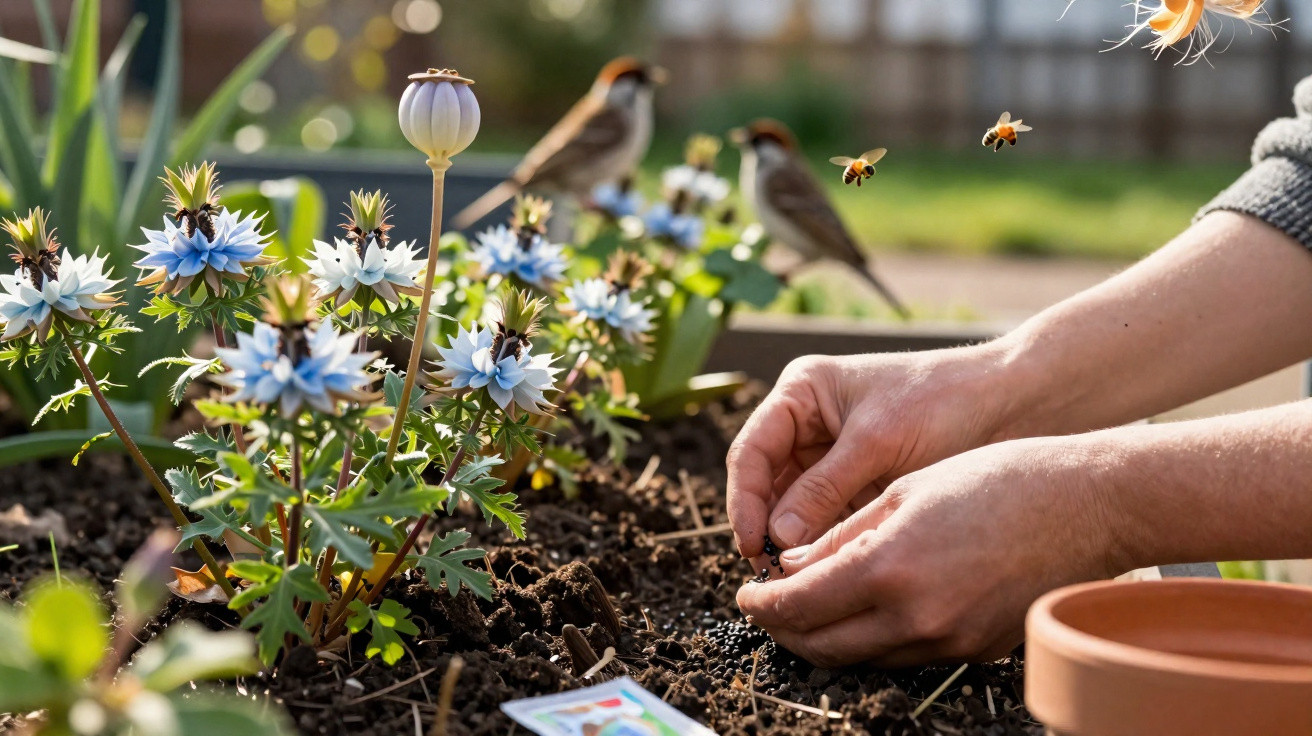
Many keen gardeners reach spring and find themselves staring at bare beds, unsure what to plant: something that grows quickly, looks attractive and also benefits wildlife. Between pricey ornamental perennials and delicate exotics, there is a surprisingly straightforward option - a time-honoured, almost nostalgic flower that needs very little attention yet brings colour and life to the garden for months.
A delicate beauty with a big impact: love-in-a-mist (Nigella damascena)
At the heart of this is a plant that used to be a staple of cottage and farm gardens, but is often overlooked today: love-in-a-mist (Nigella damascena), commonly sold simply as “nigella” or under its botanical name. This annual summer flower may seem modest at first glance, but it can make a striking impression once it is growing in the border.
What makes it so effective is its balance of airiness and abundance. It forms fine, almost floating clouds of foliage and flowers that sway gently in the breeze. Rather than rigid lines, it creates a relaxed, romantic look - ideal for anyone who wants a garden that feels more natural and full of movement.
“Love-in-a-mist turns bare corners into a loose sea of flowers with very little effort - and at the same time provides food for insects and birds.”
Filigree foliage like green lace
Love-in-a-mist is known for its delicately divided leaves. The foliage looks like soft lace or fine dill threads, creating a light cushion that does not smother neighbouring plants. That texture makes it perfect for softening hard edges - for example along fences, threaded between perennials, or beside paths.
The flowers sit like small stars on top of this green veil. They appear in pale blue, white, pink, or gentle blends of these shades. On overcast days in particular, the pastel tones act like little pools of light in the bed and can make even gloomy moments in March feel more cheerful.
Early, generous flowering with very little gardening
Sow directly into the soil in March and you can expect rewards early in summer. Love-in-a-mist grows quickly, fills gaps in perennial borders and disguises bare patches in the vegetable garden. It works well:
- between berry bushes and fruit trees,
- along the edges of vegetable beds,
- in sunny front gardens,
- in large pots and containers on a balcony or terrace.
It also asks very little of you: no constant cutting back and no complicated feeding regime. If you water until the seedlings are properly established, you can largely leave it to its own devices afterwards - especially in a typical temperate European climate.
Sowing in March: how to get it right without expert know-how
To reach its full potential, love-in-a-mist mainly needs two things: sunshine and a soil that drains well.
Choosing the spot: sunshine matters more than rich soil
A position with direct sunlight for several hours a day is best. Partial shade is possible, but flowering will be a little less abundant. When it comes to soil, it is impressively unfussy: poor or average soil, even slightly stony ground - none of that is a problem.
What matters is that rainwater does not sit around for long. If your soil is heavy, work in a little sand or fine grit so the roots are not left waterlogged.
“The most important rule: sun plus drainage - this flower needs little more than that.”
Direct sowing into the bed: scatter, press down, done
Love-in-a-mist develops a sensitive taproot and dislikes being moved once it has grown on. That is why direct sowing in March is the best approach.
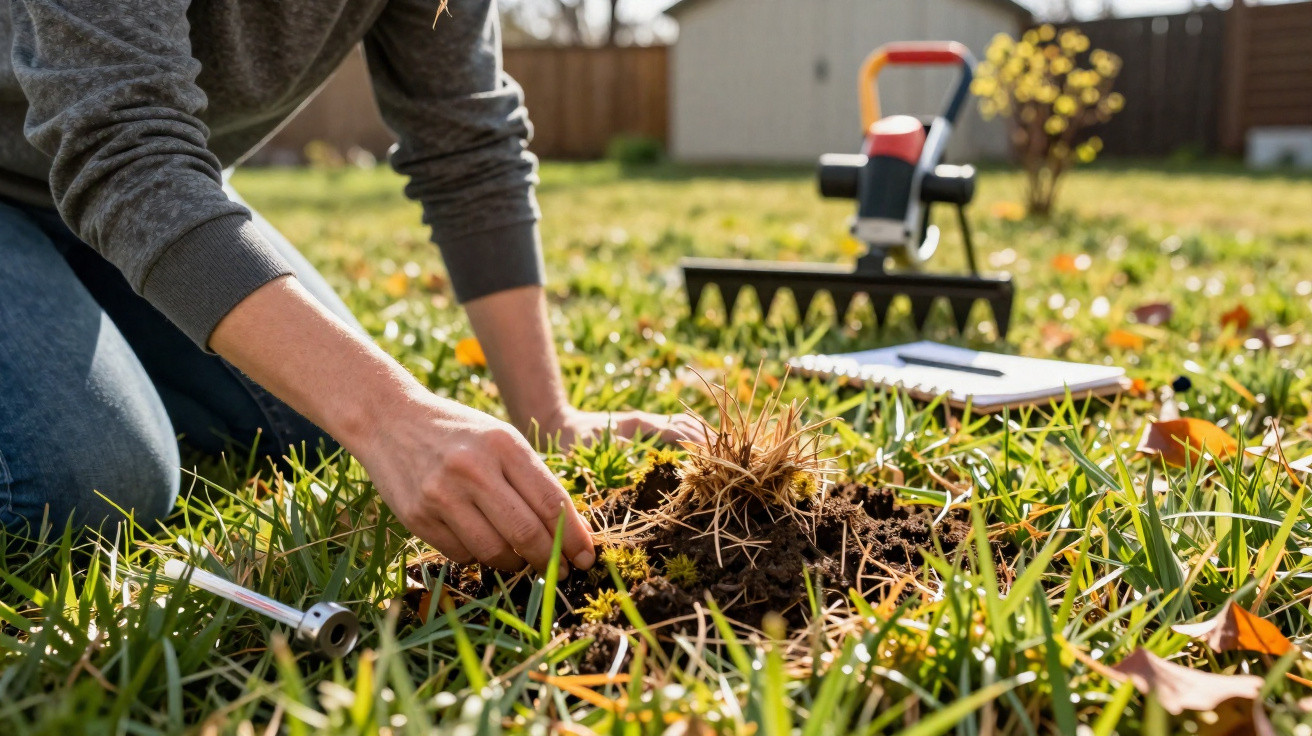
- Loosen the soil roughly, removing stones and large clods.
- Lightly level the surface with a rake.
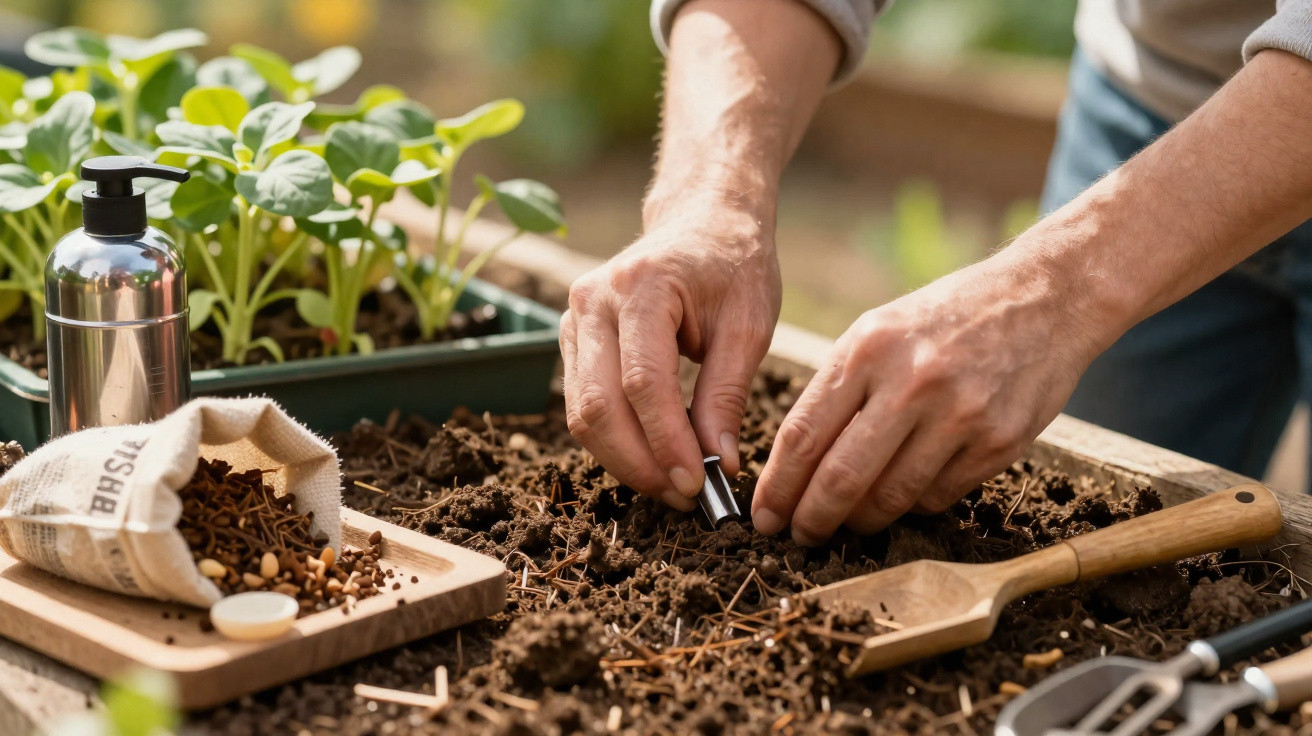
- Scatter the seeds by hand, keeping them reasonably spaced.
- Press in gently with the rake or cover with a very thin dusting of soil.
- Water with a fine spray so the seeds are not washed away.
After around two to three weeks, the first delicate seedlings appear. During dry spells in spring, light, regular watering is enough until they are well rooted.
Young plants from the garden centre: take care when planting out
Some garden centres sell pre-grown love-in-a-mist plants in April or May. If you want a more immediate effect in the border, you can use these instead. The key is to keep the rootball as intact as possible.
The plant reacts poorly to damaged roots. In practice that means: do not pull the rootball apart, make the planting hole large enough, and water thoroughly after planting. As with direct sowing, heavy soils benefit from mixing in sand so excess water can drain away.
A bee magnet and a bird buffet in a single plant
Love-in-a-mist is not just attractive - it also makes a genuine contribution to garden ecology. By sowing it, you are also setting up a feeding stop for pollinators and birds.
Plenty of nectar for bees, bumblebees and butterflies
The star-shaped flowers are rich in nectar. As soon as temperatures rise, honeybees, solitary bees and bumblebees visit the plants repeatedly. Small butterflies also benefit from this reliable food source in early summer.
For gardeners, that can have a practical knock-on effect: where pollinators are abundant, fruit trees, berry bushes and vegetables such as courgettes or pumpkins often set better. This delicate flower therefore supports a more generous harvest in the background.
Decorative seed pods as winter food for birds
After flowering, distinctive balloon-like seed pods form. By late summer they dry out, turn brownish, and remain clearly visible - an eye-catching feature well into late autumn.
“If you leave the seed pods standing, you also create a natural buffet for finches, sparrows and other seed-eaters.”
Inside the pods sit countless small black seeds that birds like to pick out in autumn and winter. At a time when natural food sources are dwindling, every remaining plant in the garden can make a worthwhile contribution - without relying on bought-in seed mixes.
Sow once, enjoy for years: self-seeding as a bonus
If you allow love-in-a-mist to ripen in autumn, you benefit twice over the following year. The plant readily self-seeds: once mature, the pods split open, the seeds fall to the ground, and they germinate on their own the next spring.
Less work, more flowers - with a little control
Over time, this creates a relaxed carpet of new plants without you needing to sow every year. If you do not want it spreading everywhere, simply remove some pods before they open, and leave a few only where you want new seedlings.
This habit makes love-in-a-mist particularly appealing for low-maintenance gardens, wildlife-friendly areas and rural-style front gardens. Even in urban courtyards, it can gradually create a small flowering habitat that needs very little watering and general upkeep.
Practical tips for combinations and everyday use
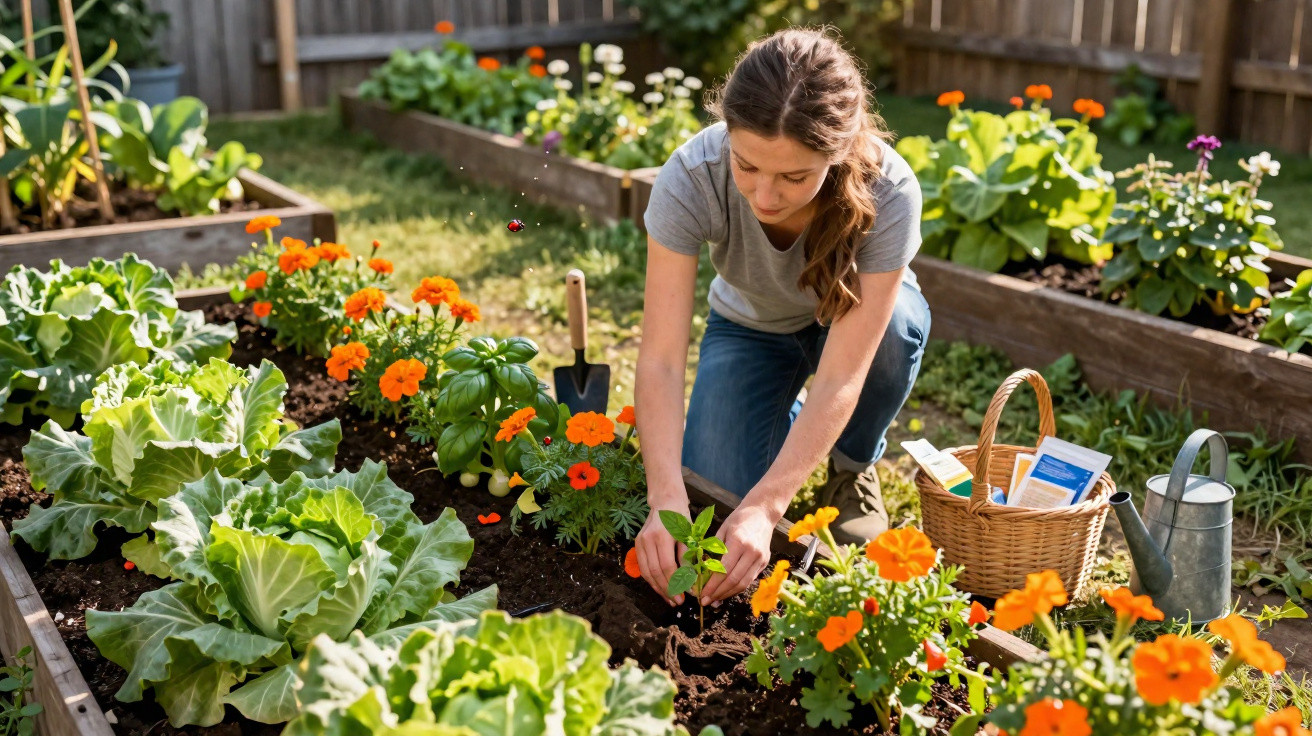
In borders, love-in-a-mist looks especially good when paired with other equally straightforward plants. Popular companions include pot marigolds, cornflowers and cosmos. Together they create a scene reminiscent of classic meadow planting and traditional cottage gardens.
It can also bring enjoyment indoors: the flowers suit loose, short-lived bouquets. The dried seed pods last much longer and can be used in vases, wreaths or autumn arrangements.
What hobby gardeners should also know
If you garden with children, love-in-a-mist fits well into small projects. The seeds are easy to see, germination is usually reliable, and the change from a delicate flower to a plump pod can feel almost magical to many children.
Pet owners may also be interested in this: the plant is not considered a common grazing plant. Dogs and cats usually show little interest in it. Even so, as with all ornamental plants, it is sensible to place pots and beds where animals are less likely to dig or nibble.
Anyone aiming to make their garden more wildlife-friendly will find love-in-a-mist an easy place to start: it adds colour, texture and life without filling the diary with maintenance tasks - and it gradually turns a simple bed into a small, living ecosystem.
Comments
No comments yet. Be the first to comment!
Leave a Comment