
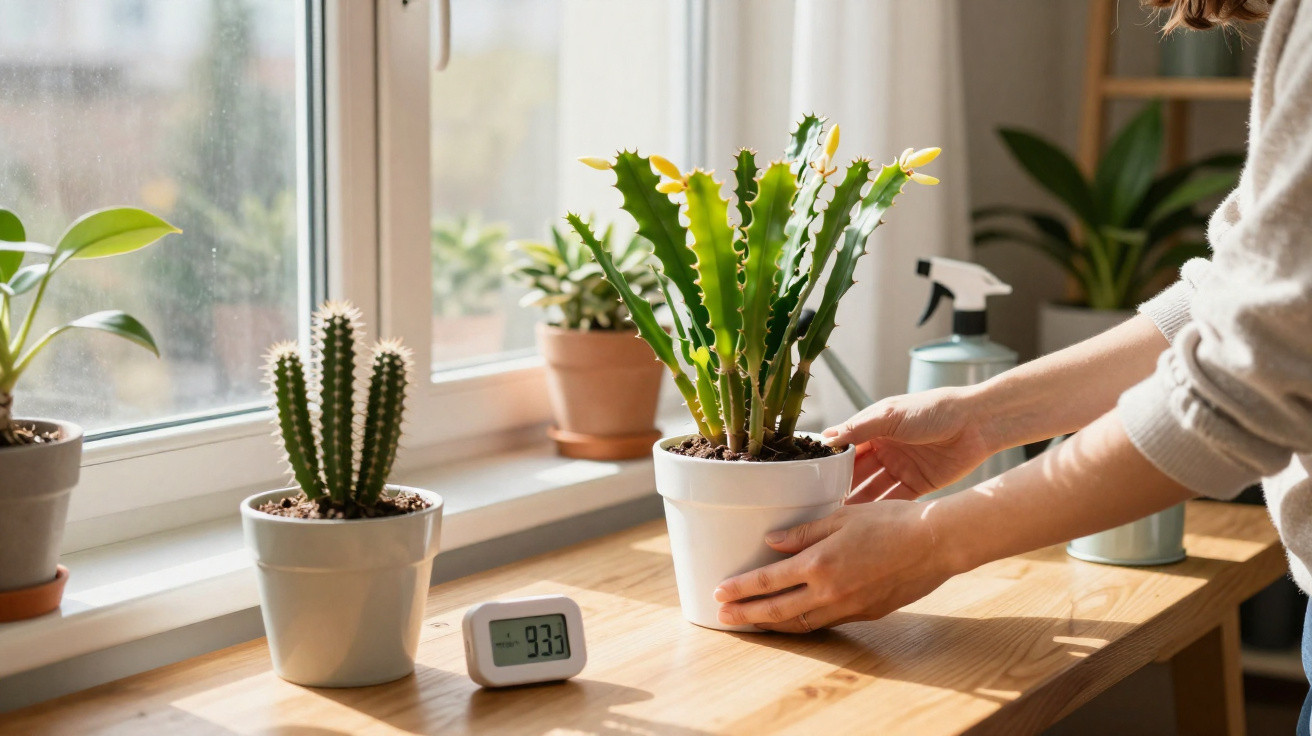
Often, it comes down to a single care mistake made in winter.
Plenty of plant lovers will recognise this pattern: in the first year your Easter cactus was bursting with life, covered in bright, starry blooms. The following year it still looks healthy and produces new segments - yet when Easter arrives there’s nothing. No buds, no splash of colour. This is rarely about a “lack of green fingers”; it’s almost always the result of getting light, temperature and watering wrong during the winter months.
The Easter cactus is not a desert cactus
The Easter cactus (most commonly sold under the botanical names Rhipsalidopsis or Hatiora) originates in South America’s tropical forests. In the wild it doesn’t sit in hot sand - it grows high up in the tree canopy, clinging to branches. It receives filtered light, plenty of fresh air, and a loose growing medium made from rotted leaves and bits of bark.
Treating it like a typical desert cactus is a mistake. It needs:
- a bright position without harsh midday sun
- a loose, free-draining compost - not heavy garden clay
- moderately higher humidity rather than dry, centrally heated air
Here in the UK, its natural flowering window is roughly March to May. At its best, the entire pot can be studded with star-shaped flowers - but only if the plant was allowed a genuine rest beforehand.
Confusing it with the Christmas cactus often causes problems
Many home gardeners mix up the Easter cactus with the much more familiar Christmas cactus. They look similar at first glance, but the differences are clear:
- Flowering time: Christmas cactus in winter, Easter cactus in spring
- Segments: Easter cactus is usually rounder and less toothed
- Rhythm: the Easter cactus’s rest period falls right in the middle of our heating season
That mix-up leads to a predictable outcome: in December the Easter cactus sits in a warm room on the windowsill, gets evening light for hours, and is watered as usual - when it should be resting somewhere cooler. Yet this is exactly the time it forms the structures that later become flower buds. If that phase doesn’t happen, neither do the flowers.
The real key: a clear annual calendar
"If you want the Easter cactus to bloom, you need to give it more ‘seasons’ than your living room does."
For buds to form on time, the Easter cactus needs a noticeably cooler, darker rest period lasting around eight to twelve weeks. Temperature matters - but so does the length of the night.
Autumn to winter: the cool break
From late autumn (roughly from late October or November), the resting phase begins. Suitable conditions include:
- temperatures between 10 and 15 °C
- around eight hours of indirect daylight
- at least twelve hours of real darkness with no lamplight
Good locations include a lightly heated spare room, a bright stairwell, or a cool bedroom windowsill - as long as there’s no artificial light in the evenings and it isn’t right next to a radiator.
During this time the cactus slows its metabolism, yet it quietly sets up its future flower buds. If it’s kept too warm or too bright, the message it receives is: “grow, don’t bloom” - and bud formation is disrupted.
Spring: wake it gently
From February, you can gradually move the pot back into a warmer room. Ideally aim for 18 to 20 °C with more light by the window, still avoiding strong direct sun. Watering can increase slightly again, but the roots must never sit in water.
This is usually when the first buds appear at the tips of the segments. At that point: don’t keep turning the pot, don’t shuttle it between warm and cold rooms, and avoid draughts right by the window.
Water, light, temperature - how to place it and water it correctly
The Easter cactus is sensitive to change. A steady routine encourages flowers rather than stress.
Watering schedule through the year
Rule of thumb: never leave the compost permanently wet - but don’t let it dry out completely for weeks on end either.
- Spring/summer (growth): water every one to two weeks; the top layer can dry slightly between waterings.
- Autumn: water less often, lower temperatures gradually, and stop feeding.
- Winter rest: every three to four weeks give a small glass of water - just enough to prevent the segments from shrivelling.
The compost should be light and airy: two thirds quality houseplant compost, plus one third drainage material such as perlite, coarse sand, lava grit, or fine pine bark. Standing water in a cachepot or saucer quickly causes rot in this forest cactus - typically seen as soft, glassy, mushy segments.
Light and positioning without stress
Indoors, the Easter cactus is happiest in a bright spot set slightly back from the glass. Direct midday sun in summer can scorch it. In winter, the sun is lower and less intense, which is fine - provided the resting temperature is kept.
Artificial light is especially relevant during the rest period. If the plant sits under constant evening light from a living room or kitchen, it never gets the long nights it needs. If you don’t have a cool, darker room, at least avoid shining lamps directly on it in the evening and place it a little screened.
The most common mistakes that stop it flowering
"The Easter cactus’s biggest enemy isn’t a pest - it’s well-meaning, constant attention."
Failed flowering is usually traced back to the same issues:
- Winter quarters that are too warm: kept at around 20 °C continuously, often directly above a radiator - the plant may look vigorous but produces few buds.
- Evening light all the time: televisions, floor lamps and kitchen lighting shorten the dark period and throw off the plant’s internal calendar.
- Overwatering: heavy compost that stays wet causes root rot; segments turn soft and drop.
- Moving it during the bud stage: a sharp temperature shift or a draught can make buds fall off.
Keeping these points in mind greatly increases the chance of a proper spring display.
More flowers: humidity and care while it’s in bloom
When flowering, the Easter cactus appreciates slightly higher humidity. In many homes, dry heated air quickly dehydrates the plant, and buds can shrivel and drop.
A simple method: set the pot on a saucer filled with damp expanded clay pellets or terracotta beads. The base of the pot must not stand in water - it should sit above the moist layer. That lifts local humidity without harming the roots.
Turning the pot gently is fine, but not every day. Once a week - at most every two weeks - is enough; otherwise the cactus may respond by dropping buds.
When repotting and feeding are worth doing
After a few years, an Easter cactus can become fully root-bound. In that case, repot after flowering (late spring or early summer) into a slightly larger pot with fresh compost. However, going too large is counterproductive: the plant then puts most of its energy into roots rather than flowers.
During the growth phase you can use a weak cactus feed or flowering plant fertiliser every four to six weeks, heavily diluted. In winter, during the rest period, don’t feed at all.
Why the “winter mistake” matters so much
The underlying issue is almost always the same: the Easter cactus is treated in winter exactly as it is during the rest of the year. A warm home throughout, plenty of light, regular watering - that suits many houseplants, but not this one.
If you stick to a cool, darker rest period and cut back watering, you’ll often see the difference the very next spring: buds appear on almost every tip, and the “boring pot plant” becomes a real Easter showpiece on the windowsill again.
A heavily flowering Easter cactus is a talking point for children and guests alike - and it’s a striking example of how strongly plants respond to day length and the seasons. Respect that rhythm, and you’ll be rewarded year after year.




Comments
No comments yet. Be the first to comment!
Leave a Comment