
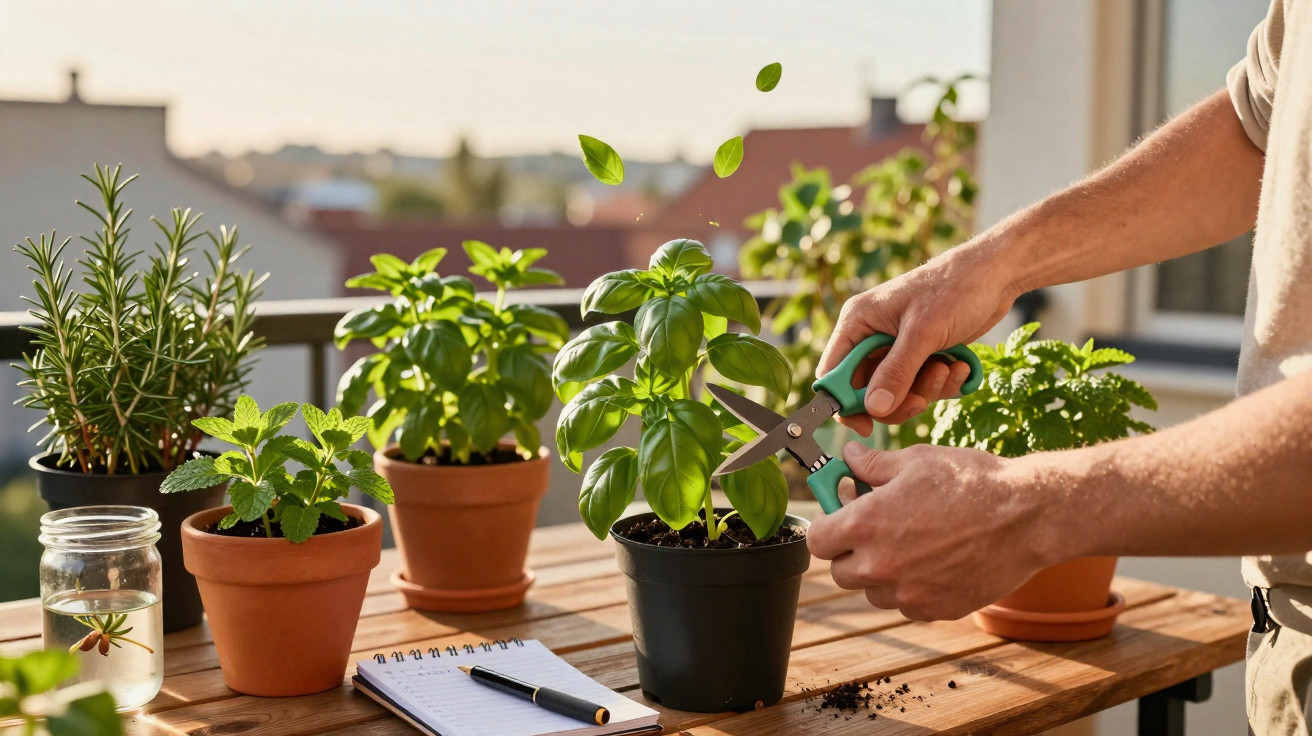
The basil on the window ledge looked like a plucked chicken. Just a few long, woody stems, topped with a meagre little crown of leaves. “That one’s done for,” the neighbour said, already reaching for the bin lid. I stopped her and-almost out of stubbornness-cut back half the shoots. It felt wrong to remove that much green. Almost like sabotaging my own herb pot. Two weeks later, in the very same spot, there was a small, deep-green miracle: dense cushions of leaves, fresh fragrance, almost like a second spring in a pot.
Since then, I’ve watched herbs differently. Mint that suddenly goes into overdrive when you cut it back. Thyme that shifts from a tired, woody shrub into a compact little aroma-bomb. And that faintly magical moment when fine, pale-green tips appear from what looked like a bare stem.
The question remains: what’s actually happening when we trim herbs regularly?
What a clean cut does to your herbs
Anyone who’s ever taken a confident snip into basil, rosemary, or mint knows that brief hesitation. It feels counterintuitive to damage a plant you want to see thrive. And yet, with many culinary herbs, that cut triggers something like a growth firework. Instead of stretching upwards on a single track, the plant starts widening out: it branches, thickens, becomes bushier-and often more fragrant.
Behind the scenes, the plant is following a rather smart internal programme. When you cut, the herb loses some of its leaves-its “solar panels”. In response, it draws on reserves stored in roots and stems and sets up new shoots. One stem becomes two, two become four. And it’s those fresh tips that later hold much of the aroma. In that sense, pruning isn’t destruction at all; it’s closer to a reset.
You notice the difference quickly in everyday cooking. If you only pluck basil from the bottom, within a few weeks you’re left with a long-necked, tired stick. If, instead, you regularly cut just above a pair of leaves, you suddenly harvest proper bunches. A gardener from a neighbourhood allotment told me they “shaved” their parsley every fortnight. The result: rather than a one-off harvest, they had fresh green growth right through to autumn-almost like an endless conveyor belt of herbs.
Even the famous “family mint” in the garden tells the same story. Plenty of households have a patch that returns year after year, even though it’s constantly being picked for tea. One season, when hardly anyone cut it, the mint shot up, flowered early, lost its punch, and looked tired by August. The following year, harvesting started consistently from May-before any flowers appeared. The plant responded with tight, fresh growth, and the tea tasted noticeably more intense.
Underneath all of this is a fairly straightforward mechanism. Plants have what’s called apical dominance: the tip of a shoot releases hormones that suppress the buds below it. Remove that tip, and the brake comes off. Side buds wake up and form new shoots, so the plant branches out. At the same time, it rebalances energy between roots and leaves. When the top is reduced, root growth often slows a little while the plant puts its effort into new growth above. That’s how, within weeks, a sparse herb stem can turn into a small bush after one decisive cut.
How to cut herbs so they bounce back - in the best way
The key principle is simple: don’t just “pick at” herbs at random-cut with intention.
For soft herbs such as basil, mint, lemon balm, or oregano, cut a section off just above a pair of leaves or a small side shoot. That way, you leave dormant buds in place, ready to push on. As a rule of thumb, take about a third up to a maximum of half the plant in one go. Don’t take it down to nothing; think of it like a good haircut: shaping, not shaving.
Woody herbs-rosemary, thyme, and sage-play by slightly different rules. They usually re-sprout from semi-woody growth, not from very old wood. Here, it pays to do a regular shaping cut in spring, plus a lighter trim after flowering. If you cut shoots just before flowering, you tend to get the highest aroma density. There’s a practical bonus, too: regular trimming keeps plants lower, more resilient against frost, and less likely to topple over in pots.
Many people do exactly what feels easiest with herb cutting-and then regret it later: pluck a leaf here, tear a bit there, and then do nothing for weeks. We all recognise the pattern. Let’s be honest: hardly anyone patrols the window ledge with scissors every morning. Still, a bit of rhythm helps. One small, deliberate trim weekly, or every two weeks, beats constant nibbling.
Another common mistake is the fear of taking “too much”. That hesitation lets herbs rush into flower. Once that happens, energy shifts into seeds rather than leaves. The plant turns tough, the flavour fades, and basil becomes a sad, flowering stalk. If you keep cutting before flowering, you hold the herb in its vegetative, leaf-producing phase for much longer. And yes-sometimes you need that first brave cut to realise: they come back. And how.
“Herbs want to be used. If you don’t cut them, you lose them sooner-not because they die, but because they stop doing what you’re growing them for.” – an older gardener from a community garden in Cologne
- Harvest before flowering – this keeps flavour concentrated in the leaves instead of drifting into seeds and blooms.
- Always cut above a pair of leaves – this activates dormant buds and produces dense, bushy plants.
- Take no more than half at once – what remains keeps feeding the plant so it can re-sprout vigorously.
- Use clean, sharp scissors – crushed stems heal poorly and can rot.
- Water well after cutting, but don’t drown it – the plant needs light and a little calm now, not soggy roots.
Why regular cutting has more to do with us than you might think
When you cut herbs regularly, you don’t only change the plants-you shift how you notice them. What started as “a bit of decoration on the window ledge” becomes a living presence with its own rhythm. You begin to spot the first flower buds as they form. You learn which days basil slumps when the room is too hot and dry. And you experience, right there in the kitchen, how a bold cut unlocks new growth-not as a gardening proverb, but as something you can watch unfold.
There’s something slowing and grounding about this small green routine. A few minutes with scissors over the pot, your hands smelling of thyme and mint, your attention moving away from the screen and back to leaves and light. Many people who now work from home say their herb shelf has become a kind of daily micro-break. Instead of making a third coffee, they step out to the balcony, snip two shoots, and briefly rub the leaves between their fingers. A tiny action, a noticeable effect.
Regular trimming also brings a quiet kind of commitment. If you cut your herbs, you treat them as something worth tending. You start planning meals not only around appetite, but around what’s actively growing on the sill. More mint? Then it’s mint water. Oregano at its best? Maybe you top the pizza yourself. On a small scale, you practise living with cycles rather than fighting them. You can call that sentimental-or simply useful. Herbs that are cut back regularly stay younger for longer, give more harvest, and quietly show, in an unshowy way, how good it can feel to let go of what’s excess from time to time.
| Key point | Detail | Reader benefit |
|---|---|---|
| Regular cutting encourages bushy growth | Removing the shoot tip triggers side shoots and thickens the plant | More harvest in a small space; compact, sturdy herb clumps |
| Use the right technique for each herb type | Soft herbs cut above leaf pairs; woody herbs cut only into younger growth | Avoids bare patches and dead stems; plants stay vigorous for longer |
| Harvesting before flowering boosts flavour | Energy stays in the leaves instead of shifting into seeds and blooms | Stronger taste in cooking; herbs stay usable for longer |
FAQ:
- How often should I cut my herbs back? For fast growers such as basil, mint, or chives, do a light cut every 1–2 weeks; for slower ones like rosemary, trim once or twice per season.
- Can I cut herbs down to just above the soil? For chives and parsley, yes; for woody herbs such as rosemary or lavender, no-always leave some young green growth.
- What happens if I never cut herbs at all? They flower sooner, become woody, turn patchy, and lose aroma-even if they still look “alive”.
- Is plucking instead of cutting bad for the plants? Plucking a few leaves won’t harm them, but it often leads to uneven growth; targeted cutting encourages branching far more effectively.
- Can I fertilise straight after cutting back? A small amount of organic feed or compost can help, but keep it modest-too many nutrients make growth soft and more vulnerable.

Comments
No comments yet. Be the first to comment!
Leave a Comment