
Every winter, robins quietly begin organising the next generation, well before most of us have packed away the fairy lights.
Even when borders look sparse and the garden seems to be dozing, these orange-chested regulars are already assessing secure nesting spots and potential mates. One small, easily missed task in December can nudge the odds in your favour and make your garden the one they settle on, season after season.
Why robins decide on your garden long before spring
Robins might appear unhurried as they hop across the lawn in January, but their year runs to a tight schedule. It is easy to assume nesting only kicks off in spring; in reality, the groundwork is laid much earlier.
In the UK, robins often manage two or three broods each year, and one of those commonly begins early in the new year. By January they are already looking for territories, partners and suitable places to nest. By March, nest-building is properly under way.
That is why any nest box you intend to offer needs to feel inviting before that early window arrives. A box crammed with last season’s nest, droppings and parasites does not exactly suggest “family home”.
Robins start checking garden real estate in January, so your nest boxes must be clean, dry and ready by the New Year.
Bird charities and garden wildlife experts repeatedly recommend one clear job before December finishes: clean out and reset bird boxes ready for the breeding season ahead.
The one job to finish before December ends
If you want robins to return, the key task is straightforward: thoroughly clean every bird box between late autumn and mid-winter, and make sure it is ready by New Year’s Day.
This is not only about robin behaviour. In the UK, timing also matters because of wildlife legislation.
What the law says about nest boxes and eggs
Under the Wildlife and Countryside Act 1981, active nests must not be disturbed. Once birds have moved in, you are required to leave them undisturbed. That protection includes eggs that have not yet hatched.
Any old eggs that remain in a nest after the breeding season may only be removed between September and January. They must then be disposed of. Keeping the eggs is illegal, even if they never hatched.
Cleaning, clearing and any removal of old eggs needs to happen in the narrow September–January window, or you risk breaking the law.
So the safest, lawful point to refresh a box lands in the damp, post-summer quiet spell-exactly when many gardeners overlook wildlife jobs. If you do it then, you give robins a meaningful head start.
How to clean a bird box without harming wildlife
A nest box does more than house a brood of chicks. Over the year it can accumulate mites, fleas, bacteria and mould. Leaving the previous nest in place risks turning the box into a health problem.
Wildlife organisations generally suggest a simple winter routine.
Step-by-step: a winter clean that robins will appreciate
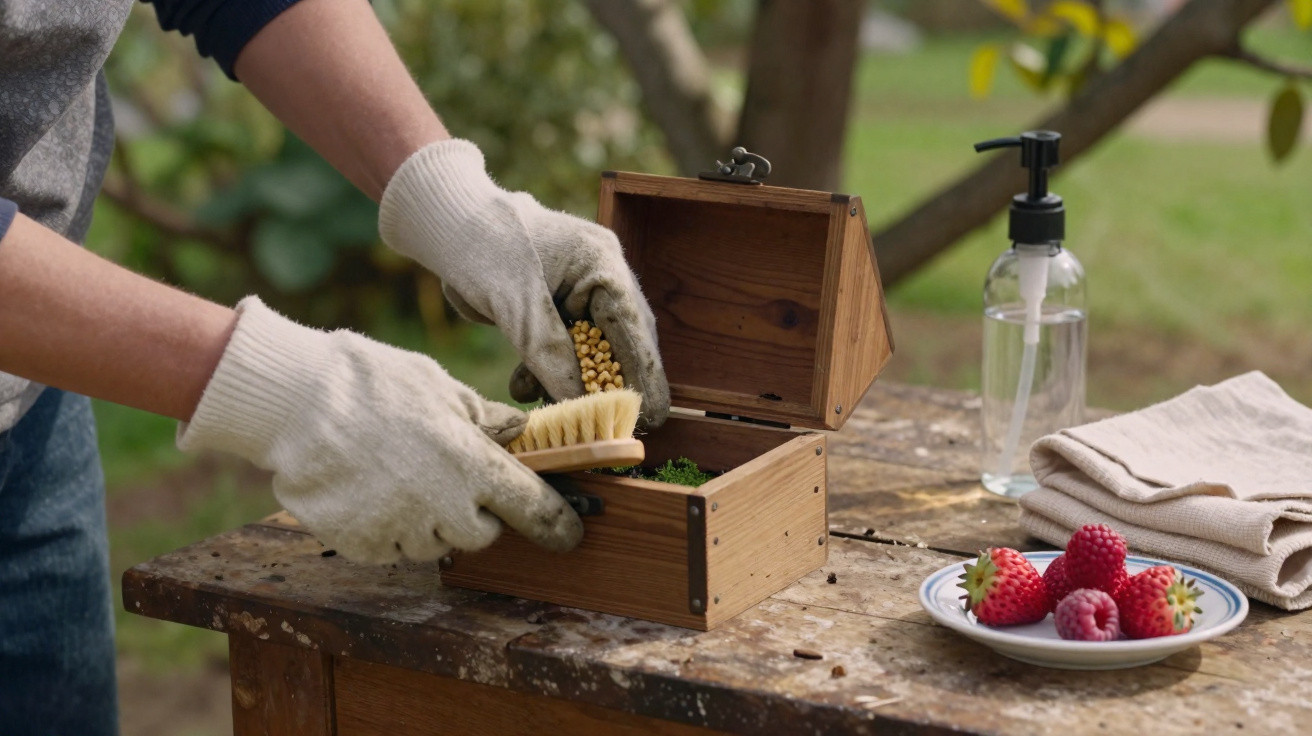
- Bring the box down at any point from late September to February, when you are confident it is empty.
- Open it and remove all old nesting material, droppings and general debris.
- Boil a kettle and pour hot water over the inside to kill parasites.
- Leave it open in a shed or another dry place so it can air and dry completely.
- Make sure the entrance hole and any drainage gaps are unobstructed.
- Fix anything that has worked loose: screws, a damaged roof, or cracked panels.
- Put the box back up no later than the end of December.
Wildlife charities strongly discourage using insecticides or flea powders, as residues can harm adult birds or chicks. Boiling water is effective without introducing chemicals.
A simple rinse with boiling water once a year keeps parasites down and makes the box feel fresh, dry and safe for the next brood.
Where to place a bird box so robins actually use it
Cleanliness helps, but robins still need a spot that matches how they naturally nest. They tend to choose sheltered, tucked-away places rather than high, exposed branches.
In the wild, robins often nest in:
- Log piles and brush heaps
- Hollows in tree trunks
- Dense hedges and thickets
- Gaps in walls, sheds or banks
They usually favour locations close to the ground, with protection from wind and predators. For garden boxes, many ornithologists suggest positioning them no higher than about 1.8–2.1 metres if you are hoping to attract robins.
| Placement factor | What robins tend to prefer |
|---|---|
| Height | Near ground level, up to around 1.8–2.1 metres |
| Direction | Facing away from prevailing wind and heavy rain |
| Cover | Partly concealed by shrubs, ivy or a fence |
| Disturbance | Quiet corners, away from doors, play areas and busy paths |
| Predators | Not directly above a feeding station used by cats or corvids |
Take a slow walk around your garden and try to see it as a robin would. A good nest site feels hidden. It is not a place where people or pets constantly pass by. It sits near cover, with easy access to food-rich borders or a lawn.
Choose a sheltered corner, low but not ground-level, with foliage nearby and as little human traffic as possible.
The golden rule: do not go looking for the nest
If a robin starts showing interest in your box, fight the temptation to take a look inside. Plenty of nests fail because of well-intentioned curiosity.
Robins may abandon a nest if they feel it has been discovered. Even a quick lift of the lid, or repeated visits, can be enough for them to leave eggs or chicks.
Instead, observe from a distance. You can still notice adults arriving with moss and leaves, and later returning with beaks full of insects, without hovering over the box.
Beyond the box: small extras that keep robins loyal
A clean nest box in a suitable position is the foundation of a robin-friendly garden. A few additional measures can make it more likely they stay through winter and return each year.
Winter food and water that make a difference
Robins can handle cold snaps, but frosty nights put pressure on their energy reserves. Reliable food and water can help them maintain a territory.
- Scatter mealworms, suet pellets or soft, high-energy mixes on a ground feeder.
- Keep at least one shallow dish of water from freezing by topping it up each morning.
- Leave some fallen leaves and dead stems so insects remain available as natural food.
Robins often defend small territories, sometimes fiercely, so putting out several feeding spots can reduce squabbles between birds.
Turning a routine task into a winter ritual
Cleaning out a bird box can feel like a dreary job, yet it can also become a quiet seasonal habit. Some households now treat late December as “bird box week”: checking boxes, feeders, water dishes, and the general condition of the garden.
For children, that small routine can be an early, practical lesson in wildlife care and the legal protection around birds and nests. For adults, it is a reminder that birds keep close track of the calendar, even when we feel stuck between the holidays and the grey, damp days.
Even a balcony, courtyard or small yard can accommodate a scaled-down version. One box on a sheltered wall, a pot of dense evergreen planting and a little food may still draw a robin in. Size matters less than doing it on time, and doing it consistently.
By the time spring bulbs push through the soil, the choice is often already made. A robin either regards your garden as a clean, secure base for raising chicks, or it has quietly gone elsewhere. More than anything, that decision hinges on what you do with that small wooden box before December turns into the new year.




Comments
No comments yet. Be the first to comment!
Leave a Comment