
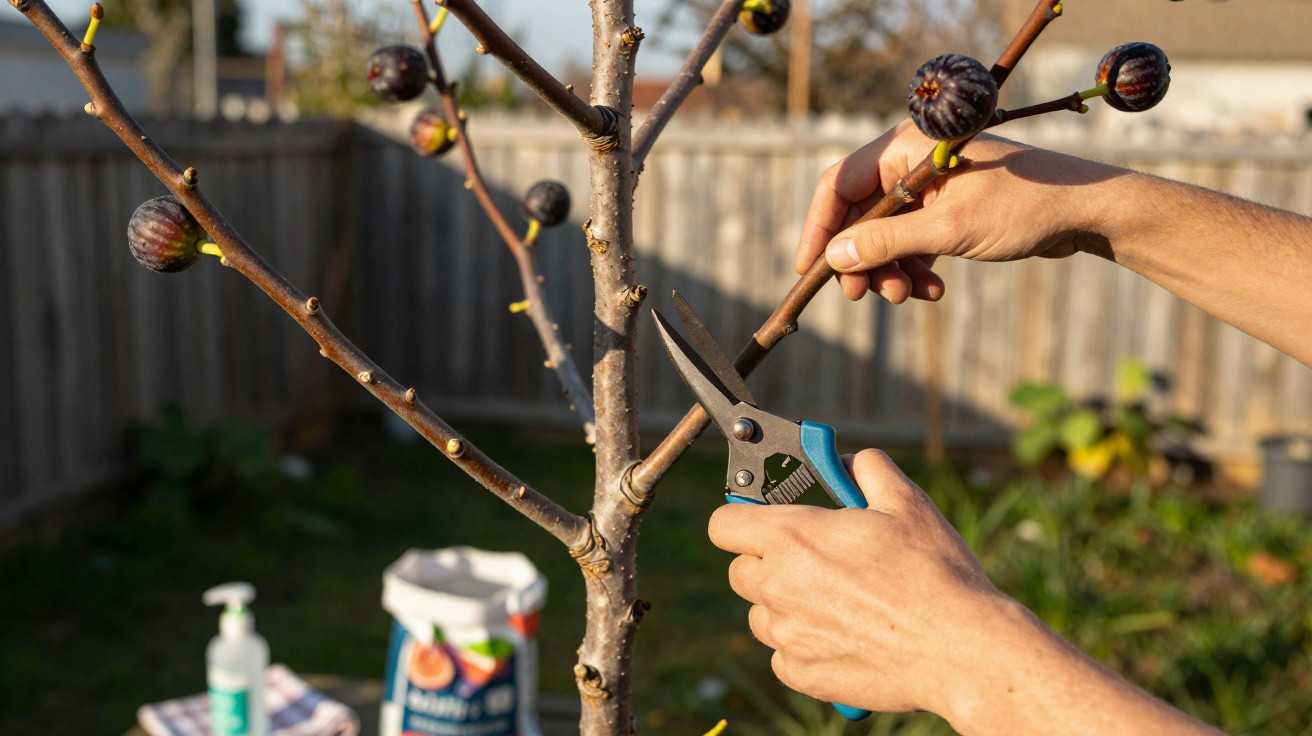
Many amateur gardeners know the frustration: a fig tree covered in magnificent leaves, yet by the end of summer there are only a handful of miserable fruits hanging on the branches.
One neighbour hauls baskets of sweet figs back from their plot, while another stands baffled in front of a vigorous, leafy, but almost fruitless fig tree. The variety is often blamed first, and sometimes climate change gets the blame too. In reality, the outcome is usually decided by a single overlooked job at the end of winter: whether the tree later groans under figs or merely shows off foliage.
Why fig trees often produce leaves instead of fruit
A fig tree that has gone for years without seeing pruning shears will eventually lose all shape. The crown becomes overcrowded, branches cross over, grow back into the centre, and block out most of the light. Inside, a damp, shaded microclimate forms - ideal for fungal problems, and terrible for fruit buds.
At the same time, pruning too hard can cause the opposite issue: the tree may look neat and healthy afterwards, but the fruit-bearing buds have been removed. What follows is lots of new shoots and leaves, while the hoped-for figs fail to appear.
"The crucial difference between a full basket of figs and a disappointment tree is often a targeted cut at the end of winter."
The best window is late winter to very early spring, once severe frosts are no longer likely and the buds are just about to break. In much of Central Europe this is usually between February and March. At that point you can steer growth without exhausting the tree.
The ideal framework: 4 to 6 strong scaffold branches
For heavy cropping, a fig tree needs a clear framework rather than a tangled mess. Specialists recommend keeping four to six sturdy main branches. These should form an open bowl - a kind of "goblet" - around the trunk.
Proceed like this:
- Choose only the most vigorous, uninjured branches, spaced evenly around the trunk.
- Remove branches that grow inwards, cross, or rub against each other, cutting them off at the base.
- Cut out dead wood and any obviously diseased shoots completely.
The aim is a bright, airy crown with no dark, sealed-off centre. Sunlight and airflow should reach right into the tree. When they do, far more healthy fruit buds develop.
This doesn’t apply only to the top of the crown. Tidy up thoroughly around the trunk and at the base as well. Shoots rising from the base - often called water shoots or gourmands - drain a huge amount of energy but rarely produce a worthwhile crop themselves. Remove them as early as possible, ideally cut close to their point of origin.
How far you can cut back without wrecking the harvest
On the chosen main branches, leave the leading shoots in place but shorten them. A practical rule of thumb is to remove about a third of their length. This acts like a wake-up call for dormant buds further down the branch. The tree starts to branch closer to the base of the main limbs - exactly where many figs will later form.
With so-called twice-bearing varieties (biferous figs), the early figs often sit on two-year-old wood. That older wood should be kept wherever possible. So avoid a blanket, radical cut; instead, look carefully at which older shoots are likely to carry fruit.
| Pruning mistake | Result |
|---|---|
| No pruning for years | Dense crown, fungal issues, few fruits, lots of leaf mass |
| Severe pruning back to a few stubs | Strong new growth, but hardly any figs in the next few years |
| Removing the wrong branches (fruiting wood cut away) | Healthy-looking tree, attractive shape, very poor harvest |
The small pruning trick: always cut above an outward-facing bud
One detail makes an enormous difference: make the cut just above a bud that points outwards. That bud will produce the next shoot. If it points inwards, the new growth heads back into the middle of the crown and clogs the airflow channel you have just worked hard to open.
"Anyone who consistently cuts above an outward-facing bud will, over the years, shape an open, sun-filled fig tree - almost automatically."
This approach doesn’t just reduce disease pressure. It also lowers the need for plant protection products, because damp, poorly ventilated pockets are less likely to form in the first place.
Without sun and warmth, even the best pruning achieves little
Even perfect technique won’t help if the site is wrong. Figs originate from warmer regions and, for all their toughness, they remain devoted sun-lovers.
Basic site rules:
- At least six hours of direct sun each day.
- A warm, sheltered position, for example in front of a south- or west-facing wall.
- Loose, well-drained soil; avoid waterlogging at all costs.
- Slightly acidic to mildly neutral pH, around 6 to 6.5.
A mulch of leaves, grass clippings, or shredded prunings in a layer of 5 to 20 cm protects the roots. It keeps moisture in the soil for longer and prevents extreme temperature swings around the root zone.
Fertilise correctly: more figs, less leaf mass
It’s also easy to get feeding wrong. Many gardeners overdo nitrogen-rich fertilisers because they read vigorous leaf growth as proof of a healthy tree. The plant responds with huge leaves - but not with more figs.
For a generous crop, a fig tree mainly needs potassium and phosphorus. A balanced fruit-tree feed, or a home-mixed fertiliser with a higher potassium share, supports flowering and fruit set. Well-rotted compost adds extra nutrients and improves soil structure.
"Too much nitrogen means a jungle look in the garden, but the fig bowl stays empty."
Region and variety: why not every fig tree responds the same
In cooler areas - such as northern Germany or higher ground - variety choice and frost risk matter more. Some figs crop only once a year (uniferous varieties), while others crop twice. In regions prone to late frosts, once-bearing varieties are often the safer bet. The first flush on twice-bearing trees can be wiped out completely by frost.
There are also varieties that depend on a specific tiny fig wasp for pollination. In many parts of Europe that wasp isn’t present. In that case, the tree will produce hardly any edible fruit, no matter how well it is pruned. Anyone planting new should specifically ask for self-fertile varieties suited to Central European gardens.
Practical tips for your next late-winter prune
To avoid turning your next attempt into a nerve-racking guessing game, follow a fixed routine:
- Work on a frost-free day in late winter.
- Start by removing dead, diseased, and inward-growing wood.
- Select four to six strong main branches and cut out all competing branches.
- Shorten shoots on the main branches by about a third, cutting just above an outward-facing bud.
- Cut away all water shoots on the trunk and from the root area, as low as possible.
- Finish by applying mulch and, if needed, feeding moderately.
If you’re unsure, take a cautious approach with young trees: a light, regular prune each year is better than a radical intervention every few years. The tree responds more calmly, and yields improve more steadily.
What many people don’t realise: figs only crop properly after a few years
Fig trees require patience. Many specimens spend their first three to five years mainly building roots and wood. Only after that do they enter a reliable fruiting phase. If you shape them with consistent, structured pruning during this period, you set them up for many productive years later.
Beginners are often confused by the different terms: "breba figs" refers to the first harvest on older wood, while "autumn figs" grow on the current season’s shoots. Depending on the variety, one of these waves matters more than the other. Checking the label when buying - or asking a quick question at the nursery - helps avoid disappointment later.
If you’re also experimenting with other Mediterranean species such as pomegranate or olive, similar principles apply: open crowns, plenty of light, and careful feeding. In densely built-up areas with warm house walls, these trees can perform surprisingly well - provided you don’t forget that end-of-winter prune.

Comments
No comments yet. Be the first to comment!
Leave a Comment