
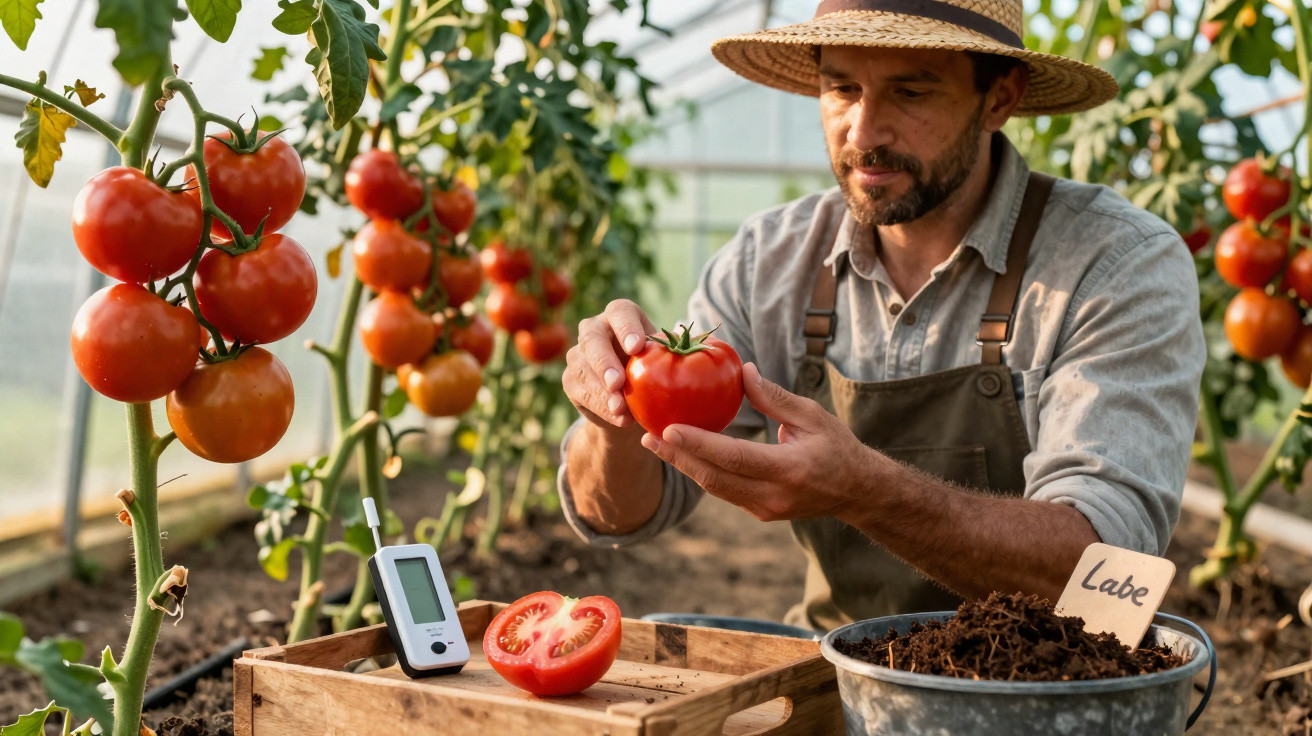
Organic market gardeners will insist there’s no magic at work. What they describe instead are small, steady decisions made again and again from the first warm days right through to the last pickings. Quite a few of those choices cut across what many home growers assume they should do. The colour you see on the plate is set up months before harvest, shaped by the hidden life in the soil and by how plants “breathe” through light and stress. And yes, there is a secret to it. It’s softer, and more ordinary, than most people expect.
Just after daybreak on a smallholding in East Devon, I watched a grower lean into his polytunnel and nip off a single leaf from a heavy truss. The tunnel carried a scent of warm rope and basil. He let the irrigation run as a slow trickle, then paused halfway down the row and silently counted to twenty. A robin darted along the drip line. He didn’t flap or rush; he was tracking where the sun would land on the fruit at noon. Almost under his breath, he said sweetness isn’t a recipe. It’s a rhythm. A tiny pause can change the flavour.
The quiet art behind that red, red colour in tomatoes
Organic market gardeners don’t force redness with fertiliser; they draw it out through balance. When more light reaches the fruit, the plant can build more lycopene-the pigment responsible for that red colour. But if temperatures climb too far at the wrong moment, colouring can stall. Skilled growers remove just a few leaves around each truss so fruit gets mottled, dappled light rather than a blast of harsh midday glare. They also train plants up strong strings so tomatoes stay clear of the soil, where airflow is better and skins dry evenly after dew. From the path it looks effortless. It isn’t.
During a dry week last July, a grower in Kent divided his crop into two lots. One section was left dense and leafy. In the other, he took off only three leaves around each truss-no more than that. At picking time, the more open plants coloured evenly around two to three days sooner, with fewer green shoulders and less patchy ripening. Out of curiosity he checked brix with a pocket refractometer, and the opened fruit edged it by a whisker. Was the difference down to light, or the trickle-watering he matched to it? He smiled and said it was probably both.
The reasoning is straightforward. Lycopene forms best in consistent warmth-roughly the feel of a proper summer afternoon. When polytunnels or glasshouses overheat, the plant shifts into survival mode and effectively puts pigment-making on hold. Pulling a light shade cloth across during heat spikes helps keep the plant in that useful metabolic “sweet spot”. The soil plays its part as well: plenty of organic matter cushions roots against temperature swings and holds water like a sponge. A thick mulch keeps the rhizosphere steady, so the plant can invest in colour rather than coping with crisis.
The sweetness you can taste but can’t fake
Sweetness comes from sugars and from the way acids soften as the fruit finishes. Organic growers don’t “add” sweetness; they guide plants to ration water at the point when flavour concentrates. The approach is simple in principle: slow, measured hydration early on, followed by a gentle tightening as fruits begin to blush. Not drought-more like easing off slightly. They water thoroughly but less often, and towards the end they may miss one day so skins firm up and sugars concentrate. The best tomatoes I ate this year came from soil that smelled like woodland after rain.
Most people recognise the moment a tomato tastes of sunshine and time. Many growers aim for brix 7–9 in their best varieties, with cherries often racing higher. One couple in Somerset ran a small comparison: two matching rows of ‘Ailsa Craig’. Both were watered deeply to the same depth, but once fruits showed blush, one row was watered at 10–15% longer intervals. The second row finished a touch smaller, yet the flavour had more snap-less watery, with richer, jammy notes. That line sold out first, purely on taste.
Sugar isn’t the whole story. Micronutrients influence how plants move energy and assemble the compounds we read as flavour. Potassium helps transport sugars. Calcium supports cell walls, helping fruit hold together when late-season stress arrives. Instead of relying on blue pellets, organic growers typically build fertility through compost, well-rotted manure, and gentle liquid feeds such as comfrey tea-inputs that bring a broader range of minerals along with living microbes. Those microbes trade nutrients for root exudates, a quiet exchange that often repays you in taste. Sweetness is rarely about tipping something flashy in; it’s about keeping the plant’s energy moving smoothly.
Do what growers do when no one’s watching
This is the routine many won’t make a song and dance about, because it sounds too plain. Begin with living soil: a generous band of compost along the row, then mulch with straw or shredded leaves. Train the plant to one or two leaders, and take off the first two leaves below a fruiting truss to lift airflow and admit light. Water at the base (not over the foliage) and do it in the morning. As soon as the first fruits shift from green to a pale blush, trim watering frequency slightly while keeping each watering deep. If a heatwave hits, hang a 30–40% shade cloth through the hottest midday hours and refresh the mulch. Then leave space for the plant to do the work.
The most common mistakes are the ones people make when trying too hard. Extra nitrogen drives leaf growth at the cost of flavour. Frequent, small daily drinks of water swell fruit and wash out taste. And picking at the “breaker” stage to outsmart birds gives you red later, but not the same sweetness-because sugar build-up largely slows once the fruit is off the vine. Realistically, nobody gets it perfect every single day. If birds are a problem, net whole beds rather than harvesting early. And if you miss a watering and the plant droops, don’t compensate by flooding it-bring it back gently across two mornings. Flavour forgives steadiness far more than it rewards heroics.
One grower summed it up like this:
“If the plant never has to shout for anything-water, air, minerals-it speaks in sugar.”
Keep a pocket checklist for harvest week:
- Light leaf-thinning around coloured trusses only
- Morning, deep watering; skip one cycle at light blush
- Mulch topped up to a teacup’s depth
- Shade cloth ready for midday scorch
- Pick fully ripe for sweetness; earlier only for storage
These aren’t tricks; they’re habits that taste good.
What stays with you the day after the market
Tomatoes carry a record of how they were raised. Their redness is patience you can see. Their sweetness is the result of tiny choices you hardly notice in the moment: a leaf removed here, a pause in watering there, a bed enriched with compost long before sowing. Share a bowl with a neighbour and you can taste the gap between “well grown” and alive. The secret isn’t a product-it’s the way growers protect calm and allow stress only as a whisper. There’s a quiet pride in that, lingering like a stain on your fingers and a promise still hanging on the vine.
| Key point | Detail | Benefit for the reader |
|---|---|---|
| Light, not scorch | Thin leaves around trusses; use shade cloth in heat spikes | Faster, more even red without sunscald |
| Water rhythm | Deep, infrequent watering; slight reduction at blush | Sweeter flavour, firmer texture, lower risk of splitting |
| Living soil | Compost, mulch, and gentle feeds like comfrey tea | Stable nutrients, improved taste, more resilient plants |
FAQ:
- Do tomatoes keep sweetening after they’re picked? No. They will redden off the vine via ethylene, but sugar levels largely plateau after harvest. For sweetness, pick fully ripe.
- Is salt water a good hack for sweeter tomatoes? It can stress plants and raise the risk of blossom-end rot. Organic growers prefer mild water reduction and rich soil biology for safer, tastier results.
- Should I remove lots of leaves for more sun? No. Remove a few leaves around each truss to improve airflow and light. Stripping plants invites sunscald and reduces flavour.
- What organic feed helps with sweetness? Potassium-rich options like comfrey tea support sugar movement. Balanced compost and mulch supply the wider minerals that underpin flavour.
- Why are my fruits red but bland? Likely too much water late on, excess nitrogen, or early picking. Shift to deeper, less frequent watering and harvest fully ripe for better taste.



Comments
No comments yet. Be the first to comment!
Leave a Comment