
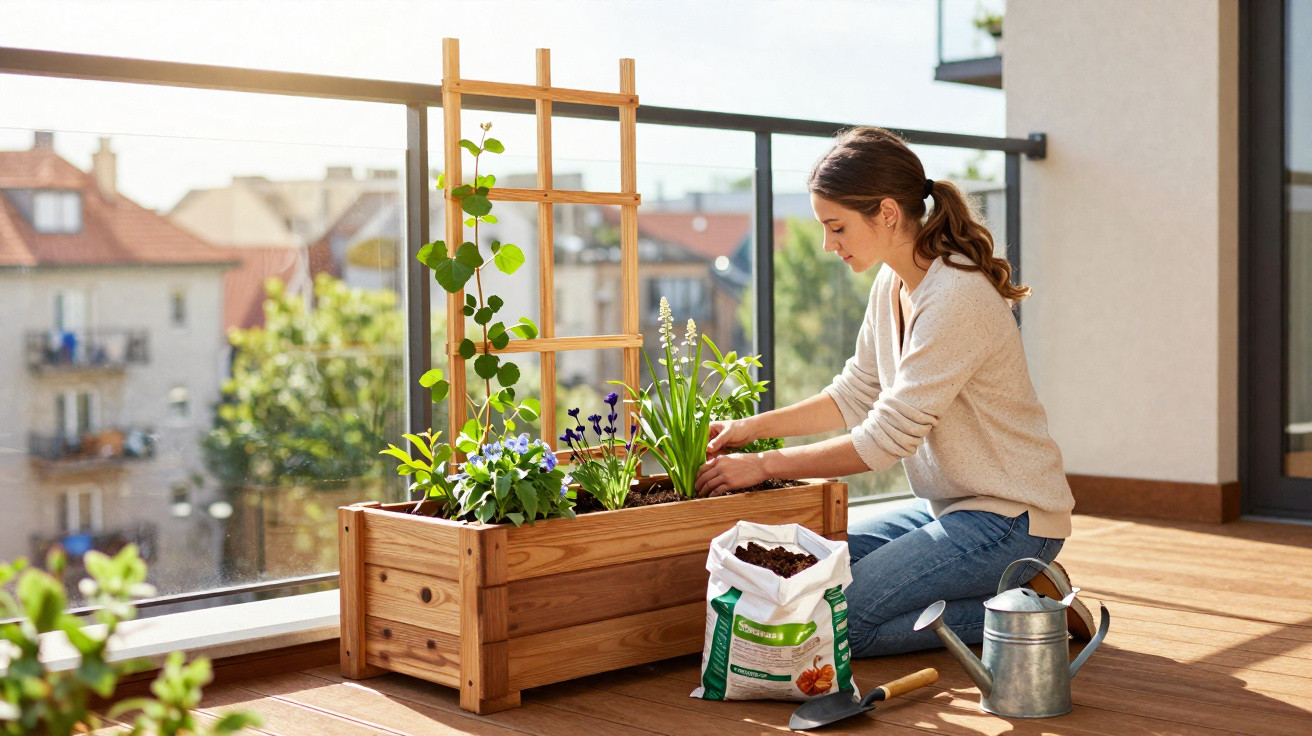
Anyone looking out of the window at grey paving slabs or a bare patch of soil has a quick route to a greener view with a simple trip to the discount aisle. Lidl is bringing a new Parkside wooden planter box with an integrated trellis into its stores, aimed squarely at people who don’t have much space but still want plenty of plants.
What the new Lidl planter box is all about
This planter box with trellis is designed to tackle two needs at once: it gives you a compact bed for herbs, flowers or small shrubs, and it also adds a vertical section above it that can be covered with climbers-creating a natural privacy screen.
"The Parkside planter box made from solid wood combines a mini bed and a trellis in one, and is aimed mainly at households with limited outdoor space."
The box is made from solid wood and comes pre-treated with a water-based protective stain. Inside, there’s already a plastic insert tray, which helps protect the wood from constant moisture and makes planting simpler.
Dimensions, volume and load capacity
In day-to-day use, the key details are the measurements. The planter is around 60 centimetres wide, 28 centimetres deep and roughly 100 centimetres tall. It has a noticeable presence, but it takes up no more floor space than a standard balcony chair.
- Width: approx. 60 cm
- Depth: approx. 28 cm
- Overall height: approx. 100 cm
- Insert capacity: around 20 litres of compost
- Maximum load: about 30 kilograms
The plastic insert stops water from running straight through the wood. If you want to be extra cautious, place the planter on feet, a saucer or rubber pads so moisture doesn’t sit underneath the base for long periods.
Why it’s a smart choice for small gardens
It’s clearly intended for balconies, patios and narrow terraced-house gardens. Rather than spreading outwards, the planter uses height-something many standard pots can’t offer because they only sit on the ground.
Typical places it works well:
- narrow city balconies
- patios at terraced houses
- small front gardens or entrance areas
- transitions between a seating area and lawn
With the trellis, you can create visual separation without much effort-for example, between your seating area and the neighbouring plot, or in front of an unattractive fence. Instead of planting a hedge and waiting years, a slim unit like this can green up over the course of a single summer.
More privacy without solid barriers
In built-up neighbourhoods, many people feel like they’re sitting in full view. A planter box with trellis can act as a compact outdoor divider: it softens sight lines without making a balcony or garden feel boxed in.
"Once covered with climbing plants, the wooden trellis becomes a living wall in summer-reducing visibility, but far more welcoming than concrete or glass."
If your home faces a road or pavement, you can position the planter along the boundary to break up direct views-without committing to a complex fencing system.
How families with children can benefit
One advantage that’s easy to miss: raised planters are a great way to get children involved in gardening without them turning the whole lawn into a digging site. The soil stays contained in the box, while the rest of the outdoor space remains free for play.
Children can:
- sow seeds in a clearly defined area
- water the bed with their own small watering can
- watch the plants develop day by day
- taste home-grown herbs or edible flowers
This encourages patience and a sense of responsibility, and it turns outdoor play into a simple learning experience. At the same time, the trellis behind the planter can grow into a green screen later on-useful when a paddling pool or sandpit is out during summer.
Which plants suit the Lidl planter box
There’s enough space for a small mixed planting scheme. For a low-effort setup, choose hardy herbs and add one or two decorative features for impact.
Ideas for the insert tray
- Herbs: rosemary, thyme, oregano, chives, parsley, mint
- Flowering plants: pansies in spring, then geraniums or petunias later
- Edible flowers: nasturtiums, calendula
- Trailing plants: hanging strawberries or trailing ornamental varieties
Keeping herbs close to a patio door is genuinely practical: you can grab fresh leaves while cooking instead of relying on dried alternatives. Edible flowers add colour to meals and often deliver that immediate “wow” effect for children.
Plants for the trellis
The trellis suits fast-growing climbers that can add height within a single season:
- scented ornamentals such as sweet peas
- clematis in compact varieties
- jasmine for a strong summer fragrance
- climbing beans or mangetout as an edible option
For a playful, child-friendly start, colourful nasturtiums or sweet peas grown from seed are a good pick. They tend to germinate fairly quickly, which helps keep enthusiasm high.
Assembly, care and lifespan
The planter arrives flat-packed in store. The box contains the wooden sections, the trellis, screws and a short set of instructions. With standard tools, it can be assembled without much fuss-ideal for an after-work project.
"To enjoy the wood for a long time, it should be maintained regularly: a fresh coat of exterior wood stain every one to two years noticeably extends its lifespan."
Basic tips to keep it in good condition:
- keep contact points with the ground as dry as possible
- prevent waterlogging in the insert; check any drainage holes
- inspect the wood for cracks before winter and re-stain if needed
- in strong winds, position it so it can’t topple
Balcony, patio or garden – where does it fit best?
Because the footprint is only about 60 by 28 centimetres, it will slot into most corners. On a balcony, it’s wise to check the maximum load rating (often in building documents or available from the landlord). Once filled with compost, plants and water, the total weight can quickly exceed 30 kg.
In terraced-house gardens, it works well as a transition between the patio and the lawn. Placing two or three units side by side can even create a small green wall, for example as a backdrop for a seating area.
When it’s genuinely worth buying
This planter comes into its own when ground space is limited but you still want a noticeable boost of greenery. If you already have large beds and plenty of room, you may prefer heavier-duty options. For renters, city homes and young families, however, this format is close to ideal.
The price also helps: rather than paying for expensive made-to-measure items from a DIY store, you get a ready-to-use system that works without extensive planning. If you’re more confident with DIY, you could place two planter units back-to-back to create a taller or wider privacy screen.
For many people, it’s likely to become more than a simple plant pot: a small oasis outside the window, a green divider on the patio and a first “own bed” for children-on the footprint of a slim shelving unit.


Comments
No comments yet. Be the first to comment!
Leave a Comment