
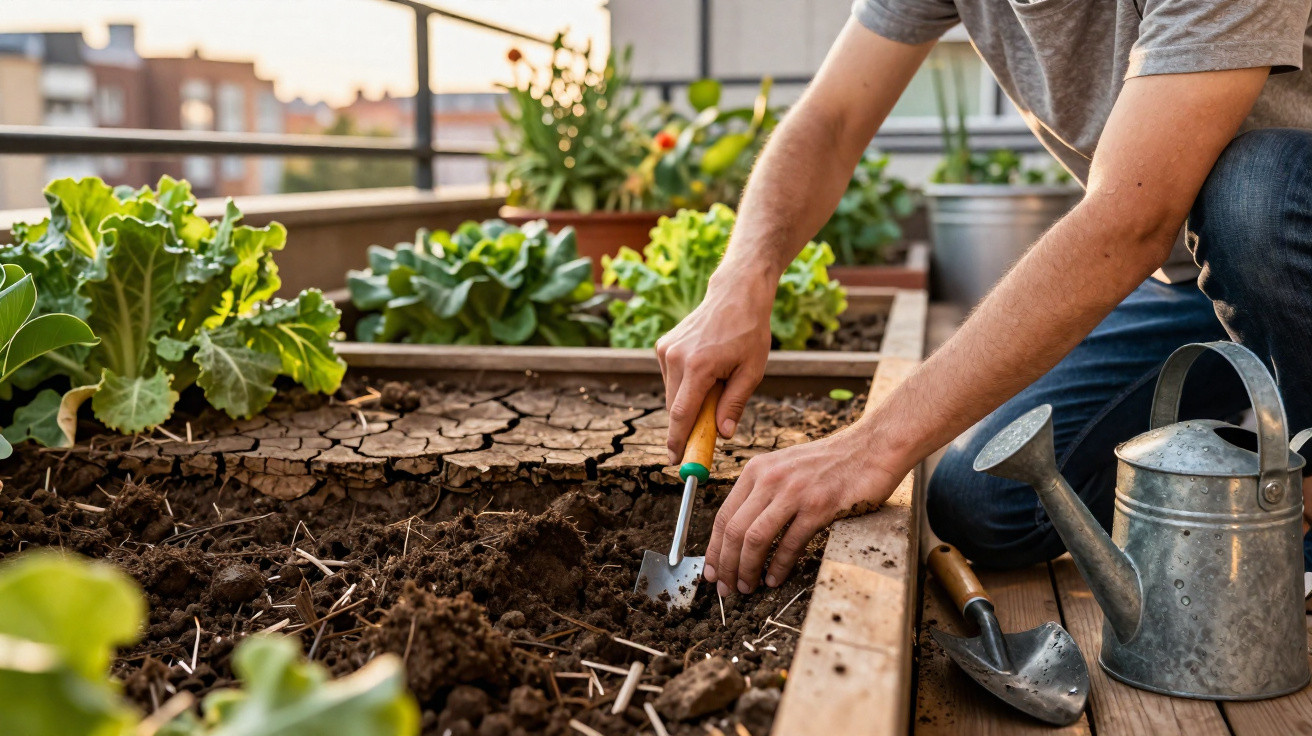
At first, the soil appeared ideal: light brown, crumbly at the surface and dry again only a few hours after watering. It was the sort of finish that makes you think you have mastered gardening. Pots stood in tidy rows across the balcony, with tomatoes stretching upwards and basil doing its best to follow. The watering-can handle remained damp, the sun warmed the terracotta, and everything looked as it should.
Then, two days later, the leaves began to curl and growth came to a halt. Pressing a finger beneath the dry crust, the gardener found soil that felt unexpectedly cold and lifeless. There was no rich, fresh earth scent or yielding texture, only a compact, resistant block.
Soil that dries quickly is meant to be “well drained”, isn’t it?
Something clearly did not make sense.
Dry at the surface, suffocating below
In cities during summer, this is easy to spot everywhere: balcony planters, shared-garden beds and vegetable plots in back gardens. By late afternoon, the topsoil often appears pale and dusty, as though every drop of water has vanished. To many people, that rapidly drying surface suggests soil that can breathe.
Plants often reveal another reality. Leaves droop at midday, roots circle inside pots rather than growing downwards, and growth simply… stops. A quick-drying surface can conceal an absence of air deeper in the root zone: like a room whose window looks open but has been painted shut.
Consider a typical clay-loam garden bed. Following rain, its surface can dry within a day, and a quick pass with a rake makes it seem pleasantly crumbly. Yet one step across it can leave a smooth, glossy boot print. That is compaction. At the next rainfall, water skims across the surface and escapes around the edges rather than soaking through.
Within the soil, the pore spaces between particles have been crushed. Water may race along certain channels while remaining trapped in others, leaving air with no simple route to circulate. From the surface, the bed seems dry and harmless. Underneath, however, roots must find their way through a cramped maze that is partly waterlogged and partly desert-dry.
The real issue is soil structure rather than moisture alone. Sun and wind rapidly draw water from the top few millimetres, leaving them dusty and apparently thirsty. Further down, however, soil can be as dense as a brick while retaining stagnant pockets of water with almost no oxygen.
This is where roots struggle. They require air as well as water. When soil particles are compressed too closely, the tiny gaps that ought to contain oxygen remain water-filled for too long. The result is a peculiar contradiction: a pot that dries rapidly on top but acts like a waterlogged sponge around its roots.
How to test and improve “fake-draining” soil
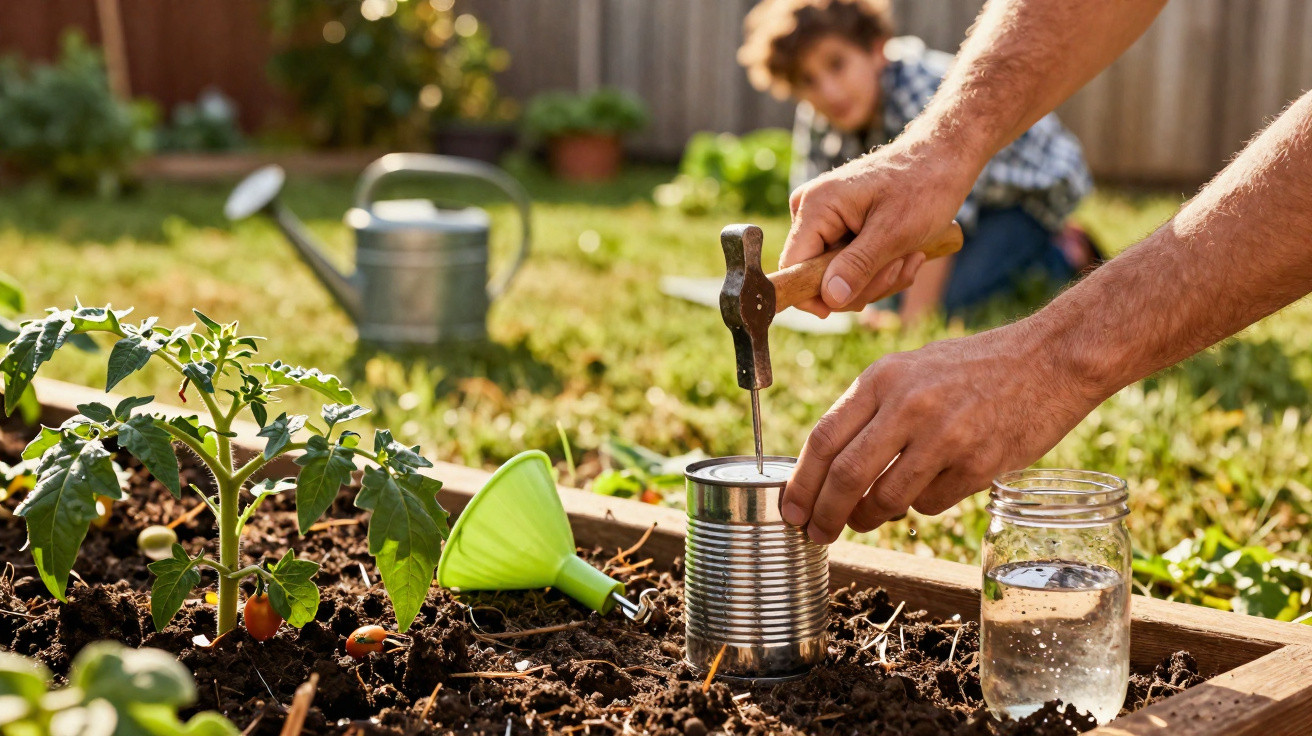
A straightforward action can reveal a great deal: the screwdriver test. Just after watering, and then again the following day, gently push an old screwdriver or a long wooden stick into the soil. If it suddenly meets resistance a few centimetres below the surface, the soil is likely compacted, regardless of how quickly the top dries.
When repotting or relocating plants, you can also cut a vertical section through a pot or raised bed. A healthy profile should look light and open, with visible crumbs and a few roots passing through it. If you find a solid layer instead, roots growing sideways and hardly any fine root hairs, the soil is not well aerated. It is merely giving that impression.
In response, many gardeners water more frequently. The plants appear stressed and the surface looks dry, so out comes the hose or watering can. We have all had that thought: “Maybe I just didn’t water enough.” But when soil is already compacted, additional water does not introduce more air; it forces out the limited air that remains.
Another frequent response is to work only the top centimetre using a small hand rake. Although this can feel like loosening the soil, the compacted layer beneath remains undisturbed. The surface may look renewed, but conditions below remain unchanged for the roots.
Healthy soil is not just “wet or dry”; it’s a living sponge where water and air share space.
A soil scientist once told me, “If your soil dries fast but roots still struggle, don’t blame the water. Blame the architecture.”
- Ease compaction carefully: use a garden fork rather than a spade, lifting the soil without fully turning it over.
- Add living material, not simply sand: incorporate compost or well-rotted plant matter to form stable crumbs that retain both moisture and air.
- Observe the way water behaves: if it beads and runs away, the top layer is sealing; if it vanishes immediately, inspect the deeper layers for density.
- Mulch thoughtfully: a light organic mulch prevents the surface from baking hard while allowing air to move in and out.
- Change where you walk: permanent paths shield the remaining soil from repeated pressure that crushes its pore spaces.
Rethinking the appearance of good soil
Once you have noticed this contradiction, it is difficult to overlook. A tidy surface that dries quickly no longer automatically suggests perfect drainage; in some cases, it becomes a warning sign. You start watching how rain moves across different beds, how quickly puddles appear and how long they remain.
You also begin to judge soil by touch rather than sight alone: crumbling a handful through your fingers, noticing the slight squeak of clay or the gentle collapse of organic-rich crumbs. The eye is fast, but the hand tells the truth.
| Key point | Detail | Value for the reader |
|---|---|---|
| A fast-drying surface can be misleading | Sun and wind dry the top layer while deeper soil remains dense and poorly aerated | Avoid mistaking a dry appearance for healthy conditions around the roots |
| Structure matters more than watering | Compacted soil loses the pore spaces required for oxygen and balanced moisture | Address soil architecture rather than only altering watering habits |
| Simple tests inform action | The screwdriver test, a vertical slice and observing water behaviour expose actual aeration | Use low-tech checks to adapt your approach before plants suffer |
FAQ:
- Question 1 Why do my pots dry out so fast but plants still look suffocated?
- Question 2 Does adding sand always improve drainage and aeration?
- Question 3 How often should I loosen my soil to keep it aerated?
- Question 4 Can mulch really help with both drying and compaction?
- Question 5 What’s the quickest way to tell if my soil has enough air for roots?
Comments
No comments yet. Be the first to comment!
Leave a Comment