
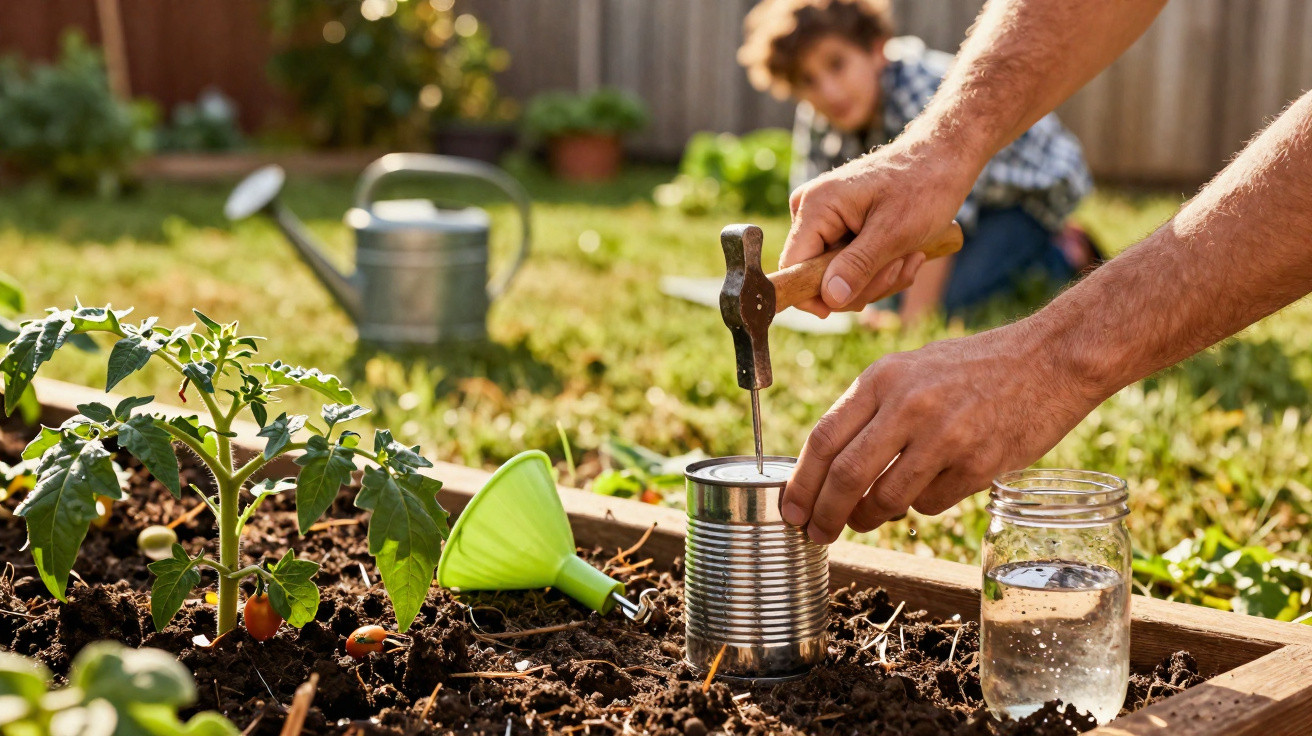
The plants were dormant, rain scented the soil, and the watering cans had at last been put aside. That lull in the gardening year became the unexpected point at which an item destined for recycling was transformed into the easiest irrigation system I have used – and one that has rescued my vegetables on more than one occasion.
From heatwave panic to a quiet winter revelation
Each summer seems to bring another challenge. Heatwaves come one after another, water restrictions begin sooner, and gardens are among the first to suffer. Like plenty of hobby gardeners, I had settled into a predictable routine: watering late in the evening, worrying over drooping tomatoes, and checking the water meter with a sense of guilt.
On the hottest days, I emptied watering cans almost as quickly as I refilled them, but the soil was dry again within hours. Water either evaporated or flowed away across the surface before the roots had a chance to take it in.
Traditional watering often looks generous, but a surprising share never reaches the roots that need it.
The change began in the kitchen rather than the garden. One winter, following a quick meal from a tin, I paused with a rinsed metal can above the recycling bin. This time, I kept it.
The tin can that refused to be rubbish
The empty can should have disappeared into the anonymous recycling stream. Instead, it became the first version of a basic automatic watering system: free to make, free of electronics, and requiring almost no upkeep.
Why we never think to keep a can
Tin cans perfectly represent the convenience of using something once. We open, rinse and throw them away without another thought. However, they are strong, waterproof and weather-resistant – precisely the features expensive irrigation products advertise on their packaging.
After its label and grease had been removed, the can looked unremarkable and a little absurd on the kitchen worktop. Its lack of complexity proved to be an advantage: there were no moving components, brittle plastic connections or fittings that could go missing.
A small, robust metal cylinder can act as a slow-release reservoir, feeding water right where roots are working hardest.
Turning scrap into a discreet reservoir
The principle was almost embarrassingly straightforward: by allowing water to escape from the can very slowly, then burying it beside a plant, I could create a homemade drip irrigation system without purchasing anything.
Rather than using sprinklers that wet foliage and paths, the can would supply water underground at root depth. That meant fewer weeds, reduced evaporation and less remorse when the next water bill arrived.
How the DIY automatic watering can works
This straightforward system takes minutes to assemble using tools found in almost every home. It needs no power, timer or specialist hose – only gravity and patience.
- 1 empty metal food can (400–800 g size works well)
- 1 hammer
- 1 nail or sturdy sharp point
- Protective gloves, to avoid cuts on sharp edges
Making the holes: controlling the flow, not flooding the bed
With gloves on, turn the can upside down and use the hammer and nail to gently make five to ten small holes in its base. Keep the holes tiny and distribute them evenly.
The smaller each hole is, the more slowly water escapes. This gradual release is what makes the method work. Rather than receiving one heavy soaking that drains through the ground, the plant gets a mild, steady supply.
Slow drip irrigation keeps the soil moist without drowning roots or wasting litres in minutes.
Burying the can: where placement matters more than perfection
Dig a narrow hole in the bed around 20 centimetres from the plant’s main stem. Put the can in upright with its pierced base facing downwards, then cover it so that just the rim, or a few centimetres, remains above ground.
Filled with water, the can acts as a concealed reservoir. Water gradually passes through the holes and into the surrounding earth, with capillary action carrying it through the root zone.
What happened in that first week
Initially, the outcome was almost disappointing. The top of the soil remained dry, contradicting everything my “hosepipe brain” expected. Yet a finger pushed a few centimetres below the surface revealed something else: cool, moist soil.
Within a few days, several struggling plants changed noticeably. Tomato leaves stood up rather than drooping limply at midday. Flowers remained in place instead of falling off in response to the heat. Fruit set grew more consistent.
Once the surface dryness stops tricking you, you start to trust what the roots already know: the moisture is there.
Why this humble trick saves both water and money
Today’s gardens are filled with smart technology that promises convenience and control, including programmable timers, connected valves and soil-moisture sensors. Yet a buried can tackles the same essential issue without any of that complication.
A tiny system with a real impact on water use
Watering conventionally with a hose can easily consume up to 15 litres per square metre on a hot day. Much of this never turns into moisture that roots can use. A can-based arrangement lets you adjust the quantity of water for every individual plant.
Rather than indiscriminately drenching an entire bed, fill only the cans beside plants that need help: thirsty tomatoes, cucumbers and young trees during their first summers. The outcome is lower waste and a reduced bill when the season ends.
| Method | Water use | Where the water goes |
|---|---|---|
| Hose or sprinkler | High | Foliage, paths, evaporation, part of the root zone |
| Watering can at surface | Medium | Topsoil, with runoff if used excessively |
| Buried can reservoir | Low to medium | Directly around roots, with minimal loss at the surface |
Recycling that actually changes daily habits
Putting food cans to work in the garden makes recycling a practical action rather than an abstract virtue. Every can kept out of the bin can also replace a plastic irrigation device that would otherwise need to be made, transported and eventually discarded.
Across a season, several reused cans may save the expense of drip kits, porous hoses and replacement parts that often split just when the hottest weather arrives.
Neighbours, scepticism and the quiet spread of an odd idea
Burying tins in a vegetable bed inevitably attracts notice. The first remarks tend to come over the fence or in casual conversation: “Are those… baked beans cans in your tomatoes?”
From raised eyebrows to borrowed hammers
At first, people found it amusing. Some neighbours thought the metal would rust immediately or contaminate the soil. Others believed it was an elaborate permaculture technique they had somehow missed on social media.
Several weeks later, those same people began asking more useful questions: how many holes should there be, how deep should the can sit, and what can size suits courgettes? This is how ideas travel through allotments and suburban gardens – through clear results rather than manifestos.
When a plant survives a heatwave with less water than its neighbours, the method behind it travels fast.
Different gardens, different versions
Once gardeners take up the idea, they soon adapt it. Some choose tall coffee tins for young fruit trees, while others use smaller cans for herbs in pots. Gardeners in sandy ground make fewer and smaller holes. Those with heavy clay enlarge them to prevent blockages.
This modest experimentation makes one simple technique into an adaptable toolkit. Every garden adjusts the approach for its own soil, climate and choice of plants.
What this scrap-metal hack reveals about resilient gardening
Ultimately, this is less a story about a can than a change in outlook. Rather than assuming that every issue requires a new product, the method begins with whatever is already in the recycling bin and asks, “Could this work?”
Learning from slow water, not fast fixes
Slow-release irrigation goes against an instinct many gardeners acquire: when a plant appears unhappy, we hurry over with a large amount of water. This can encourage shallow roots and make plants dependent on regular human help.
A buried reservoir supplies water in small amounts and encourages roots to reach further down. Deeper root systems help plants cope better if you go away for a long weekend or if restrictions tighten on outdoor water use.
Key concepts behind this simple system
A number of helpful principles sit behind this seemingly simple hack:
- Capillary movement: moisture naturally travels from wetter to drier soil, spreading water from the holes throughout the root zone.
- Evaporation control: placing water below ground shields it from direct sunshine and hot wind.
- Targeted irrigation: extra water goes only to plants that need support, reducing weed growth in unused areas.
Adding a layer of mulch over the soil – straw, shredded leaves or grass clippings – strengthens the effect. Acting like a lid, the mulch slows evaporation further and can help the can supply water for two to three days.
This minor change in gardening practice has wider consequences. It lowers reliance on continual watering, reduces plastic purchases and encourages gardeners to think differently about everyday waste. Cans saved through one winter can discreetly prepare a garden for a harsher, drier summer, one buried tin at a time.
Comments
No comments yet. Be the first to comment!
Leave a Comment