
At 6.30 am the street is still, yet the gardens have already started their morning conversation. You catch it in the hiss of hoses, the steady tick of sprinklers, and the weary exhale that comes with yet another water bill that will sting. A neighbour in a washed-out dressing gown stands on the lawn, looking at pale, thinning patches of grass that gulp and gulp and still never look content. A few houses along, a different front garden seems strangely unbothered: rich dark earth, thriving plants, no sprinkler anywhere - only a soft brown layer spread across every bed like a quilt. The owner, holding a mug of coffee, gives everything one quick water and heads back indoors.
So why does one garden act permanently parched while the other seems to run almost on autopilot?
The low-effort garden tweak that quietly saves litres of water
The answer usually isn’t a clever irrigation controller or some exotic drought-tough plant. It’s far more basic. That calm, easy-going garden is protected by a simple cover of mulch - shredded leaves, wood chips, straw, even grass cuttings.
That modest layer changes the conditions at ground level. It protects the soil from sun and wind, reduces evaporation, and keeps roots in a cooler, steadier environment. Plants are under less strain, so they don’t start pleading for water every evening - and the gardener tends to look less worn out as well.
A small change above the soil alters the watering pattern below it.
Compare two tomato beds in the height of summer and the contrast is almost immediate. In the first bed, exposed soil turns hard and cracks by lunchtime, like dried clay. The plants droop, leaves curling, and at 6 pm the gardener arrives home and rushes out with the hose, feeling they’ve left it too late.
In the second bed nearby, the surface is covered with 5–7 cm of wood chips. Move the chips aside and the soil underneath is still damp and noticeably cool. Those tomatoes put on thick stems and deep green leaves, even though they’re watered only a couple of times a week.
Same sunshine, same heat, same plants - a different surface.
The reasoning is straightforward. Bare soil behaves like a pan left on the hob: moisture vanishes almost as quickly as you add it. Mulch is the lid. It slows the loss of water, shields the soil from direct sun, and even reduces the force of heavy rain so more soaks in rather than running off.
As organic mulches break down, they also feed the soil. Over time the ground becomes more like a sponge, holding moisture for longer. Roots are encouraged to grow deeper, which makes plants less reliant on shallow, everyday watering.
This is the quiet arithmetic of a healthier garden: the same rainfall, less wasted moisture, better storage, and sturdier growth.
How to mulch so you genuinely water less (not more)
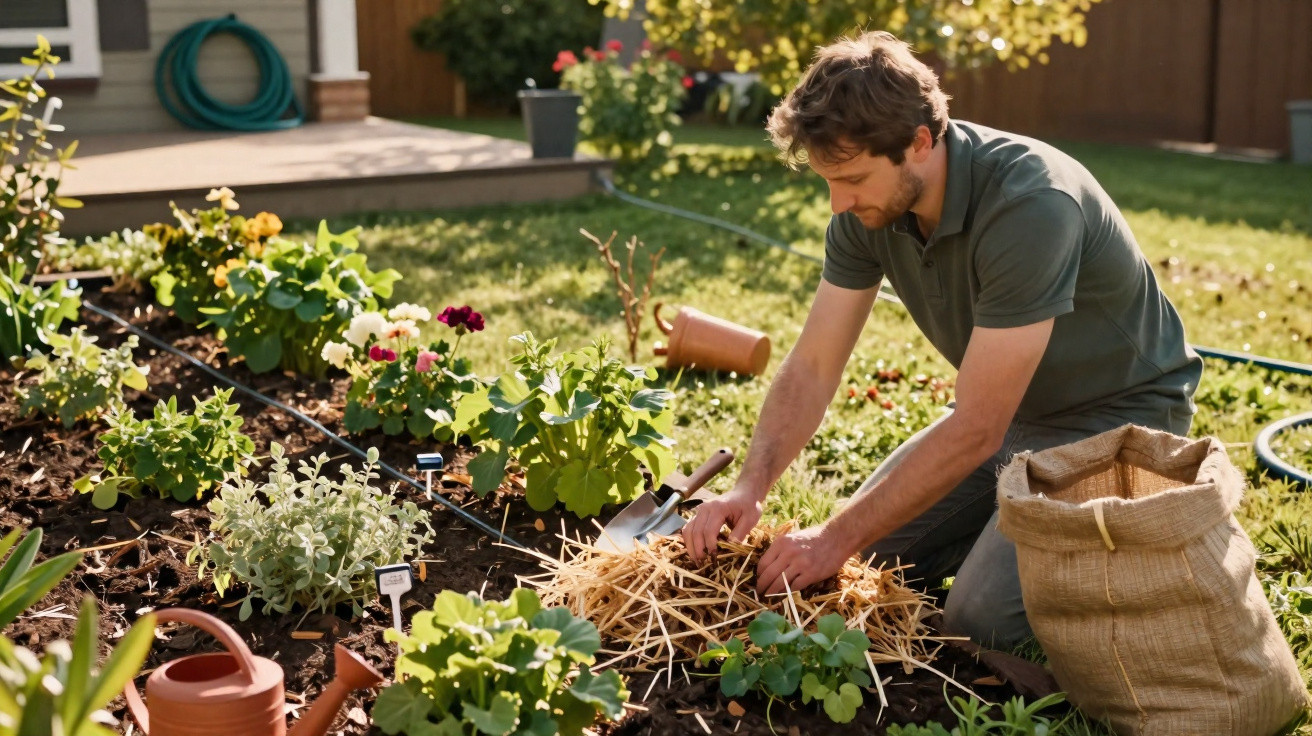
The practical shift is uncomplicated: cover the soil. Begin with a light weed, then give the ground one deep watering. While it’s still moist, apply a 5–8 cm layer of mulch around your plants, leaving a few centimetres clear around stems and trunks.
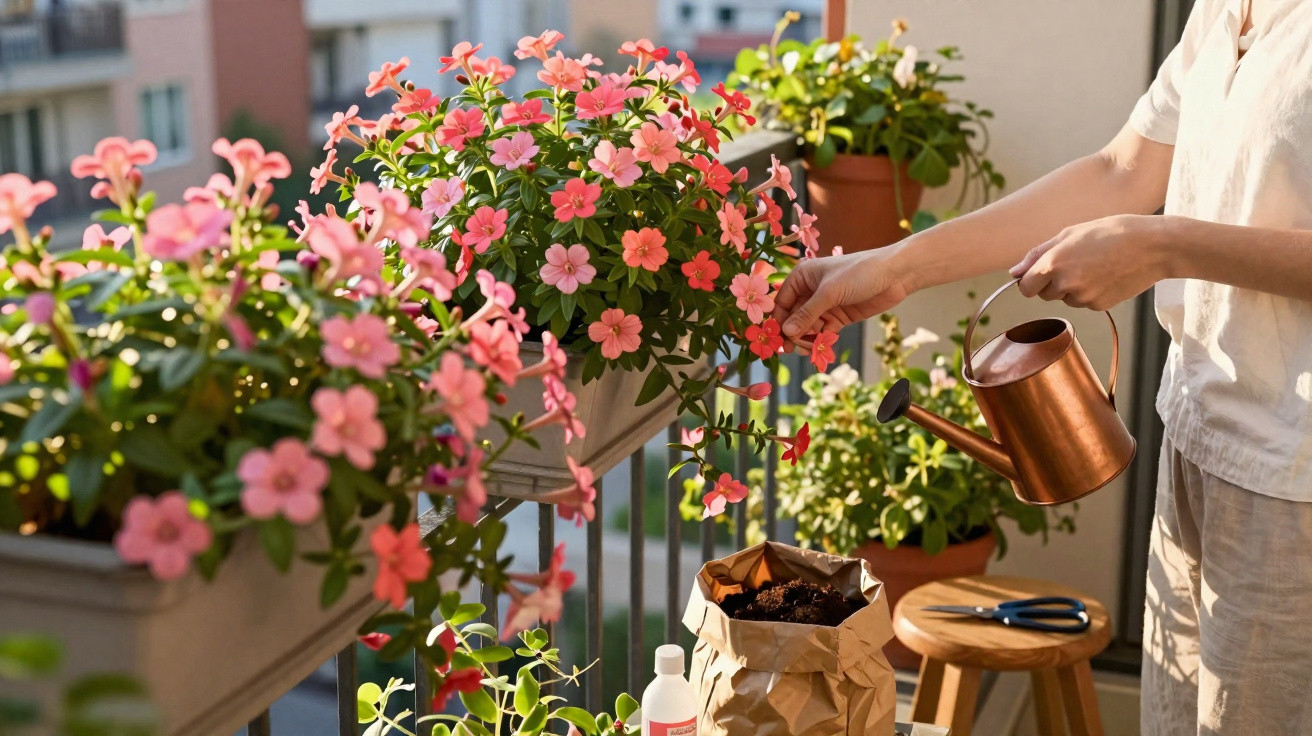
Suitable options include shredded bark, straw, composted leaves, pine needles, or even last week’s grass clippings (let them dry first). For pots and balcony planters, even 2–3 cm can help. Press it down lightly so it settles, but don’t compact it into a sealed crust.
After that, don’t automatically water every day. Instead, check the soil beneath the mulch with your fingers and water only once it’s dry 3–4 cm down.
This is where people often trip up: they mulch… and then keep watering exactly as they always have. Habits are hard to shift. But within a week or two you’ll usually find the soil stays moist far longer than you assumed. Let that be your cue. Drop one watering day and watch how the plants respond.
Another common error is heaping mulch right up against stems, forming a little “volcano”. That holds moisture against the bark and can encourage rot or pests. Leave a small breathing gap around each plant.
Most of us recognise that moment when we realise we’ve been putting in double the effort for half the payoff.
"Mulch doesn’t make your garden lazy. It lets your garden work with water instead of fighting against dry air and hot sun."
- Ideal mulch thickness: 5–8 cm for beds, 2–3 cm for pots - enough to cover the soil without smothering it.
- Best materials for beginners: Composted bark, straw, or shredded leaves; they’re easy to handle and simple to source.
- Watering rhythm shift: Change from shallow daily top-ups to deeper watering every few days, led by the soil rather than the diary.
- Where to avoid mulch: Hard up against trunks, on already waterlogged ground, or over weed membrane that shuts down soil life.
- Extra bonus: Fewer weeds, softer soil, and a garden that captures rain instead of letting it go to waste.
Rethinking what a well-watered garden looks like
Once you start mulching properly, your idea of what “well cared for” looks like tends to change. A healthy bed no longer means bare, freshly raked earth that bakes dry by midday. It can look slightly wilder and softer - more like a woodland floor adapted to a back garden.
And realistically, hardly anyone checks moisture levels every single day with saint-like consistency. Mulch builds in a bit of slack. If you miss a watering, have an exhausting day, or go away for the weekend, the plants won’t instantly make you pay for it. They’re cushioned by that quiet, protective layer.
It’s not the sort of upgrade that demands attention like a new sprinkler system. Yet it’s the kind of background decision that helps your garden keep moving forward, while you use less water and spend less energy fretting.
| Key point | Detail | Value for the reader |
|---|---|---|
| Mulch reduces evaporation | A 5–8 cm layer guards soil from sun and wind, keeping moisture where roots can reach it | Less frequent watering and steadier growth during hot spells |
| Organic mulch improves the soil | Bark, straw and leaves gradually break down and enhance soil structure | More fertile, sponge-like soil that naturally holds water longer |
| Your watering routine can shift | Move away from shallow daily watering towards deeper, less frequent sessions | Lower water bills, less time on the hose, and stronger root systems |
FAQ:
- Question 1 What’s the best mulch if I’m just starting out?
- Answer 1 Choose medium shredded bark or composted wood chips. They’re straightforward to spread, don’t blow around too easily, and generally last a full season or longer while still allowing rain to pass through.
- Question 2 Will mulch attract slugs or pests?
- Answer 2 In very damp areas, slugs can shelter in thick, wet mulch. Keep the layer sensible, don’t push it against stems, and favour coarser materials such as bark over soggy grass clippings.
- Question 3 Can I use stones or gravel as mulch?
- Answer 3 Yes - particularly in dry or Mediterranean-style gardens. Stones do reduce evaporation, but they don’t enrich the soil, and they can warm up significantly, so they suit drought-tolerant plants better than thirsty vegetables.
- Question 4 How much less will I need to water with mulch?
- Answer 4 Many gardeners find they can reduce watering by a third to half once a decent mulch layer is in place, especially during heatwaves. The precise saving depends on your climate and soil type.
- Question 5 When should I renew or add more mulch?
- Answer 5 Top up once or twice a year, typically in spring and/or autumn, whenever the layer has reduced to less than about 3 cm. Add fresh material over the top of the old without disturbing the roots.


Comments
No comments yet. Be the first to comment!
Leave a Comment