
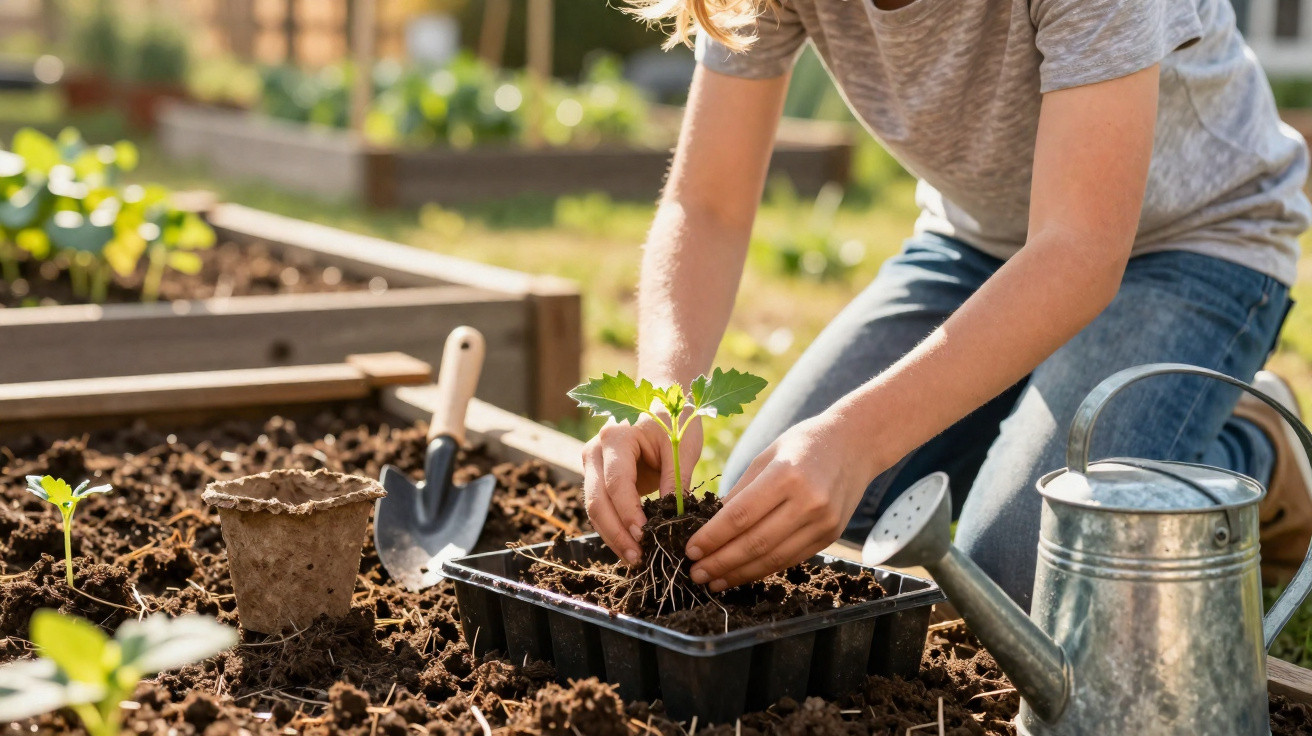
I can pinpoint the first time I properly noticed a plant growing. I was marooned on the sofa with a torn ligament and far too many hours to fill. On the windowsill sat a seed tray - nothing fancy, just tomatoes and basil. For days they seemed unchanged: fine green strands, two minuscule leaves, and a hopeful smudge of life in compost.
Then, one morning, I leaned in and something felt different. The stems had thickened in the space of a night, the leaves had subtly altered their shape, and the seedlings somehow looked… older. Not taller - simply more settled, as though they’d quietly decided, “We’re staying.”
That invisible turning point stuck with me.
Because in truth, the stretch of time when a plant is no longer a brand-new seedling, yet not quite a “proper” plant, is the part where its future is largely set.
The hidden childhood that decides if a plant survives
Ask most gardeners what counts, and you’ll often hear about the dramatic bookends: sowing and harvesting. The beginning and the payoff. The memorable moments.
But the stage that most strongly determines whether a plant thrives sits almost unnoticed in the middle - the hardening and establishment phase, when a young plant shifts from sheltered, pampered conditions to the real outdoors. This is a plant’s “childhood”: the awkward in-between where roots push downwards, stems strengthen, and protective systems begin to kick in.
On the surface, it can look like very little is happening - perhaps a couple more leaves, perhaps a stem that’s a touch thicker. Internally, however, the plant is effectively refitting itself for survival.
Picture a tomato seedling raised indoors on a bright kitchen worktop. In steady warmth and gentle light, it reaches up - soft, leggy, optimistic. Put that same seedling outside on a blustery April day and you can almost sense the shock. Leaves tighten and curl, the stem bows, and the whole plant droops as if it’s run out of energy.
If it gets through that initial jolt, the following week can be remarkable. Tiny, barely noticeable hairs start appearing along the stem. The stem itself thickens - less like cotton and more like a pencil. Roots drive further down, hunting water and minerals. And you realise it no longer keels over every time the wind picks up.
That brief, uncomfortable spell isn’t merely “stress”. It’s practice.
Botanists describe elements of this change as “hardening off” and “establishment”, though those labels don’t quite convey what’s happening. Under manageable pressure, plants shift from pure growth mode into resilience mode. Cell walls become sturdier. Leaf stomata learn to open and close with better efficiency, so less moisture is lost during hot, dry spells. Hormone levels change, sending a clear message downwards: spread out, go deeper, get ready.
Rush this middle stage - or miss it altogether - and you can end up with tall, eye-catching plants that collapse at the first heatwave, pest problem or dry week. Respect it, and you grow something different: a plant that has learnt how to hold its ground.
How to support hardening off and establishment instead of undermining it
If seeds are the plant equivalent of birth, then hardening and establishment are closer to learning to walk. You don’t drop a toddler into a marathon; you let them wobble, topple, and find balance.
With seedlings, that translates to gradual exposure. Begin in gentle conditions, then introduce “real life” step by step: a few hours outdoors one day, a little more sun the next, then a hint of wind after that. This steady rhythm tells the plant, “You’re safe - but stay alert.” In response, tissues thicken, roots branch and search, and leaves adjust to cope.
When it goes well, this stage takes roughly one to two weeks, and what it builds can pay off for the rest of the season.
Most of us don’t execute it flawlessly - and that’s normal. Life gets in the way. The forecast changes. A clear day arrives unexpectedly. A weekend away appears in the diary. One day seedlings are inside; the next they’re outside from morning to evening under bright sun and gusty wind. Some get scorched. Some wilt. Some simply… vanish.
Nearly everyone has had that moment of coming back to find a whole tray collapsed, as though the plants have decided they’re done. It can feel oddly personal - a small, green failure. The quieter truth is that toughness isn’t formed in total comfort or in full-blown crisis, but right at the boundary between the two.
And let’s be frank: nobody gets the timing perfect every single day.
Gardeners who reliably raise hardy, long-lasting plants usually do one thing consistently: they guard this overlooked transition. They tend to talk less about miracle feeds and more about patience, pacing and timing.
“People think I have magic soil,” a veteran urban grower in Berlin told me. “I don’t. I just never skip the awkward teenage phase of my plants. That’s where their character forms.”
- Introduce stress gradually – Offer sun, wind and cooler nights in small, controlled doses, rather than a harsh first full day outside.
- Watch the stems, not just the leaves – A slightly thicker stem with a purplish tinge can be a good sign the plant is responding, toughening up.
- Water a little less deeply but regularly – Provide enough to keep growth steady while encouraging roots to search, rather than lingering shallow near the surface.
- Avoid extra fertiliser in this window – Let the plant put energy into structure and roots, not just rapid leafy growth.
- Be prepared to lose a few weaklings – The ones that adapt are the ones that will carry your garden through heat and storms.
The stage you can’t photograph but always feel months later
Well after the flowers have finished and tomato vines have started to yellow, you can usually tell which plants had a solid establishment phase. They’re the ones that stayed green an extra week during drought, recovered after the neighbour’s cat flattened them, or kept cropping when the others gave up.
You won’t spot that in glossy catalogue pictures. You notice it when a plant makes it through a difficult summer and quietly refuses to die. That stubborn streak wasn’t conjured up in July - it was built weeks earlier, during that almost dull middle period when nothing “Instagrammable” seemed to be going on.
Once you start noticing this invisible season of growth, you can’t unsee it.
| Key point | Detail | Value for the reader |
|---|---|---|
| Gradual hardening | Slow exposure to sun, wind and cooler air over 7–14 days | Reduces shock and losses, giving plants a stronger start outdoors |
| Root establishment | Watering that encourages deep roots rather than constant surface moisture | Plants handle heatwaves better and cope with missed waterings |
| Stress as training | Light, controlled stress builds thicker stems and better leaf control | Creates long-term resilience against weather, pests and disease |
FAQ:
When does this “hidden” stage actually start?
It starts once seedlings have formed their first true leaves and you begin preparing them for life outside their protected spot - often around 2–3 weeks after germination.How long should I harden off my plants?
Allow roughly 7–10 days for most vegetables and flowers, extending to 14 days for more delicate plants or climates with large temperature swings.What are the signs a plant is handling the transition well?
Look for firm leaves that don’t flop, sturdier and slightly thicker stems, and new growth that stays compact rather than stretched and pale.Can I fix a plant that skipped this stage and looks weak?
You can’t undo the past, but you can reduce further stress: give partial shade, water gently, and shelter from wind for a few days to help it regain some strength.Does this matter for indoor plants too?
Yes. Any shift in light, room position or pot triggers a mini establishment phase as roots and leaves adjust, and handling that change gently usually pays off later.

Comments
No comments yet. Be the first to comment!
Leave a Comment