
The sprinkler ticked on and off in a steady rhythm, beads of water catching the late-afternoon sun. Your garden ought to have resembled something from a golf course advert. Instead, the lawn sat in flat, tired blotches of brown and grey-green, like bargain carpet that’s seen one party too many.
You’d checked the timer three times. You’d spread the “good” fertiliser from the bright bag that promised a thick, healthy lawn in two weeks. You’d stood there with your hands on your hips, feeling faintly judged by your neighbour’s greener patch next door.
And still, the grass won’t play along.
Eventually you stop asking, “Did I water enough?” and start suspecting you’re asking the wrong question altogether.
When water and fertiliser aren’t the real villains
Most lawns that look miserable aren’t hungry. They’re being choked. Just beneath the surface, roots are trying to survive in compacted soil, trapped under a tight layer that seems harmless when you’re only looking from above. What you notice is yellowing blades and bare areas. Underfoot, the lawn feels oddly springy in places and rock-solid in others.
Even so, you keep reaching for the hose and the spreader as if they’re magic wands. It’s what every advert and every bag tells you: water more, feed more. The lawn, however, barely reacts.
The awkward reality is that a lot of lawns fail not because nobody cared, but because they received the wrong kind of care.
A homeowner in Ohio spent three summers pursuing the perfect lawn. He fitted a smart sprinkler system, set up early-morning watering, and even moved up to a pricier fertiliser. The water bill rose. The lawn didn’t. Thin patches appeared along the path. The strip at the front by the road scorched every July.
Then a local lawn specialist came round. He didn’t start by asking about watering timetables. He picked up a screwdriver and tried to push it into the soil. After a few inches, it stopped abruptly with a dull thud. The issue wasn’t above ground at all: the soil was packed so tightly the roots could barely grow more than about 2.5 cm (1 inch) deep.
Across the road, a neighbour with a cheaper mower and no fancy apps had loose, crumbly soil and deeper roots. It wasn’t hard to see whose grass stayed green through the next heatwave.
Grass is a living system, not a plastic rug. It needs more than water and nutrients; it also needs air, space, and the right conditions underground. When soil is compacted by constant footfall, heavy mowers, children, dogs, or simply years of being left to its own devices, the tiny pores that should hold air and water effectively disappear.
Water runs off instead of soaking down. Fertiliser lingers near the surface or leaches away instead of feeding the root zone. The lawn is forced to limp along with a shallow root system that burns out under summer stress.
So you water even more, which encourages weak, shallow roots and increases disease pressure. A cycle begins that looks like bad luck from the surface, but it’s really just physics and biology under your feet.
The quiet fix hiding under your mower
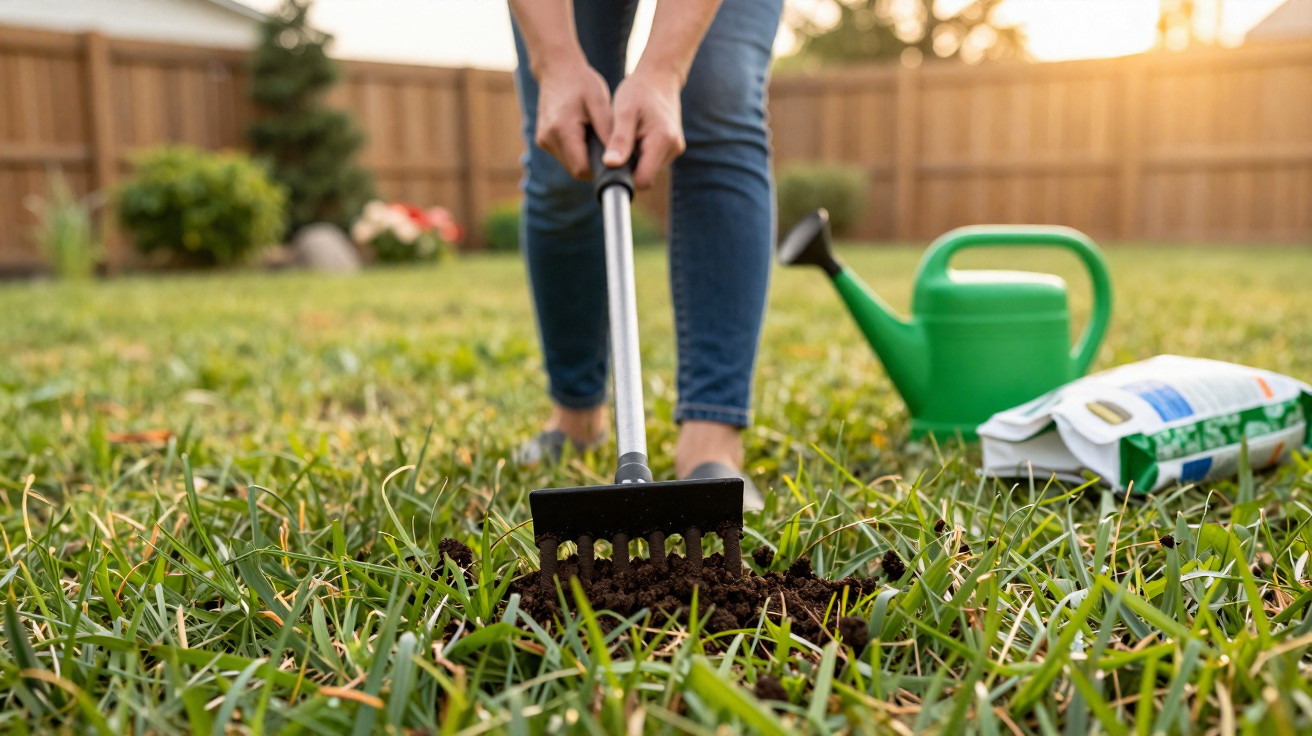
The most overlooked move in lawn care isn’t a new seed blend or a premium fertiliser. It’s core aeration. This is when a machine removes small plugs of soil from the lawn, leaving little cylinders scattered across the grass. It looks untidy for a day or two, then quietly changes how your garden “breathes”.
Pulling out those cores creates pathways for air, water, and nutrients to reach the roots instead of staying trapped near the top. Roots begin to drive deeper. Water stops puddling and starts penetrating. Over time, the lawn shifts from merely coping week to week to building genuine resilience.
If you’ve never aerated before, it can feel almost laughably simple. But simple doesn’t mean ineffective. With lawns, the small, quiet changes are often the ones that make the biggest difference.
A familiar pattern plays out for many people: the grass looks stressed, they search “best lawn fertiliser”, buy the expensive bag, and spread it with hope. The first small burst of green feels like a win. Then summer arrives in full force and the same thin patches show up again.
Most of us have had that moment, standing in the garden thinking, “What else do you want from me?” Usually, the missing piece is that nothing below ground has improved. The soil is still hardpan. The roots are still stuck in the top 2.5 cm (1 inch). Fertiliser becomes a short-lived plaster over a structural problem.
And let’s be honest: almost nobody is checking their soil every week or tracking compaction like a researcher. Yet one aeration session, done at the right time of year, can deliver what months of guesswork with the hose never will.
“Most homeowners blame themselves when their lawn fails,” says a veteran groundskeeper who manages several city parks. “Nine times out of ten, it’s the soil, not the person. Grass is incredibly forgiving if you give its roots room to live.”
To break the cycle, you don’t need a complicated spreadsheet of products. You need a short, workable checklist that resets how you think about the ground beneath you:
- Check the soil with a simple probe or screwdriver - if you can’t push it in 10–15 cm (4–6 inches), compaction is likely.
- Book core aeration once a year in spring or autumn, when the grass is actively growing.
- Leave the plugs on the lawn so they can break down and feed the soil naturally.
- After aerating, top-dress with a thin layer of compost to rebuild structure and biology.
- Reduce watering slightly once roots deepen, so the lawn learns to grow downwards.
The deeper story your lawn is trying to tell you
A struggling lawn is rarely only about appearance. It’s a conversation between you and the ground you walk over every day. Some lawns spend half the day in shade as a tree matures, and the grass underneath is fighting a battle it was never going to win. Some sit on fill dirt dumped by a developer thirty years ago, still dense and lifeless. Others were planted with the wrong grass for the climate and limp along year after year.
When you step back and take in that bigger picture, the guilt eases. Maybe the lawn isn’t misbehaving. Maybe it’s signalling something your watering schedule can’t solve. You start spotting the areas where water sits too long, where the dog always runs the same route, where the soil by the drive feels like concrete.
That’s when lawn care stops feeling like a wrestling match and starts to feel more like listening.
| Key point | Detail | Value for the reader |
|---|---|---|
| Soil compaction often beats water issues | Hard, dense soil blocks roots, air, and nutrients | Helps explain why watering and fertilising haven’t worked |
| Core aeration is a game-changing habit | Pulls small plugs, opens channels for root growth | Offers a concrete, relatively simple fix with lasting impact |
| Look at shade, traffic, and grass type | Trees, paths, and wrong varieties stress grass constantly | Guides smarter choices instead of endless trial and error |
FAQ:
- Why is my lawn yellow even though I water regularly?
Yellow grass often points to shallow roots, compacted soil, or nutrient imbalance, not just lack of water. When roots can’t grow deep, the lawn stresses quickly under heat or sun, even with a sprinkler running.- How do I know if my soil is compacted?
Try pushing a long screwdriver or soil probe into the ground. If it stops after about 2.5–5 cm (1–2 inches) and you need serious force, the soil is likely compacted and your grass roots are trapped near the surface.- Is core aeration really necessary every year?
On high-traffic lawns with children, pets, or heavy clay soil, yearly aeration is a big help. On lighter, sandy soils or low-traffic gardens, you might space it out to every 2–3 years and still see good results.- Should I aerate or fertilise first?
Aerate first so you open pathways down into the root zone. Then fertilise or add compost. The nutrients move deeper and work more effectively than when they sit on top of hard soil.- Can I fix a bad lawn without starting over?
Often yes. Combine aeration, overseeding with a suitable grass mix, and sane watering habits. Restarting from bare dirt is usually a last resort when the soil or grass type is completely mismatched to your climate and light.




Comments
No comments yet. Be the first to comment!
Leave a Comment