
After years of pushing a mower, turning over soil and waging war on slugs, I genuinely thought I’d cracked gardening.
Then three genuinely radical ideas crept in and quietly changed everything.
They weren’t lifted from a glossy catalogue or picked up on a pricey course. They came from permaculture - an approach that treats a back garden less as something to control and more as an ecosystem to support. It can feel like a small shift at first, but once it clicks, it’s hard to garden any other way.
Permaculture: from tidy beds to living systems
Permaculture originally meant “permanent agriculture”, though that label barely does it justice. The guiding principle is straightforward: cooperate with nature rather than fighting it. That includes growing food, of course, but it also means looking after soil life, wildlife, and the people doing the work.
“At its heart, permaculture asks a blunt question: can a garden feed you without exhausting the ground beneath your feet?”
This mindset rests on three central ideas: care for the land, care for people, and fair use of surplus. In an average suburban garden, that usually leads to fewer chemical inputs, less waste, and closer attention to how water, nutrients and energy travel across the site.
Rather than insisting on straight lines and exposed soil, a permaculture garden is allowed to shift with the seasons. Some plants are left to flower to support pollinators. Fallen leaves are left to decompose where they land. The soil is kept covered. Over time, what can look like untidiness becomes a source of fertility and resilience that conventional methods often struggle to replicate.
1. Permanent mulch: feeding the soil rather than the bin
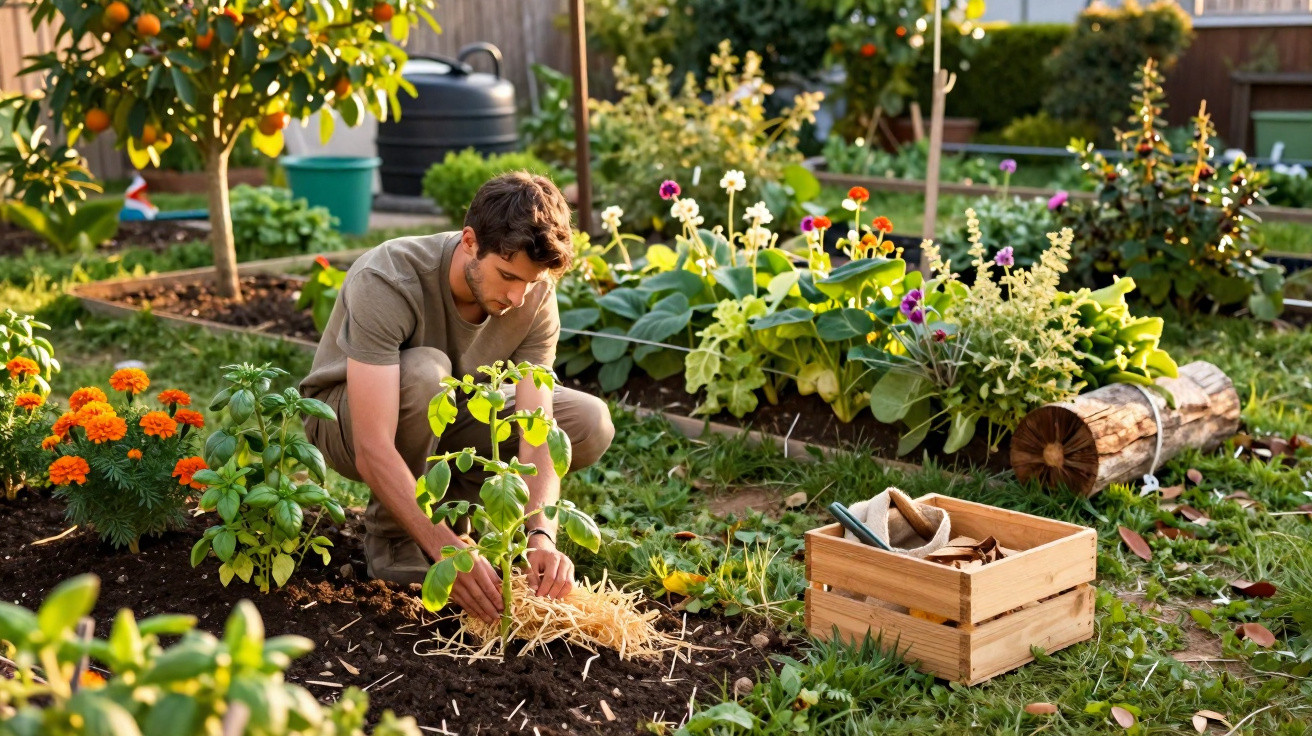
Traditional gardening books often present neat beds with spotless, brown soil between crops. Permaculture reads that as a warning sign. Exposed earth washes away, overheats in summer and loses nutrients whenever it rains.
Permanent mulch turns that habit around. Instead of scraping beds clean, you cover the ground - and you keep it covered.
“A mulched bed turns kitchen scraps, lawn clippings and dead leaves into a free, slow-release fertiliser factory right under your feet.”
What you can use as mulch
- Straw or old hay (ideally free from weed seeds)
- Dry grass clippings applied in thin layers
- Autumn leaves and shredded hedge trimmings
- Wood chips or ramial chipped wood from young branches
- Half-finished compost and old crop residues
Apply organic matter in a layer a few centimetres deep around plants, but keep it away from stems to reduce the risk of rot. As it breaks down, worms pull it down into the soil. Fungi spread through the material and into the root area. Bit by bit, the ground becomes darker, crumbly and far easier to work.
That modest “blanket” of mulch also triggers a chain of benefits:
- Less moisture evaporates, so you don’t need to water as often.
- Weed seeds find it harder to sprout, which reduces weeding.
- Soil temperatures fluctuate less, helping roots during heatwaves and cold snaps.
- Nutrients accumulate steadily rather than arriving in sharp, easily-leached surges.
For time-poor gardeners, the impact is significant. A single afternoon mulching can remove dozens of smaller chores later on. And it’s not only for larger plots: even a balcony container topped with a thin layer of shredded leaves will stay damp and productive for longer than bare compost.
2. Companion planting: turning beds into plant communities
The second hit to my gardening pride was seeing how permaculture arranges crops. Instead of separating plants as though each needs its own space, it intentionally mixes them so they help one another.
“Companion planting treats a bed like a neighbourhood, where tall, low, deep-rooted and shallow-rooted plants share light, space and defence.”
Some partnerships are tried and tested; others remain more experimental. The principle doesn’t change: bring together plants that can provide shade, deter pests, attract beneficial insects or offer physical support.
Classic companion combinations to try
| Companions | Why they work |
|---|---|
| Tomato, basil, French marigold | Basil may improve tomato flavour; marigolds give off compounds that discourage some soil pests. |
| Carrot, leek | The scent of leeks can disrupt carrot fly, while carrot tops help loosen soil around leek roots. |
| Squash, sweetcorn, climbing beans | Beans fix nitrogen, sweetcorn serves as a living stake, and squash blankets the soil to suppress weeds. |
Instead of strict lines, a companion bed ends up looking more like a patchwork. Lettuce benefits from dappled shade beneath taller crops. Herbs along the edges draw in pollinators and predatory insects. Different root depths pull nutrients from multiple soil layers, leaving fewer unused pockets.
In tight gardens, this kind of layout can increase yields. A bed 1.2 m wide, for instance, might run sweetcorn down the centre, with beans winding up the stems and pumpkins spreading out towards the path. In a conventional arrangement, that same footprint would typically produce a single crop plus a strip of compacted ground for walking.
3. Raised “autofertile” mounds: building soil upwards
The third technique almost feels like a loophole. Rather than struggling with poor, compacted earth, permaculture gardeners create raised mounds filled with organic matter. In Central Europe these are often called “hugelkultur” beds, but with a few adjustments the concept suits most climates.
The build is uncomplicated: start with woody material at the base, add layers of greener waste, manure or compost, then finish with topsoil. The result is a sponge-like ridge that stores both moisture and nutrients.
“A well-built mound acts like a buried water tank and compost heap combined, feeding plants for years with little extra input.”
Why these mounds change the game
- As wood rots, it absorbs rain and releases it slowly during dry periods.
- Nutrients are freed up bit by bit through decomposition, giving plants a long, consistent supply.
- The raised shape helps excess water drain away, which is useful in heavy clay or wet conditions.
- The slopes create a range of microclimates: warmer, sunnier faces and cooler, damper backs.
They do take work upfront: digging a shallow trench, shifting logs, stacking layers. But once they’re established, many gardeners find they water less and see stronger growth even where soil is thin and tired.
Planting can also be dense and mixed. Put perennial herbs along the top, thirstier annuals partway down, and shade-tolerant salads at the bottom. Because the mound resembles a woodland floor, soil organisms move in quickly, accelerating the whole process.
How these three methods work together
Individually, mulch, companions and mounds all improve a garden. Used together, they function like connected parts of one system.
- Mulch locks in moisture on the mounds and supports the fungi decomposing the buried wood.
- Companion planting makes full use of the mounds’ height differences and microclimates.
- Combined, they reduce reliance on bought-in fertiliser, mains water and weed killers.
Even a small urban garden can scale these ideas down. One raised bed with a woody core, a generous top layer of shredded leaves, and a mixture of tomatoes, basil and marigolds already follows the same logic. Over a few seasons, production often increases while effort and spending decrease.
Useful terms and real-world scenarios
Permaculture language can sound off-putting, but a handful of terms make it easier to navigate:
- Guild: a collection of plants - and sometimes animals - that benefit one another, commonly designed around a central tree or key crop.
- Edge effect: the way life tends to concentrate where two habitats meet, such as hedge and lawn, path and bed, or mound and flat ground.
- Self-seeding: plants that are allowed to drop their own seeds so fresh growth appears without the gardener sowing again each year.
Imagine a UK terrace house with a 6 m by 8 m back garden. In one corner, a fruit tree grows with chives, comfrey and strawberries planted underneath to form a simple guild. Across the middle, two long woody mounds sit under a mulch of last autumn’s leaves. Between them, curving woodchip paths replace a rigid grid of beds. By late summer, beans dangle from sweetcorn and courgette leaves keep the soil shaded. The hosepipe is needed far less often than when everything was planted in straight rows over bare earth.
There are compromises. Damp mulch can attract slugs, so early in the year you may need traps or barriers. On heavy clay, mounds can slump if they’re over-watered. Companion planting requires attention; not every combination thrives in every climate. Even so, those manageable drawbacks come with substantial rewards: richer soil, improved water retention, more insects and birds, and a garden that feels lively rather than merely maintained.
For gardeners who feel they’ve already tried every trick, these three methods can be a quiet jolt. Not because they’re showy, but because they demand less from you and rely more on the hidden life under the surface. Once you make that shift, a neat vegetable plot of bare, tidy rows starts to look oddly outdated.

Comments
No comments yet. Be the first to comment!
Leave a Comment