
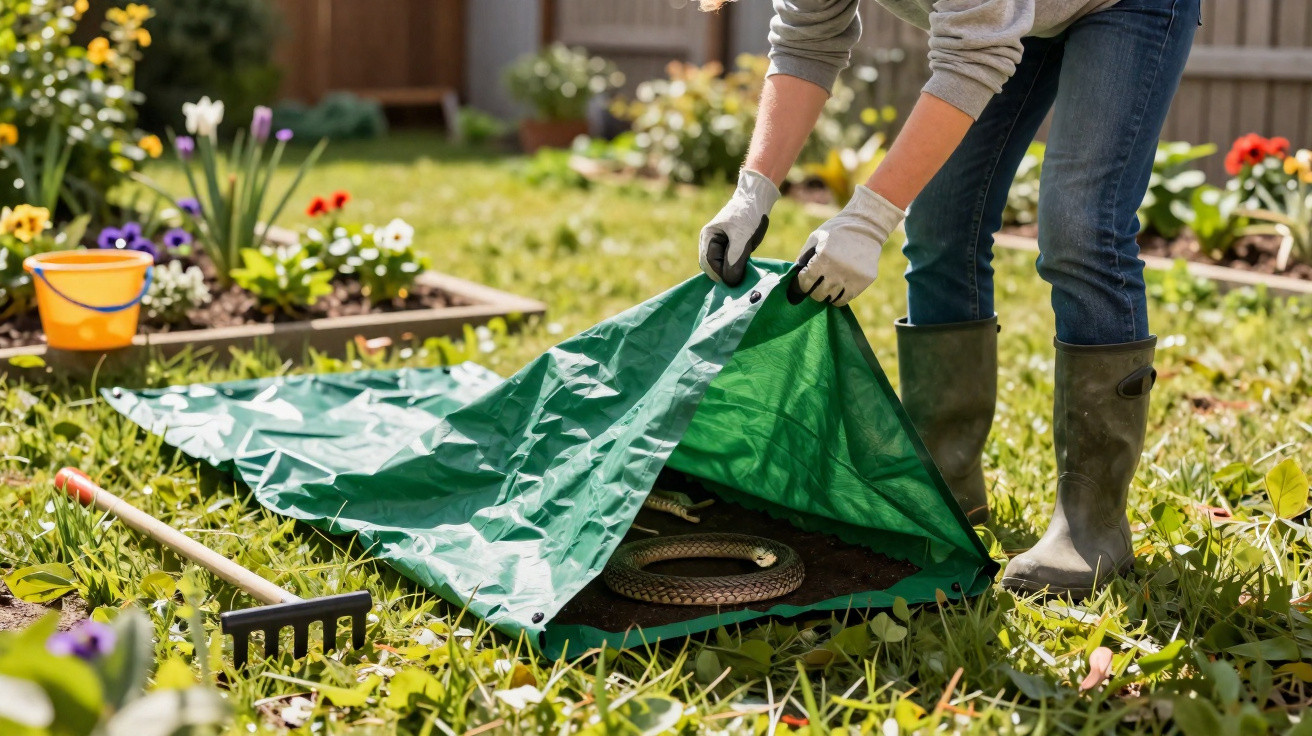
As soon as the sun starts to feel strong again, the best time of year begins for hobby gardeners. Beds are readied, hedges trimmed, play equipment put up. In the middle of all that activity, one item often gets left behind because it looks harmless - but for snakes it can turn into a perfect little spa. If you know what it is, you can make your garden noticeably safer with just a few simple changes.
Why snakes are so likely to show up in gardens in spring
Snakes are classed as cold-blooded animals, meaning their body temperature is governed by their surroundings. To become active, hunt and mate, they need a minimum level of warmth - in Central Europe usually around 25 to 30 °C.
That is where the typical family garden comes in. After winter, sunshine can already be quite strong during the day, while the soil stays cool for much longer. Snakes then actively look for warm, sheltered spots. And they do not only find these in stone walls or wood piles - increasingly, they are drawn to everyday garden items.
"The critical point: Flat, dark coverings on the ground turn into small heating surfaces in spring - ideal hiding places for snakes."
This one item becomes a snake magnet
The biggest risk comes from garden tarpaulins and similar covers laid flat on the ground. This might be a large sheet left over after building work, a dark cover thrown over the compost, or old plastic and metal panels that were put down “just for a moment” in the back corner of the garden.
The mechanism is straightforward:
- dark material absorbs heat from the sun,
- the soil underneath holds on to that warmth,
- a warm, wind-sheltered gap forms between the cover and the ground.
For snakes, that narrow space feels like a natural radiator: warm, protected and hardly visible from the outside. That combination is exactly what makes it so appealing - especially in spring, when the animals are still sluggish after winter dormancy and need to rebuild their energy reserves.
How the “mini greenhouse” effect develops
When someone lays a dark plastic sheet or a piece of corrugated metal flat on the lawn, a pocket of trapped warmth builds up underneath. Sunlight heats the top surface, the ground below absorbs the energy and then releases it slowly. Between those two layers, a zone forms that is warmer than the surrounding air.
To us, it might only feel mildly warm; for a snake, it can be the difference between staying in winter-sleep mode and becoming active. It will slide under the sheet, remain there for hours, and usually only leave once it cools down significantly in the evening.
The most common garden mistakes - and how to avoid them
Many garden owners - without any bad intent - do exactly what snakes find attractive. Typical spring situations include:
- An old builder’s tarpaulin is left lying flat on the ground for weeks.
- A compost heap is “temporarily” covered with black plastic sheeting.
- Old corrugated metal or fibre-cement sheets end up in the back corner of the garden - placed directly on the soil.
- Firewood is stacked without any gap underneath, with long grass growing alongside.
This creates a whole chain of warm, hidden hideaways. If you want to prevent that, it helps to take spring clean-up in the garden through to its logical conclusion.
Practical steps for a less snake-friendly garden
A few quick actions can reduce the risk considerably:
| Problem | Better approach |
|---|---|
| Tarpaulin flat on the ground | Only use it tightly stretched or remove it completely |
| Wood stored directly on soil | Store at least 20 cm off the ground on pallets |
| Forgotten metal or plastic sheets | Dispose of them or store upright, not close to the ground |
| Long grass near the house and patio | Keep it cut short regularly, especially near paths and play areas |
"The fewer warm, hidden cavities there are at ground level, the less attractive the garden becomes as a place for snakes to stay."
How to store garden tarpaulins properly
Garden tarpaulins are useful, and there is no need to stop using them. What matters is how they are stored.
- Let the tarpaulin dry out fully after use.
- Roll it up neatly rather than scrunching it into a corner.
- Hang it up, for example on a hook in a shed, garage or carport.
- Do not leave it lying flat on beds or the lawn long-term when it is not needed.
If you only lay the tarpaulin out for short tasks and then roll it back up straight away, you remove the incentive for snakes to settle underneath it.
What you should never do
The most serious mistake is lifting a tarpaulin without considering that a snake could be there - especially if it has been on the ground for some time.
- Never reach directly under an old tarpaulin with bare hands.
- First raise it using a broom handle and tip it slightly.
- Keep enough distance and open the area up slowly.
If you do spot a snake, stay calm. Panic reactions are more likely to create risky situations - for people and for the animal.
What to do if there is already a snake in the garden
Many snake species in Central Europe consistently avoid humans. They sense vibrations as someone approaches and will usually move away on their own as soon as they can see a clear escape route.
If you still come across one at close range, a few simple ground rules help:
- Keep your distance and do not move closer.
- Stay calm and avoid sudden movements.
- Step back slowly by one or two steps.
- Keep children and pets away.
"If you give a snake space, there is usually no need to be afraid - it does not want contact and will retreat."
Trying to catch one yourself is not a good idea. Snakes are difficult to judge, and many species look very similar. In some countries they are strictly protected, and killing such animals can result in heavy fines.
If you remain unsure, it makes sense to contact local authorities or wildlife rescue centres. Specialists there know the regional species and can advise whether any action is needed.
Making the garden safer for children and pets
If you have small children or curious dogs and cats, it is worth paying extra attention to potential hiding places. Particularly sensitive areas include:
- sandpits and playhouses if dark corners form underneath,
- spaces under patios where sheeting may be lying around unchecked,
- pond edges with dense, taller vegetation,
- uncut strips directly alongside walls or wood stores.
Keeping the area around the house, patio, barbecue spot and play equipment tidy reduces the chance of snakes venturing right up to frequently used spaces. Taller, denser islands of grass can be moved towards the edge of the plot, away from seating and play areas.
Why snakes are still useful
As unpleasant as the idea of a snake in your own garden might be, they play an important role in the ecosystem. They mainly eat small mammals such as mice, and sometimes rats or large insects. Particularly on rural plots, a healthy snake population helps keep rodent numbers in check.
If you plan the garden so that snakes can still find retreat areas towards the outer edges, but fewer right next to the house, you gain two benefits: fewer mice and more distance from the animals. Rock piles, wilder corners and deadwood can be placed intentionally at the boundary of the plot, while areas close to where you live are kept clear with shorter vegetation and more defined structure.
Ultimately, it is about avoiding typical snake magnets such as garden tarpaulins left flat on the ground - without slipping into blind fear. Once you understand why these everyday items are so tempting for reptiles in spring, a few small changes can make your property safer and help you feel more relaxed in day-to-day garden life.

Comments
No comments yet. Be the first to comment!
Leave a Comment