
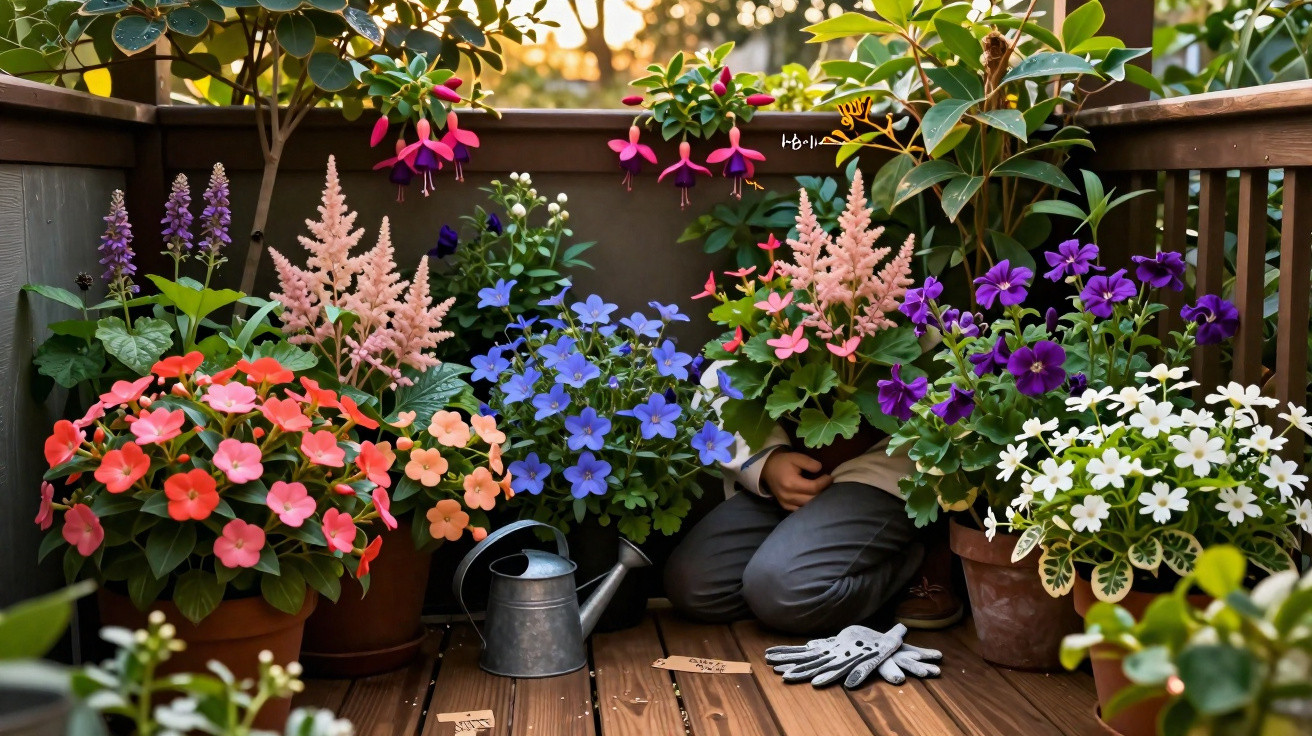
A north-facing balcony, a courtyard that never really brightens up, a cool corner of the garden: plenty of people give up on these spots in frustration - and there’s no need.
If you’ve got a shady nook like this, you’ll know how disappointing bare pots and a dull wash of green can look. Choose the right shade flowers, though, and you can turn the same space into a colourful summer border that keeps glowing from June right through into autumn - without a gardening qualification or hours of upkeep.
Planning a shade garden: assess the light properly first
Before you buy anything, take a clear-eyed look at the light you actually have. Shade isn’t all the same. A north-facing balcony that catches a brief spell of morning sun is a very different setting from the ground beneath an old horse chestnut, where it can stay cool even in August.
- Bright partial shade: a little morning or evening sun, with dappled light in between.
- Dense shade: almost no direct sun, often beneath trees or beside tall walls.
- Shifting shade: the sun moves and patches of light drift across the bed during the day.
In bright partial shade, many perennials will cope well. In truly dark areas, only genuine shade specialists will still manage to produce flowers with so little light. Put sun-lovers there instead, and by July you’ll be staring at spindly stems and yellowing leaves.
Soil in the shade: cooler, but often too wet
Shady corners dry out more slowly, stay cooler for longer and can feel like a natural air conditioner in summer. The downside is that moisture can linger, especially close to walls or under dense tree canopies. Waterlogging can quickly finish off even tough shade flowers.
"A loose, humus-rich soil is almost more important in shade than the choice of variety - it holds moisture without trapping it."
If you want to get shade areas ready, three straightforward steps will take you a long way:
- Loosen the ground with compost and a little leaf mould.
- Remove thick roots and any compacted layers carefully.
- After planting, cover the surface with bark mulch or chipped wood.
That way, roots stay cooler through summer, and flowers really can last the full season rather than fading by July.
These seven shade flowers bring colour from June through to autumn
With a smart mix of long-flowering annuals and reliable perennials, even a north-facing balcony can become a tiered display of blooms. The seven plants below cover the season with very few gaps.
1. Busy Lizzie (Impatiens)
Few balcony plants flower as tirelessly in shade as the Busy Lizzie. In pots, window boxes or beds, it forms dense cushions packed with blooms in pink, red, white or orange.
- Ideal for: north-facing balconies, shady window boxes, the front of borders
- Flowering period: June until the first frosts
- Care: keep evenly moist; don’t allow to dry out
If you pinch off spent flowers regularly, new buds keep coming almost continuously.
2. Tuberous begonia (Begonia tuberhybrida)
Tuberous begonias thrive where others simply give up: deep shade, under balconies, and in dark corners by the house. Their double flowers often look like miniature roses.
- Ideal for: hanging baskets, tall pots, heavily shaded spots
- Flowering period: June to September
- Care: humus-rich compost, water regularly, but avoid soggy roots
Overwinter the tubers somewhere frost-free in the cellar, then pot them up again the following spring - a welcome bonus if you like to save money.
3. Fuchsia (Fuchsia)
With their elegantly dangling bells, fuchsias are a classic for shady patios. They prefer cool roots and won’t thank you for harsh midday sun or bone-dry compost.
- Ideal for: hanging baskets, shady balconies, sheltered spots by walls
- Flowering period: usually June into a mild autumn
- Care: water often but moderately; feed weekly with a liquid fertiliser
Keep removing faded blooms, and the plant is encouraged to keep producing more.
4. Astilbe - feathery plumes for shade
Astilbes add shape and height in borders. Their upright, feathery flower plumes sit above elegant foliage and create bright highlights in midsummer, even in the darker parts of the garden.
- Ideal for: border edges, areas near ponds, beneath open woodland planting
- Flowering period: depending on variety, June to August
- Care: never let the soil dry out; top up with compost in spring
Mixing different varieties gives you weeks of shifting colour, from white to pink to red.
5. Carpathian bellflower (Campanula carpatica)
This compact bellflower scatters the ground with small, light-coloured blooms. In dappled shade it forms neat cushions that also suit dry-stone walls and border edges.
- Ideal for: partially shaded borders, containers, wall tops
- Flowering period: May to September, with short pauses
- Care: lightly cut back after the first flush, then feed again
It pairs well with other hardy perennials with similar needs, such as low-growing cranesbill varieties.
6. Cranesbill geranium as a long-flowering option (for example ‘Rozanne’)
Perennial cranesbills cover larger areas as ground cover without looking invasive. Some well-known varieties produce violet-blue flowers right across summer.
- Ideal for: partially shaded beds, under shrubs and trees, filling gaps
- Flowering period: June to October
- Care: if needed, cut back hard once in late summer
Because it blooms for so long, it works brilliantly as a “carpet” beneath showier perennials such as astilbes.
7. Tiarella - the underrated shade star
Tiarella (foamflower) is a classic woodland perennial. It stays low, often with attractively marked leaves, and sends up delicate flower spikes again and again from spring into late summer.
- Ideal for: under shrubs, shady front gardens, along garden paths
- Flowering period: roughly April to September, depending on variety
- Care: humus-rich soil, a little compost in spring, and very little else
Combine it with its relative heuchera (coral bells) to build a textured shade area with foliage in a range of colours.
How to combine the seven shade flowers cleverly
Simple pairings can turn gloomy corners into real focal points. Here are three ready-to-copy combinations:
| Location | Plants | Effect |
|---|---|---|
| Under a tree | Tiarella + cranesbill + astilbe | A flowering carpet from spring to late summer, plus airy height in July/August |
| North-facing balcony | Fuchsias in hanging baskets, plus tuberous begonias and Busy Lizzies | Layers of flowers at different heights, colour through to the first frost |
| Dark base of a wall | Tuberous begonias + Carpathian bellflowers | A colourful edge against an otherwise bare wall, easy to look after |
"Mixing annual and perennial shade flowers gives you instant impact in year one and a stable flowering backbone for the future."
Care tips to keep shade flowers going all season
So the display doesn’t collapse in midsummer, a few simple habits make a big difference:
- Each morning, check quickly whether the compost still feels slightly moist.
- Water at the base rather than constantly wetting the leaves.
- In containers, apply a liquid feed for flowering plants every two weeks.
- Remove faded stems consistently on fuchsias, begonias, impatiens and campanula.
- Once a year, work compost in around established perennials.
If you’re away a lot, choose larger containers and add a mulch layer of bark chips - the compost will dry out far more slowly.
Why shaded beds are often more relaxing than sunny borders
Many gardeners overlook just how appealing shady areas can be. While sun-baked borders can guzzle water in high summer, established shade plants often manage with surprisingly few watering-can trips. Temperatures stay gentler, evaporation is lower, and heat stress is much less of an issue.
There’s also a visual advantage: flower colours can look richer in partial shade, and whites and pastels often shine more strongly than they do in glaring sun. So if you enjoy working with subtle tones, shade is an excellent place to do it.
Getting more from shade: structure, foliage, scent
It’s not only about flowers. Several of the plants above also earn their keep with interesting leaves: tiarella and many cranesbill varieties bring patterned or coloured foliage that remains attractive even when flowering is quieter. Add ferns or hostas and you get a lively mix of shapes and greens.
If you want fragrance as well, edge the bed with shade-tolerant herbs such as sweet woodruff or certain mints. They sit happily alongside the flowering plants listed here and can be used for tea or in the kitchen - a practical extra for anyone who wants to do more than just look at their shady spot.


Comments
No comments yet. Be the first to comment!
Leave a Comment