
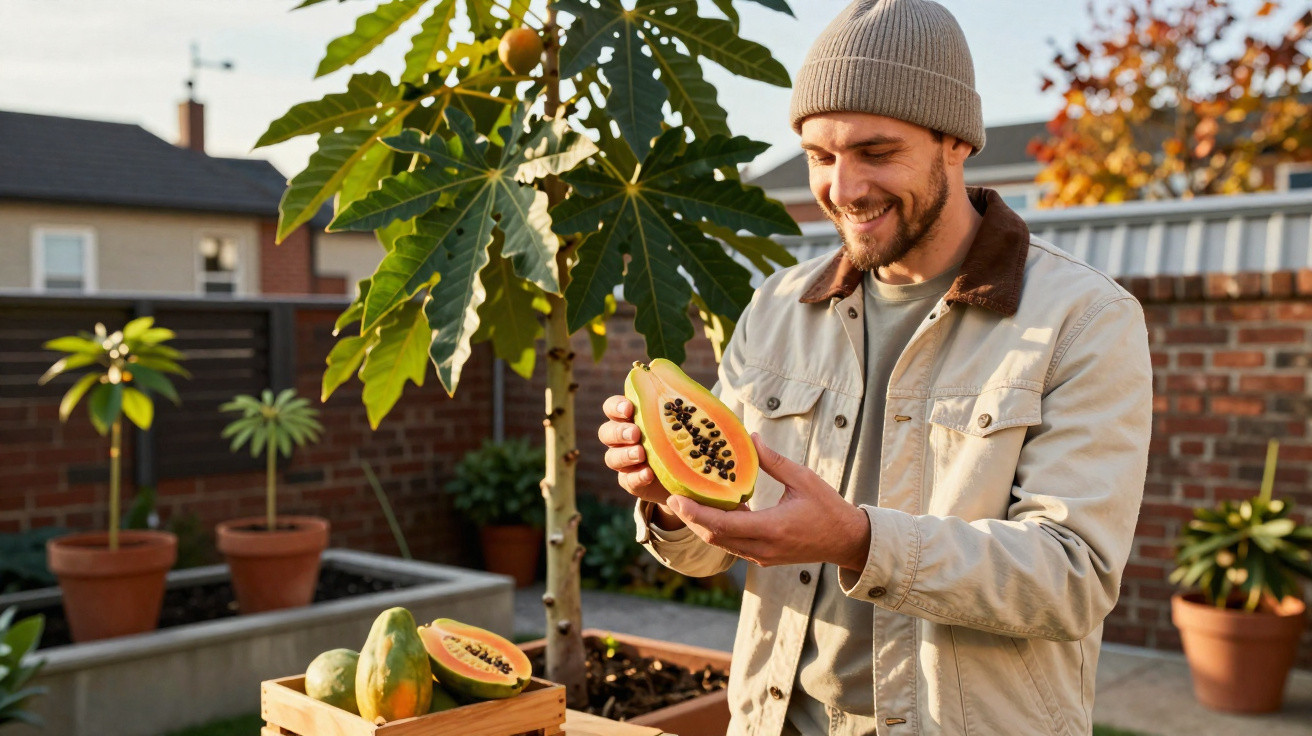
On an icy January morning, there’s one fruit tree that looks as though it should be growing in the tropics - yet it takes harsh winter cold in its stride.
Across Europe and much of North America, many gardeners still assume that anything with an exotic appearance is destined to fail unless it lives in a greenhouse. That belief is beginning to fade, largely because of an unlikely contender: a supposedly “tropical” tree that endures deep freezes and, with a little patience, produces fruit with a custard-smooth texture.
A tropical look that tricks almost everyone
At a glance, the tree seems almost like a prank from nature. Its long, arching leaves - up to about 30 centimetres - hang in soft, drooping layers. When summer arrives, it can make an everyday back garden feel oddly jungle-like.
Because the foliage is so lush, most people assume a single proper frost will finish it off. It simply doesn’t look suited to a place where temperatures sit around freezing for months at a time. In garden centres it’s often grouped near citrus or fig trees, which only reinforces the misunderstanding.
This is a fruit tree that looks like it should be on a Caribbean beach, yet copes with winters that roast apple trees and pears alike.
That misconception has held it back for years. Plenty of gardeners picture it needing a sheltered Mediterranean courtyard or the warmth of a heated greenhouse. In reality, it’s close to the reverse: this tree doesn’t come from the tropics at all, but from an area where winters are real - with snow, cold snaps and biting late frosts.
The pawpaw: a “tropical” fruit born for cold weather
The tree is the pawpaw (Asimina triloba), also known as the “American custard apple”. Its natural range is eastern North America, stretching from the southern Great Lakes down into the Deep South, and reaching into parts of Canada.
In its native habitat, pawpaw is found in river valleys and along woodland margins. Summers there can be hot and humid, but winters can be severe - and that combination has helped shape its toughness.
The pawpaw tolerates temperatures down to around −25°C, putting it among the hardiest fruit trees with genuinely exotic-tasting fruit.
Where figs can begin to struggle at roughly −10 to −12°C, an established pawpaw generally carries on without fuss. That resilience makes it a realistic option for much of the UK, wide areas of northern and central Europe, and most US regions with cold winters (excluding the far north and high mountain areas).
After it has settled in, the tree behaves like a conventional orchard species: it sheds its leaves in autumn and sits dormant through winter. Beneath frozen ground, the roots simply hold on until spring returns.
“Mango of the North”: a fruit that tastes like dessert
Hardiness is impressive, but the pawpaw’s real appeal is the fruit itself. In late summer into early autumn, you’ll see clusters hanging from the branches, green and sometimes tinged with yellow. At first they can seem rather plain - a bit like small mangos, or perhaps oversized beans.
Once you cut one open, everything changes. The flesh is pale, soft and creamy, and many people eat it straight from the skin with a spoon.
The flavour is often described as a blend of banana, mango and a hint of vanilla, with the texture of a ready-made custard.
That combination is why it’s widely nicknamed “mango of the North”. From a nutrition point of view, pawpaw fruit is also notably rich, providing vitamins, minerals and amino acids at levels higher than many familiar orchard fruits.
There is, however, a downside. Pawpaws are poor travellers: ripe fruit bruises easily and doesn’t keep for long. That fragility is a big reason you seldom find it in mainstream supermarkets. Unless you’re close to a specialist grower or a local farm shop, the practical way to enjoy it regularly is to grow it yourself.
How to grow pawpaw in a cold climate
Why you need at least two trees
A common frustration is that a single, healthy pawpaw can grow well for years and still never produce fruit. Most cultivars are not self-fertile, so they require pollen from a genetically different tree.
For a reliable harvest, plant at least two different pawpaw varieties within pollinating distance.
In a smaller garden, spacing two trees about 3–4 metres apart is usually effective. Bees and other insects can move the pollen between flowers, although in some areas you may get better results by hand-pollinating with a small brush.
Site and soil: what this “tropical” tree really wants
For all its exotic appearance, the pawpaw’s requirements are fairly straightforward.
- Soil: Deep, fertile ground that stays evenly moist but still drains well. It prefers a slightly acidic to neutral pH. Very chalky soils or those that dry out completely are best avoided.
- Sunlight: For heavy cropping, mature trees do best in full sun. Young plants - particularly during their first 2–3 years - are happier with partial shade or a little protection from harsh midday sunshine.
- Water: Consistent watering through the first few summers helps the taproot establish properly. Once established, pawpaws often handle short dry spells better than their “tropical” image suggests.
- Space: Most cultivars reach about 4–5 metres tall, with a broadly similar spread.
The taproot is worth highlighting. Pawpaw forms a strong central root and doesn’t like disturbance. If you’re planting a container-grown tree, do it carefully and avoid breaking up the root ball. Bare-root trees should be planted quickly, with gentle handling throughout.
Low-maintenance fruit: a friend of pesticide-free gardens
Once the tree has established, pawpaw is generally low effort. Compared with apples, pears or peaches, it tends to face far fewer pests and diseases - particularly in Europe, where many of its natural adversaries aren’t present.
Pawpaw leaves contain natural compounds that tend to repel many common insect pests, reducing or removing the need for chemical sprays.
That means no routine fungicide programme and no ongoing fight with codling moths or peach leaf curl. For gardeners aiming to minimise treatments or keep things organic, it’s a significant benefit.
Pruning is usually light-touch. A little shaping in late winter can keep the tree to a convenient height and maintain an open, airy crown. Heavy pruning is seldom necessary.
Choosing varieties: flavour, size and ripening time
Specialist nurseries now stock a range of named pawpaw varieties, each with small but meaningful differences. Growers often compare them using broad criteria like these:
| Criterion | What to look for |
|---|---|
| Fruit size | Choose larger-fruited cultivars for fewer but heavier fruits, or smaller-fruited types for more individual pieces. |
| Flavour profile | Some selections skew more strongly towards banana notes, while others emphasise mango or vanilla tones. |
| Ripening period | Mixing early, mid-season and late varieties can spread picking across several weeks. |
| Cold adaptation | Most are hardy, but certain selections have been tested specifically in colder regions. |
Planting two different named cultivars usually improves cross-pollination and can also give you a broader range of flavours.
From garden to kitchen: what to actually do with pawpaws
The simplest approach is to eat them fresh, spooning the flesh straight from the skin. The large, dark seeds are easy to remove, although the flesh itself can be a little slippery.
Because it’s naturally creamy, pawpaw works particularly well in uncomplicated recipes:
- blended into smoothies instead of banana
- used as the base for homemade ice cream or semifreddo
- folded into muffin or cake mixture to add moisture and aroma
- stirred through yoghurt and oats for a rich breakfast
Once cut, the flesh discolours quickly - much like apple or avocado. If you’re using it in puddings or salads, a squeeze of lemon juice will slow the browning.
Potential risks and points to know
As with many plants, sensible moderation is important. The skin and seeds aren’t eaten and can be mildly toxic if consumed in quantity. Only the ripe pulp is used.
Some people report digestive discomfort if they eat a large amount of very ripe pawpaw on an empty stomach. Starting with a small serving, and avoiding overindulgence, helps prevent unpleasant surprises.
In parts of North America, pawpaw stands also support specialised wildlife, including certain butterfly species whose caterpillars feed only on the leaves. In European gardens that exact relationship is usually missing, but the flowers still add spring interest and provide nectar for pollinators.
What this means for small gardens and urban growers
If space is tight, swapping a standard apple tree for something unusual can feel like a gamble. Pawpaw reduces that risk: it stays to a manageable size, copes well with cold, and generally needs less spraying than many traditional fruit trees.
A typical example might be a city back garden in northern England or the US Midwest. Two young pawpaws are planted along a sunny fence. For their first summers, they’re given a bit of shade cloth during heatwaves. Then, after around three to five years, the first fruits arrive. Neighbours assume you’ve somehow managed a rare tropical import in a heated conservatory - and you simply smile, knowing the trees have come through every winter outdoors.
Gardeners who already grow hardy figs, persimmons or quince often see pawpaw as the next step towards a more varied, climate-resilient mini-orchard. Together, these species broaden the harvest window and reduce reliance on varieties that can struggle as weather patterns become less predictable.
Put plainly: pawpaw is a deciduous, cold-hardy fruit tree with exotic-looking leaves and custard-like fruit. It needs two different varieties for pollination, reasonable soil, a bit of patience, and very little else. The payoff is a crop that tastes like holiday, even as the first autumn fog settles beyond the back door.

Comments
No comments yet. Be the first to comment!
Leave a Comment