
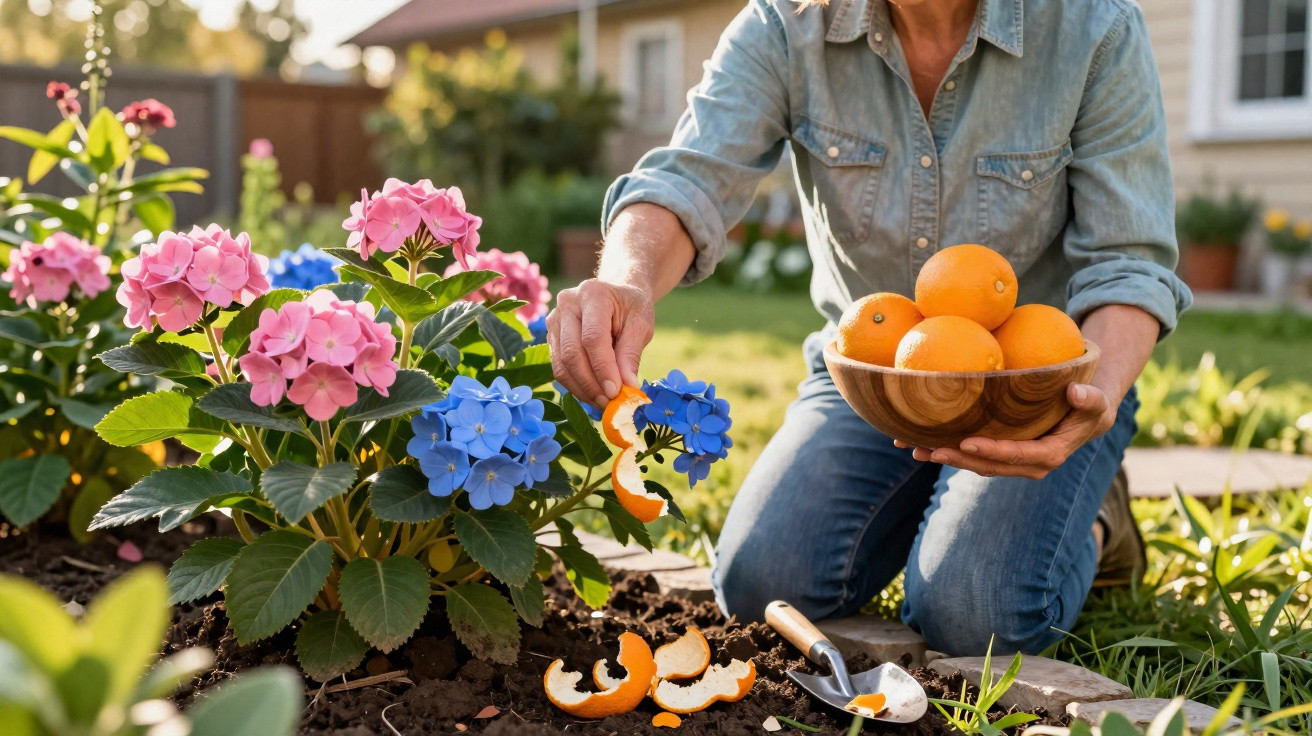
Too often, the problem isn’t the shrub at all, but what it’s growing in: soil that simply doesn’t match the needs of these flamboyant plants. One small, easily overlooked kitchen habit can support healthier growth, enrich foliage colour and help tired flower heads recover-without paying extra for specialist fertiliser.
Why hydrangeas struggle in many gardens
Hydrangeas are well known as “acid-loving” plants. They tend to do best in soil with a pH of roughly 5 to 6.5. Across many gardens in the UK (and in the US), soils can lean alkaline, often due to limestone in the ground, hard tap water, or the repeated use of certain fertilisers.
Once the soil turns too “sweet” or chalky, hydrangeas often begin to show recognisable signs:
- Leaves fade to pale green or yellow, particularly between the veins
- Flower heads become smaller and look thin
- Fresh growth comes through weaker and less bushy
- Plants look fine early in spring, then worsen as the season progresses
This goes beyond appearance. In higher-pH soils, key nutrients-such as iron, magnesium and some trace elements-can become unavailable. The roots may be sitting in nutrient-rich ground, yet still struggle to take up what the plant needs.
When hydrangeas sit in soil that is too alkaline, they slowly starve in the middle of apparent abundance.
Garden centres often answer this with rows of specialist feeds. Many are effective, but they can be expensive-and if the underlying pH doesn’t change, improvements may not last. That’s where a common kitchen leftover can be surprisingly useful.
The surprising value of orange peel
Citrus peel, particularly orange peel, can provide a budget-friendly way to gently support acid-loving plants. In most homes it goes straight into the bin or the food-waste caddy. For hydrangeas, those skins can contribute more than you might expect.
What orange peel brings to the soil
Orange peel contains modest but helpful levels of:
- Potassium – promotes robust flowering and improves overall toughness
- Magnesium – helps maintain rich green leaves and supports chlorophyll production
- Calcium – contributes to root development and the plant’s general structure
As the peel breaks down, it also fuels the soil ecosystem-fungi, bacteria and small invertebrates-which gradually release these elements in forms that hydrangea roots can absorb. It can also gently shift the soil conditions towards what hydrangeas prefer, working alongside other acidic organic materials such as leaf mould or pine needles.
Used correctly, dried orange peel acts like a gentle, homemade booster tailored to plants that enjoy acidic ground.
How to prepare orange peel before it reaches the border
It’s tempting to tuck fresh peel straight under a shrub, but it rarely delivers good results. Whole, damp peel breaks down slowly, may encourage mould, and can attract fruit flies.
Step-by-step method for a usable “peel fertiliser”
Gardeners who get the best results usually stick to a straightforward process:
- Peel the oranges and remove as much leftover pulp as you reasonably can.
- Slice the peel into strips or small pieces to help it dry faster.
- Lay the pieces in a single layer on a tray.
- Dry thoroughly:
- Leave them in a warm, well-ventilated place or on a sunny windowsill for several days, or
- Use an oven on the lowest setting, keeping a close eye on them so they don’t brown.
- Only store the peel once it is fully dry and brittle.
After drying, you can turn it into either of two practical forms:
- Fine powder – blitz the peel in a blender or coffee grinder
- Very small flakes – chop finely, or crush using a rolling pin or pestle
Good orange-peel fertiliser snaps like a crisp; if it bends, it is not ready for the garden yet.
Applying orange peel to hydrangeas without overdoing it
As with any soil amendment, the goal is moderation. Small, consistent applications tend to work better than tipping on large amounts.
How much and how often?
| Plant size | Amount of dried peel | Frequency (growing season) |
|---|---|---|
| Young potted hydrangea | 1–2 tablespoons of powder or flakes | Every 4–6 weeks |
| Mature shrub in the ground | 2–4 tablespoons scattered around the base | About once a month |
| Large established hedge or group | Small handful per plant, spread widely | Two or three times between spring and late summer |
Apply it as a thin, even ring around the drip line-roughly where the outer edge of the foliage reaches-rather than heaping it against the main stem. Lightly work it into the top layer of soil (or cover it with a little compost), then water well.
Think of orange peel as a seasoning for the soil, not a mulch: a fine dusting, not a thick carpet.
Pairing peel with other good habits for standout blooms
Orange peel on its own won’t transform a site that’s fundamentally wrong for hydrangeas. It’s most effective when used as part of a wider routine that matches what these shrubs naturally require.
Simple habits that support the peel trick
- Check your soil type – a simple pH test kit helps you understand how alkaline your garden actually is.
- Add other acidic organic matter – pine needles, shredded bark or leaf compost can help keep soil conditions supportive.
- Water consistently – hydrangeas dislike drying out, especially in summer containers or south-facing beds.
- Avoid lime-based products – builders’ rubble, some lawn treatments and certain tap waters can push pH upwards again.
When combined with compost and sensible watering, citrus peel can provide an extra nudge-helping shrubs stay greener, less stressed and more likely to form full flower heads.
What about colour change and blue flowers?
For many gardeners, hydrangea care is tied to achieving a strong blue shade. Colour is influenced partly by acidity, but aluminium availability in the soil also plays a key role. Orange peel can help with the acidity side, though it does not directly colour the flowers.
In naturally acidic soils that already contain aluminium, continued organic additions-including citrus peel-may help maintain or intensify blue and purple tones. In strongly alkaline gardens, you may still need to grow hydrangeas in containers using ericaceous compost, or use products containing aluminium sulphate, to see a clear change.
Risks, limits and when to hold back
No home-grown approach is risk-free. Here, the main issue is overuse. Even when dried, a thick layer of peel can form a dense mat that repels water and encourages mould on the surface.
Extra care is sensible if:
- The soil is already strongly acidic (pH under 5), as further changes could stress certain varieties
- Pets or local wildlife are known to react to citrus and might chew the peel
- Hydrangeas share a bed with plants that prefer neutral or alkaline conditions
In these cases, use smaller quantities or apply only in specific spots. Observing the plant’s response across a full growing season is more reliable than following any single, fixed rule.
From kitchen habit to garden routine
If your household regularly eats oranges, mandarins or tangerines, drying peel can become a quick, almost automatic routine: keep a tray out, add peels as you go, then dry them properly once the tray is full. The finished peel stores neatly in a jar and can be sprinkled on borders whenever you’re passing with a watering can.
Beyond helping lacklustre shrubs, it highlights how small domestic habits can gently shape a garden over time. Nutrients move from the fruit bowl into the soil food web, and then show up again as sturdier stems and better blooms. Hydrangeas-because of their generous flower heads and their clear response to soil conditions-make that cycle particularly easy to notice.
Comments
No comments yet. Be the first to comment!
Leave a Comment