
Many home gardeners face the same puzzle every year with their roses: one wrong cut at the wrong moment, and the flowers simply fail to appear.
Between late winter and early spring, it’s decided whether a rose bush will erupt with blooms in May and June - or limp along looking sparse. Prune too early and you invite frost damage. Leave it too late and you drain the plant’s energy, sacrificing flowers. With a handful of clear rules, this tricky timing becomes far easier to manage.
The perfect time: this short window is what really matters
Roses may look romantic, but they can be unforgiving when the timing is off. The ideal moment for pruning sits right on the cusp between winter and spring.
"In most regions, the best time to prune is roughly between mid-February and mid-March - just before the new shoots properly get going."
At this point the plant is gradually waking from winter dormancy, without yet being in full growth. Cuts close quickly, and the rose can channel its energy straight into the buds you leave behind.
Why pruning too early is so risky
It’s easy to be tempted: a mild day in January, a bit of sunshine - and your hand reaches for the secateurs. That often backfires.
- Shoots cut early can start growing immediately in mild weather.
- Those fresh, water-rich shoots are extremely vulnerable to frost.
- Late night frosts can kill them back entirely.
- Cold can penetrate deep into the wood through the fresh cut surfaces.
The outcome: frozen tips, weakened shoots, fewer flowers - and sometimes even the loss of whole branches.
Temperature beats the calendar: prune only after the worst frosts have passed
Your best guide isn’t the date on the calendar, but the temperature outside. While hard frosts are still likely in your garden, roses are better left unpruned.
"Only once the period of sharp night frosts is over should the secateurs come out. Better to prune a little later than too early and harm the plant."
In many places, the timing around the second half of March works well; in milder areas, it’s often noticeably earlier.
Watch the buds: the rose shows you when it’s ready
Alongside the weather, the plant itself gives very clear signals. If you check your roses regularly, you’re unlikely to miss the moment.
Buds "breaking" as the starting signal
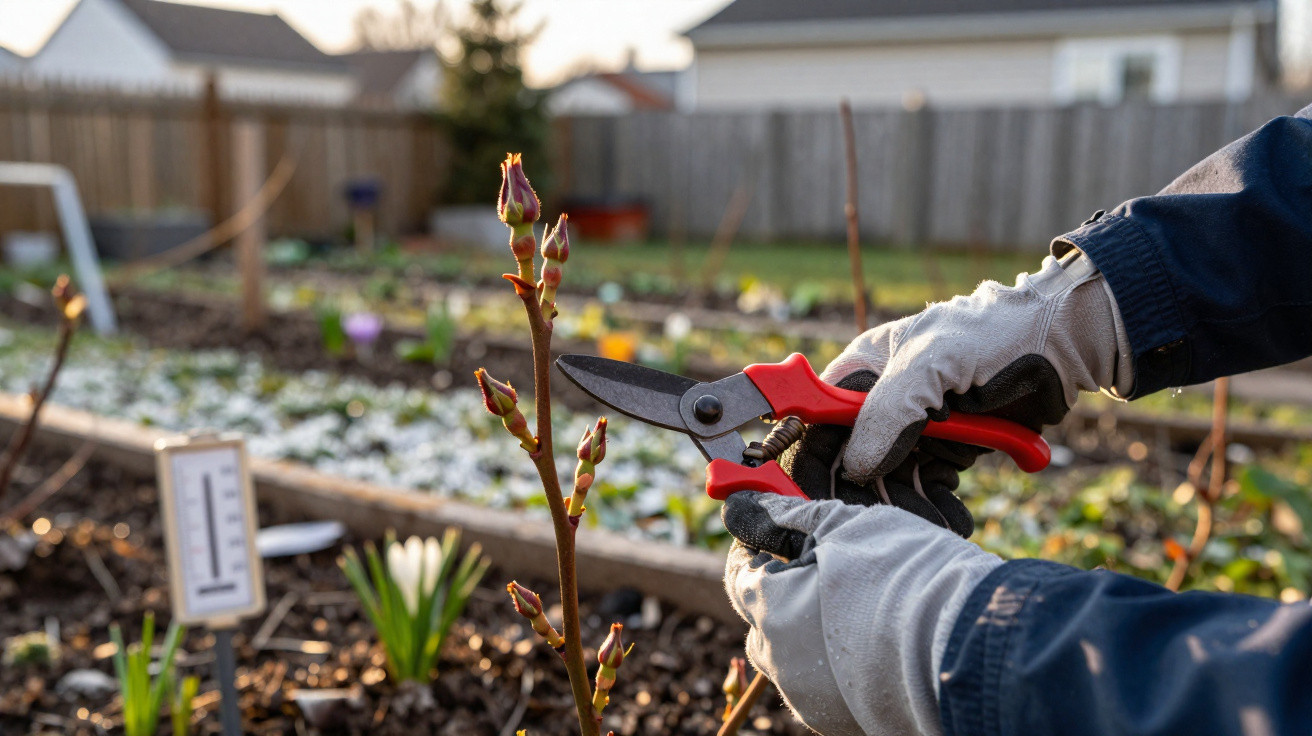
The technical term is bud break, or the start of new growth. You’ll spot it when buds swell and take on a reddish tint or a pale green shade. There are no fully formed leaves yet, but the shoots look unmistakably alive.
"As soon as the buds thicken and begin to show a little colour, the ideal time has arrived: the rose benefits most from pruning and puts its strength into a few well-spaced new shoots."
If there are already lots of young leaves, you’ve left it late. Pruning is still possible, but it costs the plant far more stored energy.
Region matters: not every garden runs on the same timetable
The climate in one area can differ drastically from another. To keep roses healthy, you need to take those differences seriously.
Mild regions: an earlier start in February
In places with relatively mild winters - for instance in sheltered lowland areas, near coasts, or in warmer river valleys shaped by wine-growing - the risk of severe frost usually ends sooner.
- Pruning often falls between the second half of February and early March
- Roses start growing earlier here, so waiting can be counterproductive
- A longer growing season allows strong new shoots before the main flush of flowering
In these climates, leaving it until the end of March often means cutting back shoots that are already fully in leaf - which costs both flowers and vigour.
Colder sites: it’s safer to wait until mid or late March
At higher elevations, in colder pockets, and in areas where frost lingers, winter conditions often hold on for longer.
"Here the rule is: wait until mid-March - and in some cases even until the end of March - so late frosts don’t destroy young shoots."
The old gardening rule of thumb about the "Ice Saints" can still be relevant too. If your garden regularly suffers late cold snaps, move cautiously and keep a close eye on forecasts.
What happens inside the rose: pruning and plant physiology
Pruning a rose isn’t a cosmetic trim - it’s a major intervention in the plant’s energy budget.
Directing sap flow: fewer buds, more strength
Over the cold months, roses store reserves mainly in their roots and the lower wood. As temperatures rise, that energy begins moving into the shoots.
"If you prune shortly before or at the start of this 'sap movement', you direct the plant’s full strength into fewer, deliberately chosen buds - which boosts both flowering and shoot vigour."
If you prune late, the rose has already invested energy into many shoots and leaves that you then remove - and those reserves are gone.
Why late pruning exhausts plants
When a shrub is already full of foliage, it has spent substantial nutrients. If you cut those shoots away at that stage, the plant has to push out new growth a second time.
That leads to:
- delayed flowering
- weaker new shoots
- higher disease pressure due to stress
If you want your rose to stay vigorous over the long term, it’s best to avoid this double burden.
The right cut: what to do on the day
Once the timing is right, tidy technique matters most. Blunt or dirty blades do more harm than good.
Tools and basic rules
- Use sharp, clean, disinfected secateurs
- Make cuts crisp and smooth - no crushing
- Always cut at a slight angle; never hack straight across
"Every cut is a wound - the cleaner it is, the lower the risk of fungal infection and rot."
The "three-bud rule" for bush roses
A simple method works well for classic bed roses and bush roses. In this context, an "eye" means a dormant bud on the shoot.
Proceed like this:
- From the base of each shoot, count up three buds.
- The third bud should face outwards, not towards the centre of the shrub.
- Cut at a slant about five millimetres above that bud.
This encourages new shoots to grow outwards, keeping the shrub open and airy inside. That, in turn, noticeably reduces the risk of fungal diseases.
The correct cutting angle
Always angle the cut slightly away from the bud. That way, rainwater runs off rather than collecting at the sensitive point.
"A slanted cut, just above an outward-facing bud, is one of the most important hand movements in rose-pruning technique."
Spring clean for roses: remove old wood, let in air and light
Beyond simply shortening shoots, rejuvenating the plant is crucial. Many rose problems start because old, diseased wood is left in place for too long.
Remove dead and weak wood decisively
You can spot dead wood by its grey-brown colour (often darkening to black) and its brittle, breakable texture. A quick scratch test with your fingernail helps: under dead bark, there’s no fresh green.
- Cut dead shoots back into healthy wood
- Remove very thin, weak twigs without hesitation
- Leave only strong, green shoots capable of carrying flowers
The clearer the framework, the more powerfully and evenly the rose will bloom.
Thin the centre: a bird should be able to "fly through"
An old gardener’s image is useful here: a small bird should be able to fly through the shrub without bumping into branches. That picture describes exactly how open the interior should be.
"Any shoots growing inwards, crossing, or rubbing against each other should be removed - this allows light and air to reach the centre of the shrub."
This cuts down fungal problems caused by damp, poorly ventilated areas and ensures all leaves receive sunlight.
After pruning: care that pays off in flowers
The job isn’t finished once you’ve pruned. The rose has to recover from the stress and needs support to restart strongly.
- Remove old leaves and all prunings completely; don’t leave them on the ground
- Loosen the soil around the shrub, taking care not to damage roots
- If needed, work in a well-rotted organic feed
- During dry spells, water thoroughly and occasionally rather than misting lightly every day
After a hard prune in particular, roses respond very well to good nutrition and consistent moisture.
Practical cues and common mistakes
If you’re unsure, two simple guides help: the bud stage on the rose itself and the typical early signs of spring in the garden.
| Signal | What it means for rose pruning |
|---|---|
| Buds swelling, slightly reddish | The optimal window begins |
| Early bulb flowers (crocus, snowdrop) blooming | The date is approaching; prepare your tools |
| Roses covered in small leaves | Pruning still possible, but the plant is already heavily committed to growth |
Common mistakes include cutting back too timidly ("out of fear of doing something wrong"), using blunt secateurs, and leaving a dense, bare, ageing framework in the centre of the shrub.
Why the effort is worth it
Roses respond immediately to careful pruning. If you hit the right window, cut cleanly, and thin the plant properly, you’ll be rewarded with strong, healthy shoots and abundant flowering. At the same time, you’ll typically need fewer plant-protection treatments because fungal disease and pest pressure drop significantly.
Especially in small city gardens or on balconies - where a handful of roses can define the whole look - a well-timed prune can be the difference between three pale blooms and a shrub that turns into a firework of flowers in early summer.




Comments
No comments yet. Be the first to comment!
Leave a Comment