
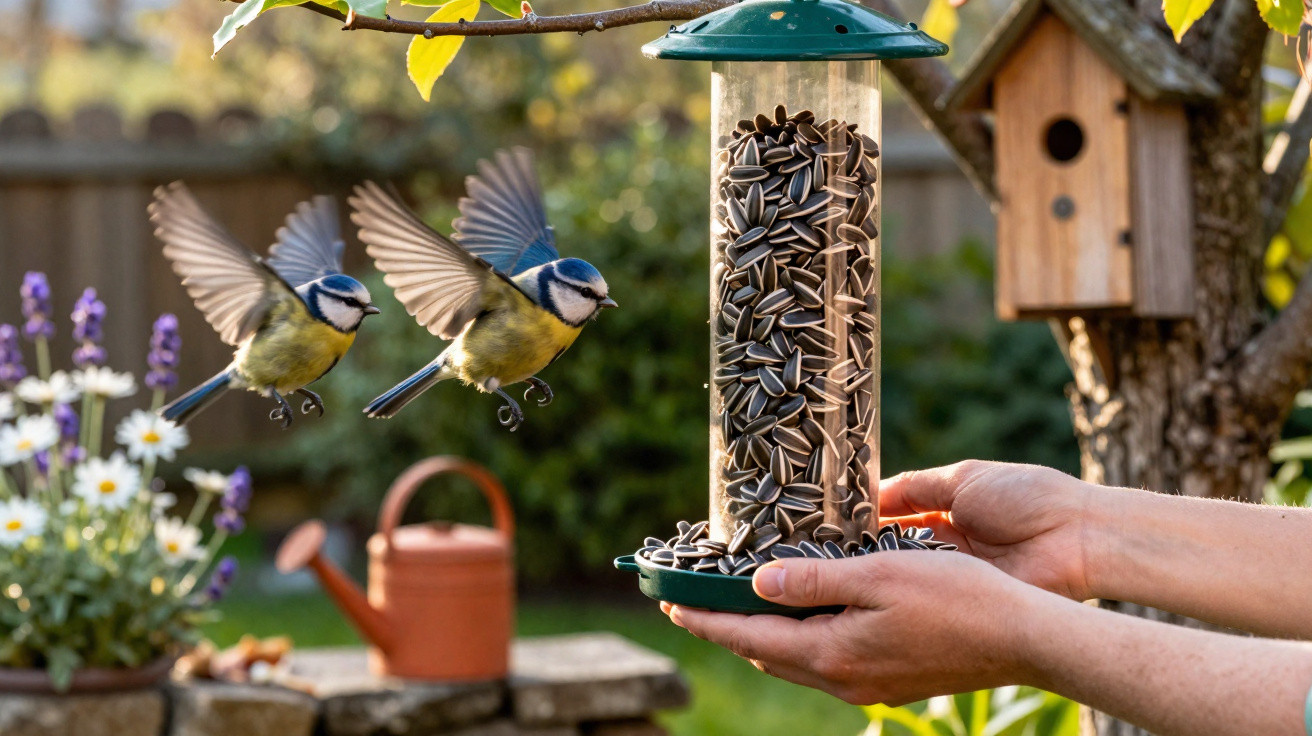
Many keen gardeners would love to see more birds in the garden - especially lively tits with their yellow-and-blue plumage. They are not only attractive to watch, they also hoover up huge numbers of pests. The key to getting them to visit regularly - and potentially even stay - is surprisingly simple, yet remarkably effective.
Why tits flock to this food
Tits have an extremely fast metabolism. They burn through vast amounts of energy, particularly during the colder months. That is exactly why sunflower seeds sit right at the top of their menu. These seeds pack fat, protein and essential nutrients into a concentrated, easy-to-use form.
"Sunflower seeds are like power bars for tits: small, easy to crack, and packed with energy."
Especially in winter, birds need food that:
- provides lots of energy in a small amount,
- can be eaten quickly,
- stays readily available even in freezing conditions.
Sunflower seeds tick every box. Putting them out in your garden gives the birds a dependable energy source. Tits remember reliable feeding spots and return again and again - often bringing a few “friends” along with them.
Which sunflower seeds tits actually prefer
Black or striped seeds - a small but important difference
In shops you will mainly find two types of sunflower seed: black and striped. For tits, the choice is straightforward: they favour black seeds. The reasons are simple:
- More oil: Black seeds contain more fat and therefore more energy.
- Smaller and softer: Tits can peck them open more easily.
- Less effort required: The birds do not burn up the very energy they are trying to take in.
If you genuinely want to do tits a favour, choose good-quality black sunflower seeds. Ideally they should be unsalted and untreated, and preferably organically grown. That way, pesticide residues are less likely to end up in the birds - and, over time, your garden environment benefits too.
Feeding with or without shells?
At first glance, shelled sunflower seeds can seem more convenient because fewer husks end up on the ground. For tits, however, seeds with shells offer clear advantages:
- The shell protects the seed from damp.
- The birds stay occupied at the feeder for longer.
- The seeds spoil more slowly.
If you want to reduce mess from discarded husks, place a board or another easy-to-clean surface beneath the feeding station. That makes it quick to clear away leftovers without changing what you offer.
How to position the food correctly in the garden
Height, location, safety - the perfect spot for a tit bar
Tits are cautious birds. They dislike feeding on the ground, where cats, martens and other predators can strike with ease. A well-placed feeder often determines whether the birds settle in - or fly off again after just a few seconds.
Proven rules of thumb for positioning:
- Height: roughly 1.5 to 2 metres above the ground.
- Near shrubs or trees: so there is a quick escape route if danger appears.
- Easy to see: tits should spot the feeder while flying in.
- Keep distance from cat hiding places: avoid dense hedges directly underneath.
Sturdy wooden or metal feeders work well, as do silo-style feeders that keep seed dry. Open trays or makeshift platforms may attract birds now and then, but they offer far less protection.
"A raised, clearly visible feeder with nearby escape cover is ideal for tits - safe, but still easy to reach."
Keep seasons in mind: adjust quantities properly
A tit’s appetite changes over the year. In winter, their small bodies are essentially running on continuous heating. At that time, feeders can be kept generously topped up. In autumn, the birds build energy reserves. In spring and summer, insects become the priority - especially when adults are feeding chicks.
A rough seasonal guide for sunflower seeds:
- Autumn: start feeding gradually and help birds get used to the spot.
- Winter: refill consistently, avoiding longer gaps without food.
- Early spring: keep feeding until natural food sources are plentiful again.
- Summer: small amounts are possible; tits tend to use feeders as a supplement.
What else attracts tits to the garden
A suitable nest box as a long-term invitation
If you want tits to stick around, food alone is not the whole story. A well-positioned nest box can make the difference. Tits like to breed in cavities. In natural woodland, they use holes in trees; in a garden, a nest box can replace that habitat.
What matters for a nest box:
- Entrance hole: about 28–30 millimetres in diameter for blue tits and great tits.
- Height: 2 to 3 metres above the ground.
- Orientation: east to south-east is ideal to reduce wind and driving rain.
- Avoid strong midday sun: direct heat can quickly over-warm the interior.
The best time to put one up is late winter, before the birds begin searching for territories. Many tits also use nest boxes as a roost on cold nights.
Plants that attract insects - and keep tits well fed
As much as tits enjoy sunflower seeds, they remain insect hunters. In spring in particular, when chicks are in the nest, countless caterpillars, aphids and beetles end up in adult beaks. A wildlife-friendly garden provides the perfect hunting ground.
Typical plants that encourage insects - and therefore help tits too:
- chives, oregano and other herbs that are allowed to flower,
- lilac, elder and buddleia,
- lavender, wild roses, foxglove,
- single, open flowers rather than heavily bred varieties with little or no nectar.
If you do not trim hedges into perfectly straight lines, and instead let certain shrubs grow more naturally, you create extra cover and perching points. Piles of dead wood, leaf litter and a wilder corner of the garden all increase insect numbers - which in turn expands the birds’ buffet.
Why poisons in the garden drive tits away
Many gardeners reach for sprays as a reflex when aphids and caterpillars appear. That can make a garden far less appealing to tits. No insects means no suitable food for chicks. On top of that, pesticide residues can reach birds indirectly through contaminated prey.
"If you want tits as natural pest control, you have to leave them their prey - and largely avoid chemicals."
Instead of chemical treatments, consider alternatives such as:
- plants that deter pests, for example marigolds or garlic alongside certain crops,
- mechanical approaches like picking pests off by hand or blasting them with water,
- sacrificial plants that draw pests away from your vegetables.
How tits help the garden in very practical ways
Tits may look charming, but they are ruthless hunters. A pair of tits with chicks can carry several hundred insects to the nest in a single day. Caterpillars are a particular favourite - including species that damage fruit trees and ornamental shrubs.
Supporting them pays off in more than one way:
- less leaf damage on roses, fruit trees and ornamental shrubs,
- healthier plants without resorting to toxins,
- more life in the garden thanks to birdsong.
Especially in densely built-up neighbourhoods, wildlife-friendly gardens become important refuges for birds. A simple feeder filled with sunflower seeds can be the start of a small, functioning ecosystem - with tits as its most noticeable residents.
Practical everyday tips for having tits in the garden
If you want to get going, you do not need much: a sturdy feeder, black sunflower seeds and a reasonably sheltered spot. In winter, a bucket of seed often lasts for several weeks, depending on how many visitors you have.
A simple routine helps: check the feeder in the morning, add a little extra during hard frost, and reduce slightly during milder, thawing weather. This keeps tits nearby without making them completely dependent on people.
Over time, many garden owners start to recognise individual birds - for instance, especially bold great tits that remain calm even when people are close by. Children, in particular, can see first-hand how animal behaviour changes when you provide a safe place with reliable, nutritious food.
If you then add a nest box and avoid poisons, an ordinary front garden can quickly become a popular meeting point for tits. The results are easy to spot: fewer pests on your plants, more song in spring - and a feeder that is never dull.
Comments
No comments yet. Be the first to comment!
Leave a Comment