
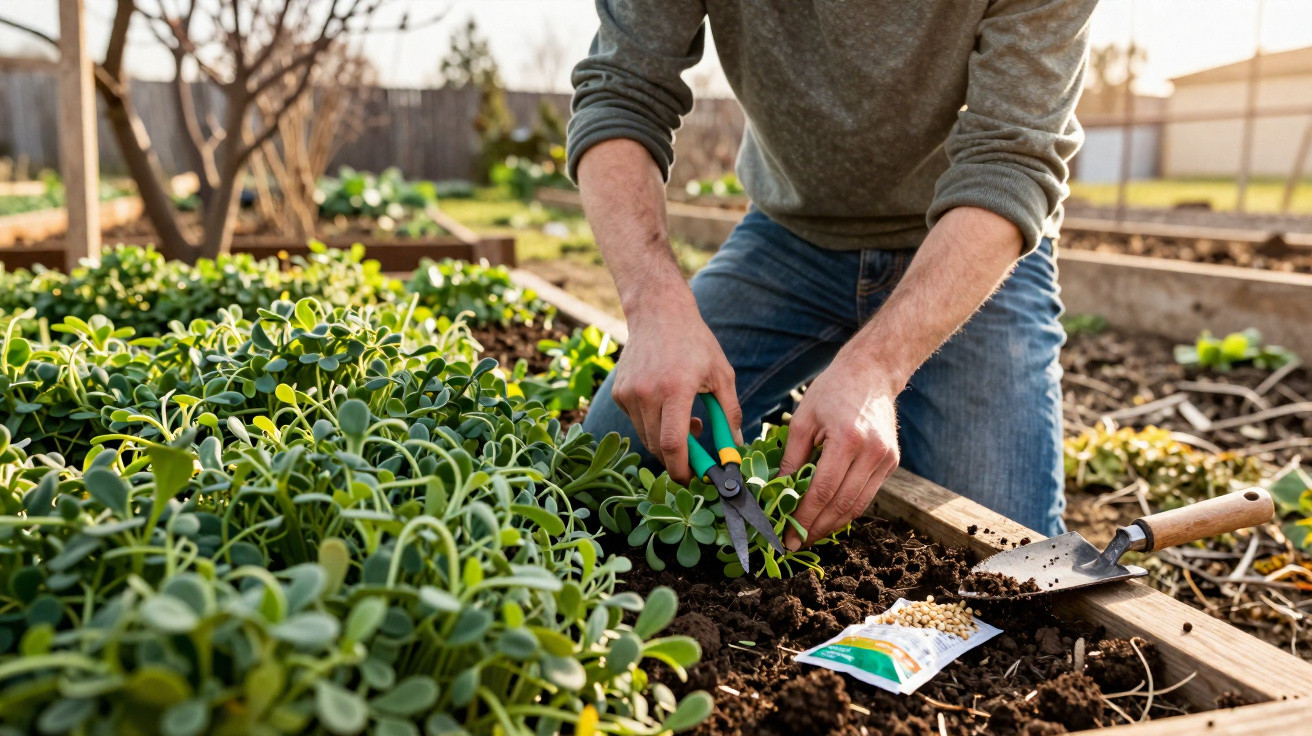
When February makes everything look grey and lifeless, forward-thinking gardeners can already begin the real season - in the soil.
In late winter, many gardens sit idle: beds look abandoned and motivation goes into hibernation. Yet this is exactly when a simple, often underestimated method can lay the groundwork for remarkably fertile soil - with no expensive machinery, no garden-centre fertiliser and no back-breaking labour.
An unassuming helper: the plant that works while everything else sleeps
Most vegetable crops simply won’t get going in cold ground. Below 8 to 10 °C, little to nothing happens for typical seeds. If you wait until it’s properly warm outside, you leave the soil unused for weeks - and in that time it’s exposed to rain, wind and unwanted growth.
That’s where a classic, surprisingly modern technique from professional vegetable production comes in: green manure. The star here is a plant that starts readily at around 5 °C soil temperature and actually thrives in cool conditions: white mustard / yellow mustard, botanically Sinapis alba.
"If you sow mustard in February, you’re bringing a free soil worker into your garden - on duty day and night, with no pay."
While other seeds might rot, mustard takes full advantage of the damp, chilly weather. That makes it ideal for the period when the garden appears to be resting - but the soil can quietly be prepared.
Just ten days to a green carpet
One major benefit is speed: mustard grows exceptionally fast. After sowing on lightly loosened soil, it usually takes only about ten days to see the first rich green. Soon after, the bed becomes a genuine carpet of plants.
This brings several immediate effects:
- Weeds get very little chance, because the mustard foliage blocks light and space.
- The soil stays covered, helping protect it from capping (surface sealing) and erosion.
- Rain no longer hits bare ground directly, so the soil remains crumbly rather than turning hard and compacted.
In late winter, uncovered soil is essentially an open invitation to all sorts of volunteer plants. A dense plant cover simply withdraws that invitation - keeping the bed clean for your actual vegetable crops.
Six-week rule: the ideal time to cut it back
If you want that green carpet to become a real nutrient booster, timing matters. The biggest benefit comes when you don’t just leave the plants to their own devices, but stop them at the right moment.
A useful guideline is around six weeks after sowing, typically just before flowering or as flowering begins. At this stage, the plant holds its highest concentration of nutrients in leaves and stems - especially valuable nitrogen.
"If you cut before full bloom and lightly work the greenery in, you give your soil a natural nutrient boost - without synthetic fertiliser."
If you leave mustard standing too long and let it set seed fully, the stems become woody. They then break down far more slowly, and some nutrients go into seed production rather than returning to the soil. So if you want the full benefit, cut in time - using a scythe or a lawnmower set high - and take the plants down generously.
How to tackle the cut in practice
- Mow the plants to roughly a hand’s breadth above the soil.
- Leave the cut material on the surface, or work it in lightly.
- Use a rake or cultivator tine to mix only the top layer - don’t dig deeply.
- Wait a few weeks for the material to rot down well; then you can plant.
Biological soil improvement instead of a spade marathon
It isn’t just the foliage doing the work. Below ground, mustard plays its second big trump card: its root system. The roots drive down into the soil, branch strongly, and after they die back they leave a fine network of channels.
That delivers several noticeable results:
- Compacted patches open up without you having to dig and sweat.
- Rainwater penetrates more easily instead of pooling on the surface.
- Later vegetable crops find looser soil and can root faster.
If you plant lettuces, kohlrabi, peas in March or April - or tomatoes and courgettes later on - you’ll notice the difference straight away. The soil is easy to work, stays loose and crumbly, and doesn’t cling to spades or shoes as a heavy, sticky mass.
Measurable impact: higher yields thanks to a winter start
Long-term observations in vegetable growing show this winter approach doesn’t just look good - it produces tangible results. When mustard is sown as green manure in late winter and incorporated before flowering, yields of the following crops increase by an average of about 18 percent.
| Measure | Effect on the garden |
|---|---|
| Sow mustard in February | early soil activation, protection from erosion |
| Dense growth after 10 days | weed suppression, clean beds in spring |
| Cut after about 6 weeks | release of nitrogen and organic matter |
| Looser soil in March/April | better rooting, easier planting work |
| Green manure as a routine | on average about 18% higher harvest |
The combination of improved soil structure, greater nutrient availability and reduced competition from weeds directly affects both the quantity and quality of what you harvest. A relatively small effort in February can therefore pay dividends for months.
Step-by-step guide for your own garden
1. Choose the timing
Start as soon as the soil is no longer frozen and can be loosened easily with a rake. In many areas, mid-February to early March is ideal.
2. Prepare the area
Clear away old plant residues roughly, then scratch the surface lightly with a rake or hoe. Deep digging isn’t necessary.
3. Sow the seed
Broadcast the mustard seed, similar to sowing a lawn. Then rake it in lightly or cover with a thin layer of soil. Watering helps it get going, but in damp weather it often isn’t required.
4. Let it grow and keep an eye on it
At first, it may look as if nothing is happening. Then the first delicate leaves push through. After about a week and a half the area is clearly green, and after a few weeks it is almost fully covered.
5. Cut in time and incorporate lightly
Before flowering begins - or early in the flowering stage - cut the plants and mix them into the top layer of soil. After that, it’s a matter of patience while the material decomposes and turns into humus.
When green manure isn’t suitable - and what to use instead
There are a few situations where mustard isn’t the best green manure choice. If your bed suffers from brassica diseases such as clubroot, it’s wiser to use other green manures, such as phacelia or certain clover types. They also loosen the soil and add organic matter, without belonging to the same plant family as cabbages.
On very small balcony spaces - where every box is replanted several times per season - space can also be tight. In that case, green manure is most worthwhile in planters or pots that sit empty in late autumn or winter. Short-lived mixes of mustard and clover work well there.
More life in the soil: what’s really happening behind the scenes
The visible plants are only half the story. Root exudates and decaying plant material significantly increase soil activity. Bacteria, fungi, earthworms and other soil organisms multiply and form a complex network that makes nutrients available and stabilises soil structure.
If you use green manure year after year, you’ll notice your garden’s “feel” changing: heavy soils become looser, sandy areas hold water better, and beds remain fertile for much longer. This is especially noticeable in dry summers, because well-built soil can store water and release it gradually.
So if you recognise the feeling of starting from scratch every spring, a targeted sowing in February can shift the balance. A modest-looking plant takes on the job that would otherwise require a spade, fertiliser and hours of work - and it prepares the ground for strong young plants and generous harvests.
Comments
No comments yet. Be the first to comment!
Leave a Comment