
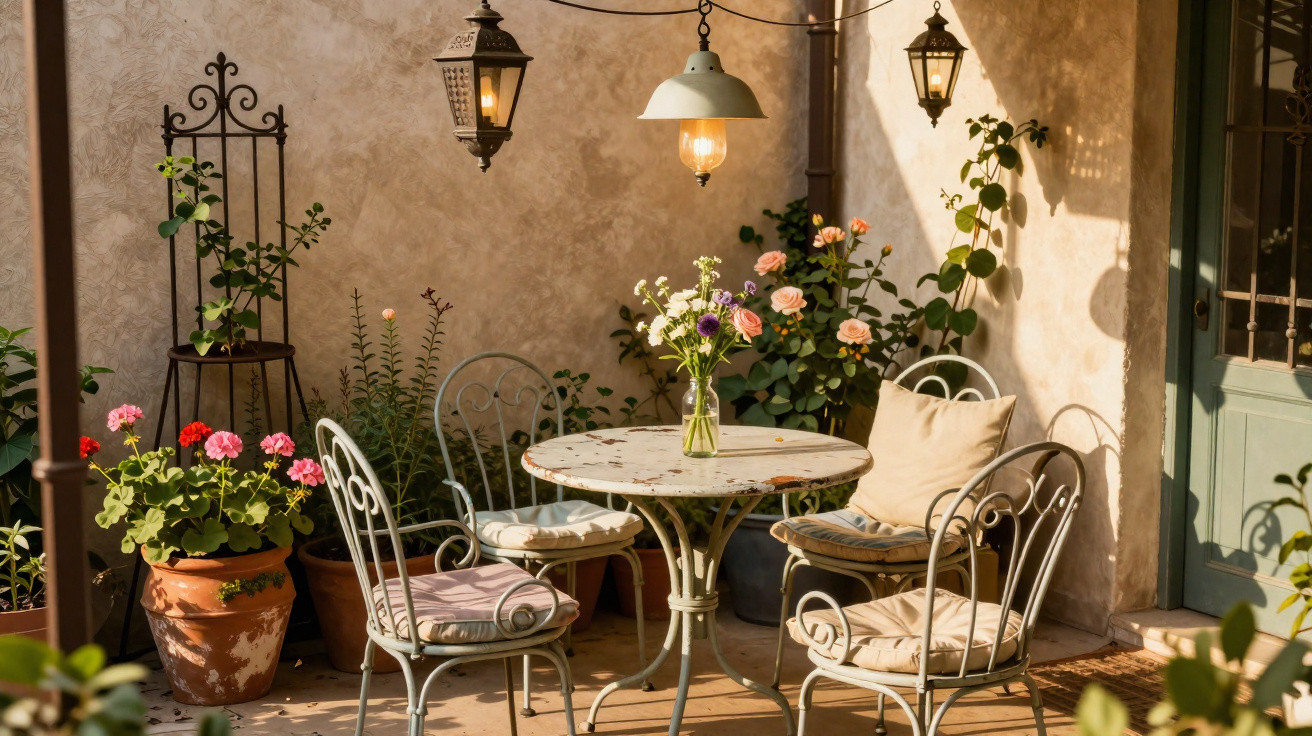
Patina instead of plastic: more and more garden lovers are picking up old finds at flea markets and turning balconies, terraces and courtyards into nostalgic favourite spots.
For years, almost all decorating effort went into the living room, kitchen and bedroom. Outdoors usually got the bare minimum: a plastic table, wobbly stacking chairs, perhaps a string of lights from the DIY store. That is now changing - and noticeably so. Gardens and balconies are meant to feel like a genuine extension of the living space, full of character, history and pieces you will not see in every catalogue. This is exactly where the brocante look - the flea-market look - comes in.
Why the brocante look works so well outdoors
Older furniture and accessories bring something most standard garden ranges simply do not: a sense of lived-in time. Flaking paint, traces of rust, hairline cracks in a glaze - these details tell a story. Instead of a sterile, perfect finish, you get an outdoor area that feels as if it has been there for decades.
"If you choose vintage deliberately, you design your garden not like an exhibition, but like a lived-in space that has grown over time."
Interior designers and garden designers are increasingly turning to finds from flea markets, classifieds or even bulky waste collections. An old serving trolley becomes a mobile bar, a galvanised wash tub turns into a planter, and a worn armchair becomes the best seat in the evening sun. What matters is getting the balance right between practicality and atmosphere.
Find number 1: Unusual lamps instead of a standard garden light
Even the most beautiful garden looks flat after sunset without lighting. Rather than the familiar LED garland from the DIY store, many trend-setters are now choosing older lights with real presence. Popular options include:
- brass lanterns from the 1960s
- pendant lights with satin-finished glass
- wall lights with a strong patina
- industrial lamps from workshops or factories
You will come across pieces like these surprisingly often at flea markets, in antique shops or online. The key is to look carefully: does the metal feel solid? Is the glass intact? Can the electrics be replaced? With a new cable, an outdoor-rated lampholder and the right bulb, discarded lamps can become striking focal points for a veranda, front entrance or balcony.
"One single characterful light can change the entire feel of a terrace."
A handy side benefit: restoring what already exists does not just save money, it also cuts down on waste and the need to buy new - something that is becoming more important to many gardeners.
Find number 2: Terracotta pots with a past
Mass-produced terracotta pots can look smooth and interchangeable. Older vessels with signs of use are the opposite: chipped edges, weathered rims, a film of moss. It is precisely this ‘imperfection’ that makes them so desirable.
Garden stylists often use large, heavy pots and urns as visual anchors: by the front door, at the start of a path or as a stand-alone feature in a border. The older and more substantial the pot, the stronger the effect. It looks especially good when a crust of limescale, soil and moss has built up over the years.
- Small pots: ideal for culinary herbs or low-growing perennials
- Medium containers: perfect for hydrangeas, small olive trees or grasses
- Large urns: bold statement pieces, for example with a clipped box ball or a rosemary standard
If you find pieces like this, check them for cracks: hairline fractures are usually fine, but full splits can become an issue in frost. With a drainage layer of gravel and a clay shard over the drainage hole, the pots will stay usable for a long time.
Find number 3: Wrought iron adds structure to the garden
Wrought-iron elements are returning to many gardens - and not only as seating sets. In particular, older pieces such as these are in demand:
- garden gates
- arches for climbing plants
- trellises and pergolas
- railings and small balustrades
Older items were often made using far higher-quality techniques than today’s mass-produced alternatives. They are heavy, sturdy and frequently feature playful ornamentation. Used thoughtfully, they divide a garden into zones, guide the eye or create backdrops for climbing roses, grapevines or sweet peas.
"A narrow iron gateway can turn an average garden path into an almost film-worthy entrance."
A light coating of surface rust is not a problem - many people actively like that look. If you want to protect the pieces, use a wire brush and apply rust protection and metal paint. That way the character remains, without the iron deteriorating over time.
Find number 4: Vintage iron furniture for outdoor dining
Old iron dining sets are also enjoying a comeback. Typical features include curved lines, vine-like decoration or lattice patterns. These sets suit:
- small cobbled courtyards
- city balconies
- country-style terraces
- conservatories and covered verandas
Most second-hand iron furniture looks a little tired at first glance: flaking paint, rust marks, bent sections. With minimal effort, it can be refreshed. A stiff broom or metal brush removes loose rust; after that, apply a rust-inhibiting primer followed by two coats of metal paint. If you want to keep a shabby look, paint less ‘perfectly’ on purpose and let small uneven areas show.
Well-known manufacturers from the 1950s and 1960s are particularly sought-after by collectors. For everyday use, however, they do not have to be design classics. Many unbranded sets from that era are impressively robust - often far sturdier than today’s lightweight patio sets.
Find number 5: Seating with retro charm
The most important ingredient in a coherent outdoor space is comfortable seating. This is where the brocante trend really shines. People are especially looking for:
- wooden rocking chairs
- vintage rattan armchairs
- folding deckchairs with fabric slings
- garden chairs from the 1960s and 1970s
A rocking chair in good condition on a veranda or balcony invites you to read and daydream. Rattan armchairs with new cushions can turn an overlooked corner into a small lounge. And an old deckchair with striped fabric instantly brings back memories of seaside resorts and spa towns from decades gone by.
"One special seat can turn an anonymous outdoor area into your own personal retreat."
Cushions and covers are easy to replace. What matters is the frame: is everything firm, are the joints sound, is the timber free from softness? Rattan can be slightly brittle, but it should not crack the moment you sit down. If you are unsure, give the piece a proper test at the flea market.
How to achieve the brocante look without turning kitsch
The biggest risk with vintage décor is that the garden starts to resemble a prop store. A few straightforward rules help prevent that:
- Fewer pieces, but with impact: one interesting gate or a distinctive lamp beats ten small trinkets.
- Limit the colour palette: a consistent base tone for metal and wood (for example cream, dark green or black) keeps things calm.
- Use planting as the link: lush greenery softens the severity of iron and stone and visually ties everything together.
- Function over nostalgia: every item should earn its place - for sitting, lighting, setting things down or framing a view.
If you are hesitant, begin with a single area, such as the seating spot or the entrance. Place one or two strong brocante pieces there and keep everything else simple - the style then looks intentional rather than accidental.
Practical tips for buying and upkeep
When browsing flea markets, a quick check before you buy is worth it:
- Metal: leave pieces with holes, deep pitting or severe warping.
- Wood: soft patches, mould and insect damage are warning signs.
- Ceramic: full cracks can lead to complete failure in frost.
- Upholstery: replace old foam and musty fabrics; reuse the frame.
Many brocante finds do best with a gentle first step: clean thoroughly, let them dry, and only then decide whether they need paint or a seal. Some items look so good after a simple wash with soapy water that you may want to leave them exactly as they are.
Why this trend can be worth it in the long run
Vintage garden pieces are not just a passing fashion. Choosing older quality often means investing in durable materials: solid iron, thick-walled ceramic, hardwood. With a little care, these items can cope outdoors for decades. At the same time, the outdoor space stays flexible. An old serving trolley can move into the living room in autumn, a garden bench can be shifted to the far end of the plot, and a pot can be relocated to the front door.
Many brocante fans say these furniture pieces and accessories are exactly what start conversations. Guests ask where something came from, stories get shared, and the garden becomes more than a backdrop: it turns into a reflection of personal tastes, humour and sometimes even the past. That is the appeal of this trend - and why it endures so stubbornly.
Comments
No comments yet. Be the first to comment!
Leave a Comment