
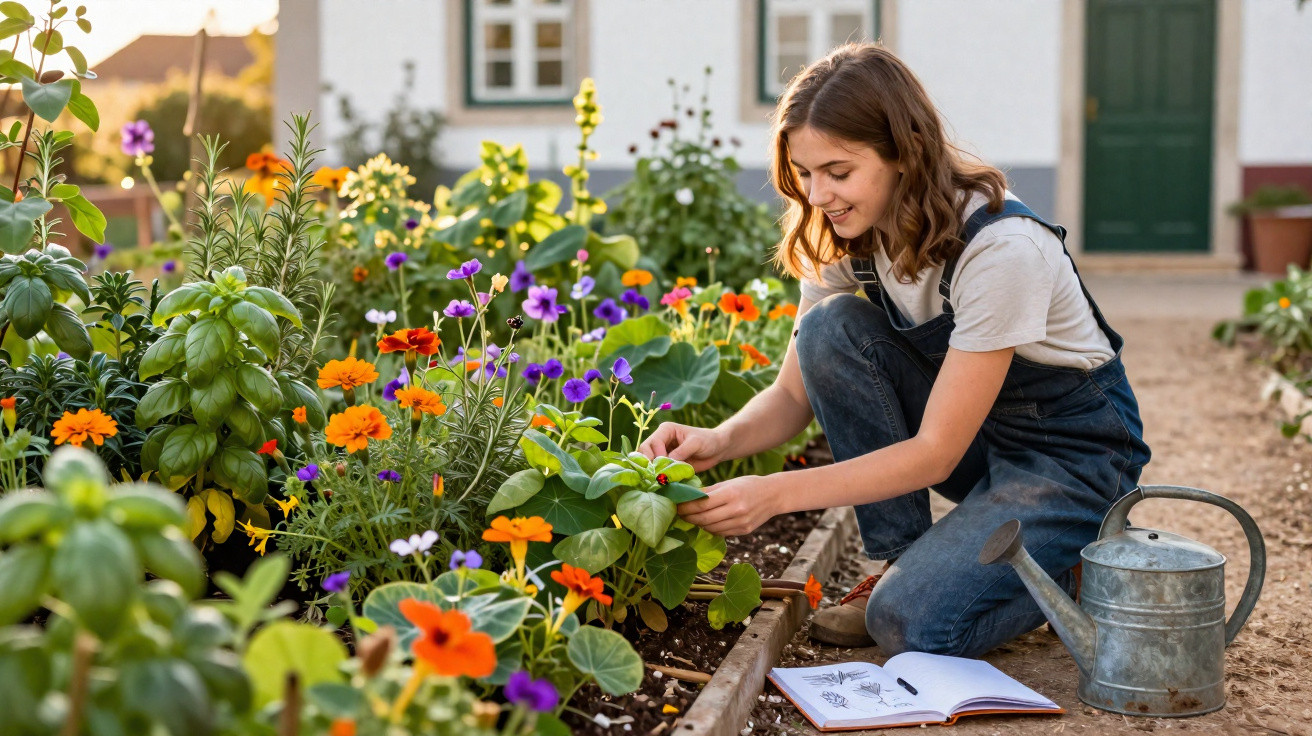
The year aphids nearly took over, I was close to abandoning everything except my resentment. My kale was shredded like lace, roses sagged beneath sticky infestations, and every evening I surveyed the beds, tallying losses like an exhausted accountant. Then, on one wet morning, frustration rather than planning made me pour a handful of mixed herb and flower seeds into my palm and scatter them.
There were no straight lines or carefully matched colours. It was simply chaos: dill, calendula, coriander, marigolds, cosmos and probably other things too-I had hardly looked at the packets.
A few weeks afterwards, I noticed an unexpected change. There were fewer chewed leaves and fewer curled, unhealthy ones. The garden buzzed more, with tiny winged visitors that were not pests but useful insects. My orderly grid of plants had turned into a patchwork, and the pest pressure had quietly... eased.
That was the moment I understood that my “mistake” had revealed something useful.
When a messy bed outperforms a perfect row
The earliest clue was not something I saw; it was the quiet in my own mind. I was no longer making a running inventory of overnight damage or reminding myself to look up another organic spray. One evening, I went outside and realised that my beans looked... untouched. So did my cabbage. And on stems where I would normally find aphid colonies, ladybirds sat like tiny red taxis.
The bed where I had thrown down the wild herb-and-flower mix bore no resemblance to the rest of the garden. Tall plants bent over shorter ones, seed heads swayed above exposed soil, and the whole patch vibrated with small creatures. It felt less like a vegetable bed and more like a miniature protest against monoculture: untidy, busy and strangely well balanced.
That managed chaos appeared to be doing more work than any product I had bought.
Several weeks after sowing at random, I began making an informal count. In my ordinary spinach row-neatly planted, one variety and evenly spaced-I would find five to ten aphid colonies per metre. In the mixed bed, I usually found one, and sometimes none at all. My tomatoes, only a few steps away, had fewer whiteflies than in earlier years, despite me changing nothing about how I grew them.
One afternoon, I paused beside a calendula flower simply to watch. Within two minutes, I saw hoverflies zipping about like tiny drones, a lacewing resting beneath a leaf, and a predatory wasp cutting into a caterpillar. I was no longer the gardener trying to fight every pest. Instead, I was the landlord offering a home to creatures that knew how to do the job properly.
It was not a miracle. It was a new workforce that I had not meant to recruit.
What took place in that bed is called companion diversity. The random combination brought together varying heights, fragrances, root systems and flowering periods. Pests that thrive on an obvious, repetitive feast-identical leaves planted row after row-were suddenly confronted with visual disruption, powerful scents and nearby predators. Some became confused, some were eaten, and others simply moved on.
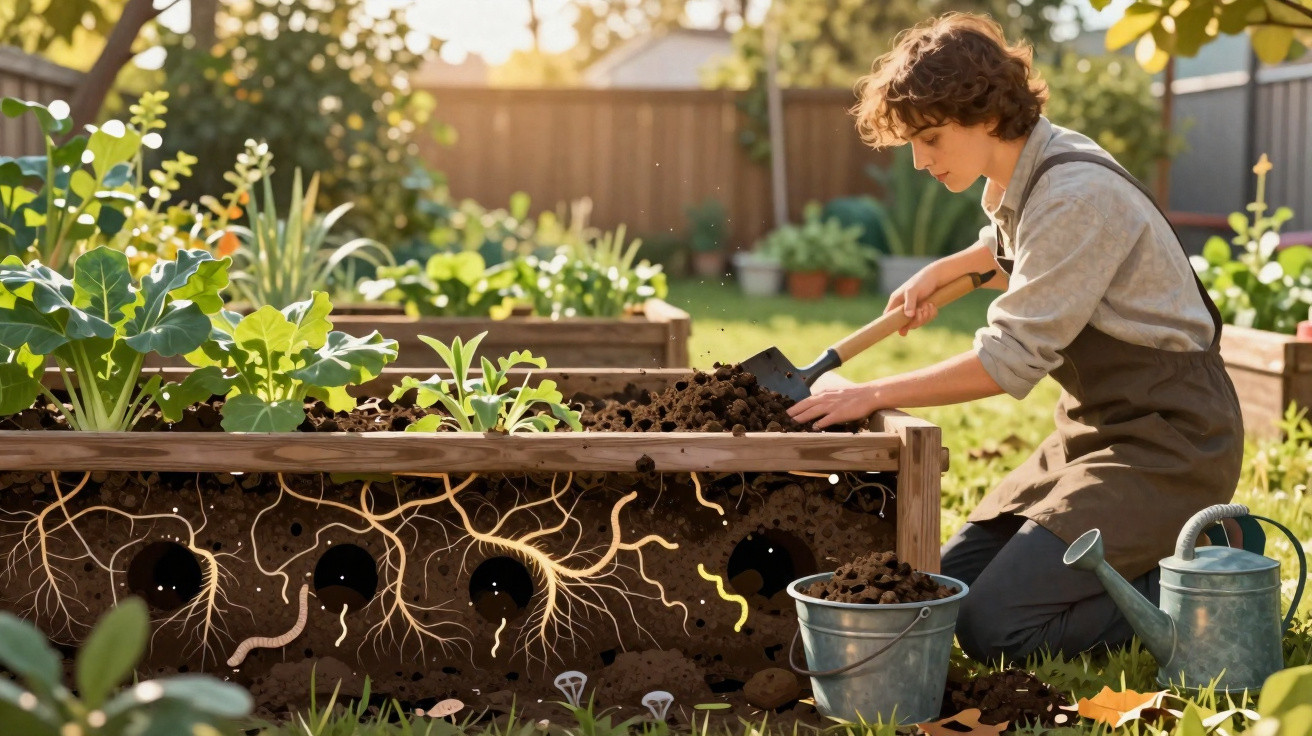
My accidental jungle also shaded bare ground, retained more moisture and supported soil life through continual root activity. That helped strengthen the vegetables growing among it. Stressed plants chemically shout “eat me” in ways we cannot see, while robust plants murmur “don’t bother”. The bed had turned into a small, self-organising neighbourhood watch.
Nature is not neat. For years, I had forced it into orderly compartments and then wondered why the system was so fragile.
How to recreate companion diversity deliberately
If you would like to test this approach, begin on a smaller scale than I did. Choose a single bed, border or even a large container. The process is almost embarrassingly easy: select 5–10 packets of herbs and flowers-annuals are the most straightforward-then tip a little of each into a bowl. Mix them well with your fingers and try not to overanalyse it.
Pick plants you will genuinely use, such as dill, coriander, basil, parsley and chives. Include flowers with long flowering periods that attract beneficial insects: calendula, cosmos, marigolds, alyssum, borage and nasturtiums. Walk over your chosen space and scatter the mixture lightly, as though seasoning food. Add a thin covering of soil or compost, water gently and leave it alone.
When seedlings emerge at odd angles or in places that appear “wrong”, resist the temptation to move them. That unevenness contributes to the defence system.
Many of us make the mistake of chasing the perfection seen in gardening magazines: symmetry, coordinated colour schemes and bare, tidy soil between rows. Then we question why pests treat our beds as a clearly labelled all-you-can-eat buffet. We’ve all been there, that moment when you realise your most organised bed is also the one being destroyed first.
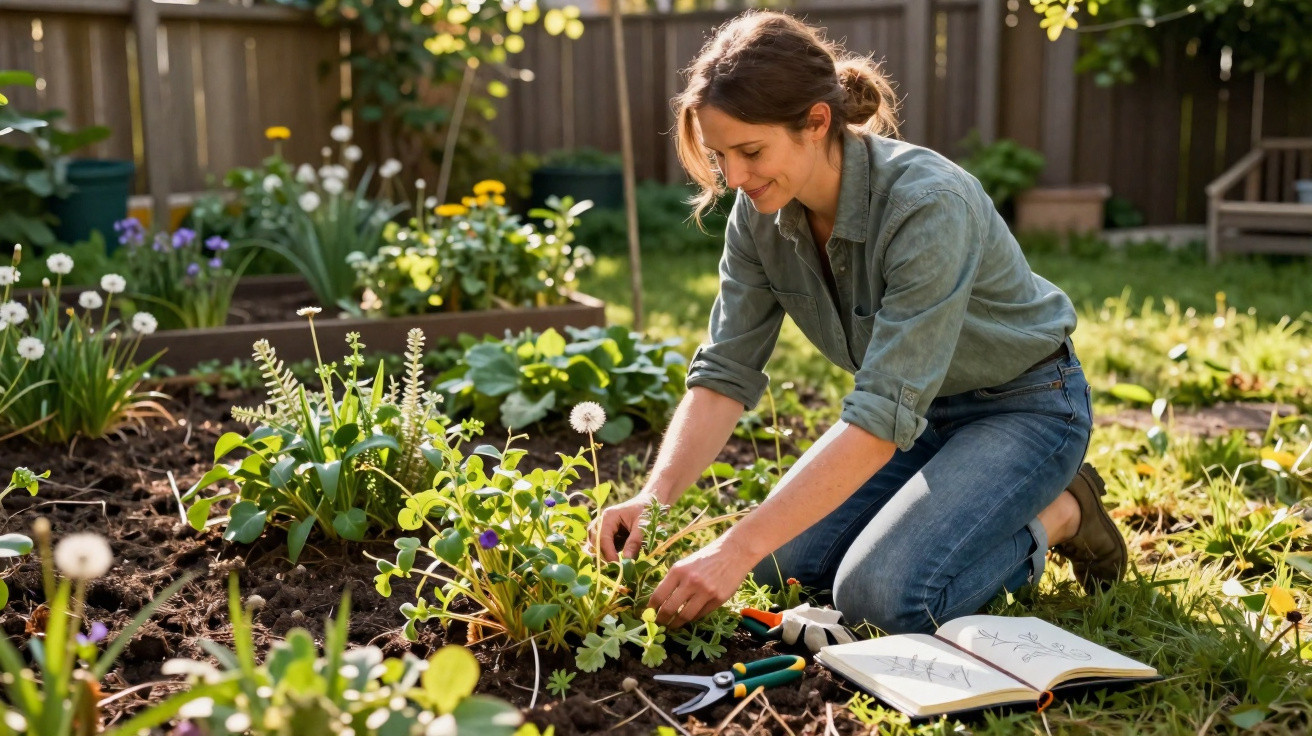
A gentler method is to combine structure with disorder. Keep your main crops approximately where you want them, while allowing the random mixture to occupy gaps, edges and inconvenient corners. Do not pull out every additional seedling merely because you cannot remember sowing it there. Some of my most effective bodyguards were self-seeded plants from the previous season.
Let’s be honest: nobody really does this every single day. You are not going to inspect plants for insects at dawn. Instead, create a system that keeps quietly working even when you forget to tend it.
A simple herb and flower chaos mix
The easiest mental adjustment is to stop treating every non-vegetable plant as clutter. One year, I nearly removed all the coriander that had self-seeded in my tomato bed. I left it in place instead, then saw fewer hornworms and more tiny parasitic wasps hovering around like silent security guards. A gardening friend said she had experienced the same result after allowing her basil and dill to flower and set seed.
“Once I stopped ripping out everything that looked out of place, the garden calmed down,” she told me. “It’s like the more flowers I allowed, the less spraying I needed.”
Here is a basic “chaos mix” to experiment with:
- Dill, coriander, basil or parsley for fragrance and nectar
- Calendula and marigolds for prolonged flowering and soil benefits
- Alyssum and cosmos to draw hoverflies and parasitic wasps
- Nasturtiums as decoy plants for aphids and flea beetles
- Borage near tomatoes and squash to attract pollinators and predators
One small bowl of seed can provide many quiet bodyguards.
Living with a garden that responds
After watching a random patch of herbs and flowers outwit a line of chemical treatments, it is difficult to return to the old approach. You begin spotting small negotiations throughout the garden: a little leaf damage, followed by the arrival of something that eats the offender; a surge of aphids, then a sudden increase in ladybirds a few days later, as though they had been summoned by a memo.
You start to recognise that the aim is not to eliminate every pest. It is to maintain a shifting truce, supported by scent, diversity and a continual invitation to predators. The mixed bed becomes less of a technique and more of a routine. You begin tucking seeds into any spot with light, moisture and a bare edge.
This method will not solve every issue. In some years, a particular pest may still attempt to take over, and some plants will still be lost. However, the underlying panic begins to fade. You spend less time searching online for answers and more time observing what arrives.
The garden ceases to be a battlefield and becomes a conversation.
| Key point | Detail | Value for the reader |
|---|---|---|
| Random herb–flower mixes confuse pests | Varied scents, heights and colours interrupt pest movement and feeding | Fewer outbreaks, reduced dependence on sprays and greater resilience in difficult years |
| Mixed beds attract natural predators | Flowers and herbs provide food for ladybirds, hoverflies, lacewings and parasitic wasps | Free, continual pest control that works even when you are away from the garden |
| Accepting “mess” reduces stress | Allowing self-seeded plants and mixed sowings creates a self-balancing ecosystem | Less pressure to maintain perfection and more time to enjoy the garden |
FAQ:
- Question 1 Will mixing herbs and flowers steal nutrients from my vegetables?
- Question 2 Which herbs and flowers are best for reducing pest pressure?
- Question 3 Can I try this in pots or on a balcony?
- Question 4 How long does it take before I notice fewer pests?
- Question 5 Do I still need any other pest control methods?

Comments
No comments yet. Be the first to comment!
Leave a Comment