
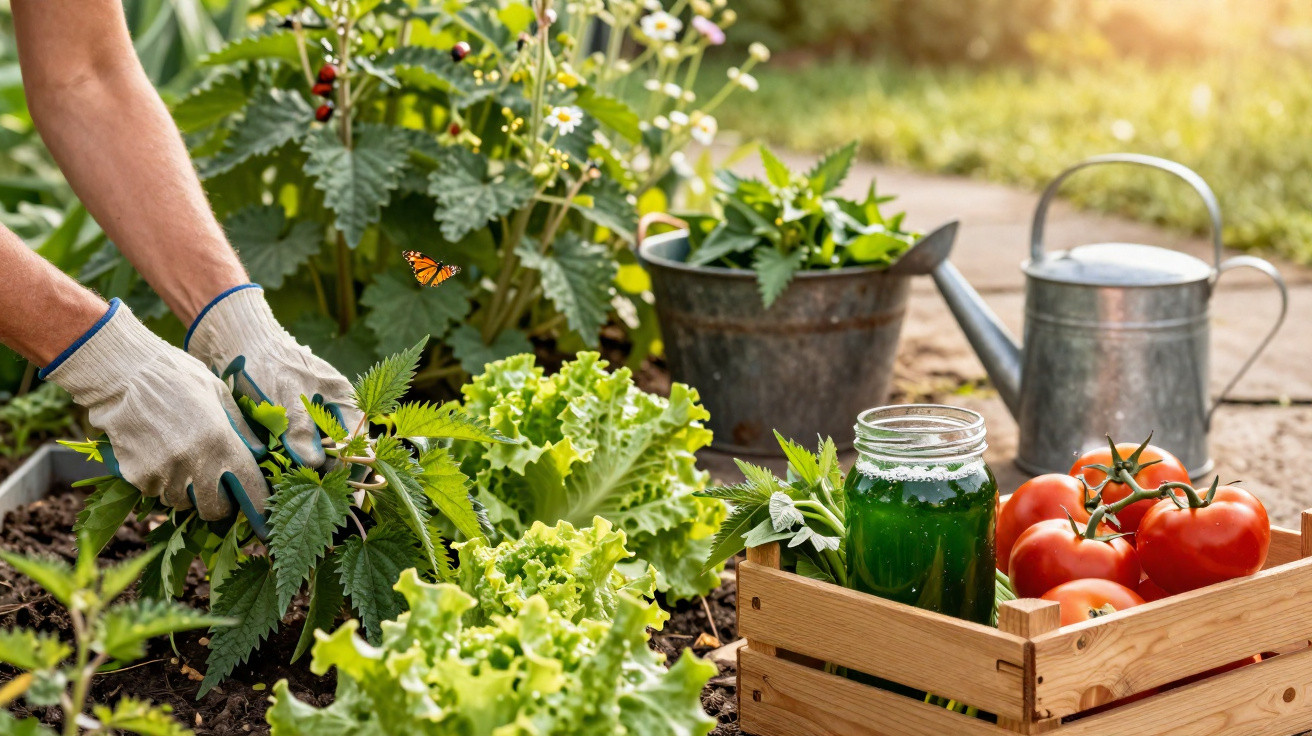
Nettles are often dismissed as annoying, painful and “messy”. Yet removing them without thinking can be bad for your soil, your crops and even biodiversity. Behind those stinging leaves is a powerhouse plant that does far more underground and in the compost heap than most people expect.
Why nettles are real nutrient powerhouses in the soil
Nettles tend to appear where the soil is already rich in nutrients. What makes them so useful is that their roots draw those nutrients up from deeper layers and store them in the stems and leaves.
“From nettle leaves you can make a free liquid fertiliser that easily replaces many shop-bought products.”
The plant is particularly high in:
- Nitrogen – drives strong leafy growth
- Potassium – supports flowering and fruit formation
- Calcium – helps stabilise cell walls and improves soil structure
- Magnesium – essential for photosynthesis
- Iron – promotes healthy, deep green foliage
This mix makes nettles an excellent base for natural fertiliser. Instead of adding nutrients via synthetic fertilisers, you are recycling what is already in the ground - just in a form that vegetables and fruit can take up more readily.
Nettle feed: liquid fertiliser and plant protection in one
A staple of wildlife-friendly gardening is nettle feed. It has a pungent smell, but the effect is all the more impressive. Once you’ve brewed it properly, it is hard to go back.
How to make nettle feed yourself
You only need a container, water and fresh plant material - nothing fancy. A simple step-by-step method:
- Roughly chop about 1 kg of fresh nettle shoots (avoid flowering plants).
- Put them in a bucket or bin, ideally not made of metal.
- Pour over 10 litres of rainwater.
- Cover loosely so air can circulate, but animals cannot fall in.
- Leave for 7 to 10 days, stirring once a day.
- When it stops frothing, the feed is ready. Strain it through a sieve and add the plant remains to the compost.
Always dilute before use:
- 1:10 for liquid feeding in the veg patch and ornamental garden
- 1:20 for sensitive plants or for spraying onto leaves
Used correctly, this feed encourages strong roots, lush growth and tougher, more resilient plants. At the same time, the smell helps deter aphids and some types of mite - a natural protective barrier without chemicals.
Nettles in the compost: a turbo-boost for decomposition
If your compost heap is sluggish, skip the special additives and reach for the scythe instead - then work nettles into the pile. Their leaves bring plenty of nitrogen, which really gets compost microbes moving.
“Chopped nettles heat up the compost, speed up rotting and increase the nutrient content of the finished humus.”
A few rules of thumb for composting:
- Always chop nettles so they break down faster.
- Mix them with dry, carbon-rich materials such as leaves or wood chippings.
- Add them regularly in thin layers rather than as one dense lump.
Once the material starts to rot, the sting disappears completely. The notorious hairs lose their structure, leaving only nutrient-rich humus that will improve your beds’ fertility for the long term.
Habitat for butterflies and beneficial insects
Many insects rely on nettles. Some butterfly species lay their eggs only on this plant; without it, their life cycle breaks.
Typical species that depend on nettles include:
- Peacock
- Small Tortoiseshell
- Red Admiral
- Map
So, if you clear every nettle from your garden, you remove the nursery these species need. The result is fewer butterflies, less pollination and reduced diversity.
“A small strip of nettles is often enough to feed a whole chain of animals - from caterpillars to birds that eat them.”
On top of that, nettles host plenty of beneficial insects that keep pests in check. A deliberately wild nettle corner by the fence can work like a free pest-control team.
Vitamin-rich plant and traditional remedy right beside the bed
Nettles are not only helpful for tomatoes and roses - they are useful for people too. For centuries, young spring shoots have been seen as a strengthening pick-me-up after winter.
The leaves contain a range of vitamins and minerals, including:
- Vitamins A, C and K
- Iron
- Calcium and magnesium
You can turn them into, for example:
- Nettle soup – similar to spinach soup, but more aromatic
- Pesto made with nettles instead of basil
- Tea from young leaves
- Green smoothies with a small amount of nettle
In folk medicine, the plant is used for issues such as joint problems, to help the body shed excess water, and to support hair and nails. Key points: harvest with gloves, use only fresh young shoots, and pick plants away from roads or contaminated areas.
How to keep nettles under control
Nobody wants nettles taking over the entire garden. With a few straightforward habits, they can stay useful without becoming a nuisance.
The right spot for a “wild corner”
A clearly defined area works best:
- A strip along the fence or at the back boundary
- A corner behind the shed
- A large pot or a builder’s mixing tub if space is tight
You can slow the roots effectively with lawn edging stones, wooden boards or a low wall. That way, it is obvious where the plant is welcome - and where it is not.
Regular cutting instead of ripping out
Cutting plants back two to three times per season prevents them spreading heavily by seed. The bonus: the cuttings can go straight into the compost or into your nettle feed, continuing to work for you.
“Don’t pull them out - harvest them. That’s how ‘weed’ becomes an ongoing gift for soil, beds and insects.”
What is really happening underground
Nettles often grow where the soil is already fairly fertile. Their roots loosen the subsoil, create fine channels and improve aeration. As root sections die back, they turn into humus in the ground and feed the soil ecosystem.
That structure benefits whatever you grow afterwards. If you convert a nettle patch into a vegetable bed after a few years, you often gain looser soil and better water retention - a quiet head start that few people notice.
Practical ways to use nettles in the vegetable garden
In day-to-day gardening, you can put the plant to work in several smart ways:
- Nettle feed to strengthen tomatoes, squash and brassicas
- Chopped nettles as mulch around heavy feeders
- A narrow nettle strip next to the compost heap for quick top-ups
- A dedicated “harvest patch” for the kitchen and home remedies cupboard
If you make peace with nettles in this way, you soon see the pattern: they do not only take up space, they pay it back in multiple places. And it is exactly that exchange that turns a supposed nuisance into a quiet professional working in the background of your garden.
Comments
No comments yet. Be the first to comment!
Leave a Comment