
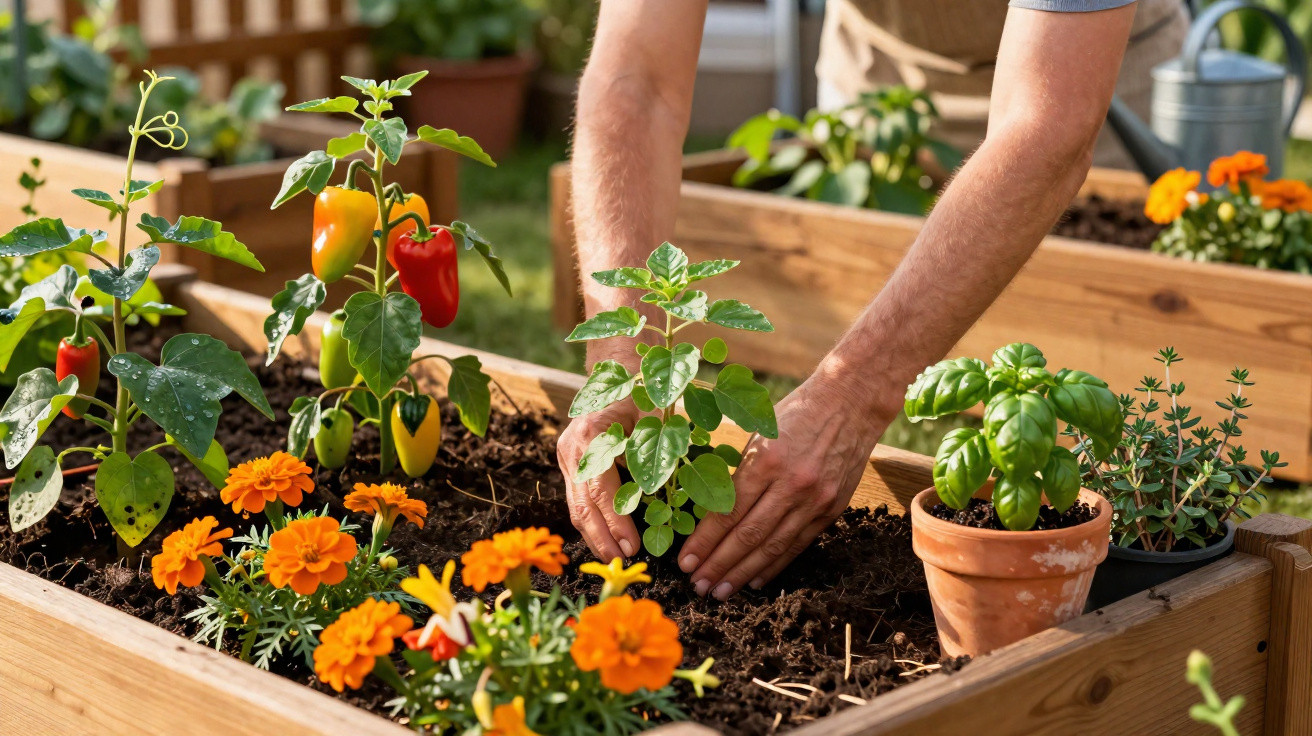
Many home gardeners grow oregano purely to top up the spice rack. In companion planting, though, this Mediterranean perennial does far more: it helps drive pests away, reduces disease pressure, and adds both structure and function to any vegetable bed. If you match it with the right neighbours, you can get noticeably more out of your plot.
Why oregano is so effective in the vegetable garden
Originating from the Mediterranean, oregano thrives in sun, warmth and free-draining soil. Those are exactly the conditions you often have in beds, raised beds and herb spirals - and its fragrance is useful for much more than cooking.
"The essential oils in oregano confuse harmful insects, attract beneficial ones and create a small protective shield around neighbouring plants."
Because it grows in a low, carpet-like mat, oregano lightly shades the soil, helps it stay moist for longer, and suppresses weeds at the same time. In wildlife-friendly gardens it has long been treated as a core tool in integrated pest management - a living, scented barrier rather than reaching for chemicals.
The best vegetable partners for oregano
Tomatoes – the dream team in the summer bed
Tomatoes and oregano work together in the border almost as well as they do on a pizza. The herb’s strong scent masks the smell of tomato plants, which would otherwise act like magnets for aphids and hungry caterpillars.
- Plant oregano around the base of the tomato
- Spacing: about 30–45 cm
- In mid-summer, tomatoes provide a little shade over the soil
Tomatoes benefit from a bed surface that stays drier and better ventilated. At the same time, oregano’s antibacterial and antifungal compounds can help lower the risk of soil-borne problems.
Peppers and chilli – more flowers, more fruit
Sweet peppers and hot chillies like full sun and plenty of light. Oregano stays low, so it won’t compete for height or brightness. Instead, it draws in bees and butterflies, which then also help pollinate pepper flowers.
"Where oregano blooms, the fruit count on peppers usually rises - without any extra effort."
Meanwhile, the herb’s aroma can keep typical warm-weather pests such as spider mites and aphids at arm’s length. A row spacing of about 25–35 cm is enough for both to grow well.
Brassicas – natural protection against cabbage pests
Broccoli, white cabbage, cauliflower and Brussels sprouts are routinely targeted by large white butterflies and their caterpillars. Oregano can disrupt the butterflies’ navigation. They locate the brassicas less easily and lay fewer eggs - so feeding damage drops noticeably.
If you tuck oregano between brassica plants, you create multiple scented barriers. At the same time, tiny parasitic wasps and other beneficial insects are attracted in, using cabbage eggs and larvae as food. This helps establish a self-regulating system within the bed.
Cucumbers and squash family crops – fewer beetles, fewer diseases
Cucumbers and courgettes, as well as pumpkins, often suffer from beetles and true bugs that spread diseases such as bacterial wilt. Oregano’s intense scent compounds can irritate these pests.
Placement matters: it’s better to position oregano at the edge of the bed, roughly 40–60 cm away from the runners. That way there’s no fight for space, and the long cucumber stems can spread freely.
| Vegetable partner | Main benefit of oregano | Recommended spacing |
|---|---|---|
| Tomatoes | Disrupts caterpillar and aphid infestations | 30–45 cm from the stem |
| Peppers / chilli | Attracts pollinators, keeps mites away | 25–35 cm |
| Cucumbers | Confuses beetles, improves microclimate | 45–60 cm |
| Courgette / pumpkin | Disrupts true bugs, supports ground cover | 60–75 cm from the runners |
Strong herb and flower partners alongside oregano
Basil – a kitchen classic that pairs well in the bed
Basil prefers noticeably moister conditions than oregano, yet the pairing can still work very well. Planting both in the same bed puts a large slice of Mediterranean cookery right outside your door.
Key point: place basil closer to your watering point or water it more deliberately, while allowing oregano to keep its feet on the dry side. The different scent “islands” between the plants attract a wide range of beneficial insects.
Thyme – a Mediterranean duo for sunny spots
Thyme and oregano want almost the same thing: lots of sun, minimal fertiliser, and loose soil. Both cope well with lean conditions and often develop their most intense aromas when they’re not overfed.
"If you want to plant up a low-maintenance rock garden or a dry-stone wall, a mix of oregano and thyme is spot on."
In an herb bed, the fragrance of each plant reinforces the other. Pests often avoid that corner, while bees love the small summer flowers.
Tagetes and nasturtium – a living pest police force
Tagetes (marigolds) have been used for years as a targeted measure against nematodes in the soil. Together with oregano you get a two-level defence: down in the ground against eelworms, and above ground against sap-sucking insects.
In this set-up, nasturtium acts as the “decoy”. Many aphid species prefer to pile onto its leaves and flowers. Oregano planted around it, in turn, brings in ladybirds, hoverflies and other predators that use the aphids as a food source.
Plants you should not place too close to oregano
Fennel – a chemical troublemaker in the bed
Fennel releases certain substances into the soil that can inhibit the growth of neighbouring plants. Oregano suffers noticeably when it is nearby: it grows less well, produces less aroma, and often stays weak.
If you want to keep both, allow at least 1.2 metres between them or grow them in separate beds.
Lettuce and other “water guzzlers”
Head lettuce, cut-and-come-again salads and many other leafy vegetables need evenly moist soil. Oregano prefers the opposite: it’s happiest when the soil is allowed to dry out between waterings.
If they sit side by side, one of them will always be stressed - either the oregano rots, or the lettuce bolts quickly and turns bitter. It makes far more sense to group beds by watering needs.
How to get the most from oregano in the garden
Site, care and pruning
Over time, oregano spreads via runners and can smother smaller plants. Regular trimming keeps it tidy and compact, while also giving you continual harvests.
- Harvest young shoots every few weeks
- Remove some flower buds if your priority is leaf quality
- Cut back old, woody stems hard in spring
A relatively low-nutrient soil encourages the production of essential oils. High-nitrogen fertiliser may push lush growth, but it dulls the flavour and reduces the herb’s deterrent effect on insects.
Smart positioning in the bed
Rather than squeezing oregano in “wherever it fits”, it pays to think ahead. Single plants placed at bed corners act like scent anchors. A strip along a path releases extra aroma whenever you brush past.
"If you plant oregano deliberately as a fragrant border, you create a natural protective band around sensitive crops."
Another useful spot is near the compost heap: oregano can help repel flies while also softening unpleasant smells. Under fruit trees it lightly shades the soil and slows weeds, while its flowers attract beneficial insects for the tree blossom.
Practical extra tips for home gardeners
Many people only know oregano as a dried seasoning for tomato sauce. In the garden it plays a much bigger role as a “system plant”. If you’re new to companion planting, start with a few oregano plants around tomatoes and peppers, then work up to brassica or cucumber beds.
Oregano also suits balcony growers: in a large container next to tomatoes, chilli or peppers, it can offer the same fragrant protection. The key is a drainage hole so the compost never stays too wet. If you have an older plant, you can divide the root ball every few years and use it to establish new partner beds in the garden - a free bonus that becomes more valuable with each season.

Comments
No comments yet. Be the first to comment!
Leave a Comment