
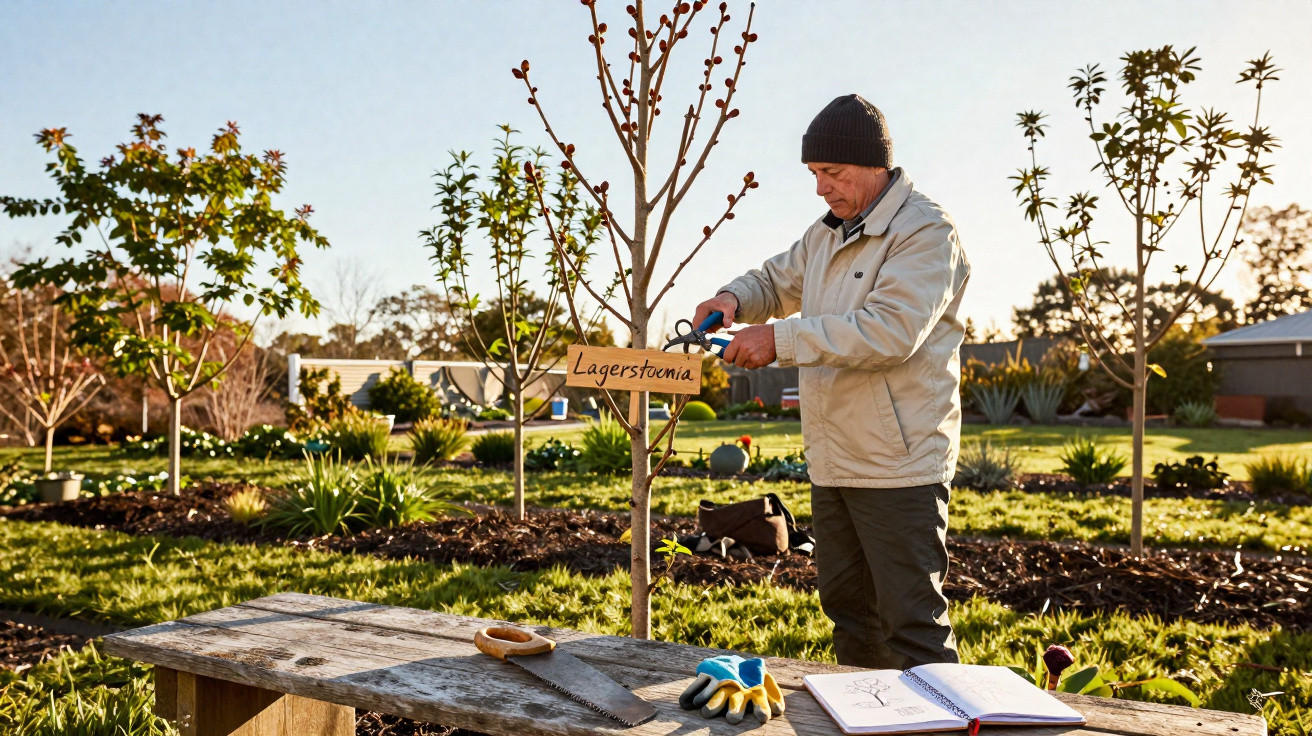
If you hang about now, you’ll be giving away your high-summer display.
Plenty of keen gardeners put pruning off until April or May. It feels sensible: wait and see what starts growing again. For five specific summer-flowering trees and shrubs, though, that timing is a genuine mistake. They set their flowers on fresh new shoots - and those only appear in abundance if you cut back early enough, in late winter through to the very start of spring.
Why some flowering trees need the shears so early
The key detail is simple: these plants bloom on “this year’s wood”. In other words, the summer flowers sit on young shoots that grow in spring. If you prune very early, you encourage exactly that new growth - and, with it, masses of flowers.
"If you prune when new growth is already in full swing, in the worst case you’ll cut off whole clusters of future flowers."
It isn’t only about looks, either. Cutting back too late can genuinely knock the plants back. With sourwood, for example, pruning during a period of strong sap flow disruption can easily lead to “bleeding” from the cuts. The plant loses energy and becomes more vulnerable to fungi, bacteria and pests.
There’s also an ecological angle. Fewer flowers means less food for bees, bumblebees and butterflies. In dry, hot summers, resilient summer bloomers such as desert willow or chaste tree (gattilier) can be invaluable insect magnets. Prune at the wrong time and you deprive wildlife of an important food source for months.
The five summer bloomers that need pruning now
In many gardens these species are still seen as a bit exotic, but in milder parts of the UK they’re increasingly popular. All five follow the same rule: prune early to secure summer flowers.
1. Crape myrtle (Lagerstroemia, also known as Indian lilac)
Crape myrtle is the best-known member of this group. From early summer it carries large, airy panicles in white, pink, red or violet. In warmer areas it works brilliantly as a small specimen tree by the house or as a standout in a front garden.
The right time to prune is while it’s dormant or right at the very start of spring, before the buds begin to swell. If you reach for the secateurs in April - or even May - you push flowering back and lose the early main flush.
- shorten only lightly; don’t cut it back hard
- remove old, exhausted shoots at the base
- keep the crown open so rain can dry off quickly
2. Chaste tree (Vitex, also called monk’s pepper)
Chaste tree grows as a shrub or small tree with aromatic, pleasantly scented leaves. In summer it produces long flower spikes in violet, pink or white, and they’re usually buzzing with insect visitors.
It responds extremely well to a confident prune at the end of winter or just before growth starts. The more decisively you reduce it, the more new flowering shoots it tends to produce.
"A well-pruned chaste tree turns into a dense cloud of flower spikes in high summer, and keeps reblooming for weeks."
If you only trim timidly, you’re more likely to end up with an increasingly straggly crown that’s bare lower down, with fewer flowers restricted to the tips.
3. Desert willow (Desert Willow)
Desert willow comes from the arid regions of North America. The name is slightly misleading: it isn’t a true willow, although its narrow, long leaves do resemble one. Its trumpet flowers look almost like small orchids - usually in shades of pink and purple with a yellow-marked throat.
It copes remarkably well with heat and drought, which makes it an interesting choice for towns, dry front gardens and gravel beds. How generously it flowers depends heavily on pruning timing. If you cut too late, you can rob the plant of several weeks of potential bloom.
A very early shaping and thinning prune is ideal, during which:
- overly long, thin shoots are redirected to stronger side branches
- old, weak branches are removed
- a loose, multi-stemmed crown is developed
4. Sourwood (Oxydendrum arboreum)
Sourwood is still something of an insider’s pick here. In early summer it carries delicate, drooping sprays of small white bells. In autumn, the foliage turns spectacular shades from bright red through to orange.
It doesn’t need much pruning, but timing matters. The best window is between late autumn and very early spring. In that period you can remove awkward branches without the tree bleeding heavily or sacrificing flower buds.
"With sourwood, it’s better to prune less often - but do it consistently at the right time of year."
If you remove thick branches in late spring, you risk long, dripping cut surfaces and a noticeable weakening of the tree.
5. Heptacodium (seven-son flower tree)
Heptacodium is a small tree with a surprisingly showy performance. Its buds are formed very early in the year, yet the flowers themselves don’t appear until late summer. The white, scented blooms arrive in clusters; later, the calyces turn reddish, making the tree look attractive for almost twice as long.
The sensitive period is the very start of spring. As soon as the first shoots are visible, put the secateurs away - otherwise the next flowers will end up in the green waste.
It only tolerates light pruning:
- remove dead wood or branches growing inwards
- pull off water shoots at the base
- maintain the structure rather than shortening hard
Basic rules for spring pruning of flowering trees
Whether it’s crape myrtle or desert willow, a handful of core principles apply to all five. They’re not only about more flowers, but also about strong, healthy crowns.
| Step | What to do |
|---|---|
| 1. Prepare tools | Use sharp, clean secateurs; disinfect the blade beforehand |
| 2. Check the tree’s shape | Look from all sides and decide on the growth form you want |
| 3. Remove dead wood | Take out dry, brittle and diseased branches completely |
| 4. Thin the crown | Remove crossing shoots and growth heading inwards |
| 5. Finishing cuts | Shorten just above a pair of outward-facing buds |
A useful rule of thumb is to make fewer, well-placed cuts rather than lots of frantic snipping. Every wound costs the plant energy, and large cuts take longer to seal over.
What if you’ve already missed the window?
Many people only realise in April that the job really belonged in February. If that’s you, it pays to be cautious. When new shoots are already clearly visible, stick to a straightforward “health prune” only: remove dead, diseased and broken wood - nothing more.
"A hard cut-back in the middle of strong sap flow can hold summer bloomers back and put them under extra stress."
Instead, note the date and correct it properly next winter or very early spring. These five species, in particular, respond with plenty of fresh flowering shoots when pruning happens on time.
How to hit the right pruning time more reliably in future
A simple garden calendar helps. For each tree, write down:
- flowering period (month)
- recommended pruning window
- type of prune (hard, moderate, thinning only)
Another practical trick is to watch the buds. With these summer bloomers, the main prune should be done while the buds are visible but still firm and closed. Once growth breaks, the window has effectively shut.
If you’re unsure, err on the side of cutting a little less rather than too much. With rarer choices such as sourwood or heptacodium, simply removing poorly placed shoots is often enough to keep both structure and flowering strong.
Extra tips for more flowers and healthier trees
Pruning alone won’t conjure flowers if the plant is in the wrong place. In general, these summer bloomers prefer:
- a sunny, sheltered spot
- free-draining soil that doesn’t become waterlogged
- moderate but regular watering during dry spells
A light feed in spring - for instance, with an organic slow-release fertiliser - supports fresh growth. Don’t overdo it, though, or you’ll end up with lots of long shoots and fewer flowers.
By combining several of these trees - for example chaste tree, crape myrtle and desert willow - you can create a continuous band of bloom from June into autumn. Insects benefit from the variety, and even in hot summers the garden stays lively and full of colour.
For that to work, everything comes down to a brief moment in late winter: making the right cut at the right time. If you take the secateurs in hand now, you’ll avoid frustration later - and you’ll get a summer when these trees really show what they can do.



Comments
No comments yet. Be the first to comment!
Leave a Comment