
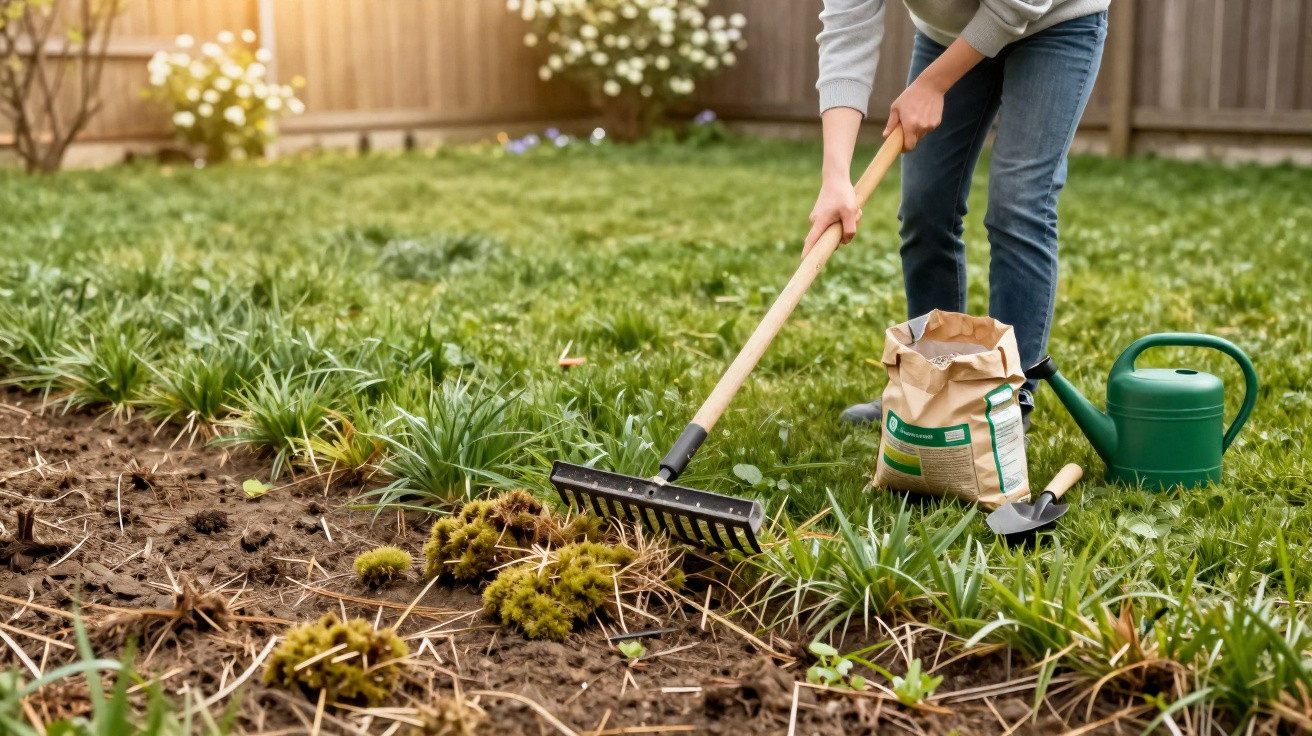
Has winter taken its toll on your lawn?
A straightforward tip used by a garden centre professional can make your grass look fresh again in no time.
Plenty of keen gardeners throw themselves into the new season-only to be met by brown patches, cushions of moss and areas that look flattened and tired. A member of staff from a garden centre chain shared a simple routine that can bring even weary lawns back to a thick, lush and hard-wearing state in spring. What matters most is timing, a few targeted actions and a bit of patience.
Why spring is the turning point for your lawn
After winter, the turf is often depleted: damp conditions, frost and limited sunshine leave clear signs behind. In March, grass begins to grow again gradually. That moment is when you can set the course for the entire season-will it become a dense green carpet, or a patchy, uneven mix?
That’s why professionals begin early in spring with a gentle first round of care. If you start too soon, or go in too aggressively, you can put the lawn under stress and weaken it rather than helping it bounce back.
“The golden rule for the first cut of the year: remove a maximum of one third of the blade length-never more.”
First cut: don’t scalp it
March is often when the first mow happens. Many people reach for the mower with enthusiasm and set the cutting height far too low. The downside shows quickly: the lawn looks washed out and becomes more prone to drought and weeds.
- Cut only one third of the grass height
- Set the cutting height higher to begin with (around 5–6 cm)
- Mow a little more often instead of doing one severe cut
This leaves enough leaf area for the grass to keep photosynthesising and to build strength for new shoots.
Mulching-yes, but at the right time
Many mowers come with a mulching option. In summer it’s convenient: the finely chopped clippings stay on the surface and work like a natural fertiliser. Right after winter, though, it’s often the wrong approach.
In spring, the grass is frequently still damp and dense. If clippings are left behind, they can stick together and form a felted layer. The turf then gets less air, and the blades underneath can start to rot. The result is yellowing rather than a rich green lawn.
“In March, it’s better to mow with the grass box, dispose of the clippings or compost them, and save mulching for warmer, drier days from May onwards.”
The decisive pro trick: let the lawn ‘breathe’ again
The garden centre employee insists on one step many home gardeners overlook: opening up the soil on purpose and aerating the lawn.
Over the years, the ground becomes compacted. Clay-heavy soils, in particular, can turn into a hard layer when wet. Pressure from children, pets and garden parties makes it worse. Water then sits on the surface, roots get very little air, and the lawn quietly struggles.
“A quick check: if water stays on the lawn for a long time after rain, or the ground feels ‘rock hard’, it’s time for a serious aeration session.”
Remove moss and thatch thoroughly
Before loosening the soil, tackle moss and thatch. The recommendation from the garden centre is:
- Pull a sturdy leaf rake or scarifying rake firmly across the area
- Comb out moss pads and dead grass consistently
- Collect the waste and remove it from the garden
Even if it looks alarming at first-the lawn can appear thin and battered-this creates room for fresh growth. Light, air and water can reach the soil surface properly again.
Create deeper air channels with a fork or a machine
After raking comes the second part: getting air down into the soil. For smaller lawns, a strong garden fork or a dedicated lawn-aerator fork is enough:
- Push the tines into the ground at regular intervals (for example every 15–20 cm)
- Rock the fork slightly backwards and forwards to loosen the soil
- Water will soak in more easily later, and roots can grow deeper
If your lawn is larger, a powered or push scarifier is often the better option. Its blades scratch into the turf by a few millimetres, remove thatch and open up the surface. Important: work in straight lines-either lengthways or widthways-not in random directions, so the grass recovers more quickly.
Filling gaps: fresh soil, seed or turf
Once you’ve aerated and scarified, bare patches and thin areas often become more obvious. This is when the “fresh boost” the garden centre worker talks about comes in: you improve the problem spots with new soil and seed.
“Always top up bare or very weak patches with fresh, loose soil-new grass seed germinates far better in it.”
When turf is worth it
If you want a visible result quickly, use ready-grown turf. Lightly loosen the ground, level it with fine soil, then lay the rolls tightly together on the prepared area. Water well-and the lawn looks almost instantly complete again.
Turf works particularly well for small, heavily used zones, such as by the patio or beside a sandpit.
Overseeding for the patient
If you can wait, choose a grass seed mix made for overseeding. The most reliable method is:
- Lightly loosen the surface and remove any remaining thatch
- Spread a thin layer of fine soil or lawn topsoil
- Distribute the seed evenly and rake it in gently
- Water lightly but regularly so the soil never dries out completely
One thing to keep in mind in spring is birds. They’re especially active at this time, and fresh grass seed can look like an all-you-can-eat buffet.
“To reduce bird damage, feeding stations at the edge of the garden can help, or you can sow later-when nature provides plenty of other options.”
Fertiliser, water, mulch: keeping the lawn healthy long term
To make the most of the renewed energy, the lawn needs nutrients. In spring, professionals typically use fertiliser with a higher nitrogen content. Nitrogen encourages leaf growth, helping the lawn knit together faster.
Getting the dose right matters. Too many nutrients can make the grass shoot up quickly, but it also leaves it soft and more susceptible to drought, fungal disease and footprints. Follow the manufacturer’s instructions and, if anything, apply slightly less rather than more.
If you switch to mulching from late spring or summer, the soil automatically receives part of what it needs. Short, dry clippings break down quickly and return nitrogen and other minerals to the ground.
| Measure | Ideal time | Benefit |
|---|---|---|
| First cut | March / April | Kicks off growth and shapes the lawn |
| Scarifying / aerating | March to April | Removes moss and improves air and water flow |
| Overseeding | Spring to early summer | Fills gaps and thickens the sward |
| Nitrogen fertiliser | Spring | Promotes rich green colour and strong growth |
| Mulching | May to September | Natural nutrient return, less fertiliser needed |
Common mistakes-and how to avoid them easily
Many lawn issues come from well-intended but poorly timed care. Three frequent examples:
- Cutting too short: encourages moss and makes the soil dry out faster.
- Scarifying in hot weather: stresses the grass, and recovery is poor.
- Constant damp: incorrect watering or compacted soil leads to moss and rot.
Keep these in mind and you’ll avoid a lot of frustration-and you may not need expensive rescue attempts in midsummer.
What terms like scarifying and mulching actually mean
Beginners, especially, often get stuck on phrases that sound routine in a garden centre. Two come up repeatedly here:
- Scarifying: sharp blades cut a few millimetres into the turf. Old grass, moss and thatch are pulled out, and the surface becomes more permeable.
- Mulching: the mower chops the clippings so finely that they can be left on the lawn. They rot down and feed nutrients back into the soil.
Both are tools, not miracles. They’re most effective when the timing is right and the lawn isn’t already severely weakened.
Lawn care as a routine: little effort, big impact
Follow the garden centre professional’s advice and you won’t need specialist knowledge: mow gently in spring, remove moss and thatch, open up the soil, fill the gaps, and fertilise with restraint-that’s all there is behind the “secret trick”. The key is the order of steps and paying attention to the soil, not only the blades of grass.
With this simple routine, a tired, patchy lawn can gradually turn into a dense, resilient surface. And that’s what brings the summer payoff many people aim for: walking barefoot across a soft green carpet without having to think about brown patches or islands of moss.




Comments
No comments yet. Be the first to comment!
Leave a Comment