
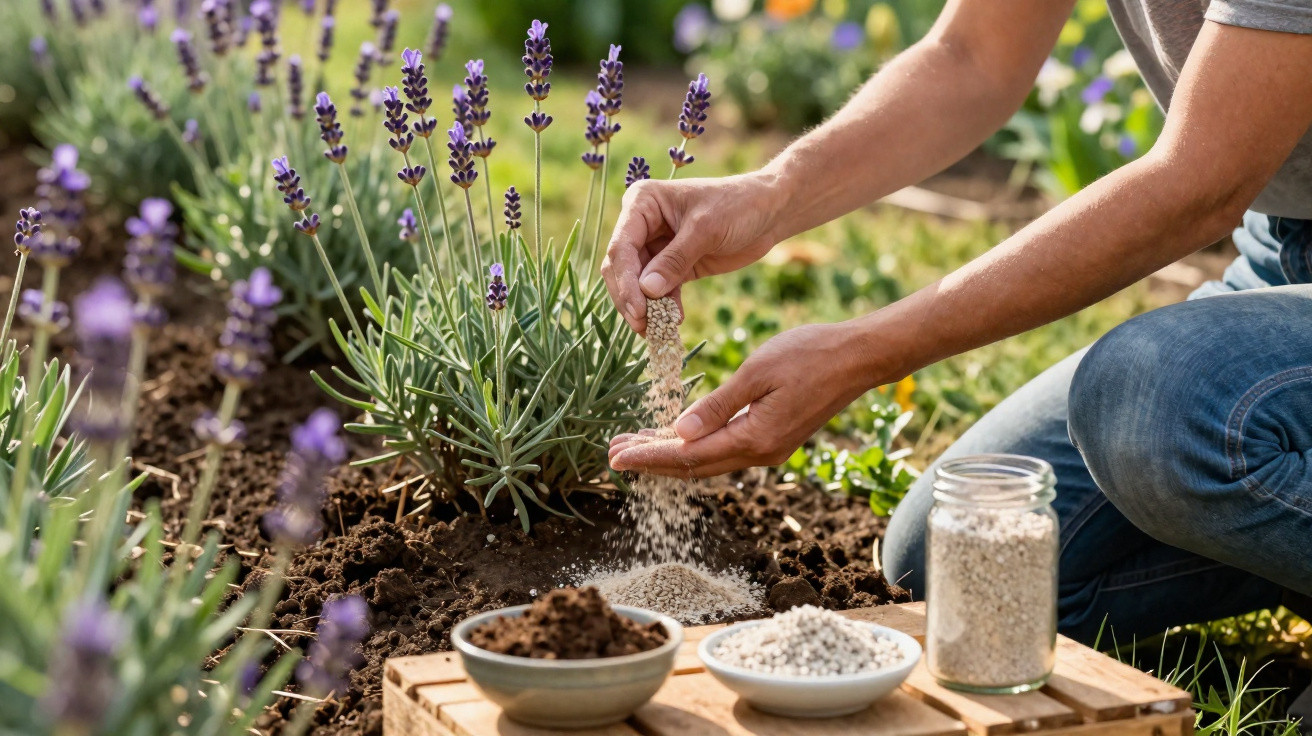
Many people tend lavender with care-sunlight, watering can and all-yet still end up with only a few flowers. The real difference is made less in July and far more in March and April. If you apply the right nutrients then and get the soil conditions right, you steer the plant’s energy into tight growth and fuller, denser flower spikes.
Why lavender responds better to a light spring feed than lots of fertiliser
Lavender originates from sparse, rocky Mediterranean landscapes, where it grows in free-draining, lime-rich soils. That background shows up clearly in the garden and in pots. Soil that is too rich pushes lots of soft leaf growth but produces fewer flowering shoots. Waterlogging encourages root rot and can weaken the shrub for several seasons.
In spring, the plant stores up what it needs for summer flowering. A single, gentle feed is enough to support bud formation without upsetting its natural balance. Repeated feeding sends the plant into leafy growth and later costs you colour, fragrance and sturdy stems.
Remember: A targeted boost in March–April supports bud formation. Constant feeding takes the natural toughness out of lavender.
The trio of compost, bone meal and garden lime provides exactly what lavender needs
Three straightforward ingredients meet lavender’s needs: organic matter, phosphorus for roots and flowers, and lime to keep the pH in the right range. Combine equal parts in a small bucket. Use freshly sieved, fully matured compost, fine bone meal, and ground garden lime (calcium carbonate).
- Compost: improves soil structure, holds moisture without staying wet, and supplies trace elements in small amounts.
- Bone meal: provides phosphorus and calcium, supports strong roots and helps develop robust flower spikes.
- Garden lime: nudges the pH towards alkaline and creates lavender-friendly conditions.
How to apply the mix
Spread the blend in a ring around the root zone, keeping it away from the woody base. Lightly rake in the top 2–3 cm so air can enter and water can pass through. Then water thoroughly once so the nutrients reach the active fine roots.
Rule of thumb: Equal parts compost, bone meal, lime-apply thinly, work in shallowly, water once.
Calendar, dosage and mistakes that cost you blooms
Pick a frost-free window from mid-March to the end of April. Apply before the main bud-building phase so the plant can use the boost efficiently. In pots, be even more restrained, because nutrients remain available for longer.
| Location | Amount per plant | Note |
|---|---|---|
| Border, young plant | 1 small handful | Work in lightly, don’t mound up |
| Border, established shrub | 2 small handfuls | Spread around the outer root area |
| Pot, 25–35 cm | 1–2 tablespoons | Moisten the compost first |
Avoid these common pitfalls
- Nitrogen-heavy fertiliser drives leafy growth and makes stems flop over.
- Fresh farmyard manure stays wet for too long and increases fungal pressure.
- Thick layers of bark mulch cool the soil and can suppress bud formation.
- Poor drainage traps rainwater at the base and weakens the woody growth.
Site rules: Full sun, lean growing medium, and fast drainage-this is how lavender produces dense, strongly scented flower spikes in July.
Finishing touches for extra fragrance and long-lived plants
In late winter, only cut back the soft growth from the previous year and avoid cutting into old wood. This shaping and maintenance prune keeps the shrub compact and stops it splitting open in summer. Remove spent flower spikes promptly so the plant puts energy into fresh growth.
For containers, choose a mineral-leaning mix with coarse sand or fine grit. Put a drainage layer of expanded clay pellets in the pot and use containers with a generous drainage hole. Water infrequently but deeply, and let the surface dry out well between waterings.
pH and a five-minute soil check
A simple soil test shows whether you still need lime. Lavender prefers pH 6.5–8. If the reading is lower, apply a small amount of garden lime again the following year. In areas with very soft rainwater, occasionally using a little tap water in your watering routine can help, as it is often more lime-rich.
Sustainable ways to top up flower power
If you’d rather not use bone meal, choose rock phosphate or rock dust instead. Both act more slowly, but they break down steadily and are gentler on soil life. Potassium from wood ash can help produce sturdier shoots, but it must be used very sparingly because ash is strongly alkaline.
Alternatives: Rock phosphate instead of bone meal, a tiny amount of wood ash for potassium, grit as a mineral mulch to prevent waterlogging.
Practical combinations in the border
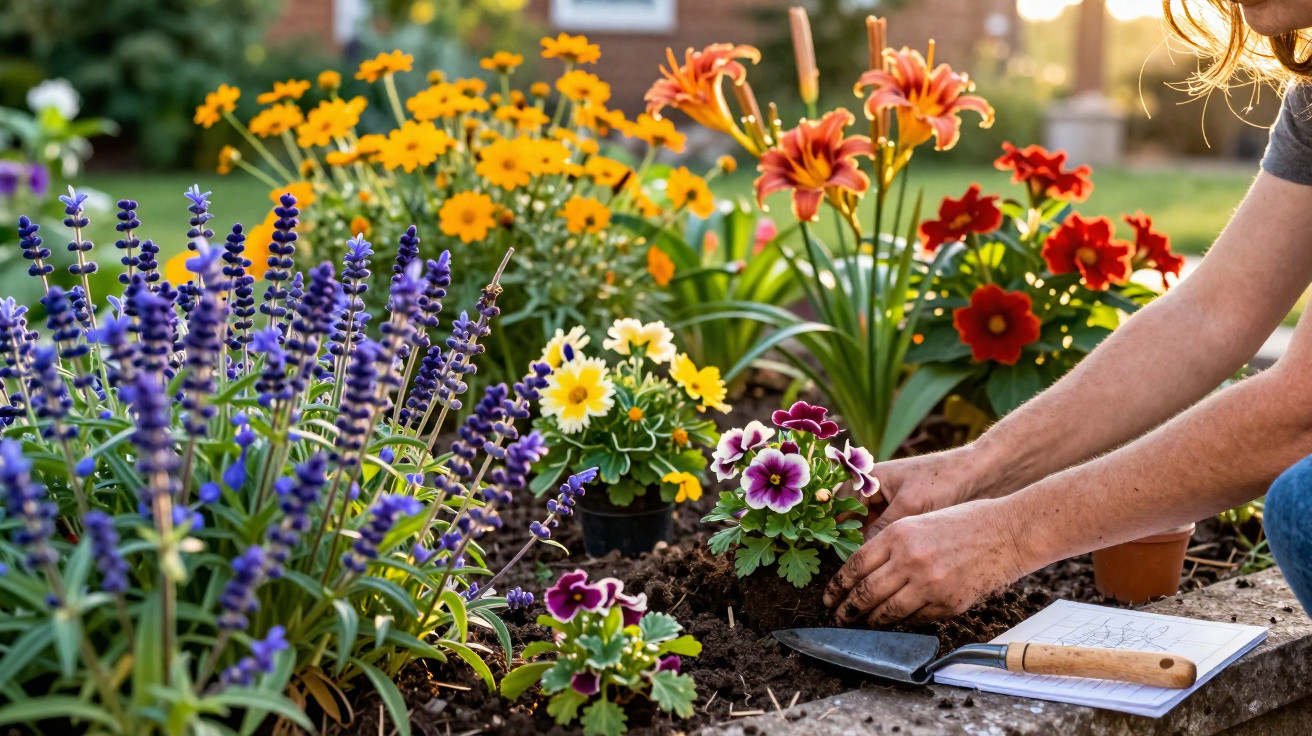
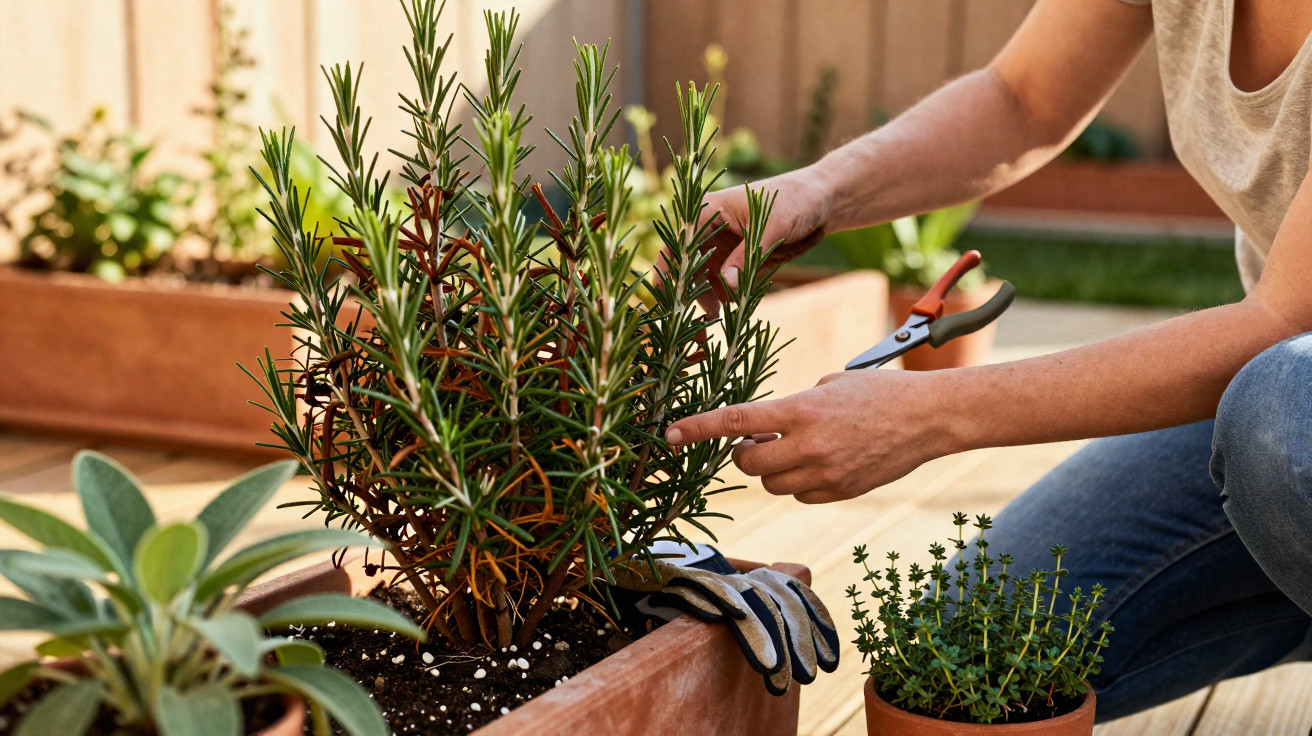
Plant lavender alongside rosemary, thyme and sage, as they share similar preferences. These neighbours dry out faster after rain and reduce fungal pressure across the bed. Pollinators also benefit from a longer sequence of flowers if you choose varieties with different flowering times.
Pets sometimes react to bone meal by sniffing and digging. For that reason, work it in well and water afterwards so no smell lingers. In homes with dogs, rock phosphate can be a better choice because it has a more neutral scent. If you want to take cuttings, select semi-ripe shoots in late summer, insert them into sandy seed compost, and keep them bright and on the dry side. This rejuvenates older shrubs and sets you up for even more fragrant flower spikes next summer.
Comments
No comments yet. Be the first to comment!
Leave a Comment