
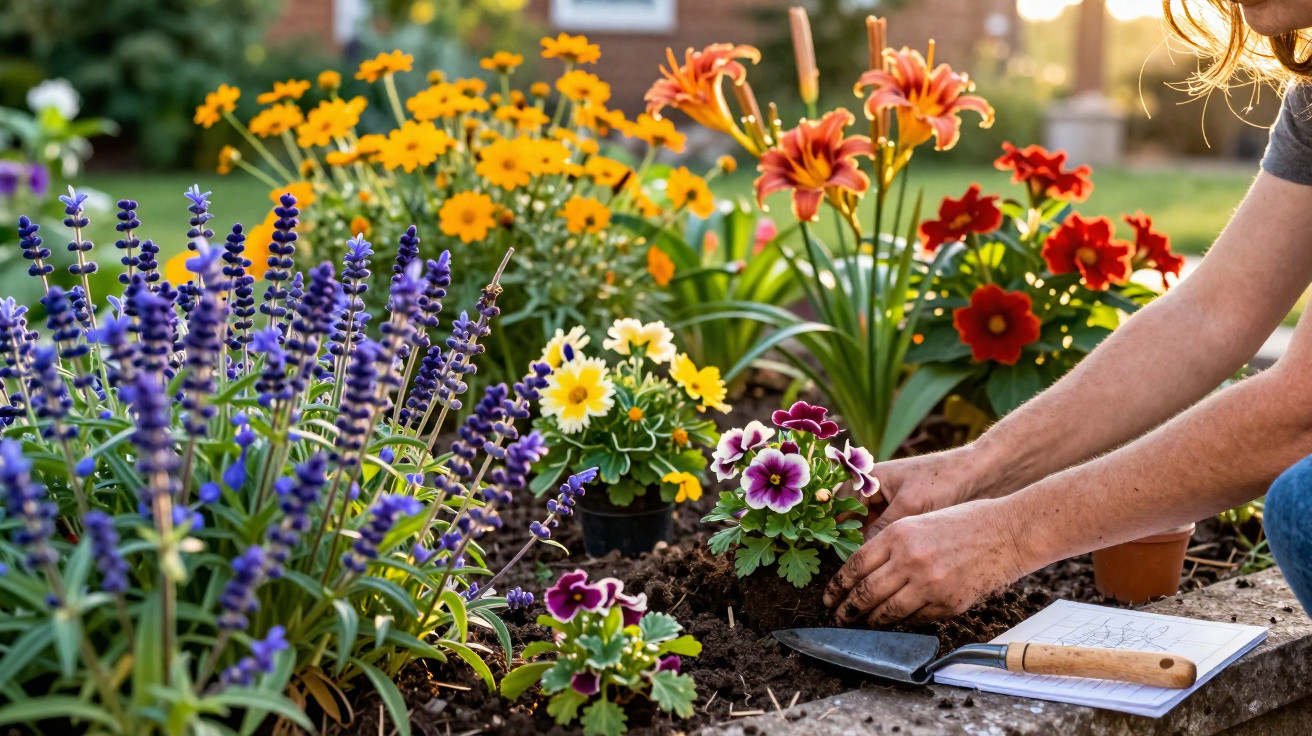
With the right turbo perennials, your garden can look lush in no time.
Plenty of hobby gardeners know the feeling: in your head, the new border already resembles a little paradise; in reality, it is still mostly bare soil. While you wait, weeds happily move into every gap. By choosing fast-growing perennials on purpose, you can shorten that frustrating phase considerably - and the garden can look surprisingly full after just one or two seasons.
Why fast-growing perennials are so useful
Perennials return year after year, root themselves into the ground, and spread gradually. If you pick species that naturally put on growth quickly, you will need far fewer replacement plants - yet you still get dense, colourful borders fast.
"Many of these perennials don’t just add colour, they also provide plenty of food for bees, bumblebees and butterflies."
Most perennials follow a similar pattern:
- 1st year: settle in, develop roots, growth stays fairly modest
- 2nd year: strong growth, clumps broaden noticeably
- 3rd year: gaps close up, the border looks full and well-structured
The plants below speed this process up significantly, especially when the soil and light are right. As a rule of thumb, “full sun” means at least six hours of direct sunlight per day. “Partial shade” is roughly half that.
How to help perennials get going quickly
Nearly all of the growth sprinters among perennials share one key requirement: well-drained soil. Waterlogging slows them down; open, crumbly soil with enough humus helps them power ahead.
The right start in the ground
- Before planting, remove weeds thoroughly.
- Loosen the soil with a garden fork and break up large clods.
- Work in compost or well-rotted manure to provide nutrients.
- Choose sturdy container-grown plants rather than tiny plug pots.
For the first few months after planting, regular watering matters. In dry spells, young perennials rarely cope with long periods without water. Once established, many of them prove impressively resilient in heat and drought.
A mulch layer of bark chippings, straw, or leaves also helps. It keeps moisture in the soil for longer, suppresses weeds, and creates calmer conditions for roots to grow.
10 perennials that really fill borders quickly
Below is a selection of ten tried-and-tested species that work brilliantly as gap-fillers in everyday gardens - attractive to look at and genuinely useful for insects.
| Perennial | Position | Main benefit |
|---|---|---|
| Agastache (anise hyssop) | Sunny, well-drained | Long flowering, bee magnet |
| Nepeta (catmint) | Sunny to partial shade | Blue-violet carpet of flowers |
| Coreopsis (tickseed) | Sunny | Yellow to red “daisy” blooms |
| Gaillardia (blanket flower) | Sunny, drought-tolerant | Vivid red-and-yellow flowers |
| Gaura lindheimeri | Sunny, open soil | Airy, dancing flowers |
| Kniphofia (red hot poker) | Sunny | Exotic “torches” in the border |
| Hardy geraniums | Sunny to partial shade | Quickly forms groundcover |
| Perennial salvia | Sunny | Long purple flower spikes |
| Daylilies | Sunny to partial shade | Substantial clumps, many flowers |
| Monarda (bee balm) | Sunny, fresh soil | Spreads by runners, strong insect plant |
Agastache: spicy fragrance and non-stop insect action
Agastache thrives in full sun and free-draining soil. By the second year it typically forms strong clumps topped with numerous flower spikes in purple, pink, or orange. The foliage smells of aniseed or mint, which makes it especially appealing in herb gardens and cottage-style planting. Bees, bumblebees, and butterflies can spend hours around it.
Nepeta: the blue carpet for edging
Catmint matures into low, wide cushions that sit neatly along paths, walls, or the front edge of a border. It flowers early and, after a summer cut-back, will often push into bloom again. It also copes with dry conditions far better than most border perennials.
Coreopsis and Gaillardia: summer colour without a break
Tickseed and blanket flower deliver classic summer tones in yellow, orange, and red. Their blooms resemble small daisies, but with richer colouring. If you regularly remove spent flowers, the plants keep going for weeks and are less likely to tire too early.
Gaura lindheimeri and Kniphofia: for that extra touch
Gaura looks like a haze of small butterfly-like flowers that flutter in the breeze. It slots into gaps between sturdier structural plants and brings lightness to the planting. Kniphofia, also known as red hot poker, adds bold vertical accents. Its orange-yellow flower heads resemble torches or rockets - a real focal point, particularly in modern gardens.
Groundcover and structural plants for the lower layer
Hardy geraniums: dependable groundcover
Garden geraniums (not to be confused with the classic balcony pelargoniums) cover large areas quickly. They grow into broad mounds, usually flower from late spring into summer, and leave weeds very little chance. They work particularly well at the front of rose borders or under lightly growing shrubs.
Perennial salvia: purple flower spires that keep coming
Perennial salvia is among the best for long flowering in a sunny border. Its upright spikes provide strong violet or purple colour for weeks. After a decisive cut-back once the first flush finishes, it often produces a second round. It is also one of the most popular nectar plants for solitary bees.
Daylilies: strong clumps instead of empty corners
Daylilies build into impressive clumps that quickly swallow up gaps. Each individual flower lasts just one day, but the plants produce so many that the display continues for weeks. Colours range from pale yellow to deep red, and you can even choose near-black varieties.
Monarda: bold runners with added value
Monarda prefers slightly fresher, even mildly moist soil. In those conditions it spreads on short runners and can take over an entire section of a border within a few years. The striking flower heads in red, pink, or lilac draw butterflies in large numbers. If you are concerned about it spreading too much, simply lift and remove edge sections regularly and replant them elsewhere.
How to plan sensibly with these perennials
A border that fills quickly works best with a mix: a few strong structural plants such as daylilies or red hot pokers, plus groundcovering perennials like hardy geraniums, and in between, looser drifts of flowers from gaura or nepeta. Adding a handful of bold, colourful specimen perennials helps guide the eye.
It is also worth thinking about planting distances early on. Many of these species increase in size significantly. Rather than planting too tightly, give them the space they will need in two or three years. At the beginning, you can bridge any gaps with annuals such as calendula (pot marigolds) or cosmos.
Useful extra information for beginners and experienced gardeners
The phrase “poor, free-draining site” often causes confusion. It simply means a soil that does not stay wet for long periods and does not provide excessive nutrients. A sandy-loam garden soil, improved with a little compost, suits many of the perennials listed here perfectly. Too much fertiliser mainly pushes leaf growth, while sturdiness and flowering performance can suffer.
Things get particularly interesting when you combine perennials deliberately to boost ecological benefits. For example, planting agastache, perennial salvia, and catmint together in a sunny strip creates a continuous feeding lane for insects from early summer into autumn. In larger gardens, you can extend these “flowering corridors” across several borders - with a noticeable effect on biodiversity right outside your own front door.
Comments
No comments yet. Be the first to comment!
Leave a Comment