
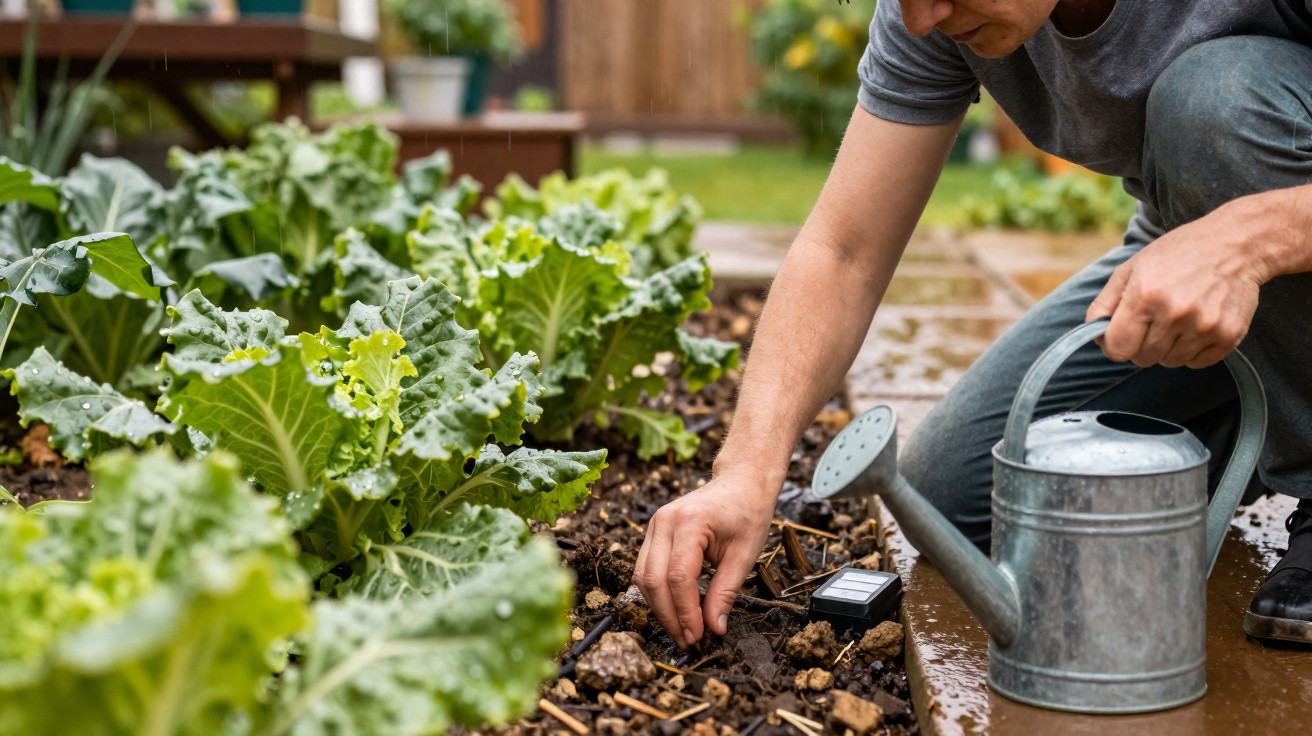
A small lapse in judgement that can end up costing your plants dearly.
When you look out of the window and see heavy raindrops, it’s easy to feel instantly relieved: today the watering can stays in the shed. Rain is often treated as an all-in-one solution for beds, balconies and container plants. Yet that comfortable assumption can surprisingly often lead to drought stress – right in a spell that feels constantly wet. What matters is not simply that it rains, but how and where the water actually reaches the soil.
Why heavy showers often only wet the surface of your beds
The misleading look: wet paths, dry roots
When a spring storm sweeps through the garden, everything afterwards can look soaked. Paths shine, leaves drip, and even the lawn appears dark green and lush. Many people automatically take that as proof that the ground has been thoroughly watered down to depth. That’s exactly where the misconception lies.
In a downpour, the water can hit a relatively firm, still-cool soil so fast that there’s hardly time for it to soak in. Droplets collect on the surface and run off into channels and dips. The top few millimetres may be damp, while the roots deeper down remain dry.
"A spectacular rain front doesn’t automatically mean the water ends up where your plants really need it: in the root zone."
For plants, prolonged light rain is often far more useful than a short burst of heavy rain. The slower rhythm gives the soil time to absorb water evenly. That allows the pores between soil particles to fill up, rather than the water immediately rushing away towards the nearest drain or ditch.
Wind and soil structure make the difference
Wind is another factor. Spring gales can dry the top layer of soil much faster than many people expect. Even if the rain has only just passed, a stiff breeze can make the surface look dusty again.
Soil type also plays a major part:
- Sandy soils let water pass through quickly, but retain very little.
- Heavy clay soils tend to hold water at the surface, while deeper roots can still end up surprisingly dry.
- Compacted areas absorb hardly any heavy rain, so water runs off to the sides.
If you judge moisture purely by how wet the surface looks, you’ll be misled time and again in many gardens.
The “umbrella effect”: when leaves divert the water
Lush foliage blocks the route to the soil
Another frequently overlooked influence is the plant’s own structure. Through spring, many vegetables, perennials and shrubs develop dense canopies of leaves. They look healthy and vigorous – and for rainwater, they can behave like an umbrella.
Droplets bounce off broad leaves, roll away to the sides and land outside the true root area. Right next to the stem or in the centre of the plant, the soil can stay remarkably dry even though everything around it is glistening.
"Dense leaf canopies often channel water away from exactly the spots where the most important roots are."
Hidden dry patches in the bed
After two rainy days, try pushing your hand or a small trowel into the soil right at the base of a strong shrub and you may be caught out: under a thin, slightly damp layer sits dry, almost dusty earth.
It’s particularly worth checking regularly in these places:
- under large hydrangeas, roses or lilacs
- in packed perennial borders with lots of leaf mass
- between tall vegetable plants such as tomatoes or Swiss chard
If you rely on rain alone here, you risk plants that still look plump and green on top while already suffering drought stress at the roots. The signs often show up later as drooping leaves, weaker flowering or leaf drop – usually only once the damage has already started.
Why balcony and container plants often miss out completely in the rain
Architecture can deliberately “deflect” rain
Conditions can be especially tricky on balconies, terraces and under canopies. Here, the building’s design becomes crucial. Overhanging roofs, upper floors and side panels create a form of shelter – convenient for people, but disastrous for plants.
Rain rarely falls perfectly straight down. A light breeze is enough to push droplets sideways. Many window boxes and pots sit right against the wall or beneath a balcony slab. They can “see” the rain, but receive barely a drop.
"While you might get wet at the window, the pots a metre away can be completely dry – and nobody notices."
Small volumes of compost dry out fast
Container plants only have a few litres of compost available. That dries far more quickly than garden soil, especially in sun and wind. If rain never reaches the surface in the first place, a brief spell of humid air won’t help much.
Typical trouble spots include:
- window boxes directly under roof overhangs
- herb pots on window ledges beneath an awning
- large containers tight to house walls, protected by a ledge or balcony
If you water purely by the forecast (“It’s raining enough today”), you’ll repeatedly find that compost and roots remain dry. On balconies in particular, an extra watering even during rain is often not a luxury, but a lifeline.
The simplest ways to check moisture levels properly
The finger test: old-fashioned, but extremely dependable
You don’t need a meter, an app or a sensor to work out whether a plant needs water. In most cases, the simple finger test is more than enough.
Do it like this:
- Push one or two fingers about 5 cm into the soil.
- Pay attention to the feel: is it cool and slightly moist, or warm and crumbly?
- If soil sticks to your finger, there’s usually still enough water in the ground.
- If everything feels dry and gritty, it’s time to water – even if it’s raining.
"Direct contact with the soil tells you more about water needs than any glance out of the window."
Lifting the pot: a quick signal for container plants
With smaller pots, weight is a reliable indicator. Lift the pot briefly and learn how a freshly watered pot feels compared with a dry one. With a bit of practice, you can tell in seconds whether watering is needed just from the weight.
This avoids unnecessary watering, reduces the risk of waterlogging, and helps ensure delicate balcony plants neither dry out nor drown.
Why rainy weather can actually be a good time to water
Humid air helps “revive” older compost
Many potting composts become water-repellent over time. The technical term is hydrophobic: water runs across the surface or down the sides of the pot instead of soaking into the root area. It’s a classic issue in containers that have been in use for several years.
Rainy weather can create surprisingly favourable conditions here. The air is saturated with moisture, and evaporation from the soil surface drops sharply. If you slowly apply lukewarm water from a watering can, you give the compost time to absorb it again. The damp air supports this, because far less water evaporates straight away.
Water precisely where rain never reaches
While the garden is being drenched, it’s worth taking a quick walk with the watering can to places that rainfall doesn’t reach: under dense leaf canopies, in sheltered corners by the house, beneath roof overhangs, or in balcony recesses protected from the wind.
Aim the water directly at the root area rather than over the leaves. That way you make use of the already-humid conditions without extra evaporation losses, and you help the plants that benefit least from the rain.
Extra tips for easier watering in the long run
Mulch, plant choice and smart positioning
If you want to water less, there are three levers you can adjust:
- Mulching: a layer of bark mulch, grass clippings or leaves reduces evaporation and keeps the soil moist for longer.
- Plant selection: deep-rooted perennials and drought-tolerant species need water far less often than shallow-rooted summer bedding.
- Positioning: don’t place containers directly under roof edges; set them where rain can actually reach them.
Once you take these points into account, you’ll need fewer corrective trips with the watering can later on – even through changeable weather.
How to spot typical drought-stress signals early
As well as the finger test and pot weight, plants themselves give clear clues. Drooping leaves in late afternoon, dull colour, rolled leaf edges or halted new growth often point to a lack of water. If those signs appear despite rainy days, take a closer look at the position, the soil and the amount of foliage – and in many cases, reach for the watering can once more.

Comments
No comments yet. Be the first to comment!
Leave a Comment