
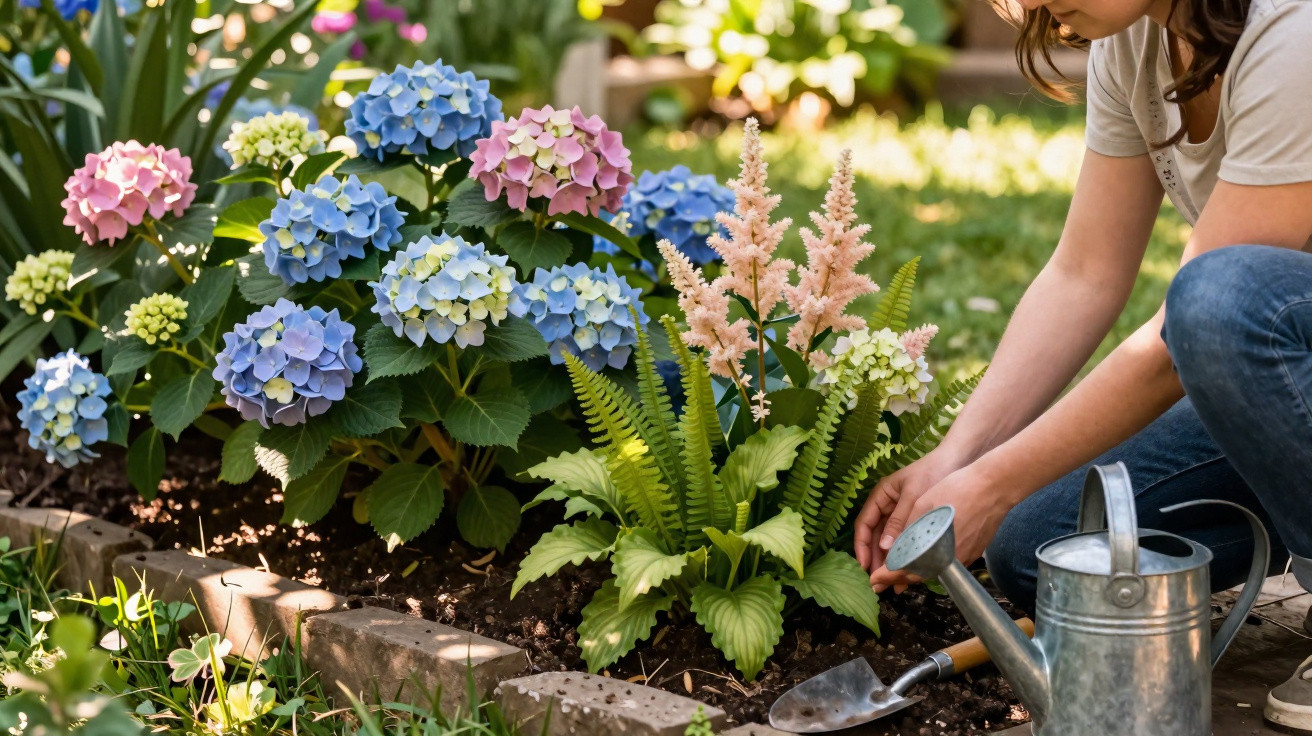
Many keen gardeners will recognise the pattern: in the catalogue, hydrangeas look like lavish, perfectly rounded flower heads, yet in your own border they droop at the first hot day. So you water more, feed more - and still only see limited improvement. In reality, the biggest difference is often made somewhere else entirely: by the plants sharing the bed with your hydrangeas.
Why hydrangeas need strong border companions
Hydrangeas are surprisingly picky about where they grow. They prefer a humus-rich, slightly acidic soil that stays evenly moist without ever becoming waterlogged. The ideal spot is bright partial shade, sheltered from harsh midday sun and drying winds.
At the same time, they have a substantial demand for both water and nutrients. Grass roots and sprawling weeds can make life difficult by competing for exactly those resources right at root level. That leads to a clear objective: the area around hydrangeas should be filled with plants that improve the microclimate rather than undermine it.
"If you pair hydrangeas with the right neighbours, you reduce watering, cut down on weeds and get noticeably more flowers from the bed."
Three types of perennial deliver particularly well here:
- Ferns: keep the soil shaded and damp
- Astilbes: add long flowering periods and extra colour
- Hostas (plantain lilies): create a living canopy of shade and draw pests away from the blooms
Ferns: living mulch for thirsty hydrangeas
Ferns may seem understated at first glance, but they are excellent companions for hydrangeas. They usually start into growth earlier in the year, unfurling fine fronds that spread across the soil surface like a green carpet.
That “carpet” brings several benefits at once: sunlight no longer hits bare soil directly, heat penetrates less deeply, and moisture evaporates more slowly. The ground stays cooler and fresher for longer. When you position hydrangeas among ferns - or tuck clumps of ferns between the shrubs - you will typically find you need to water noticeably less often in hot weather.
Just as importantly, most ferns do not rampage through the bed in the way many weeds do. They occupy space without sapping the hydrangeas’ strength. As a result, weed pressure drops naturally, without the border feeling overcrowded.
How to use ferns correctly
A loose planting in small groups works best:
- Plant hydrangeas about 1 metre apart.
- Place smaller fern species at the front, with taller ferns in the gaps and slightly offset behind.
- Water in thoroughly after planting, and keep the soil consistently moist for the first few weeks until the roots are established.
In full shade, this combination can feel like a slice of woodland; in partial shade, it reads as a cool refuge in midsummer - both for the plants and for the view from the living-room window.
Astilbes: colourful partners that extend the flowering season
Astilbes thrive in much the same conditions as hydrangeas: humus-rich soil that remains lightly moist, and a position protected from glaring midday sun. Because they flower around the same time as many hydrangeas, the two create pleasing, coordinated colour combinations.
What makes astilbes especially useful is that their feathery plumes often last longer than the large hydrangea heads. As the hydrangea blooms begin to fade or dry, astilbes keep providing bright accents - effectively prolonging the display in the border.
"Astilbes keep the bed colourful when the hydrangeas’ splendour is already fading - a natural handover in the flowering calendar."
Which astilbe colours suit which hydrangeas?
If you combine them with intent, the result looks particularly coherent:
| Hydrangea colour | Suitable astilbe colours | Effect in the bed |
|---|---|---|
| Blue or purple | White, soft pink | cool, elegant, calming |
| Pink or red | Red, strong pink | lively, romantic, eye-catching |
| White | Pastels, cream | airy, refined, very bright |
Set astilbes slightly offset behind the hydrangeas, or to the sides, so the different flower shapes do not hide each other. One point matters above all: the soil around their roots must never dry out completely. Once astilbes have been allowed to dry hard, they often respond poorly and regrow with less vigour.
Hostas: shade specialists and a protective shield
Hostas, widely sold as plantain lilies, are a classic choice for partially shaded gardens. Their broad, fleshy leaves spread like umbrellas over the soil, forming a small “roof” around the base of the hydrangeas. This keeps the most sensitive area of the shrubs - the root zone - reliably shaded.
You can feel the difference most on hot afternoons: while exposed beds turn hard and dry, the soil beneath hostas remains cool and slightly moist. For hydrangea roots, that is close to ideal.
There is another advantage as well: slugs often find hostas irresistible and will usually go for their leaves first. That may sound like a drawback, but it can reduce pressure on other plants in the bed. If slugs are already an issue in your garden, hostas can act as a practical “distraction plant”, while the hydrangea blooms are often left alone.
A simple planting plan around hydrangeas
If you want a straightforward structure, this basic layout is a useful guide:
- Centre: hydrangeas as the main feature, planted in a loose row or group
- Inner ring: a continuous band of hostas directly around the shrubs
- Back of the bed: taller ferns and larger astilbes for height and depth
- Front edge: lower ferns or compact astilbes for a gentle transition to a path or lawn
This creates a clear, tiered look: rounded flower heads in the middle, bold foliage in front, and airy fronds and plumes behind. The effect is lush without becoming messy.
How the microclimate in the bed changes
Together, these three companion plants reshape the entire small habitat around hydrangeas. The air just above the soil warms up less, the ground dries more slowly, and the light is naturally filtered. In summers with long hot spells, that difference can be significant for the shrubs.
You also build more organic matter over time: fallen hosta leaves and fern fronds break down, improve soil structure and support soil life. Earthworms and microorganisms loosen the ground and release nutrients, which then benefit the hydrangeas.
Practical tips for care and combinations
To keep this partnership working over the long term, it helps to avoid a few common pitfalls:
- Avoid waterlogging: although all these plants like moisture, none of them tolerate permanently saturated soil. A drainage layer or a looser mix improved with compost and composted bark helps.
- Adjust your watering routine: with ferns, astilbes and hostas in place, the soil holds moisture longer. Water less often but thoroughly, rather than giving a light sprinkle every day.
- Feed with restraint: one application of organic feed in spring (for example compost or an organic hydrangea fertiliser) is usually sufficient.
- Keep an eye on slugs: check hostas regularly and, if damage is heavy, use barriers or traps so the plants can continue to do their “shielding” job.
If you are unsure whether your soil is acidic enough for hydrangeas, a simple soil test kit from a garden centre can provide clarity. If the pH is too high, bark mulch, leaf mould and specialised compost will slowly bring in the acidity you need. That benefits not only the hydrangeas, but their companion plants as well.
Design becomes even more interesting if you add spring bulbs to the trio of ferns, astilbes and hostas: snowdrops or small daffodils planted between the hostas provide colour early in the year, well before hydrangeas leaf out. By the time the companion perennials are fully developed in summer, the bulbs have already died back - a natural rotation with minimal competition.
Anyone who tries this three-part combination of ferns, astilbes and hostas in their own garden tends to notice it quickly: suddenly the hydrangeas look like the glossy photos - with sturdier stems, richer foliage and clearly more blooms that cope far more calmly with periods of heat.

Comments
No comments yet. Be the first to comment!
Leave a Comment