
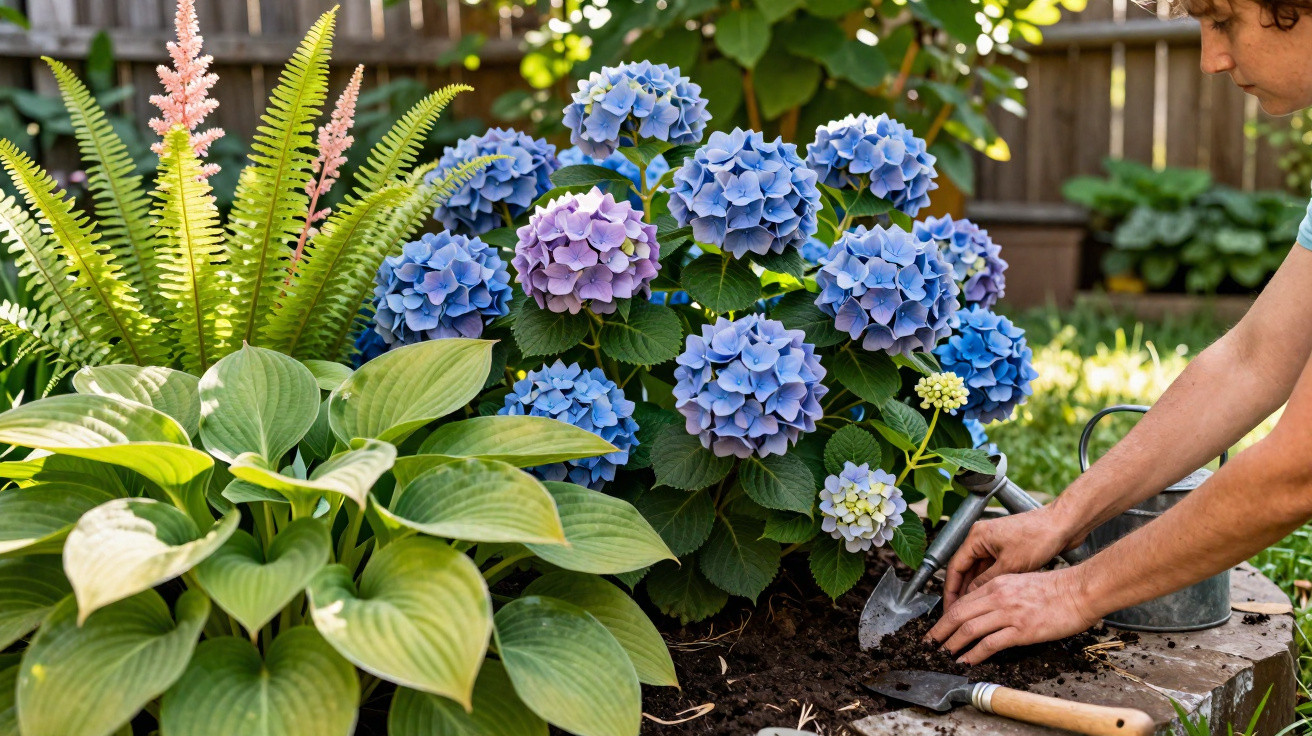
Relying solely on fertiliser, a watering can and pruning shears misses one of the biggest factors behind abundant hydrangea flowers: what you plant around the shrub. The right shade-loving plants create a cool, humid microclimate, helping hydrangeas push stronger new growth and keep flowering for longer. Three often-overlooked companions stand out in particular.
Why companion planting determines how spectacular the flowers are
Hydrangeas do best in slightly acidic, humus-rich soil that stays consistently moist without becoming waterlogged. A pH of about 4 to 5 is ideal-similar to classic rhododendron compost. They also prefer a bright to lightly shaded position, protected from harsh midday sun.
The challenge is that their roots sit very close to the surface. That makes them sensitive to drying out, intense heat, and any soil disturbance from hoes or spades. If a shrub is left on bare soil, the ground heats up quickly and loses moisture fast. The plant then uses its energy simply to cope, rather than setting fresh buds.
"A living plant carpet around the hydrangea works like a natural air conditioner for the root zone."
So instead of constantly topping up with water, it pays to take a different route: underplant with suitable shade perennials that cast shade on the soil, hold moisture and suppress weeds. Combined with a loose, organic mulch layer of bark, leaves or woodchips, you create a kind of “cooling zone” for those delicate roots.
The shade trio: hostas, ferns and astilbes
Among classic shade plants, one three-part combination matches hydrangeas especially well: hostas, ferns and astilbes. All three thrive in moist, humus-rich soil and cope well with limited direct sunshine.
Ferns: the airy cooling system
Ferns are just as comfortable in cool, shaded corners of the garden as hydrangeas are. Their fine fronds form a light cover over the soil without crowding the shrub. As a result, the ground stays damp for longer, warms up less and is less likely to crust over.
If you have several hydrangeas planted in a line, place ferns between them and behind them. This creates a lush green backdrop that gives the flower heads extra depth. Depending on the variety, the bed can even take on a slightly tropical feel-perfect if you want to lift the look of a shady spot.
Hostas: broad leaves that provide shade
Hostas are a go-to for many gardeners when they want low-maintenance shade planting. Their large, usually heart-shaped leaves sit like a collar around the base of the hydrangea, reliably covering the root area.
A useful side benefit: slugs often go for hostas and are more likely to leave the hydrangea’s flowers and young shoots alone. If you keep an eye on your hostas and, if needed, use slug rings, traps or hand-picking, you also protect the flowering shrub indirectly.
"Hostas act like a natural parasol at the base of the hydrangea-and look elegant at the same time."
With so many leaf colours-from deep green to blue-green, from yellow-edged to white-variegated-you get strong contrasts against hydrangea foliage, which is usually more uniform. That keeps the planting looking lively even when the shrub is between flushes of bloom.
Astilbes: plumes of flowers for the second act
Astilbes are among the most rewarding flowering perennials for part shade. They also prefer moist, humus-rich soil and often hit their stride with feathery blooms just as the first hydrangea flowers begin to fade. That helps bridge the late-summer gap.
Their colours range from white through pink to rich red. Paired with blue or pink hydrangeas, you can create either harmonious blends or deliberate contrasts. Astilbes need comparatively plenty of water, which makes them excellent “indicator” plants: if they start drooping, the site is already too dry for the hydrangeas as well.
How to plant the trio around your hydrangeas
If you’re designing a new bed or improving an existing one, start by checking spacing between shrubs. For most garden hydrangeas, a planting distance of 80 to 100 centimetres applies. This keeps airflow and leaves room for companion plants.
- Hydrangeas: 80–100 cm between plants
- Hostas: 30–60 cm from the hydrangea’s main stem
- Ferns: place 30–45 cm between and behind the shrubs
- Astilbes: plan as colour accents with 45–60 cm spacing
For the base soil, a blend of garden soil and specialist ericaceous or rhododendron compost works well. Water thoroughly after planting, then add a 5 to 7 centimetre mulch layer of pine bark or leaf mould. Keep the mulch from touching the hydrangea’s stem directly, otherwise rot can develop.
Care mistakes that hold hydrangeas back
Many amateur gardeners stick to habits that actually weaken hydrangeas. The biggest is frequent hoeing close to the roots. Because the roots are shallow, they’re easily damaged, reducing the plant’s ability to take up water and nutrients.
Mineral mulches such as gravel or chippings are also a poor match for hydrangeas. In summer, they heat up strongly and release that warmth into the soil. Even good companion planting can’t fully offset that heat.
"Less hoeing, no hot stone mulch and restrained feeding-then the flowers really get going."
When it comes to feeding, the rule is: too much nitrogen produces lots of leaves but very few flowers. Avoid fresh manure, thick layers of very nutrient-rich compost, or liquid feeds high in nitrogen. A better choice is a dedicated hydrangea fertiliser with a balanced formulation, applied in spring and, if needed, lightly after the first flush of bloom.
Practical example: from a weak lone shrub to a flowering bed
A common sight in many front gardens is a single hydrangea sitting on bare earth, perhaps surrounded by lawn or gravel. Even with watering, the blooms remain small or quickly flop and fade.
Once that same shrub is integrated into a shaded bed with hostas, ferns and astilbes, the conditions change noticeably. The soil stays cooler for longer, dry spells affect the plant much later, and new growth matures more robustly. Often you’ll see the difference after just one season: more buds, clearer colour and a longer flowering period.
What gardeners should know about part shade and soil moisture
Many positions aren’t fully shaded, but instead have shifting light-sun in the morning, shade at midday, and a little light again in the evening. These are ideal for hydrangeas and their companions. By contrast, direct, scorching midday sun can cause real trouble, especially in dry summers.
To check soil moisture, a simple finger test helps: if you can push your finger 2 to 3 centimetres into the soil without it feeling dusty, moisture levels are usually fine. With newly planted hostas and astilbes in particular, it’s worth checking a bit more often at first, until the roots are well established.
Other suitable partners and combination ideas
Beyond the trio described above, other perennials can also work well with hydrangeas, provided their needs are similar. Good options include epimediums, sweet woodruff, smaller coral bells, or low-growing shade grasses.
For a calmer palette, choose white hydrangeas and pair them with green ferns and white-flowering astilbes. If you want something bolder, place blue hydrangeas next to deep purple astilbes and blue-green hostas. With just a few well-matched plants, you can create a long-lasting, low-maintenance shady area that looks good from spring through to autumn-and where hydrangeas can finally show what they’re capable of.
Comments
No comments yet. Be the first to comment!
Leave a Comment